By The Numbers: The Gender Pay Gap

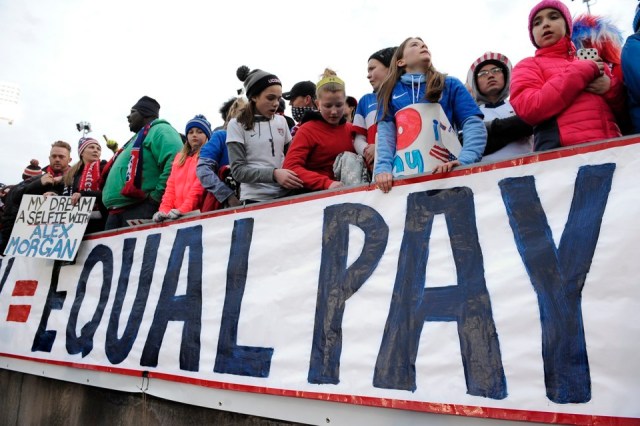
Equal Pay March (The Atlantic)

Equal Pay March (The Atlantic)

Everyone knows that women get paid less than men. (If you don’t know that by now, you’re welcome.) You may have heard that stat that women make 75 cents to every dollar a man makes.

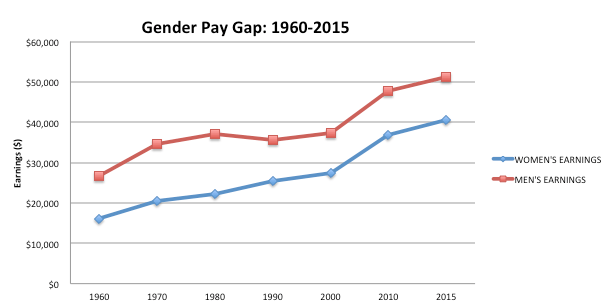
This got me curious to see what the pay gap has been throughout recent history. I found long-range pay gap data from Pay Equity Information. I then made a data table to cherry-pick my desired years:

Gender Pay Gap Data, 1960-2015 (Pay Equity Information)

Gender Pay Gap Data, 1960-2015 (Pay Equity Information)

Then I created a line graph to see the difference visually:

Gender Pay Gap: 1960-2015 chart (Pay Equity Information)

Gender Pay Gap: 1960-2015 chart (Pay Equity Information)

As you can see, the pay gap was worst in 1960-1980. Only after 1980 does the ratio start to approach 70 cents to a dollar. And there’s still so far to go.

Trump Pays His Female Employees Like It’s 1980

Ivanka Trump (CNBC)

Ivanka Trump (CNBC)

The gender pay gap is alive and well in the Trump White House. Shocker! (Except not.) Instead of achieving pay parity with men, the women are losing ground in the fight.

(Incidentally, Ivanka Trump serves in an unpaid role.)

Economist Mark Perry of the American Enterprise Institute analyzed median wages, and found that the gender pay gap has more than tripled. In other words, the women are getting paid like it’s 1980.

What does this look like in salary terms?

The median female White House employee is drawing a salary of $72,650 in 2017, compared to the median male salary of $115,000. “The typical female staffer in Trump’s White House earns 63.2 cents per $1 earned by a typical male staffer,” Perry writes.

If you need that pay gap in visual form, you’re in luck:

White House gender pay gap graph (The Washington Post/Wonkblog)

White House gender pay gap graph (The Washington Post/Wonkblog)

Damn, that does not look good.

To put this further in perspective, the national pay gap is 17%. The Trump administration pay gap sits at 37%, more than double the national rate.

Something to note: using the median, and not averages, is the best way to determine pay parity. This is because averages include the outliers, both on the low and high ends of the scale.

Another note: The pay gap in Trump’s White House is higher than the pay gap in any White House since 2003. And

By The Numbers: Interracial Marriage Data

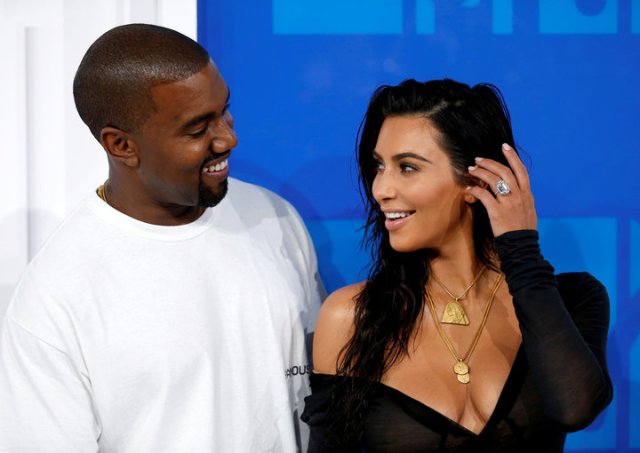
Kim Kardashian and Kanye West arrive at the 2016 MTV Video Music Awards in New York (The Huffington Post)

FILE PHOTO – Kim Kardashian and Kanye West arrive at the 2016 MTV Video Music Awards in New York, U.S., August 28, 2016. REUTERS/Eduardo Munoz/File Photo

The 50th anniversary of the Loving v. Virginia case is soon approaching. The case struck down bans on interracial marriage, and continues to resonate today. With that in mind, I was curious to see any data on interracial marriages: Has the number gone up? Has societal disapproval gone down?

Let’s take a look:

Who’s Marrying Out?

  • In 1970, less than 1% of all married couples were interracial.
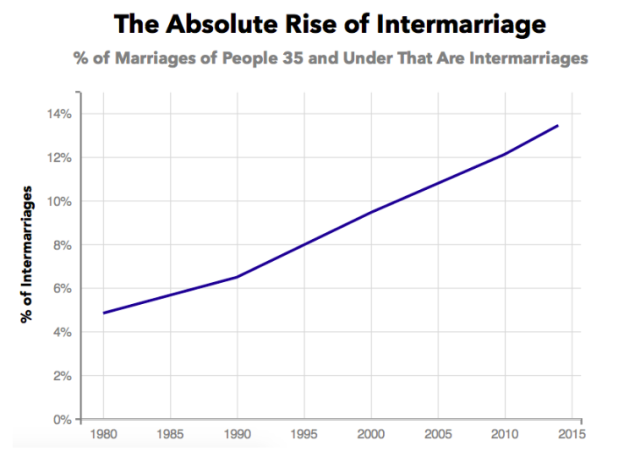
  • In 1980, 6%+ of newlyweds were interracial, and only 3% of all marriages were interracial.
  • In 2013, 12% of newlyweds (a record high) married someone of a different race, and 6.3% of all marriages were interracial.
The Absolute Rise of Intermarriage (Priceonomics)

The Absolute Rise of Intermarriage (Priceonomics)

Who’s Down with Marrying Out?

  • In 1986, only 30% of survey respondents felt interracial marriage is acceptable for everyone. But that same percentage of respondents did not feel interracial marriage was acceptable for anyone.
  • In 2009, 83% of survey respondents were accepting of interracial marriage.
  • In 2012, 93% of people approve of interracial marriage.

And let’s end on one more noteworthy statistic that warms my heart and gives me hope for the future:

“More than four-in-ten Americans (43%) say that more people of different races marrying each other has been a change for the better in our society.”


#ThrowbackThursday: Jennifer Garner in ‘Elektra,’ 2005

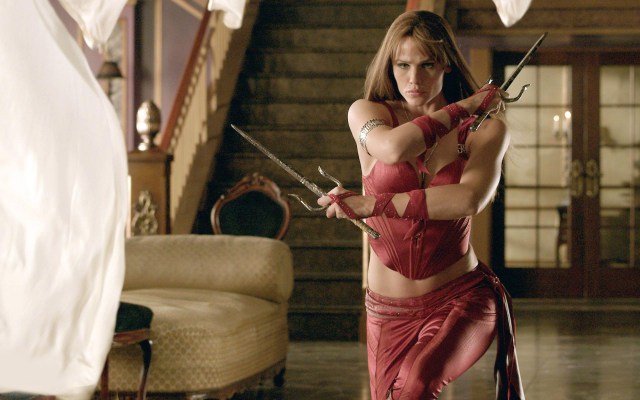
Jennifer Garner in 'Elektra,' 2005 (Ouch Press)

Jennifer Garner in ‘Elektra,’ 2005 (Ouch Press)

Full disclosure: I haven’t seen the 2005 movie “Elektra,” but per IMDB, here’s the synopsis:

Elektra the warrior survives a near-death experience, becomes an assassin-for-hire, and tries to protect her two latest targets, a single father and his young daughter, from a group of supernatural assassins.

The movie, starring Jennifer Garner in the title role, was spun off from 2003’s “Daredevil”  (which starred Garner’s eventual ex-husband Ben Affleck). “Elektra” didn’t do well at the box office: It only grossed $56M+ worldwide on a budget of $43M+.

“Elektra” would ordinarily be a footnote in the history of superhero movies, except for one thing: It’s the most recent movie starring a female superhero.

Until “Wonder Woman.”


Trends: Slaying While Pregnant


Beyonce's performance at the 2017 Grammy Awards (The Fader)

Beyonce’s performance at the 2017 Grammy Awards (The Fader)

It seems like almost every female celebrity is pregnant right now (and that almost all of them are pregnant with twins). But instead of lying low and taking it easy during their pregnancies, many of these women are stepping it up, and making pregnant and non-pregnant women alike look like slackers.

First case in point: Beyonce. Leave it to Queen Bey to put us all to shame. The superstar performed a set during this year’s Grammy Awards. One portion featured her leaning back in a chair perched at a very precarious angle. (I don’t know about you, but my heart was in my throat for that whole portion. And I audibly exhaled when she got off that chair.)

Beyonce had also been scheduled to perform at Coachella before withdrawing. But we can’t fault her for that, considering she’s done more while pregnant than many people do in their lives.

Serena Williams is widely acknowledged to be the GOAT (Greatest Of All Time) tennis player in the world. Last month, she announced her pregnancy. When she announced the news, Williams was 20 weeks along. Someone very smart (and awesome) did the math and realized that Williams had recently played in a match while pregnant. And, as Laura Wagner at “Deadspin” put it, this wasn’t just any match:

Serena Williams won the 2017 Australian Open, her record-breaking 23rd major, without dropping a single set, while nine fucking weeks pregnant. She is the greatest of all time.

Elsewhere in entertainment, Gal Gadot has been preparing for her upcoming movie “Wonder Woman.” Last November, she shot reshoots for the movie…while also five months pregnant. And she was probably doing more than a few stunts. NBD.

It’s great that we’re seeing so many women dominate during a time in life when women traditionally have been relegated to the sidelines.

#ThrowbackThursday: Serena Williams Wins the Australian Open, 2017

Serena Williams at the 2017 Australian Open (Indian Express)

United States’ Serena Williams celebrates after winning the first set against Barbora Strycova of the Czech Republic during their fourth round match at the Australian Open tennis championships in Melbourne, Australia, Monday, Jan. 23, 2017. (AP Photo/Kin Cheung)

In January, tennis superstar Serena Williams beat her sister, fellow tennis star Venus Williams, in the final set of the Australian Open. The win was her seventh Australian Open title, and 23rd Grand Slam singles title. Williams is now back to being the #1-ranked tennis player in the world.

Williams was also in the early weeks of pregnancy during the Australian Open. So there’s that.

How Many U.S. Adults Have Human Papillomavirus (HPV)?

Human papillomavirus (HPV) (Mamiverse)

Human papillomavirus (HPV) (Mamiverse)

In answer to the headline, quite a few. In fact, the number might be higher than you think.

The answer: Almost 50% of U.S. adults have human papillomavirus (HPV).

In case you’re blissfully unaware, HPV is “the most common sexually transmitted infection (STI).” The virus is most commonly transmitted during vaginal and anal sex. In worst cases, HPV can morph into genital warts and cause cancer.

A report published by the National Center for Health Statistics revealed that 42%+ of U.S. adults ages 18-59 had genital HPV. Certain strains of the virus affected 25%+ of adult men and 20%+ of adult women. These strains caused 31K cases of cancer per year.

The report also found that 7%+ of U.S. adults had oral HPV, and 4% had HPV strains associated with mouth and throat cancers.

Rates of HPV broke down along demographic lines:

The highest rate, 33.7 percent, was found among non-Hispanic blacks; the lowest, 11.9 percent, among Asians. The prevalence of genital HPV infection was 21.6 percent among whites and 21.7 percent among Hispanics.

The study was the first of its kind to examine HPV in adults.

This study really drives home the need for HPV vaccination. Yet despite a push for getting adolescents vaccinated, the HPV vaccination rate remains stubbornly low: “Only 30-40% of teens who should be getting immunized receive the three-dose shot, and only 10% of men do.”

NPR Releases 2016 Staff Diversity Numbers

National Public Radio (NPR) Logo (NPR)

National Public Radio (NPR) Logo (NPR)

In April, National Public Radio (known colloquially as NPR) released its staff diversity data for 2016. Here were the main findings for that year:

According to NPR’s human resources department, of the 350 employees in the news division as of Oct. 31, 2016, 75.4 percent were white. Asians made up 8.3 percent of the staff, followed by blacks or African-Americans (8.0 percent), Hispanics or Latinos (5.4 percent), those who identified as two or more races or ethnic identities (2.6 percent) and American Indian (0.3 percent).

NPR has been tracking this data since 2012, and it’s interesting to see how the numbers fare on a long-term basis. Spoiler alert: they pretty much flatlined. This falls in line with long-term newsroom diversity trends. Per the American Society of News Editors (ASNE): “In 2016, minorities comprised about 17 percent of employees at daily newspapers and 23 percent at online-only sites.” Pretty bad.

Here’s where NPR falls in comparison to other media:

NPR is behind The Washington Post (31 percent diverse) and The Los Angeles Times (34 percent). At 25 percent diverse, NPR is just above The New York Times newsroom, which is about 22 percent diverse.

Newsroom diversity has become part of a larger conversation regarding workplace, and companies publicly releasing they diversity data. But some newsrooms are refusing to disclose their data. The ASNE reported that 737 newsrooms responded with data for the 2016 survey. That’s out of 1.7K+ newsrooms contacted, making a 42%+ response rate.


Trends: Updating Classic Films to Be More Inclusive

Emma Watson as Belle in 'Beauty and the Beast' (The Leaky Cauldron)

Emma Watson as Belle in ‘Beauty and the Beast’ (The Leaky Cauldron)

Within the last few years, many films have been updates to classic films. While it’s no secret that Hollywood likes to recycle its own ideas, there’s now a push to make the films more inclusive.

The 2016 release of “Ghostbusters” brought one change to the classic film: the ghostbusters were all played by women (the very funny Melissa McCarthy, Kristen Wiig, Kate McKinnon and Leslie Jones). While some butthurt fanboys cried that the reboot  killed their childhood (actually, they usually used a much more brutal, assault-y verb for it), the movie brought in $46M+ on its opening weekend, and grossed $229M+ over its theatrical run.

“Ocean’s 8,” which will be released in (wait for it…) 2018, will also feature all female leads in its remake-of-a-remake. (Seriously, the first version involved Frank Sinatra and his boys’ club Rat Pack and was released in 1960.) But “Ocean’s 8” does one better than “Ghostbusters” in that it’s more diverse. In addition to Anne Hathaway and Cate Blanchett, Rihanna, Mindy Kaling and rapper Awkwakfina will also star in the ensemble. And that first cast photo looks lit.

This weekend, Disney is releasing a live-action version of “Beauty and the Beast.” This movie has a lot going for it: For starters, Emma Watson as the titular character gives it some feminist cred. Watson had a lot of input on the character, and  Belle doesn’t wear a corset and is an inventor. (Remember, in the original 1991 film, Belle’s father was the inventor with the wacky contraptions.)

Updating the characters to reflect modern times also extends to the supporting cast. Le Fou, muscle man Gaston’s main lackey, is now going to be gay. And in love with Gaston. Which puts a lot of things into perspective, actually. Though Le Fou will be the first openly gay character, he’s far from the only gay character that Disney has created.

The movie will also feature the first two interracial kisses in a Disney movie: one between wardrobe Madame de Garderobe (Audra McDonald) and harpsichord Cadenza (Stanley Tucci), and the other between candlestick Lumiere (Ewan McGregor) and feather duster Plumette (Gugu Mbatha-Raw). And Disney is here for it.

I can’t wait to see how Disney movies continue to grow and evolve in terms of representation in the future.


#ThrowbackThursday: “Ghostbusters,” 2016

'Ghostbusters,' 2016 (Geek)

‘Ghostbusters,’ 2016 (Geek)

2016 saw the release of the rebooted “Ghostbusters: Now With More Women!” OK, that wasn’t the actual title, but it might as well have been. The remake of the classic comedy film boasted Melissa McCarthy, Kristen Wiig, Kate McKinnon and Leslie Jones as the titular Ghostbusters. The film battled high expectations from all corners: nail-biting and hand-writing over whether (gasp!) funny women could open a movie, and unreasonable standards from people for whom the original 1984 movie stood as an unassailable classic.

Fortunately, the movie proved that people (and not just women) would turn out to see funny women in a remake. The film ranked second in its opening weekend with $46M+ and went on to rake in $229M+ worldwide.