#ThrowbackThursday: “Playboy,” 1953

Marilyn Monroe cover for 'Playboy,' Dec. 1953 (NY Daily News)

Marilyn Monroe cover for ‘Playboy,’ Dec. 1953 (NY Daily News)

“Playboy” creator Hugh Hefner put out the first issue of his influential magazine in December 1953. It featured actress Marilyn Monroe on the cover and centerfold. Hef knew exactly what his mag (originally titled “Stag Party”) was all about: The introduction to Volume 1, Number 1 clearly states that the periodical isn’t a “family magazine.”

Today, this legendary first issue that spawned an empire is up for auction. Put up by Nate D. Sanders in Los Angeles, it’s expected to go for $2.7K. This first issue is very rare, as only around 54K copies were printed since Hefner wasn’t sure if it would be successful. Luckily for him, it took off immediately, and American culture was never the same.


The New Abercrombie & Fitch Will Feature Less Sex (NSFW)

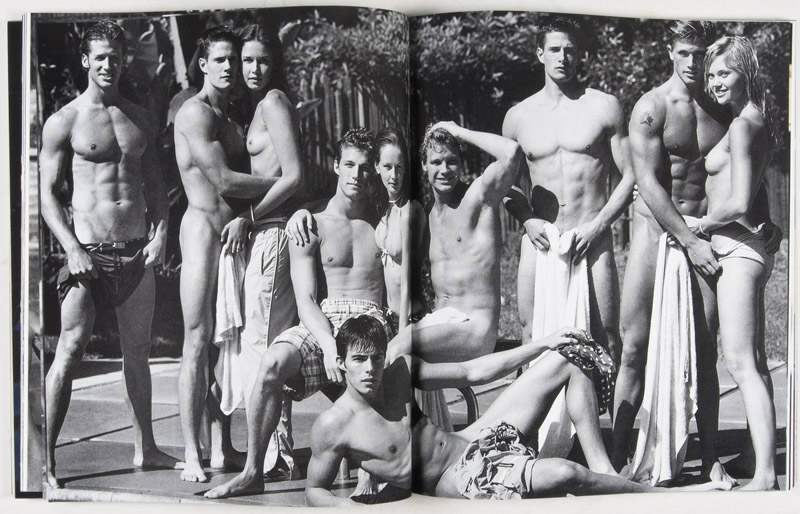
'A&F Quarterly' Spring Break Issue 2001 (Kline Books)

‘A&F Quarterly’ Spring Break Issue 2001 (Kline Books)

Happy Friday! If you’re in your mid-20s or older, you probably remember (and hell, wore) some Abercrombie & Fitch (A&F) back in the day. The stylishly distressed, yet massively overpriced, clothes were a status signifier back in middle and high school, when everyone wanted to be part of the cool crowd (which was comprised solely of all-American, apple-cheeked near-Aryans). And of course, who can forget those sex-drenched ads and catalogs?

The A&F of yore will now be changing that particular aspect. According to “The Washington Post,” the chain will no longer hire “models” (their term for sales associates) based on “body type or physical attractiveness.” They’ll also phase out the “sexualized marketing” (suggestive ads, shirtless models at storefront openings) by July.

This all comes as A&F tries to revamp its image, and project a more inclusive one. Former CEO Mike Jeffries was known for promoting the brand as exclusionary to everyone but his coveted “cool crowds,” and didn’t offer larger sizes. He stepped down from his post last December. The move came amid reports that the retailer’s shares have decreased 39% over the past year, and profits shrunk 5%+ last year.

It’ll be interesting to see if A&F can actually pull off this drastic brand reinvention, and if consumers will respond to it.

Smart Vibrators Will Data-Mine Your Pleasure

SmartBod vibrator prototype evolution (Angel.co)

SmartBod vibrator prototype evolution (Angel.co)

Happy Friday! We’ve talked about smart sex toys before, and also how Big Data is taking over sex. We’re ushering in a new era of sexual data and metrics, on a more minute level than ever before.

Enter the SmartBod, a vibrator that tracks its users’ data and aggregates it via a related app. While tracking arousal (and climax) patterns, the user will then be able to establish a baseline of usual trends. The app will also suggest ideas mined from the collected data. Call it sex-alytics, if you will.

UC Berkeley entrepreneurs Liz Klinger and James Wang aim to help women spark conversations regarding pleasure, since it can be an uncomfortable topic for most people. The user “would learn how their orgasm changes depending on how and when they use the vibrator.” It can also help women determine if they’re “normal” or not, in terms of their orgasms and arousal. So you can compete with others, or with yourself or both.

This counts as the second “smart” vibrator I’m aware of, next to the upcoming Una. As a both a sex geek and a data nerd, I can’t wait to use these and report my results. All in the name of science, of course!


Dell Williams, Influential Sex Shop Entrepreneur, Has Died

Sex shop founder/entrepreneur Dell Williams (Refinery29)

Sex shop founder/entrepreneur Dell Williams (Refinery29)

Sad news from last week: Dell Williams, founder of the first woman-friendly sex shop Eve’s Garden, died at the age of 92.

Her origin story begins in the early ’70s, when she decided to purchase a Hitachi Magic Wand, “the Rolls-Royce of vibrators” after attending famed sex educator Betty Dodson’s “Body/Sex Workshop.” (Dodson was a huge proponent of the Magic Wand.) When Williams attempted to buy the device at a New York City Macy’s, she was shamed by a younger male sales associate.

She reported her lightbulb moment as follows:

Someone really ought to open up a store where a woman can buy one of these things without some kid asking her what she’s going to do with it.

This experience led Williams to build Eve’s Garden from her kitchen table, pursuing it as a side-hustle while working a 9-to-5 as an advertising executive. She was working on this at an interesting time: Discussions about female sexuality were beginning to bubble up, contrasting with the point that sex shops were run by, and catered pretty exclusively to men.

She showed an aptitude for entrepreneurship, as the thriving mail-order business (founded in 1974) grew into a storefront, and later went online. The site sells condoms, sex toys, and books, including Williams’ biography “Revolution in the Garden.”

Williams quickly became one of the go-to women to comment on sexuality changes amidst the larger society. In 1973, she organized a conference on women’s sexuality that received a lot of attention, and was consulted on sexual matters ranging from how to up the passion during Valentine’s Day to Britney Spears’ own ode to female masturbation “Touch of My Hand.”

But perhaps Williams was destined to go into the sex industry: Legend has it she was named for journalist Floyd Dell, who was an ardent supporter for Margaret Sanger’s work.

Williams started something that (thankfully) continues to thrive to this day: the woman-friendly sex shop, where women can go in and explore without fear of being shamed or side-eyed.

Above all, she knew the power of a sexually healthy and knowledgable woman (and how scared the rest of the world is of her). For her dedication in her biography, she wrote:

It has long been my unassailable belief that orgasmic women can change the world.  By this I mean that a woman who is unfettered sexually is unfettered politically, socially, economically and she is unstoppable.


How Has “Fifty Shades of Grey” Impacted the Sex Toy Industry?

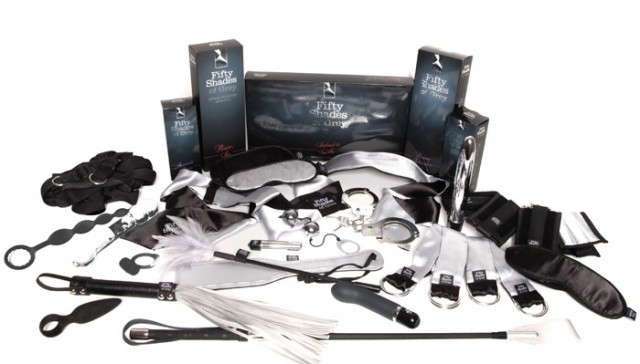
'Fifty Shades of Grey'-themed sex toys (Crushable)

‘Fifty Shades of Grey’-themed sex toys (Crushable)

With the recent “Fifty Shades of Grey” movie coming out last month (along with the requisite storm of thinkpieces), the sex toy industry is seeing an impact on the bottom line.

Different sex toy retailers are feeling an impact. “Variety” reports that Manhattan-based The Pleasure Chest was offering “Fifty Shades”-themed classes every night leading up to the movie’s premiere (though it doesn’t say for many weeks this went on).

Online retailer Adam & Eve, which holds the largest market share at 4%, has also gained a boost in sales. They’re also selling their own toy line “Scarlet Couture” pegged to the movie, in addition to the official “Fifty Shades”-inspired line.

“The Hollywood Reporter” has a piece which came out before the movie opened giving us some hard numbers. The U.K. sex toy brand Lovehoney made the line of “Fifty Shades”-inspired toys, which includes blindfolds, riding crops and feather ticklers. Demand for the “Inner Goddess” Ben Wa balls (or vaginal balls) sold out Europe in pre-orders. (Full disclosure: I was actually given a box of these when I attended a sexual health conference in January.)

THR reports that Lovehoney’s profits “tripled from $1.1 million the year before to $3.39 million by January 2014.” The “Fifty Shades” line has already sold 1.2M units worldwide, and is estimated to boost sales by 40% once the movie debuts.

If you’re looking for lingerie, Bluebella has you covered. The lingerie line has three “Fifty Shades”-inspired collections, and they anticipate a spike in sales not only from the movie, but also from Valentine’s Day.

“Inc.” also had a comprehensive article on this cultural phenomenon, and puts it in the larger context of a sea change. Market research firm IBISWorld found the following:

Between 2008 and 2013, sex toy sales in the U.S. increased by approximately 12.5 percent annually, raking in $610 million in 2013 overall.

The article notes that it’s more the smaller companies seeing a boon to their bottom line. But there’s also been a shift in who the sex toy industry’s customers are:

In 2013, women made up approximately 67 percent of U.S. industry patronage, which was a 12 percent increase from 2008.

It’ll be interesting to see if this is just a one-time sales spike, specifically in BDSM gear, or if this trend will continue, eventually making the practice almost, dare I say, vanilla.


Thursday Trends: Same-Sex Couples Reflected in Advertising

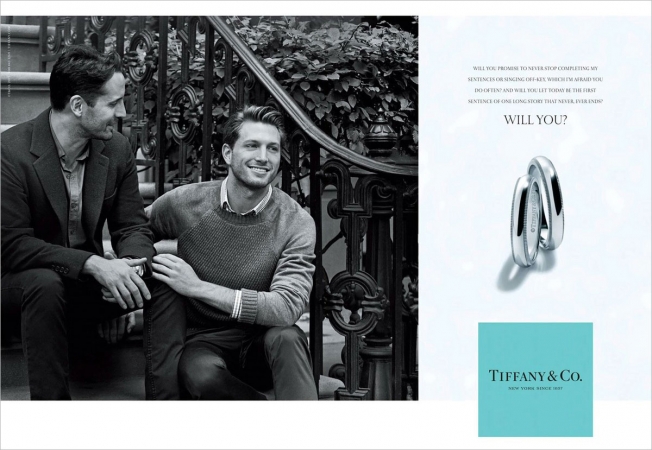
Tiffany's first ad featuring a gay couple (Adweek)

Tiffany’s first ad featuring a gay couple (Adweek)

Advertisements are finally getting with the times, and featuring more diversity than your run-of-the-mill straight white couple.

Last month, jewelry giant Tiffany’s debuted a new print ad for their wedding rings. But this ad had one thing different: it prominently featured a gay couple. And apparently the two men are a couple in real life, and were photographed on their own New York stoop.

This was the first time Tiffany’s has used a same-sex couple in their advertising. But it won’t be the last: Just this week, the brand used the same couple in a TV-spot ad. (The ad also features straight and interracial couples.) It signals that the 178-year-old brand recognizes that love comes in many forms, and they want to be all-inclusive. (And it’s a smart business move.)

Other brands in recent years have featured same-sex couples. Preppy retailer J. Crew used a gay couple in their catalog in spring 2011, and Gap used another couple on a billboard the following year. Incidentally, neither sets of couples are professional models: In the case of the J. Crew couple, one of the men was a designer for the brand. (It seems there’s also a side-trend of using real people.)

Lesbian couples are also increasingly represented. In 2012, JC Penney featured a lesbian couple with their children in a catalog pegged to Mother’s Day. Last year, condom brand Durex used two women being playfully affectionate with each other in an ad for a massage gel. This year, Hallmark showed an ad featuring a real-life lesbian couple describing their feelings for each other in the run up to Valentine’s Day.

It’s clear that things are changing. Even “The Onion” got in the action, with a (mock) article claiming that jewelry company Zales created an ad featuring a polyamorous triad. (But the article did rightfully call out that we, as a whole society, aren’t quite there yet.)

Hopefully this follow its natural progression, and  will eventually lead to more ads featuring same-sex couples with families. It’d be great to see future print and online ads and commercials where we see a family with two dads or two moms, NBD.

After all, this would make complete economic sense for these companies: In 2012, “Adweek” reported that the LGBT market is estimated to be worth around $743B+.


#ThrowbackThursday: Abercrombie & Fitch Ad, 2012

Abercrombie and Fitch ad shot by Bruce Weber (Towleroad)

Abercrombie and Fitch ad shot by Bruce Weber (Towleroad)

Three years ago, acclaimed photographer Bruce Weber shot a promo for Abercrombie & Fitch that featured handsome male models doing things all guys do: wrestling, showering, and kissing.

That last one is depicted up top. Later, the clothing brand claimed that the video (and three related others) were part of an official A&F campaign, even though Weber had identified the video as such on his Facebook page.

Regardless, it’s still a cool image. Abercrombie will always be the first softcore your 13-year-old self squealed over, but it’s at least made some strides towards acceptance (certain other inflammatory comments from former CEO Mike Jeffries notwithstanding).

Why Are Condoms So Expensive in Venezuela Right Now?

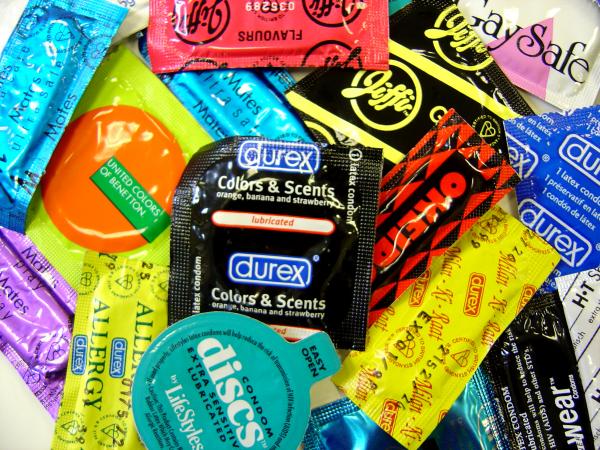
Condoms (Prevention Justice)

Condoms (Prevention Justice)

Happy Friday!

Apropos of National Condom Week: Would you pay $755 for a box of condoms?

That’s insane, right? But right now, sexually-active and contraception-conscious Venezuelans don’t have much of a choice. That’s how much a 36-pack of Trojan condoms is going for. With the exchange rate, it works out to be $20+ per condom. If you’re shopping around, a 24-back of Durex condoms is selling for $317, making it the (slightly) more economical choice of $13+ per condom. (For context, this is about $10 more than the country’s standard black market rate.)

This is really alarming when you consider that the country’s minimum monthly wage is $888.24.

The Venezuelan people literally cannot afford to have safe sex.

The reason behind these sky-high prices? Oil.

Venezuela exports a lot of the stuff, using it to bring in around 95% of foreign earnings. But oil prices have fallen dramatically recently (over 60% drop within the past seven months), leading to fewer earnings for the country. This, in turn, inhibits Venezuela’s ability to import other basic goods (such as chicken, milk and corn), since their money doesn’t stretch as far. The Bank of America Corporation estimates the the country will import 42% less in earnings than it did in 2012.

Condoms aren’t the only contraceptive that’s hard to come by within the country. Birth control pills are also in high demand, and are very hard to find right now.

According to “Bloomberg Business,” the shortages began in late December, when the Venezuelan government “tightened dollar disbursements amid sliding oil revenue.” The Venezuelan Pharmaceutical Federation offered the following observation:

No condoms were available in 10 eastern and central Caracas pharmacies visited in late January, compared with as many as 20 different kinds available at some locations in November, including Reckitt Benckiser Group plc’s Durex and Church & Dwight Co.’s Trojan brands.

Venezuelan President Nicolas Maduro was attempting to fix this problem before it started: Last June, he announced that the government was building a condom factory to meet the country’s demand. But since then, customers disliked the quality of the condoms, and demand often outpaced supply.

Another factor in this saga is Venezuela’s own sexual health stats. According to a 2012 World Bank study, the country has the fifth-highest number of teen pregnancies out of the 21 Latin America countries. (This averages out to be 88+ live births for women ages 15-19 for every 1K women.) It also has the fourth-highest number of people living with AIDS on the continent.

If this condom (and birth control) shortage continues, it’ll impact Venezuela’s teen pregnancy and AIDS population for the worse. As prices rise, people will become more inclined to completely forgo any birth control method, and the government might not be able to support the overwhelming resulting birth rate. Let’s hope a solution arrives before these things come to pass.

I’m just thankful condoms are not only cheaper than a child, but also cheaper than a month’s rent.

Thursday Trends: Plus-Size Models in Mainstream Media

Tess Munster (Bustle)

Tess Munster (Bustle)

It’s safe to say that plus-size models are having a moment in the spotlight right now. The fashion industry has finally cottoned on to the fact that most women are not a size -2 (which is rarely found in nature), but that more “normal”-sized women representative of the American public might want to see themselves depicted (and desired!). And the inclusion will also sell more for said fashion companies, so it’s a win-win all around.

We can trace this development to late last year, when the Pirelli calendar unveiled its 2015 edition. Candice Huffine made history as the first plus-size model to grace the legendary calendar’s pages. She broke a tradition stemming from 1964 of using the usual thin models to usher in a new year and a new outlook on beauty standards.

Speaking of beauty standards (more like #effyourbeautystandards), plus-size model/retro bombshell Tess Munster (now Tess Holliday) recently became the first plus-size model to sign with the U.K.’s MiLK Model Management. She’s now the first plus-size model signed to a mainstream agency, in the Curves division, and the first one within Curves above a size 20 (she’s a 22 and stands at 5 ft. 5 in.). Munster cuts a distinctive figure, with bright red wavy hair, alabaster skin and lots of tattoos. She’s been around for awhile, and was named a top plus-size model in the world by “Vogue Italia” in 2013. That same year, the “body positive activist” began the aforementioned hashtag to encourage women to love their bodies at any and every size. She also participated a video in which she and other plus-size models recreated Beyoncé’s music video for “***Flawless,” called “#everyBODYisflawless.”

Fashion blogger/model Nadia Aboulhosn was one of these models. She’s gained attention and press for her fashion prowess that’s all about the street style. The half-Lebanese stunner first drew notice when she won American Apparel’s XL Model Search in 2011.

Perhaps the most mainstream seal of approval, “Sports Illustrated” selected a plus-size model for this year’s Swimsuit Issue: Model Robin Lawley is a size 12. Lawley had previously been on the cover of Australian “Vogue,” as the first plus-size model, and was the first plus-size face of Ralph Lauren in 2012. But even though she’s plus-size by fashion industry standards, she still looks…well, like a normal tall, curvy girl. Like a model.

Let’s hope that plus-size women gaining visibility in the fashion world isn’t a one-time trend, and eventually becomes an unremarkable norm encompassing diverse shapes and sizes.

How Much Are Penis Pumps Costing Medicare?

Vacuum erection system/penis pump (Ali Express)

Vacuum erection system/penis pump (Ali Express)

Here’s something you may not know: Medicare covers the costs of penis pumps.

Contrary to a depiction in the 1997 movie “Austin Powers: International Man of Mystery,” penis pumps aren’t only used for cosmetic purpose. The devices, known in the medical industry as vacuum erection systems (VES), help treat erectile dysfunction.

A 2014 report looked at data from 2006 to 2011, and found that yearly claims for VES devices grew to $38M+ in 2011. This was nearly double the amount from 2006, where claims hit $20M+. Over five years, Medicare received over 474K claims for VES devices.

Pricing is also inflated: Consumers on Medicare are paying nearly twice as much than those paying the retail value.

As the population ages, it’s safe to speculate that more people will rely on the devices, and the spending could continue to climb even higher.