Female Genital Mutilation (FGM) Banned in Nigeria

Nigerian girl (Higher Perspectives)

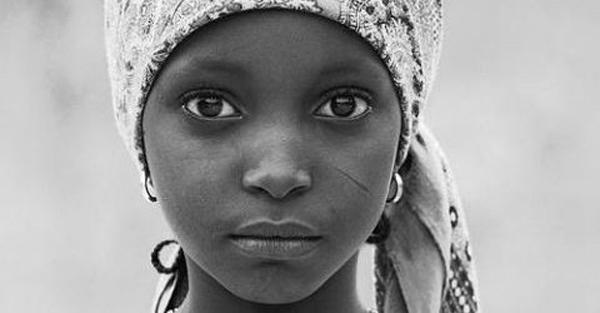
Nigerian girl (Higher Perspectives)

Last fall, Nigeria became the first country to officially ban female genital mutilation (FGM). Previously, certain states had outlawed the practice. Former Nigerian president Goodluck Jonathan signed the bill into a law before he left office.

The United Nations banned FGM in 2012.

The World Health Organization (WHO) estimates that 125M+ women have been victims of the practice across the world. Nigeria has traditionally had one of the highest rates of FGM, accounting for 25% of cases worldwide.

FGM is used as a way to control a woman’s sexuality. The practice can result in any medical complications, including affecting fertility.


How Common is Intimate Partner Violence?

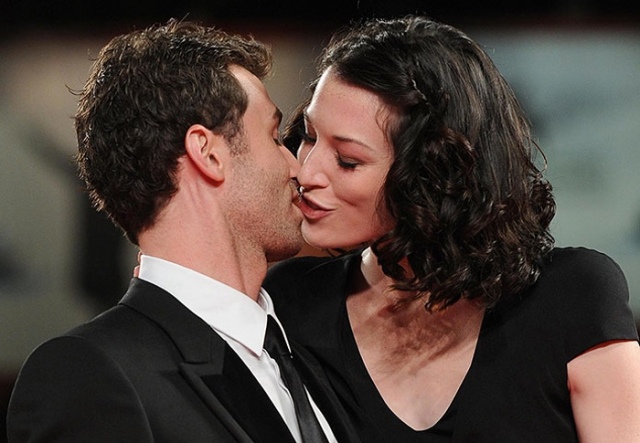
James Deen and Stoya (The Guardian UK)

James Deen and Stoya (The Guardian UK)

Late last year, adult film star James Deen was accused of rape by his former girlfriend, fellow adult film star Stoya. Other performers later came forward to accuse Deen of sexual assault, but Stoya’s two tweets on Nov. 28, 2015, started Deen’s downfall: He’s since been dropped from one major studio.

Rape can be part of a larger pattern of intimate partner violence. According to the National Coalition Against Domestic Violence (NCADV), intimate partner violence “comprises 15% of all violence crimes,” and women ages 18-24 are most likely to be “abused by an intimate partner.” In addition, 46%+ of women raped are raped by an acquaintance. Of this number, 45%+ of women are raped by an intimate partner. These are scary stats.

As of 2014, women ages 18-24 comprise 4.8% of the total population.As of the 2010 Census, women comprised 50.8% of the total population, or 156.9M+ residents. We can estimate that the current number of women in this age group who’ve been raped by an acquaintance might shake out to 155K+.

Here’s the math:

  • 156,964,212 *.0048 = 753,429 (estimate of women ages 18-24 as of 2014)
  • 753,429 * .46 = 346,578 (estimate of number of women in that age range raped by an acquaintance)
  • 346,578 * .45 = 155,961 (estimate of number of women ages 18-24 raped by an intimate partner)

Obviously, this isn’t an exact estimate, due to a couple of reasons: self-reporting (not all women will probably report rape/violence), and inaccurate data (using both 2010 and 2014 numbers).

Scary, right? Unfortunately, this is the reality, so take care of yourselves.


Justin Trudeau’s Cabinet is 50% Women

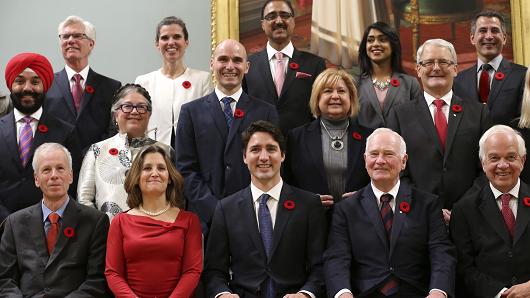
Canadian Prime Minister Justin Trudeau and his cabinet (CNBC)

Canadian Prime Minister Justin Trudeau and his cabinet (CNBC)

The new Canadian Prime Minister Justin Trudeau is working swiftly to make his own mark on his country: Last week, he debuted his new cabinet, which looks very different from the previous one (or most governing bodies, for that matter).

Trudeau’s cabinet is 50% women. That’s right, exactly half. Fifteen men, and fifteen women, along with Trudeau himself. Trudeau’s reasoning for his cabinet’s equality? “Because it’s 2015.” (Finally!) He also wanted a cabinet that “looked like Canada.”

But his actions aren’t just benefitting women; they’ll benefit the whole country:

The countries with the most female lawmakers have made major strides on issues such as education, labor-force participation and paid leave. [Sweden, Rwanda, and Finland] ha[ve] either a parliament or a ministry that is at least 50% female, while women make up only 19% of the U.S. Congress and only four of Obama’s 15 Cabinet members.

With this action, Trudeau sends a clear message: He respects and values women as peers and intellectual equals. And he intends to lead the twin charges of equality and diversity during his term. Incidentally, these terms have no limit. But I hope Trudeau is in power and makes needed changes for a long time to come.

Why Is the Number of Sexual Assaults Rising in New York City?

New York City skyline (The Huffington Post)

New York City skyline (The Huffington Post)

Certain types of violence are on the rise in the city that never sleeps. In addition to shooting and homicides increasing year-over-year, the number of rapes and sexual assaults has also increased.

But is it enough to panic over? Let’s look at the numbers. “The New York Times” reports:

From Jan. 1 to May 31, there were 540 rapes recorded in the city, an 8 percent increase over the same period last year, and more than 1,128 misdemeanor sex crimes, representing a rise of 18 percent.

But on the bright side, some types of sexual violence has declined within the city:

According to national data from the Centers for Disease Control in 2012, the rate of stranger rape as a percentage of all rape is 14 percent; in New York City this year, the rate is half that. Of the 540 reported rapes, 39 were committed by someone the victim did not know, according to the police.

But why are the overall numbers climbing? The phenomenon can be attributed to a simple economic principle: the complement effect. Numbers are climbing because more people are reporting them. And that’s a good thing! The more people that are aware of these crimes and can report them, the more accurate a picture we can get of just how rampant sexual assaults are.

I’m interested to see if this is, or will be, the case in other cities.


Black Women Covering the September Issue for “Vogue:” By The Numbers

Beyonce's 'Vogue' Cover, September 2015 (PopSugar)

Beyonce’s ‘Vogue’ Cover, September 2015 (PopSugar)

Sadly, the number of Black women covering the famed September issue of “Vogue” is very short. It really needs to be longer (how the hell is it 2015, and we’re still talking about this?!), and I have no doubt that it will be. Someday. But not soon enough.

As everyone knows by now, the ***Flawless Beyoncé will be covering the fashion bible’s September issue, which comes out Aug. 25th. It’s her first time covering the issue, though it’ll be her third time around as a “Vogue” cover model.

3: The number of Black women covering the September issue solo

1989: Supermodel Naomi Campbell covers the September issue

2010: Academy Award-winning actress Halle Berry covers the September issue.

The fashion industry is notoriously slow to change its ways (look at how many Black women were on “Vogue” covers in 2014). I hope Queen B’s new issue means we’ll see more diverse cover models, and soon.

Kim Kardashian West’s Implanted Male Embryos: How Common Is It?

Kanye West and Kim Kardashian West (US Weekly)

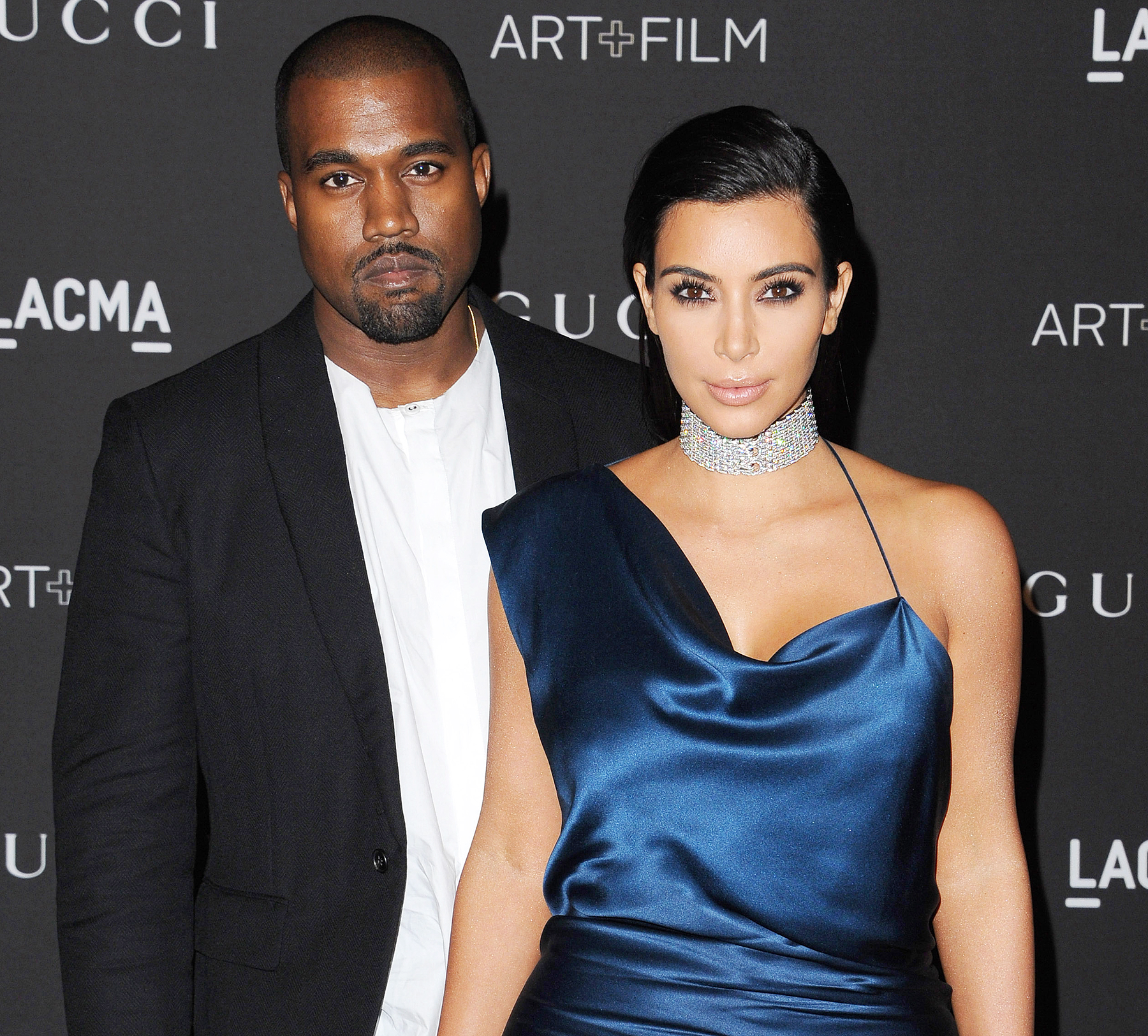
Kanye West and Kim Kardashian West (US Weekly)

As the whole world knows by now, Kim Kardashian is pregnant with her second child, a boy, through in-vitro fertilization (IVF). Apparently, her husband Mr. Kim Kardashian (a.k.a. Kanye West) wanted a boy, or, as he calls it, “an heir.”

To achieve the desired result, Kardashian chose to only implant male embryos (and evidently, it worked). She most likely underwent preimplantation genetic diagnosis (PGD), a procedure which screens embryos for sex characteristics, looking for XX (a girl) or XY (a boy).

In 2012, it was estimated that PGD was used for 4K-6K procedures per year. In 2014, fertility treatment procedures, including but not limited to IVF, were estimated at around 165K+ per year. PGD is used with IVF, so PGD cases comprise between 2%-3% of total fertility treatments.

Interestingly, the U.S. is one of the only countries in the world within which PGD may used for “prenatal sex selection.” In many countries, its use is restricted to medical and chromosome-related issues.

Nobody can yet say if this will become a widespread practice. It does raise some questions about the ethics of calling the shots on choosing your child’s sex. But this isn’t a new concern: New York University’s Director of the Bioethics Program S. Matthew Liao wrote a paper on the subject in 2004 for the “Journal of Medical Ethics” while at Johns Hopkins University. About halfway through the paper, he acknowledges, “As far as I know, no one has tried to use genetic engineering for sex selection.” Things have certainly changed in 11 years. Welcome to your brave new world.

Thursday Trends: Whitewashing Asian Characters in Film

Emma Stone, 'Aloha' (Jezebel)

Emma Stone, ‘Aloha’ (Jezebel)

Let me be clear: this is not a good trend. At all. It should never have even started. And yet, here we are.

It’s still a problem.

Historically, Hollywood has always had a problem of “whitewashing,” i.e. casting white actors in roles specifically created for non-whites. The thinking is that whites are more “bankable,” but there aren’t many roles and opportunities for non-white actors as it is. So a white actor ends up taking a role from a non-white one, and many non-white people are deprived of seeing depictions of themselves on-screen.

This tends to happen a lot with Asian actors. Most recently, director Cameron Crowe came under fire for casting Emma Stone in his latest movie “Aloha.” Stone was cast as a character named Allison Ng, whose ancestry is one-quarter Chinese and one-quarter Hawaiian. (Having white and Asian or Pacific Islander ancestry is traditionally known as “hapa,” deriving from the Hawaiian Pidgin word for half. So Ng’s heritage would be termed “hapa” or “hapa haole,” to include the European ancestry.)

Look at the picture above and tell me with a straight face that Emma Stone resembles anyone remotely half-Asian.

Fortunately, Crowe caught some heat for this decision, and has publicly apologized for his choice. (But he covered his ass a little, saying that the character was meant to be frustrated that her features belied her mixed-race heritage.) But Crowe could’ve easily cast an Asian or mixed-race Asian for his film. He just chose not to.

This whitewashing of Asian characters tends to come up every few years. 2010’s “The Last Airbender” received a public outcry when it was revealed that the cast was mostly non-white actors, save for Dev Patel. (The debacle coined the term “race bending.”) This was odd considering that the TV series (on which the movie was based) was set in a world with obvious Asian elements, and it was animated using anime influence.

The 2008 movie “21” centered on the real-life story of the MIT Blackjack Team, a group of current and former students who beat the casinos at their own game by counting cards. Though many of the group were of Indian and Asian descent, the movie whitewashed the cast, using mostly Caucasian actors.

And then there are the times when white actors are actually put in yellowface. 2012’s “Cloud Atlas,” which had the ensemble actors playing various characters, actually had two examples of this, and took it past the point of no return: Jim Sturgess (who was also in “21”) and James D’Arcy both played Korean men at one point. Sturgess and D’Arcy are both white men, but they both spent extensive time in makeup to more realistically resemble Asian men.

This is far from a new problem. The 1956 film “Teahouse of the August Moon” featured legendary actor Marlon Brando as Japanese villager Sakini, donning full-on yellowface to physically embody the role. And everyone who’s seen 1961’s “Breakfast at Tiffany’s” remembers Mickey Rooney as Holly Golightly’s Japanese neighbor I.Y. Yunioshi, who, seen through modern eyes, was a jaw-droopingly offensive caricature. (“The New York Times” review of the film called Rooney “broadly exotic.”) Fortunately, the distance of time and perspective have allowed people to see that these portrayals were very offensive towards Asians, and it was wrong to a) write/portray the characters in such stereotypical ways, and b) cast actors not of the specific ethnicity to play these parts.

But maybe the message isn’t sinking in as much as it should be: Blonde, Caucasian actress Scarlett Johansson will star in DreamWorks’ adaptation of the anime title “Ghost in the Shell.”

Here’s the thing: There are so many asian and mixed-Asian actors out there. Kristin Kreuk, Chloe Bennet, Olivia Munn, John Cho, Steven Yeun, Daniel Henney, Harry Shum Jr., Sendhil Ramamurthy. And those are only the ones I didn’t need to Google off the top of my head. Point being, there’s massive opportunity here for diverse casting that reflects reality. So let’s get on it!
Brittney Griner/Glory Johnson Annulment: How Many Same-Sex Marriages End?

Glory Johnson and Brittney Griner (Forward Times Online)

Glory Johnson and Brittney Griner (Forward Times Online)

Phoenix Mercury star Brittney Griner filed for an annulment from her wife Glory Johnson, who plays for the Tulsa Shock. The two WNBA stars married May 8th, and Johnson announced her pregnancy June 4th.

With acceptance of same-sex marriage gaining ground, divorce will naturally follow. But how many same-sex marriages end?

It’s hard, and probably too early, to find concrete and up-to-date statistics on this. In 2011, UCLA’s Williams Institute found that same-sex couples who’ve formalized their commitment had a divorce rate of 1%+. This is lower than the annual divorce rate of heterosexual married couples, which is 2%.

Around 150K same-sex couples have married or otherwise committed to each other, so that would mean around 3K same-sex couples divorce each year. I couldn’t find any stats solely for annulments.

But in 2013, Pew Research Center’s FactTank found that same-sex marriages numbered around 71K+. It did take into account that there might be some underreporting going on.

As time passes and more same-sex marriages and divorces/annulments/separations are recorded, we’ll be able to see a clearer picture of any trends.


How Many People Don’t Trust Their Partners?

Jada Pinkett-Smith and Will Smith (Word On Da Street)

Jada Pinkett-Smith and Will Smith (Word On Da Street)

Happy Friday! Actress Jada Pinkett-Smith always has something to say on marriage or sex that some find controversial. But most of the time, what she has to say is very realistic, and more people should heed her advice.

Her most recent interview Wednesday on “Howard Stern” is a prime example. Pinkett-Smith’s marriage to actor Will Smith has frequently been plagued by cheating allegations, all of which she’s dismissed. On Stern’s radio show, she laid out why she’s not worried about her man’s actions:

You’ve got to trust who you’re with. And at the end of the day, I’m not here to be anybody’s watcher. I’m not his watcher. He’s a grown man.

Pinkett-Smith went on to say that as long as Smith could look himself in the mirror, it was all good.

She brings up a great point: Many people (most, it seems) don’t trust their partners, and live in fear that their significant other will cheat.

How widespread is this mindset? Pretty common. According to the 2013 book “The Normal Bar,” which shares secrets of successful couples, less than 40% of women and just over 50% of men claim to trust their partners. Scary, isn’t it?

We should all relax a little and take a page from Pinkett-Smith’s book.


Thursday Trends: Female Celebrities’ Fluid Sexuality

Maria Bello (Salon)

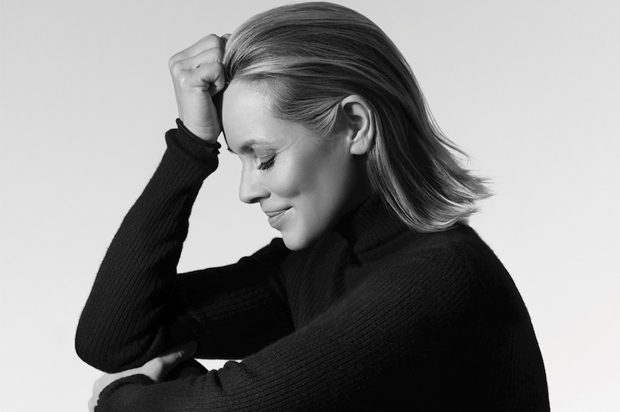
Maria Bello (Salon)

Last week, actress Maria Bello released her new memoir. “Whatever…Love Is Love” chronicles Bello’s journey as a single mom who self-identified as straight, but then unexpectedly fell in love with her female best friend. She penned a piece for “The New York Times” in 2013 that centered on worrying how her son would react to the news. (If you’re wondering, his response is her memoir title verbatim.) From there, Bello decided to redefine her relationships in a way that worked for her, and she now sexually identifies as a “whatever.”

Bello isn’t the only female public figure whose sexuality has shifted within the public eye. Oscar-winning actress Tatum O’Neal recently revealed that she likes and has been dating mostly women for some time now. O’Neal didn’t self-identify as lesbian or bisexual (she had previously been married to, and had children with, tennis ace John McEnroe), and says she’s “not one or the other.”

The millennial generation also has its share of sexually fluid women who eschew labels. Actress Amber Heard dated photographer Tasya van Ree before marrying actor Johnny Depp earlier this year. She also doesn’t label herself “one way or another.” Actress Lindsay Lohan famously had a volatile relationship with DJ Samantha Ronson, but then publicly self-identified as straight years after the relationship was over.

Though the majority of examples come from entertainment, the political sphere can claim on entrant. Chirlane McCray, wife of New York City mayor Bill de Blasio, self-identified as a lesbian when she met her now-husband in 1991. Years earlier in 1979, McCray had written an essay for “Essence,” titled “I Am A Lesbian,” which centered on gays and lesbians within the black community. McCray’s essay didn’t receive much attention until just before her husband decided to run for mayor in 2012.

What’s interesting about McCray’s case is how others in the media reacted to it: Many termed her some variation of “former lesbian.” But McCray never self-identified as anything remotely resembling that. Here’s how she responded in 2013 when asked if she self-identified as bisexual:

I am more than just a label. Why are people so driven to labeling where we fall on the sexual spectrum? Labels put people in boxes, and those boxes are shaped like coffins. Finding the right person can be so hard that often, when a person finally finds someone she or he is comfortable with, she or he just makes it work.

It’s fantastic how so many women (and people in general) are gaining the courage to step outside the box and do what works for them, especially in terms of sexuality and relationships. What I love about the above examples is that they’re all open to new experiences and don’t use labels to limit them. And that’s just beautiful.