Season 2 of Netflix’s “Jessica Jones” Will Only Feature Woman Directors

Krysten Ritter as Jessica Jones (IndieWire)

Krysten Ritter as Jessica Jones (IndieWire)

Hey Hollywood, you know all that bluster about how you can’t find female directors/writers, etc.? You know how you keep saying you want to diversify but you just can’t? Even though you’re trying really hard? Well, “Jessica Jones” is calling your bluff and raising it.

The Netflix series, which focuses on the Marvel character of the same name (played by Krysten Ritter), has been praised for its depictions of sexual assault and female friendship, among other aspects. And now showrunner Melissa Rosenberg has thrown down the gauntlet and declared that no one shall sit in the director’s chair unless their chromosomes are of the XX variety.

This isn’t the first time a TV series has hired solely women directors to direct its episodes. That would be “Queen Sugar,” co-produced and written by Ava DuVernay (who’s the first Black woman to direct a $100M movie). And that happened earlier this year.

No word yet on who’ll be gracing the director’s chair for the second season of “Jessica Jones” (and also no release date), but I can’t wait to find out.

But one thing’s for certain: Your move, Hollywood.


“Loving” Film Releases Interracial Emoji Couples

Love-Moji ('Glamour' en Espanol)

Love-Moji (‘Glamour’ en Espanol)

Given our current obsession with all things tech, Focus Features has found a fitting way to promote the company’s upcoming film “Loving:” custom emojis.

The Love-Mojis feature a variety of emojis of interracial couples in about every combination you could think of. So if you’re in an interracial couple, and you haven’t yet felt your coupling properly represented by the Unicode Consortium, your time has finally come!

Why is this important? Let’s start with the film itself: “Loving” follows Richard and Mildred Loving, a Virginia couple who got married in 1958. This wouldn’t be so remarkable except that Richard was white and Mildred was black. Their marriage happened during a time where interracial dating, much less marriage, was frowned upon, to put it lightly. Interracial marriage could bring a charge of miscegenation (race mixing, in plain terms).

The Lovings were arrested after their marriage for the crime of their relationship, and forced to leave Virginia. Once in D.C., they began legal proceedings. The Loving v. Virginia case went all the way to the U.S. Supreme Court. In 1967, the Supreme Court ruled anti-miscegenation laws unconstitutional, which struck down said laws that were on the books of sixteen states. (All sixteen states were in the South. Shocker.)

Needless to say, this was a landmark case.

But why use emojis to promote it?

Since emojis debuted, the options for emoji couples were pretty stark. They didn’t show the breadth of real-life relationships in terms of race and also sexual preference. The new Love-Moji take this into account, and rectify the oversight.

There’s also the fact that using emojis has become a convenient visual shorthand for emotions we don’t particularly feel like typing out in words.

You can get the Love-Moji via app stores and at VoteLoving.com.

“Loving” comes out on Friday, Nov. 4th.

It’s Canon: Wonder Woman Is Queer

Wonder Woman (The Mary Sue)

Wonder Woman (The Mary Sue)

Last week, the bisexual community gained heightened mainstream visibility through a Golden Age of Comics-era character: Wonder Woman.

DC comics writer Greg Rucka said that it’s “logical” that Wonder Woman is queer, given that she comes from an island inhabited solely by women warrior princesses. Wonder Woman’s homeland of Themyscira is supposed to be paradise, where inhabitants can have fulfilling relationships. But Rucka points out that despite the only options for romantic/sexual/emotional relationships, the concept of queerness doesn’t exist.

How would Rucka know this? He writes DC’s Wonder Woman: Year One series. So this revelation is obviously canon. But Rucka says that this revelation will continue to be subtle, and doesn’t feel the need to scream it at readers or make that Wonder Woman’s defining characteristic. (Real talk: I am such a fan of this line of reasoning.)

So far, Rucka is the only DC writer to speak definitively on Wonder Woman’s sexuality. As for whether the character has had same-sex relationships:

As [artist Nicola Scott] and I approach it, the answer is obviously yes. And it needs to be yes for a number of reasons.

Though this is big news, it’s not so shocking: Wonder Woman officiated a same-sex wedding in a story released last year.

The character, who’s also known as Diana Prince in her civilian life and Princess Diana of Themyscira in her homeland, debuted in Dec. 1941. The big-screen movie adaptation starring Gal Gadot will arrive in theaters on Jun. 2, 2017. It will be the first movie centered on a female superhero for the DC universe.

At this time, it’s unclear whether the upcoming movie will include this aspect of Wonder Woman.

The Fifty Shades Darker Trailer Is the Most-Viewed Trailer Ever in Its First 24 Hours

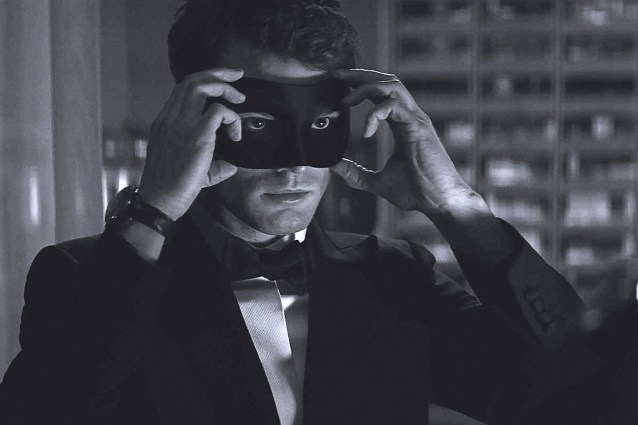
Jamie Dornan, 'Fifty Shades Darker' (EW.com)

Jamie Dornan, ‘Fifty Shades Darker’ (EW.com)

Guess who’s back? Back again?

Not Slim Shady. Everyone’s favorite telecommunications boy-genius/BDSM enthusiast/master manipulator Christian Grey and blank slate/everygirl/victim Ana Steele. Jamie Dornan and Dakota Johnson reprise their roles as the aforementioned twosome in the installment based on E.L. James’ second book Fifty Shades Darker.

The first trailer for the movie debuted on Wednesday, Sept. 14th and has already become notable for setting a new record: The trailer became the most-viewed trailer within 24 hours of its release.

The Fifty Shades Darker trailer was viewed 114M times within the first day of its release. It performed well across digital platforms, and received 2.5M views on the movie’s Facebook page only in the U.S. Internationally, the trailer was viewed 74.6M times, over double the number of domestic views.

The previous record for most-viewed trailer in the 24-hour period after its debut was 2015’s Star Wars: The Force Awakens. That trailer received 112M views.

With these viewing numbers for an initial trailer, I think we can reasonably expect that the second movie will do fairly well in box office take when released. If past trends are anything to go by, the first movie sold a lot of advance tickets and became the “sixth R-rated movie to gross more than $500 million.”

Fifty Shades Darker will be released Feb. 10, 2017.


Trends: The Bikini in 1960s Film

Ursula Andress in "Dr. No," 1962 (YouTube)

Ursula Andress in “Dr. No,” 1962 (YouTube)

This year, the bikini turns 70 years old. How can it be that old?! And love it or hate it, the iconic swimsuit isn’t not going anywhere anytime soon.

The bikini’s invention is credited to French engineer Louis Reard. When he went to the beach, he noticed women trying to get a better tan by adjusting their suits. Sensing a hole in the market, he designed the first bikini out of 30 square inches of fabric in 1946.

Though the bikini took some time to catch on with the average consumer, it caught fire on film in the 1960s. The decade featured some instantly iconic bikini moments, ensuring that the garment had earned its place in fashion and film history.

One of the first to appear was in 1962’s James Bond film “Dr. No.” Ursula Andress, playing shell diver Honey Ryder, appears from the ocean clad in a white bikini. Bikini sales rose after audiences saw the movie, and the bikini was later auctioned off for $61.5K in 2001.

After that head-turning debut, bikinis became a wardrobe staple of the beach party genre, starting with 1963’s “Beach Party” with Annette Funicello. In 1966’s “One Million Years B.C.,” actress Raquel Welch rocked a deerskin bikini.

But why were bikinis taking off during the 1960s? There are a few reasons. One is that women’s dress standards had somewhat relaxed due to the sexual revolution. While a woman might’ve felt a bikini was too revealing in the 1950s, many women grew comfortable showing their bodies (up to a point) in the 1960s.

Though the bikini gained popularity a good 15 years after its debut, the classic women’s swimwear item shows no signs of slowing down in the near or distant future.


Trends: All-Female Reboots

"Ghostbusters," 2016 (Geek.com)

“Ghostbusters,” 2016 (Geek.com)

The 2011 movie “Bridesmaids” was very funny, no doubt about that. The film, which starred a cadre of funny women led by Kristen Wiig and Maya Rudolph, centered on the escapades of the titular group as they helped their friend (played by Rudolph) on the way to getting hitched. The movie was well-liked by audiences, and that showed in the revenue. At the end of the year, “Bridesmaids” ranked #14 at the domestic box office with $169M+ in revenue, and #20 in the worldwide box office with $289M+ in revenue.

But it also had an effect on movies that we’re still feeling: “Bridesmaids” convinced studios that audiences (both women and men, shocker) would see a movie with an all-woman cast. Well…duh. And now studios have sat up and taken notice.

The waves from “Bridesmaids” have hit an interesting formula: to remake a beloved movie with an all-female cast. The rationale goes that if the men liked the original, then the women will love the remake! (And there’s the assumption that the men will be dragged to the movie from their ladies, but it’s OK because it’s a nostalgic property.)

One high-profile all-female remake has already come out: this year’s “Ghostbusters.” The reboot has Kristen Wiig, Melissa McCarthy, Kate McKinnon and Leslie Jones investigate paranormal happenings in New York. The movie has a strong “Saturday Night Live” heritage: In addition to Wiig, McKinnon and Jones logging time on the show, the movie also featured current cast member Cecily Strong in a notable part. “Ghostbusters” debuted at #2 on opening weekend, and as thus far grossed $124M+ domestically and $208M+ worldwide.

Another all-female project announced recently was a reboot of the 2001 heist movie “Ocean’s 11” (which itself is a remake of the 1960 movie of the same name). Sandra Bullock, Cate Blanchett, Rihanna, Mindy Kaling, Anne Hathaway, Helena Bonham Carter, and Nora Lum (better known by her rap name Awkwafina) will make up the ensemble. No release date yet, but I know I’ll be seeing it in the theatre because I vote with my dollars.

It’s great to see so many movies getting made with all-female ensembles, but I can’t wait to get to the point where it’s not noteworthy anymore, but unremarkable and accepted.


#ThrowbackThursday: “Bridesmaids,” 2011

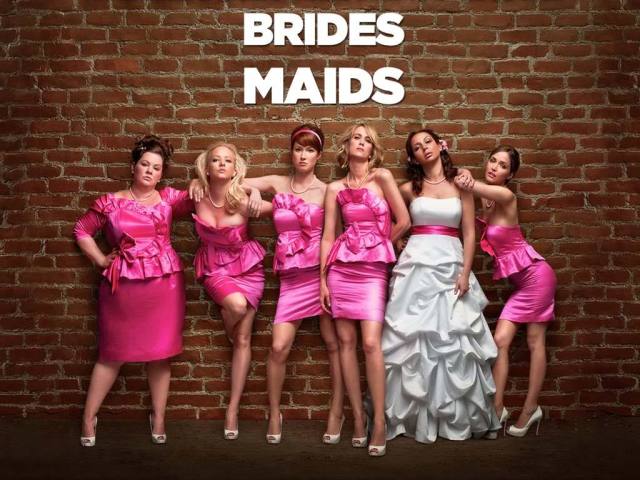
"Bridesmaids," 2011 (Scoopify)

“Bridesmaids,” 2011 (Scoopify)

If you didn’t see “Bridesmaids” when it came out five years ago, you clearly hate women in comedy. As you might guess from the movie title, the story revolved around a group of bridesmaids, led by Kristen Wiig, and their antics leading up to their friend’s wedding day.

Before “Bridesmaids” premiered in May 2011, the movie had gotten a lot of press for being an all-female comedy. Lots of questions prevailed: Were women actually funny? Would women see it? More importantly (ha, in the eyes of Hollywood), would men see it?

The answer to these questions was a resounding “yes!” The movie did well at the box office, ranking #14 at the domestic box office with $169M+ in revenue and #20 worldwide with $289M+ in revenue. It also opened the door a little wider to allow more female-driven  movies and women in gross-out comedy (remember the bridal atelier scene?).

Alejandro Gonzalez Inarritu is the First Mexican to Win the Best Director Oscar Two Consecutive Years

Alejandro Gonzalez Inarritu, Oscars 2015 (Latin Trends)

Alejandro Gonzalez Inarritu, Oscars 2015 (Latin Trends)

Alejandro Gonzalez Inarritu has a new record under his belt: He’s the first Mexican to win the Oscar for Best Director two consecutive years in a row. He won this year for “The Revenant,” and won for “Birdman.”

Inarritu joins two other directors in this distinction: John Ford (1940 and 1941) and Joseph L. Mankiewicz (1949 and 1950).

Congrats to Inarritu, and I can’t wait to see what else he does.

No Shit: Entertainment Isn’t Diverse: By The Numbers

Hollywood sign (Mapping Megan)

Hollywood sign (Mapping Megan)

A new study released this week by the University of Southern California (USC) Annenberg School for Communication and Journalism once again stated the obvious: Entertainment isn’t diverse.

If you don’t want to read the full report (though I’d recommend it), here are some choice stats:

Percentage of female speaking roles in film: 28.7%

Percentage of female film directors: 3.4%

Percentage of female screenwriters: 28.9%

Percentage of cable TV shows that have no Asian characters: 51%

Percentage of cable TV shows that have no Black characters: 23%


Still not convinced the #OscarsSoWhite hashtag is needed?

#ThrowbackThursday: Lupita Nyong’o, Oscars 2014

Lupita Nyong'o Oscar acceptance, 2014 (CBS News)

Lupita Nyong’o Oscar acceptance, 2014 (CBS News)

The Oscars are this weekend (Sunday, Feb. 28). If you’ve been following awards season this year, you know that the #OscarsSoWhite reared its ugly head again. This is the second year in a row that there have been no non-white nominees in the four acting categories. Shameful isn’t a strong enough word.

So I’m throwing it back to the last time we had a non-white winner in an acting category. That was back in 2014, at the 86th Annual Academy Awards. Lupita Nyong’o won Best Supporting Actress for her role in 2013’s “12 Years A Slave.” She’s both the most recent POC nominee and winner.

And because I couldn’t choose just one photo of Nyong’o, here’s another one that showcases her incredible Prada dress:

Lupita Nyong'o backstage at the Oscars, 2014 (Fiction Diversity WordPress)

Lupita Nyong’o backstage at the Oscars, 2014 (Fiction Diversity WordPress)