Anal Sex: Married Men, 1950s and Now

What what in the butt.

What what in the butt.

In 1953, Kinsey found that 11% of men had had anal sex within marriage, out of a sample of 5.3K men. (This sample is described “younger white adults with some college education,” so obviously we’re only getting a narrow, appropriately 1950s-esque, slice of the population.)

The male population clocked in at 74.8M (67.1M white males) in 1950. The 2010 Census counted the male population as 151M, a 101%+ growth over 60 years. If that 11% still holds, that means over 16.610M of today’s male population have had anal sex.

Of course, this isn’t a completely pure, apples-to-apples comparison (more like apples-to-pears), so I’d like to come back to this if/when I find more information.


Transmen and Transwomen: Projected Long-Term Population Trends

Transman Buck Angel

A study done in the late 1990s estimated that between 2-5% of the population is transgender. The 2010 Census counted over 151.7M men and over 156.9M women. The population increased over 9% for both genders from 2000 to 2010.

How many transpeople might be counted in the 2020 census?

First, let’s assume linear progression, in that the U.S. population will continue to increase at the same rate. So we’ll assume that the increase from 2010 to 2020 is the same as 2000 to 2010:

Cis Population 2000-2010

Cis Population 2000-2010

Next, let’s find the number of tradespeople at both the low (2% of the population) and high (5%) of the scale for 2000 and 2010.

Trans Population Range 2000-2010

Trans Population Range 2000-2010

We’ll also assume that the 2%-5% range holds.

Next, let’s find the 2020 overall population for men and women, using the same growth rate as 2000-2010:

Cis Projected Population 2020

Cis Projected Population 2020

And then the same tradespeople ranges:

Trans Projected Population Range 2020

Trans Projected Population Range 2020


As we can see, the trans population will continue to grow, and looks to increase between 3M and 8M within this decade.

#ThrowbackThursday: Alfred Kinsey’s “Time” Cover

Alfred Kinsey, 1953.

Alfred Kinsey, 1953.

Dr. Alfred Kinsey, the father of sexology research, was featured on the cover of “Time” magazine for the Aug. 24, 1953 issue.

His book “Sexual Behavior in the Human Female” was published that year, and was the second of two Kinsey Reports.

Jennifer Lawrence Nude Photo Hack: Is Our Cloud Data Safe?

Jennifer Lawrence Oscars 2013

JLaw is not amused.

Earlier this week, Oscar winner Jennifer Lawrence’s private photos were hacked off her iCloud. She wasn’t the only one: Rihanna and Kate Upton were hit as well.

This high-security breach naturally leads us lesser mortals to worry about our own data within the Cloud.

But should we?

Apple feels it wasn’t a security breach, but a specific targeted act. This seems to check out, as we’re only hearing of celebrities being hacked and not Jane from down the street. (Of course, if Jane did get hacked, I’m sure Apple wouldn’t want to risk losing their customer base by publicizing that.)

The iCloud has been up and running for nearly three years, and this is the first security breach we’ve seen so far. So the storage service’s track record has been good up until this point. But it is a large, high-visibility blip on the radar, brought into the spotlight by America’s Sweetheart.

Apple’s track record suggests that this is an embarrassing security anomaly, and hopefully a longer-term trend will bear that out.

Losing It: Average Age of Virginity Loss in the U.S.

Kissing Couple 9.2.14

According to a 2006 study, men and women in the United States first experienced sexual intercourse at age 17 on average.

A 2007 study by Mathmatica Policy Research for The Kinsey Institute notes that 49% of women lose it by age 17, while 46% of men lose it by the same age.

Assuming this holds true with the population recorded in the 2010 Census, here’s how that would break down:

Women:

The 2010 census recorded over 10M women ages 10-14, and over 10.7M women ages 15-19. If we assumed that each age spreads equally (i.e. the same number of 10-year-olds as the number of 19-year-olds), there would be approximately 2M women for each age 10-14, and 2.140M women for each age 15-19.

Let’s also assume that virginity loss commences at adolescence, at age 13. Within the two age brackets, ranging ages 13-17, approximately 10.42M women have lost their virginities during this timeframe.

Putting the 10.42M over the combined age brackets totaling approximately 20.7M yields approximately 50%.

Men:

The 2010 census recorded over 10.5M men ages 10-14, and over 11.3M men ages 15-19. Again, we’re assuming that the various ages spreads equally: Approximately 2.1M men for each age 10-14, and 2.26M men for each age 15-19.

Again taking the 13-17 age range, approximately 10.98M men lose their virginities during this period. This amounts to approximately 50% of the combined age bracket range.


While the average age for virginity loss in women has stayed relatively flat in the three years since 2007 to 2010, men’s average age for the same rite of passage has risen slightly. This could be due to the fact that men are losing it slightly earlier within the age spread, or that there are simply more men within this age range.


Sex and Stats: The Initial Facts

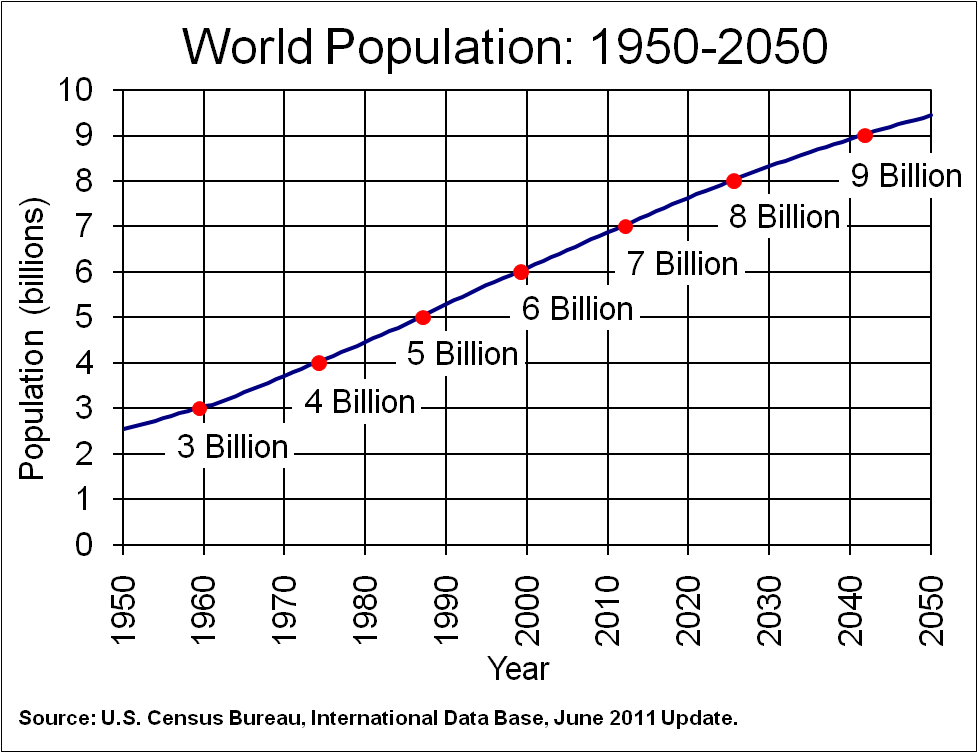
World Population 1950-2050 (Projected)

According to the 2010 Census, there are 308.7 million people living in the United States. This breaks down to over 151 million men, and over 156 million women. Effectively, men comprise over 49% of the US population, while the women make up just over 50% (not sure where that errant 1% went).

I’m interested in parsing our sex stats: by gender, age, region, etc. Not just to estimate on what’s going on, and who’s getting it on, in our bedrooms, but also to attempt to game out how the sexual landscape might change over the coming years.

Interested? You know you are, so check back for more soon!