How Many Active Female Users did Ashley Madison Have?

Ashley Madison homepage (Ashley Madison)

Ashley Madison homepage (Ashley Madison)

I’m loving this Ashley Madison hack for the sheer volume of data it’s bringing to light! It makes a numbers nerd like me very happy.

This may not come as a shock (well, hopefully it doesn’t), but Ashley Madison didn’t have a whole lot of active female users. The site claimed to have around 31M+ male users and 5M+ female users. So already, the women on the site are outnumbered by the men at a 6:1 ratio. This wouldn’t be a promising sign for any man who was a registered user. (Side note: Do you think any of the men knew to what degree they were competing with the other men? I’m really curious about this.)

But wait, there’s more: Annalee Newitz at “Gizmodo” crunched some numbers on on-site interaction between members (and made some fun bar graphs), and the results trumpeted the sex ratios loud and clear. Some examples: For every woman that checked her messages, 20 men did. For every two women that used the online chat system, 11 men did.

With those numbers in mind, how many of these men interacted with a bot? My guess is quite a few.

Female/POC Video of the Year Winners at the MTV VMAs: By The Numbers

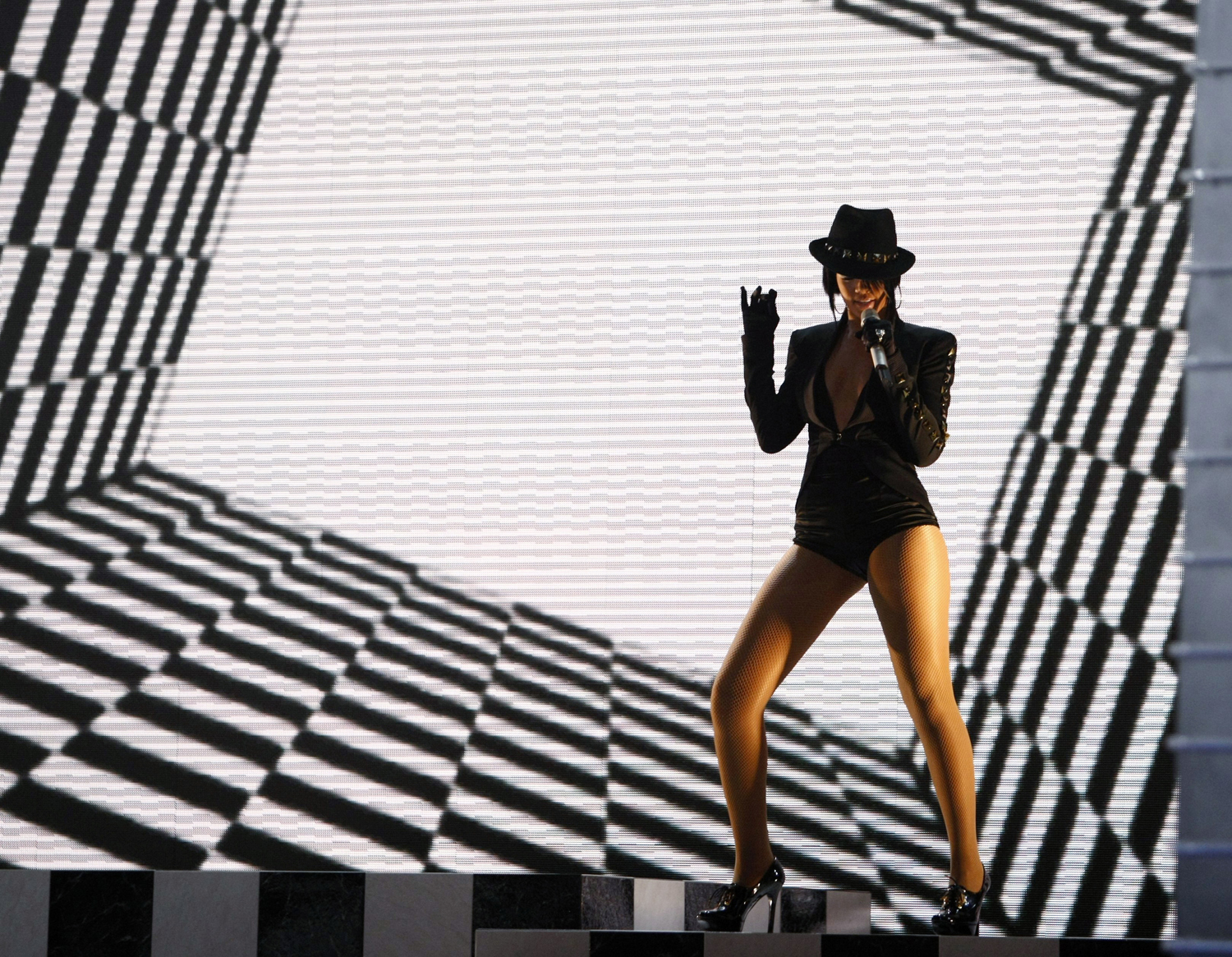
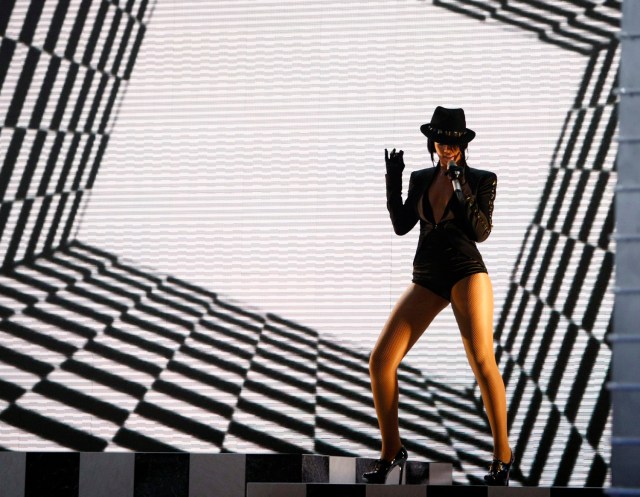
Singer Rihanna performs "Umbrella" at the 2007 MTV Video Music Awards in Las Vegas September 9, 2007. Rihanna won the award for Monster Single of the Year for the song. REUTERS/Mike Blake (UNITED STATES)

Singer Rihanna performs “Umbrella” at the 2007 MTV Video Music Awards in Las Vegas September 9, 2007. Rihanna won the award for Monster Single of the Year for the song. REUTERS/Mike Blake (UNITED STATES)

When the nominees for MTV’s Video Music Awards (VMAs) were announced earlier this summer, acclaimed rapper Nicki Minaj pointed out the glaring absence of women of color in the Video of the Year category. She had a point: The video for her song “Anaconda” broke VEVO viewing records, racking up 19.6M+ views in 24 hours, and propelled a huge cultural impact. (I know you know of at least one person who dressed in one of Nicki’s outfits for Halloween.) To have Minaj’s video snubbed ignores all of those not-insignificant achievements.

I had a sneaking suspicion that the numbers were pretty dismal, not just for women performers of color, but also for women performers in general. I wanted to see exactly how skewed the numbers were, so I looked up the data.

First, some context:

31: Years the Video of the Year Award has been presented (this year will be the 32nd)

69: Number of solo musicians who’ve been nominated

16: Number of solo musicians who’ve won

67: Number of groups who’ve been nominated (including feature artists, not counting 2015 nominees)

15: Number of groups who’ve won (including feature artists)


Let’s look at the stats of the women:

13: years where women solo artists or groups won

0: years after the award began that the first woman artist was nominated (Cyndi Lauper in 1984, nominated during the Award’s first year)

6: years after the Award began that the first woman artist won (Sinead O’Connor in 1990)

4: times Madonna has been nominated

1: time Madonna has won (1998)


And the stats of women of color:

9: years after the Award began that a female group of color was nominated (En Vogue in 1993)

11: years after the Award began that a female group of color won (TLC in 1995)

1: times a women of color group won (TLC in 1995)

  • If you counted the “Lady Marmalade” group who won in 2001, which had Lil’ Kim, Missy Elliott, and Mya, the number goes up to 2.

1: time Missy Elliott has been a double-nominee in the category (2001)

2: winners that have won twice (Missy Elliott in 2001 and 2003, Rihanna in 2007 and 2012)

1: time that Beyoncé has won (2009)

2: times that Beyoncé has been nominated, not counting her 2015 nomination (2007 and 2009)


You don’t have to be a math genius to see that Minaj was correct about the institutional bias in the music industry with regards to awards, and that this should not be tolerated.

This year’s VMAs will air on Sunday, Aug. 30th.

#ThrowbackThursday: TLC at the MTV VMAs, 1995

TLC at the 1995 MTV VMAs (NY Daily News)

TLC at the 1995 MTV VMAs (NY Daily News)

In 1995 (twenty years ago!), pop sensation TLC won the Video of the Year Award at the MTV Video Music Awards (VMAs). This was pretty special for a couple of reasons: Not only were T-Boz, Left Eye, and Chili the first all-women group to win the award, they were also the first women of color to do so.

They’re still the only all women-of-color group to win the coveted award. (The next closest group was the “Lady Marmalade” quintet from 2001, whose three out of five members were women of color.)

When the Video of the Year nominations came out earlier this year, star rapper Nicki Minaj rightly called out the nominations for their lack of diversity. (Beyoncé was the only woman of color nominated this year, up for her “7/11” video.) Let’s hope the music industry heeds her call, and ups the diversity quotient in the future. It’s absurd that it’s two decades from TLC’s historic win, and we still have to have this conversation.

Why Is the Number of Sexual Assaults Rising in New York City?

New York City skyline (The Huffington Post)

New York City skyline (The Huffington Post)

Certain types of violence are on the rise in the city that never sleeps. In addition to shooting and homicides increasing year-over-year, the number of rapes and sexual assaults has also increased.

But is it enough to panic over? Let’s look at the numbers. “The New York Times” reports:

From Jan. 1 to May 31, there were 540 rapes recorded in the city, an 8 percent increase over the same period last year, and more than 1,128 misdemeanor sex crimes, representing a rise of 18 percent.

But on the bright side, some types of sexual violence has declined within the city:

According to national data from the Centers for Disease Control in 2012, the rate of stranger rape as a percentage of all rape is 14 percent; in New York City this year, the rate is half that. Of the 540 reported rapes, 39 were committed by someone the victim did not know, according to the police.

But why are the overall numbers climbing? The phenomenon can be attributed to a simple economic principle: the complement effect. Numbers are climbing because more people are reporting them. And that’s a good thing! The more people that are aware of these crimes and can report them, the more accurate a picture we can get of just how rampant sexual assaults are.

I’m interested to see if this is, or will be, the case in other cities.


Two Suicides Linked to Ashley Madison Hack

Ashley Madison homepage (Ashley Madison)

Ashley Madison homepage (Ashley Madison)

We’re beginning to see some fallout from the Ashley Madison hack from earlier this month: Police in Toronto, Canada, have reported two suicides related to the hack, and are undertaking further investigation of the cases.

Reports of the number of Ashley Madison’s users range from 30M+ to 37M+. With those numbers in mind, these two suicides constitute between .00000006% and .000000054% of the site’s total registered users whose data was leaked in the security breach.

I’m curious to see how the hack continues to affect its outed users and those close to them.


The White House Hires Its First Transgender Staffer

Raffi Freedman-Gurspan (ABC News)

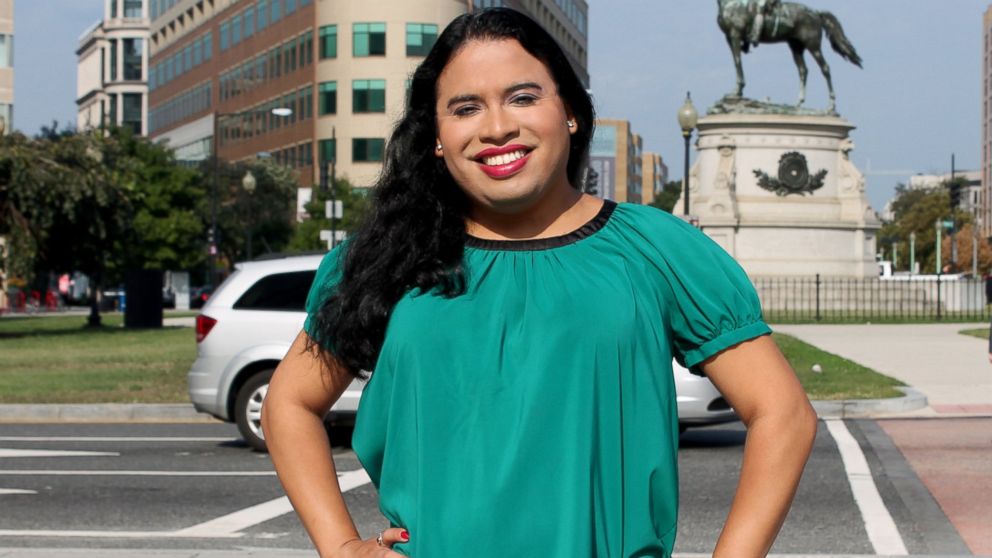
Raffi Freedman-Gurspan (ABC News)

Last week, the Obama administration made a historic hiring: Raffi Freedman-Gurspan is the first transgender person hired to serve the White House. She’s not only the first transgender person, but also the first transwoman.

Freedman-Gurspan comes with a lot of experience to her new role: She had previously served as policy adviser at the National Center for Transgender Equality, and will be the recruitment and outreach director on Obama’s staff.

While the administration has hired other transgender people to other government agencies, this is the first time a transgender person will work directly with the White House.

The hiring indicates that President Obama is becoming more comfortable in openly supporting the LGBT community: Earlier this year, he spoke out about ending conversion therapy for LGBT youth.


Ashley Madison Hackers Post the Site’s User Data

Ashley Madison homepage (Ashley Madison)

Ashley Madison homepage (Ashley Madison)

Happy Friday! Remember when cheating site Ashley Madison was hacked last month? And how the hackers threatened to release user data to the whole Internet?

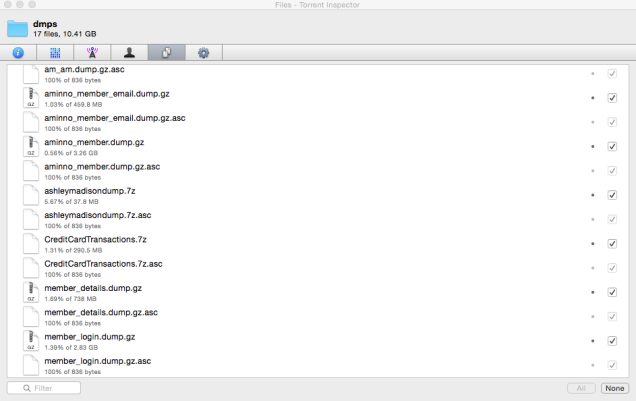
Well, they’ve finally done it. The Impact Team, as the group of hackers is known, put the data online on the Dark Web, which can only be reached using specialized equipment. They dumped a jaw-dropping 9.7 GigaBytes (GBs) of data that went back to 2008.

(For context/scale, I have a 4 TeraByte (TB) external hard drive that I keep old school projects and work on. I’ve had that thing for over 6 years, and still haven’t filled it up. One TB is equal to .001 GBs. So you can imagine how voluminous this data breach truly is.)

There seems to be some disagreement over exactly how many users had data leaked. “CNN Money” claims 32M, while “Wired” and “Engadget” put the number closer to 37M.

As of July, Ashley Madison claimed to have 40M+ users.

Ashley Madison data dump (Gizmodo)

Ashley Madison data dump (Gizmodo)

Among the metrics leaked were users’  names, addresses and phone numbers. “Wired” looked into some initial data analysis:

A sampling of the data indicates that users likely provided random numbers and addresses, but files containing credit card transactions will yield real names and addresses, unless members of the site used anonymous pre-paid cards. One analysis of email addresses found in the data dump also shows that some 15,000 are .mil. or .gov addresses.

Passwords were broken by “hashing,” or breaking into the algorithm a site would use to protect passwords. The hackers used the “bcrypt” algorithm used in web development language PHP. This is usually a secure measure to protect passwords. But hey, at least Ashley Madison tried:

It’s notable, however, that the cheating site, in using the secure hashing algorithm, surpassed many other victims of breaches we’ve seen over the years who never bothered to encrypt customer passwords.

Have a great weekend, and go change your passwords!

Black Women Covering the September Issue for “Vogue:” By The Numbers

Beyonce's 'Vogue' Cover, September 2015 (PopSugar)

Beyonce’s ‘Vogue’ Cover, September 2015 (PopSugar)

Sadly, the number of Black women covering the famed September issue of “Vogue” is very short. It really needs to be longer (how the hell is it 2015, and we’re still talking about this?!), and I have no doubt that it will be. Someday. But not soon enough.

As everyone knows by now, the ***Flawless Beyoncé will be covering the fashion bible’s September issue, which comes out Aug. 25th. It’s her first time covering the issue, though it’ll be her third time around as a “Vogue” cover model.

3: The number of Black women covering the September issue solo

1989: Supermodel Naomi Campbell covers the September issue

2010: Academy Award-winning actress Halle Berry covers the September issue.

The fashion industry is notoriously slow to change its ways (look at how many Black women were on “Vogue” covers in 2014). I hope Queen B’s new issue means we’ll see more diverse cover models, and soon.

#ThrowbackThursday: Beyoncé’s “Vogue” Covers, 2009 and 2013

Beyoncé's 'Vogue' covers, April 2009 and March 2013 (Celebuzz)

Beyoncé’s ‘Vogue’ covers, April 2009 and March 2013 (Celebuzz)

Last week, fashion bible “Vogue” announced its cover star for the always-hotly-anticipated September issue: the one, the only Beyoncé Knowles-Carter. But you may know the acclaimed singer solely by her first name.

This will mark Beyoncé’s third turn as the magazine’s cover model: She had previously appeared on the April 2009 and March 2013 covers. But this time is significant: It’ll be the first time she’s covered the September issue. Beyoncé will be only the third Black woman to cover the biggest issue of the year solo. (Her predecessors are supermodel Naomi Campbell and Academy Award-winning actress Halle Berry.)

The issue will hit newsstands Aug. 25th.


FDA Approves “Female Viagra” Addyi

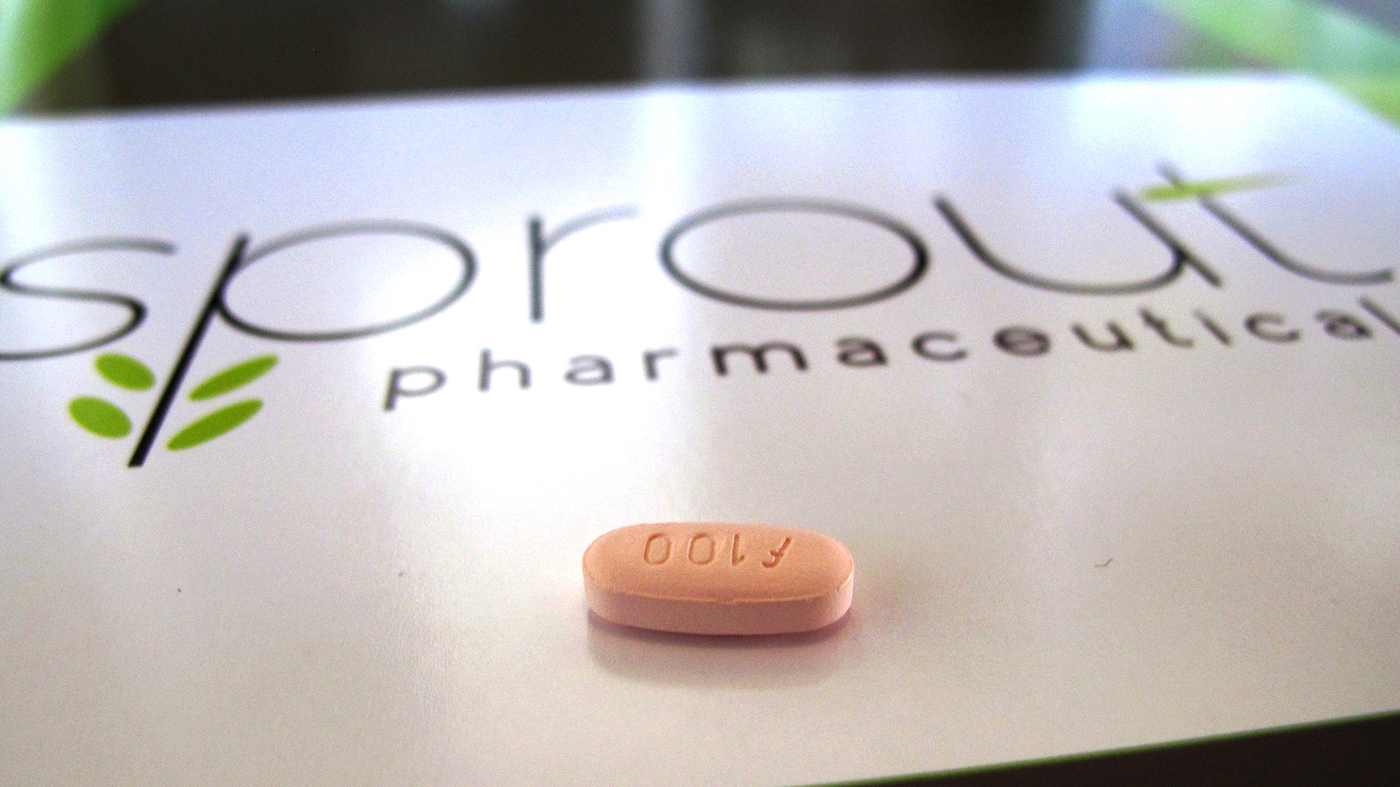
The experimental drug flibanserin, made by Sprout Pharmaceuticals, is at the center of a regulatory controversy.

The experimental drug flibanserin, made by Sprout Pharmaceuticals, is at the center of a regulatory controversy.

Yesterday, the Food and Drug Administration (FDA) approved Addyi (also known by its generic name Flibanserin) for public consumption. The drug, produced by Sprout Pharmaceuticals, is being touted as a “female Viagra,” a way to “even the score” sexually against men (who have many option to treat waning sexual desire). In some circles, it’s seen as a big breakthrough for women’s sexual health.

Interestingly, Addyi is the first drug to specifically treat waning sex drives for both men and women. (Viagra solved a purely medical/physical issue rather than a psychological one.) Addyi targets the central nervous system, putting it in line with an antidepressant.

Addyi purports to help women with hypoactive sexual disorder (i.e. lack of sexual desire.) But it works on a woman’s mind instead of her body. Rather than facilitating blood flow to the genital region, as Viagra does, the drug takes a two-pronged approach:

Flibanserin targets two neurotransmitters in the brain that can help inspire sexual desire. The first is dopamine, which helps control the brain’s reward and pleasure centers and could help drive up our interest in sex. The second is norepinephrine, which affects parts of the brain that control our attention and our response to things in our environment and could help direct our attention to a sexual partner.

The ultimate goal is that a woman’s level of desire would increase over time.

(Side note: Apparently, Viagra was marketed to women in 2004. The drug did increase blood flow to the women’s genitals, but didn’t affect their level of sexual desire.)

But the drug isn’t completely out of the woods yet: there are still some concerns regarding side effects. Doctors and pharmacists will need to undergo specific training of the drug before dispensing it, and will need to keep track of the women who take it. The biggest side effects include low blood pressure, sleepiness and “sudden fainting,” especially when taken with alcohol. (I have to say, I don’t really understand the point of making a drug to help with sex that can’t be paired with alcohol, but that’s just me.)

There’s also an argument that the drug “doesn’t work safely enough to justify its approval:” Women who took the drug during clinical trials reported a 37% increase in sexual desire, which averaged out to not even two more “satisfying sexual experiences” per month. The boost over the placebo group was even smaller.

It’s expected that Addyi will be covered under most health insurance plans, requiring a co-pay, and will inhabit a price range similar to that of Viagra. The drug should hit the market as soon as October (i.e. less than two months), with some outlets reporting an exact date of Oct. 17th.

I have to say, I’m really curious to see how this will do. I want to see how well it’ll perform (heh) sales-wise, and how many women report the side effects. But most of all, I want to see how this drug will influence the female-desire drugs that will surely come after it.