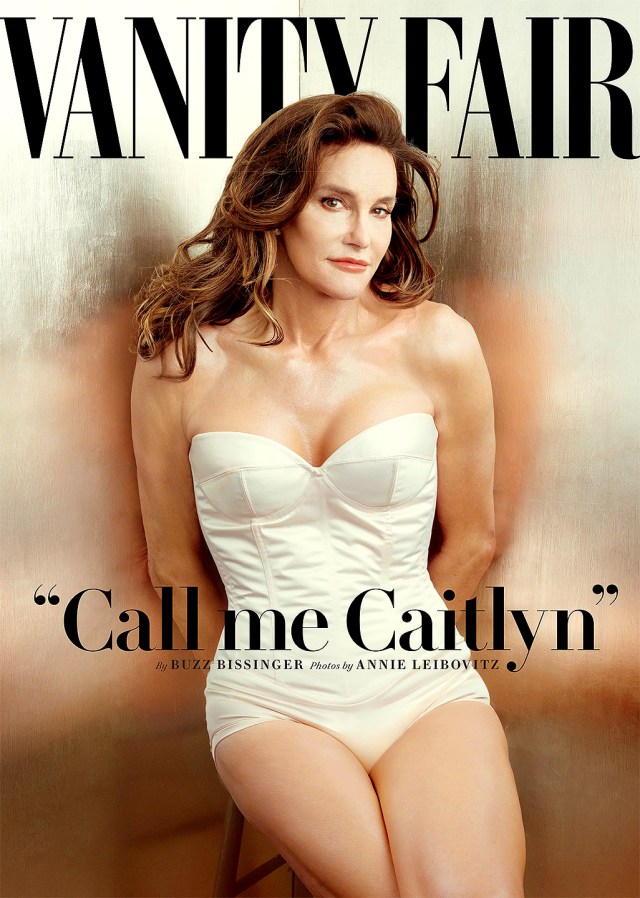
#ThrowbackThursday: Caitlyn Jenner’s “Vanity Fair” Cover, 2015

Caitlyn Jenner on the 'Vanity Fair' cover (Us Magazine)

Caitlyn Jenner on the ‘Vanity Fair’ cover (Us Magazine)

One year ago yesterday, Caitlyn Jenner made her official debut covering the “Vanity Fair” June 2015 issue. Vamping in a white strapless dress with a sweetheart neckline, emblazoned with the instantly iconic command: “Call Me Caitlyn.”

So much has happened since Jenner became (quite literally) a new woman. Transgender issues have moved into the forefront of human rights issues, and continue to grow in visibility daily. But in some ways, culture has taken a step backwards in accepting the LGBT community: see North Carolina’s bathroom bill.

But as much as Jenner has changed, some things have stayed the same. On a lighter note, the Kardashian/Jenner brood’s various antics continues to mesmerize popular culture.

Drinking (Moderately) Helps Mens’ Sexual Performance

Beer (Preuss Podcast)

Beer (Preuss Podcast)

To a certain extent, we’ve been conditioned by the media to think that having sex after drinking might not be the best thing for me (see: whiskey dick). And that’s true. But moderately imbibing might actually help a man’s sexual performance.

The Keogh Institute for Medical Research at the University of Western Australia in Nedlands surveyed 1.5K+-1.7K+ men (for some reason, I couldn’t find an exact number) about their sexual performance, specifically with respect to sexual dysfunction. The moderate drinkers reported 25%-30% fewer problems than men who didn’t drink at all. This percentage took into account age, smoking habits, and heart disease, all of which affect penile function.

But there is one issue with this study’s results: nobody asked the subjects’ partners if they were satisfied!


Idris Elba Makes History at the 2016 SAG Awards

Idris Elba at the 2016 SAG Awards (LA Times)

Idris Elba at the 2016 SAG Awards (LA Times)

The world’s hottest man (not editorializing, this is a fact and everyone agrees) made history Saturday night at the annual Screen Actors Guild (SAG) Awards.

Idris Elba (you know him as Stringer Bell from “The Wire”) not only became the first man to win two SAG awards in one night; he became the first African-American man to do so. Elba won for Best Male Actor in a Supporting Role in a Motion Picture for “Beasts of No Nation,” and for Best Male Actor in a Television Movie or Mini Series for “Luther.” This is especially impressive as it’s the first year he was nominated for a solo acting award. Go Idris!

But Elba’s wins made a splash for another, more sobering reason: He’s the only film winner that wasn’t nominated for an Oscar. His fellow winners (Leonardo DiCaprio for “The Revenant,” Brie Larson for “Room,” and Alicia Vikander for “The Danish Girl“) are all nominated. With the conversation around the Oscars’ diversity occurring for the second year in a row (#OscarsSoWhiteRedux), it’s worth noting for the future.

With Queen Latifah (“Bessie“), Uzo Aduba (“Orange is the New Black“), and Viola Davis (“How to Get Away with Murder“) also winning awards, Elba welcomed us all into the future with the following words:

“Ladies and gentleman, welcome to diverse TV.”

I, for one, cannot wait to see how things progress.

China’s (Now Ended) One-Child Policy: By The Numbers

Chinese One-Child Policy poster (The Galloping Beaver)

Chinese One-Child Policy poster (The Galloping Beaver)

Most people have heard of China’s infamous one-child policy. it’s exactly what it sounds like: each married couple is only allowed to have one child.

Now the policy has ended. Actually, it ended on Jan. 1st, less than a week ago.

A lot of people don’t know the story behind the concept, and why it was initially implemented. Here are some numbers that made the one-child policy look like a sensible idea at the time:

China’s total population:

1960: 667.1M

1970: 818.3M

China’s population grew 151.2M in 10 years, or at the rate of 15.12M per year. The government was worried that the population would continue growing exponentially at the same rate, with the country eventually becoming unsustainable.

Fertility rate:

1960: 5.76 births/1 woman

1970: 5.47 births/1 woman

The fertility rate stayed stable (and strong) throughout the 1960s.

Crude birth rate:

1960: 20.9

1970: 33.4

This metric shows the “number of of live births occurring during the year, per 1,000 population estimated at midyear.” The number hit a high in 1963 with 43.4, no doubt sending the Chinese government into a full-fledged panic.

With the above stats as historical context, it’s a bit easier to see why the Chinese government implemented the One-Child Policy, and kept it for the 35 years they did.

#ThrowbackThursday: Chinese One-Child Policy Propaganda Poster, 1986

Chinese One-Child Policy poster (The Galloping Beaver)

Chinese One-Child Policy poster (The Galloping Beaver)

As of Jan. 1, China’s one-child policy is officially history. Married couples are now allowed to have up to two children for the first time since 1979.

I’ve always thought propaganda posters were interesting, and here’s a great one for the one-child policy. It’s from 1986, and titled, “Carry out family planning, implement the basic national policy.” The image carries that can-do attitude made popular by Rosie the Riveter, and it’s easy to get swept up in the sentiment. Not to mention, the overall poster design’s pretty great too.


Saudi Women Win 20 Seats in Elections

Saudi Woman voting (Haaretz)

Saudi woman voting (Haaretz)

In Saudi Arabia, women have now gained a step towards equality: holding office.

In the recent elections held on Dec. 12 of last year, 20 women were elected to municipal seats. They comprise almost 10% of the 2.1K seats available. These seats were the only ones Saudi citizens vote for.

This was the first time women were allowed to vote in municipal elections. The most recent elections were held in 2005 and 2011.

Women were allowed to campaign for seats, albeit in a limited manner. They were not allowed to give out material that showed their faces (though this applied to both men and women), and could not speak to male audiences directly. (A candidate would have to speak from behind a partition or enlist a male relative to speak for her.) Women comprised 979 out of 7K candidates, or nearly 14%.

Around 130K+ women registered to vote, with the voting age being 21. There are 12.2M+ total women, and election officials estimated around 5M women would be eligible to vote. The country’s total population is around 30M.

This speaks to some good progress being made, and I hope there’s more on the horizon. This could happen: Before King Abdullah died, he decreed in 2013 that the Consultive Council, an appointed body that advises the king, be made up of 20% women.

Japan’s Surviving Comfort Women Will Receive Reparations

Korean comfort women (Japan Daily Press)

Korean comfort women (Japan Daily Press)

On Dec. 28, the heads of Japan and South Korea came to an agreement over making reparations for the remaining comfort women.

For those who are unfamiliar, comfort women were Korean women who served Japan’s Imperial Army before and during World War II…as sex slaves. This happened during Japan’s colonial rule over South Korea, which lasted from 1910 to 1945, and contributed to strained relations that continue to this day.

It’s difficult to pinpoint exactly how many comfort women existed, since accurate records weren’t kept. Most estimates put it at a range around 100K to 200K. Women began coming forward about their experiences in the early 1990s.

Of the 238 women who’ve come forward in South Korea, only 46 survive.

Obviously, this is a huge abuse of women (not to mention that of human rights), so it’s good that Japanese Prime Minister Shinzo Abe and South Korean Foreign Minister Yun Byung-se are trying to make it right 70 years later.

In addition to a formal apology, Japan will provide $8.3M-worth of reparations. However, the money won’t go directly to the survivors; it’ll be used by South Korea to establish healthcare for the women.

These reparations are significant because it’s the first time the Japanese government will provide the money. In 1993, Japan set up donations provided by private donors, but it wasn’t fully accepted by South Korea. At that time, 60 South Korean women received aid from the donations.

It’ll be interesting to see how these reparations make a difference for the women, and how the action changes Japan and South Korea’s relationship.


FDA Approves “Female Viagra” Addyi

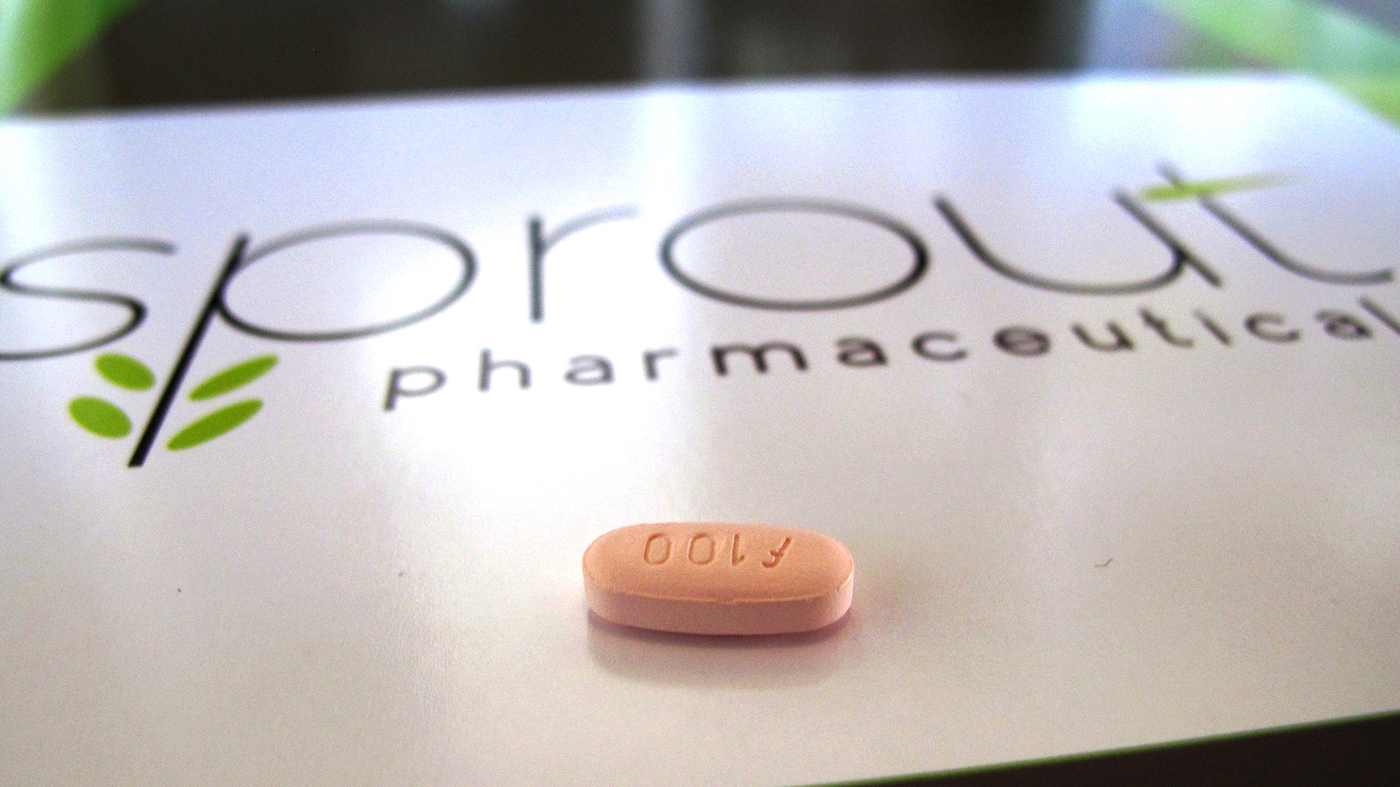
The experimental drug flibanserin, made by Sprout Pharmaceuticals, is at the center of a regulatory controversy.

The experimental drug flibanserin, made by Sprout Pharmaceuticals, is at the center of a regulatory controversy.

Yesterday, the Food and Drug Administration (FDA) approved Addyi (also known by its generic name Flibanserin) for public consumption. The drug, produced by Sprout Pharmaceuticals, is being touted as a “female Viagra,” a way to “even the score” sexually against men (who have many option to treat waning sexual desire). In some circles, it’s seen as a big breakthrough for women’s sexual health.

Interestingly, Addyi is the first drug to specifically treat waning sex drives for both men and women. (Viagra solved a purely medical/physical issue rather than a psychological one.) Addyi targets the central nervous system, putting it in line with an antidepressant.

Addyi purports to help women with hypoactive sexual disorder (i.e. lack of sexual desire.) But it works on a woman’s mind instead of her body. Rather than facilitating blood flow to the genital region, as Viagra does, the drug takes a two-pronged approach:

Flibanserin targets two neurotransmitters in the brain that can help inspire sexual desire. The first is dopamine, which helps control the brain’s reward and pleasure centers and could help drive up our interest in sex. The second is norepinephrine, which affects parts of the brain that control our attention and our response to things in our environment and could help direct our attention to a sexual partner.

The ultimate goal is that a woman’s level of desire would increase over time.

(Side note: Apparently, Viagra was marketed to women in 2004. The drug did increase blood flow to the women’s genitals, but didn’t affect their level of sexual desire.)

But the drug isn’t completely out of the woods yet: there are still some concerns regarding side effects. Doctors and pharmacists will need to undergo specific training of the drug before dispensing it, and will need to keep track of the women who take it. The biggest side effects include low blood pressure, sleepiness and “sudden fainting,” especially when taken with alcohol. (I have to say, I don’t really understand the point of making a drug to help with sex that can’t be paired with alcohol, but that’s just me.)

There’s also an argument that the drug “doesn’t work safely enough to justify its approval:” Women who took the drug during clinical trials reported a 37% increase in sexual desire, which averaged out to not even two more “satisfying sexual experiences” per month. The boost over the placebo group was even smaller.

It’s expected that Addyi will be covered under most health insurance plans, requiring a co-pay, and will inhabit a price range similar to that of Viagra. The drug should hit the market as soon as October (i.e. less than two months), with some outlets reporting an exact date of Oct. 17th.

I have to say, I’m really curious to see how this will do. I want to see how well it’ll perform (heh) sales-wise, and how many women report the side effects. But most of all, I want to see how this drug will influence the female-desire drugs that will surely come after it.

“I Am Cait” Wins Big in Overnight Ratings

Caitlyn Jenner in 'I Am Cait' (New York Daily News)

Caitlyn Jenner in ‘I Am Cait’ (New York Daily News)

Last night, “I Am Cait” premiered on the E! network. The eight-part docuseries follows Caitlyn (born Bruce) Jenner as she transitions from a man to a woman, and how that changes affects her relationships with family and friends. The series was announced right after Jenner’s groundbreaking “20/20” interview with Diane Sawyer in which she revealed she’d be transitioning.

With the overnight ratings in, the premiere garnered a 2.1 household rating within Nielsen’s 56 metered markets. It tied with TNT’s “Falling Skies” for the most-watched cable program of the night. Prior similar ratings points to this share being equivalent to about 3M viewers.

These ratings suggest that the interest in Jenner’s story is there, and substantial. I’ll be looking forward to seeing how these ratings progress on a weekly basis.