Ashley Madison Hacked: Is Your Data Safe?

Ashley Madison homepage (Ashley Madison)

Ashley Madison homepage (Ashley Madison)

Earlier this month, online dating/cheating site Ashley Madison had its data breached by a group called The Impact Team. The group is lobbying for completely shutting down the site, and has been threatening to release users’ sensitive information if their demands aren’t met. Their demands are aimed at Avid Life Media (ALM), Ashley Madison’s parent company head-quartered in Toronto.

The hackers have leaked personal information from only two people so far. Considering that the site has around 37M-40M registered users, this is miniscule. The group is specifically targeting Ashley Madison’s “full delete” feature, where a user must pay to get his information scrubbed from the site. According to The Impact Team, the feature “netted ALM $1.7M in revenue in 2014.”

This is significant because it’s the second online dating site that’s encountered a massive data breach within a few months: Adult Friend Finder went through a similar situation back in May. But this case is unique in that it’s the only one that’s fallen prey to what ‘Time” calls “data kidnapping:” the hackers won’t leak the data unless they get what they want.

Ashley Madison is ranked #18 in adult sites, and received 124K+ visits on desktop since January 2015.

Siri Corrects Bruce Jenner to Caitlyn Jenner

Siri's response to Bruce Jenner questions (Daviesha/Last November 4 Tumblr)

Siri’s response to Bruce Jenner questions (Daviesha/Last November 4 Tumblr)

Happy Friday! Here’s a great example of how technology is adapting to the changing times. Tumblr user Daviesha found that Apple iPhone’s Siri corrects the name of Bruce Jenner to Caitlyn Jenner. Daviesha asked Siri, “how tall is Bruce Jenner?” and “What is Bruce Jenner’s real name?” You can see the results in the screenshot above.

This aspect of Siri began gaining attention earlier this month. Jenner came out as a transwoman in April of this year, and debuted her new name and look on the cover of “Vanity Fair” in the publication’s June issue. She recently received the Arthur Ashe Courage Award during the ESPYs this year, and her docuseries “I Am Cait” premieres Sunday night on E! (home to the Kardashian empire).

It’s fantastic that it took Apple absolutely no time to adjust Siri to account for this momentous event. After all, Jenner is now the most recognizable trans person in the world right now. The tech giant is showing they’re capable to changing as societal mores do, and updating their technology to reflect those changes.

Google Trends: How Many People Are Searching for a Female Viagra?

Little pink pill (Stuff NZ)

Little pink pill (Stuff NZ)

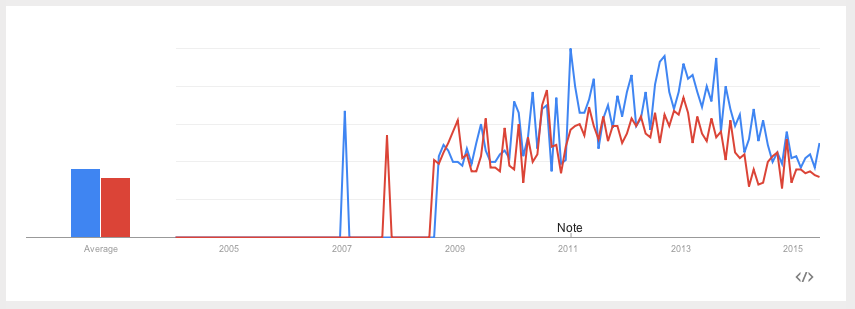
Hot on the heels of the news that a female Viagra is edging closer to public consumption, I wanted to see how often U.S. Internet users (which would be basically everyone) were searching for information related to female Viagra. I used “2004-present” as my timeframe.

First, here’s how often “female viagra” (red line) against “viagra” (blue line):

Google Trends: 'Female Viagra' vs. 'Viagra,' U.S. 2004-Present

Google Trends: ‘Female Viagra’ vs. ‘Viagra,’ U.S. 2004-Present

As you can see, there’s a lot less searching for the former term versus the latter.

Now, let’s look at “female Viagra” on its own:
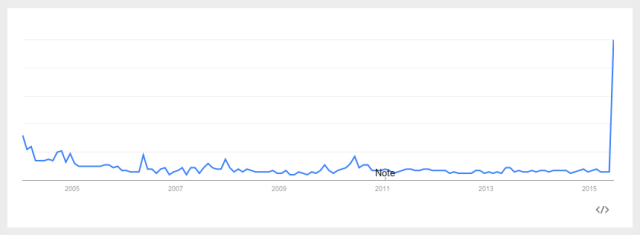
Google Trends: 'Female Viagra,' U.S. 2004-Present

Google Trends: ‘Female Viagra,’ U.S. 2004-Present

It’s hard to ignore that huge spike at the end of the timeframe. That occurred this month. It’s no coincidence: Sprout Pharmaceuticals announced that their female desire pill Flibanserin/ADDYI was recommended for Food & Drug Administration (FDA) approval on Jun. 5th.

Flibanserin/ADDYI will treat women with low libidos, known medically as hypoactive sexual desire disorder (HSDD). I wanted to see how common Google searches for low sex drives appeared.

First, I searched “low sex drive in women,” which was the first specific option Google autofilled for me:
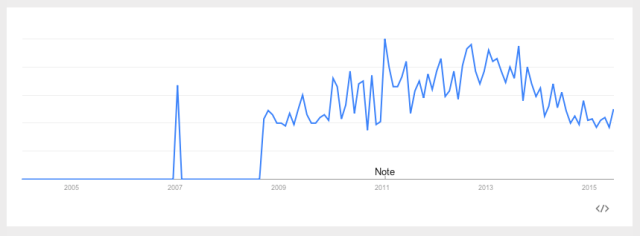
Google Trends: 'Low Sex Drive in Women,' U.S. 2004-Present

Google Trends: ‘Low Sex Drive in Women,’ U.S. 2004-Present

Interesting. It appears that the term hit its peak (ha) around a spike in 2011, and then crested in 2013. It’s dipped since then, but is starting to come back up. (Also, I’d love to know what happened in 2007.)

But let’s put this in context. Here’s “low sex drive in women” (blue line) versus “low sex drive” (red line):
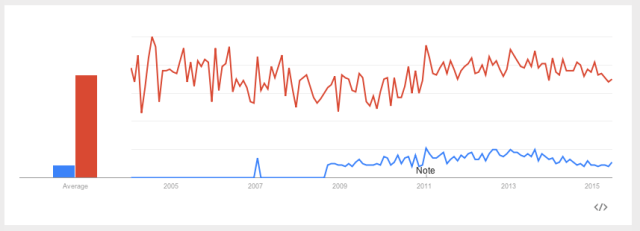
Google Trends: 'Low Sex Drive in Women' vs. 'Low Sex Drive,' U.S. 2004-Present

Google Trends: ‘Low Sex Drive in Women’ vs. ‘Low Sex Drive,’ U.S. 2004-Present

It’s interesting that the female-specific searches don’t make up that much of the overall searches.

Now let’s find out how many men are searching for information on low desire. Here’s “low sex drive in women” (blue line) versus “low sex drive in men” (red line):

Google Trends: 'Low Sex Drive in Women' vs. 'Low Sex Drive in Men,' U.S. 2004-Present

Google Trends: ‘Low Sex Drive in Women’ vs. ‘Low Sex Drive in Men,’ U.S. 2004-Present

OK, now we can see that low libidos in women are an issue, insofar as they’re being Googled.

So a lot of people (we could probably reasonably assume women) are searching for information on low sex drives in women. But how many are searching for a solution? Maybe a cure, call it “female viagra” (red line)?

Google Trends: 'Low Sex Drive in Women' vs. 'Female Viagra,' U.S. 2004-Present

Google Trends: ‘Low Sex Drive in Women’ vs. ‘Female Viagra,’ U.S. 2004-Present

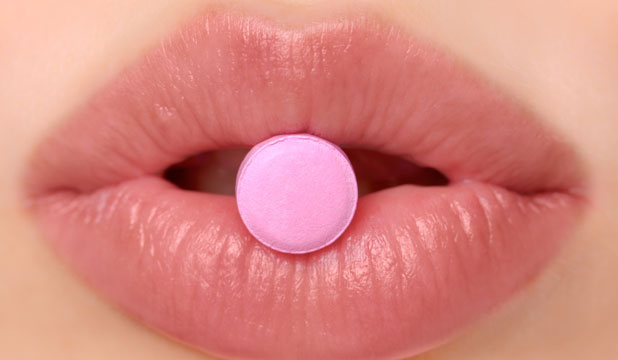
Holy shit, this is amazing. Sure, users are searching for (presumably) information on women having low sex drives, but they’re searching a lot more for a solution. At no point in this graph are there more searches for “low sex drive in women” than there are for “female viagra.” Also, note how the “female viagra” searches spike at the end, halfway through 2015. As noted above, that’s when Sprout announced their “little pink pill.”

Conclusion:

The evidence here points to the fact that people are actively searching for solutions to cure women’s low sex drives. This certainly warrants a female Viagra pill to be brought to market, but why the hell wasn’t this developed sooner?!

#ThrowbackThursday: Ultrasound, 1963

Ultrasound, 1963 (University of Cambridge)

Ultrasound, 1963 (University of Cambridge)

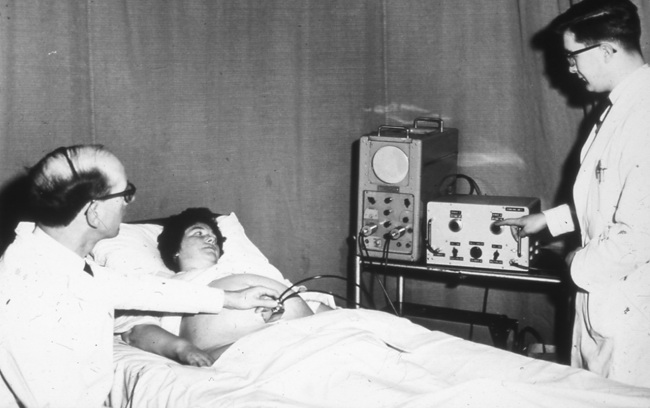
The first obstetric ultrasound was developed in 1956 in Scotland by Ian Donald and Tom Brown, using a prototype based off detecting flaws in industrial ships. It began to be used regularly within the country, and later spread to the U.K. and America in the 1970s.


Ultrasounds use ultrasonic waves to determine features of the fetus. Early on, this couldn’t be done, as the technology wasn’t nearly as advanced. It’s fascinating to see how it’s caught up.

Smart Vibrators Will Data-Mine Your Pleasure

SmartBod vibrator prototype evolution (Angel.co)

SmartBod vibrator prototype evolution (Angel.co)

Happy Friday! We’ve talked about smart sex toys before, and also how Big Data is taking over sex. We’re ushering in a new era of sexual data and metrics, on a more minute level than ever before.

Enter the SmartBod, a vibrator that tracks its users’ data and aggregates it via a related app. While tracking arousal (and climax) patterns, the user will then be able to establish a baseline of usual trends. The app will also suggest ideas mined from the collected data. Call it sex-alytics, if you will.

UC Berkeley entrepreneurs Liz Klinger and James Wang aim to help women spark conversations regarding pleasure, since it can be an uncomfortable topic for most people. The user “would learn how their orgasm changes depending on how and when they use the vibrator.” It can also help women determine if they’re “normal” or not, in terms of their orgasms and arousal. So you can compete with others, or with yourself or both.

This counts as the second “smart” vibrator I’m aware of, next to the upcoming Una. As a both a sex geek and a data nerd, I can’t wait to use these and report my results. All in the name of science, of course!


Emoji Users Have More Sex

Sexytime emojis (NY Mag)

Sexytime emojis (NY Mag)

Happy Friday! [Insert hallelujah hands emoji here!]

If you don’t use emojis in everyday text-speak, you might want to start. Science shows that emoji users have more sex. And don’t you want to be part of that group? [Winking emoji]

Dating site Match.com released a wide-ranging study, Singles in America 2015, earlier this year. The study surveyed 5.6K singles (none of whom, incidentally used Match) in their 20s, 30s and 40s that represented the U.S population according to the 2010 Census. It has some pretty interesting findings, but the emoji one is gold.

For real, the Match researchers found that singles who use emojis have more sex than singles who don’t.

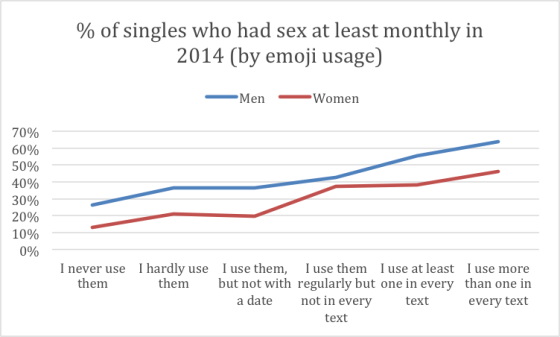
Cultural anthropologist Dr. Helen Fisher, one of the leaders of the study, found that “54% of emoji users had sex in 2014 compared to 31% of singles who did not.” [Fist-bump emoji]

There was also a direct correlation between how many emojis a single person used and how much sex they had:

Match.com 'Singles in America 2015' Emoji Survey Graph ('Time' Magazine)

Match.com ‘Singles in America 2015’ Emoji Survey Graph (‘Time’ Magazine)

Another benefit to emojis: “women who use kiss-related emojis have an easier time achieving orgasms with a familiar partner.” [Eggplant (or banana) and fireworks emojis here] This suggests that these women value good communication.

As for the emojis themselves, it mentions that the most commonly used ones are the wink (53%), smiley face (38%) and the kiss (27%).

The study showed that people tend to use emojis to show personality, which 50% of single men and women agreed on. Thirty-five percent of singles said that emojis make “expressing feelings” easier.

Fisher has an idea as to why this is happening:

“Technology reduces our ability to express our emotions, and emotional expression is a huge part of communication, so we are reinventing ways to express ourselves”

What are you waiting for?! If this doesn’t convince you to use emojis, nothing will.

If anything, this could help spread the proliferation of emojis so we can all have more sex than ever. Maybe by that time, we’ll be able to switch between English and emoji keyboards on laptops. [Side-eye and prayer emojis]


Thursday Trends: Technology in Sex Toys

Crave's Vesper vibrator (Fast CoDesign)

Crave’s Vesper vibrator (Fast CoDesign)

Legend has it Cleopatra may have been one of the first women to use a vibrator. (In her case, it was a calabash filled with buzzing bees.) The legendary queen/sex toy early adopter clearly knew she needed some extra stimulation, and the simple invention paved the way for a future industry.

Now, things have become a little more complex (and thankfully bee-less). Some sex toys have become more high-tech, and take advantage of opportunities within that field. Clearly, when technology enters the bedroom, fun follows.

Below are just a sampling of what tech looks like…in bed:

We Vibe:

The couples’ vibrator We-Vibe 4 Plus makes use of an app designed to maximize each users’ experience. It can used during sex, stimulating both partners. But it can also be used at a distance, with one wearing and the other controlling via the complementary app. The controller can choose the sensations, which the other partner then receives.

Lelo:

Sometimes you just want oral. Enter the Ora 2, which simulates cunnilingus via a rotating hub that stimulates the clitoris.

Crave:

One central component of technology is that it must look good (thank you Steve Jobs for making this commonplace). Sleek is generally the operative term. Crave’s Vesper is a wearable, thin vibrator the consumer can wear around her neck (and only use externally). Creators of the Vesper made sure the product is as elegant to wear as it is useful.


…And into the future:

Una:

This company doesn’t yet have a product on the market. But their goal is to sell a “smart” vibrator that learns from what the user likes. It’ll be interesting to see how this one takes shape.


As technology continues to evolve, it’ll be interesting to witness how sex toys incorporate the new tech into existing and new toys. Who knows? We could soon see something that looks straight out of “The Jetsons.”


Dr. Carl Djerassi, Father of The Pill, Has Died

Dr. Carl Djerassi (Rutgers News)

Dr. Carl Djerassi (Rutgers News)

Modern contraception pioneer Dr. Carl Djerassi died last Friday in San Francisco. He was 91 years old, and had suffered from complications of liver and bone cancer.

Often called the father of The Pill, Djerassi found an essential component of the now-common family planning product. In 1951, while working as a researcher at Syntex in Mexico City, he and two others successfully synthesized norethindrone, a progestin that later provided the base of the modern birth control pill. Djerassi and his team received a patent for their discovery.

Initially, the scientists thought that norethindrone would help fertility, but they soon realized that it served another purpose. The team knew that progesterone inhibited ovulation during pregnancy. They modified the progestin’s basic structure and added ethisterone, a compound thought to be devoid of medical value. (Warning: science-speak ahead.)

Djerassi’s team found that they could change the structure of progesterone to increase its potency eightfold. This progesterone analogue was strong enough to work when injected, but lost its potency when administered orally…Djerassi’s group made the same chemical modification in ethisterone that they had earlier made in progesterone.

(Interesting side note: At the time, Djerassi wasn’t researching anything to do with conception when he and his team made his famous discovery. He was actually looking for a compound that could be used to treat cancer. Happy accident, as they say.)

After five years of clinical trials, the birth control pill began reached the mass market, and cracked 1960s sexual norms wide open. (And we’re still feeling the effects of it today.)

This wasn’t his only big discovery: Djerassi also patented the first antihistamine, the drug that prevents allergy symptoms.

During his lifetime, Djerassi received 34 honorary doctorates. He was also the recipient of the National Medal of Science for chemistry in 1973, and the National Medal of Technology and Innovation in 1991. The two awards are the U.S.’s highest science and technology honors, respectively.

In addition to his scientific accomplishments, Djerassi also wrote plays (some performed off-Broadway) and science-fiction, founded a company to control insect growth, and started an artists’ colony in his property in California.

Dr. Djerassi’s contributions to family planning were, and continue to be, a boon to women the world over, and his work will continue to hold great value for the coming generations.

Thank you, Dr. Djerassi. Thank you.


Sweet Peach’s Vaginal Probiotics: Could They Work?

Sexy Peach

Sexy Peach

Last week, probiotic supplement Sweet Peach was introduced at the DEMO Conference in San Jose, California. Unveiled by Cambrian Genomics founders (and men) Austen Heinz and Gilad Gome, the supplement was initially pitched as an artificial fragrance (like, say, a peach) for the vagina, replacing the organ’s natural scent.

Understandably, people were outraged. But this turned out to be incorrect. Audrey Hutchinson, the actual founder of Sweet Peach Probiotics (and a woman), described how Sweet Peach would work thusly:

“A user will take a sample of her vaginal microbiome and send it in for analysis. After determining the makeup of her microbiome–in effect, taking a census of the microorganisms that reside in her vagina–the company will supply a personalized regimen of probiotic supplements designed to promote optimal health.”

The ultimate goal is that using Sweet Peach would help women avoid health issues caused by microorganisms, such as yeast infections.

Sweet Peach’s goals parallels recent news and studies done about replacing “bad” gut with “good” bacteria in the digestive tract to ease gastrointestinal issues.

But could it work for the vagina as well?

It’s too early to tell. Right now, the National Center for Complementary and Alternative Medicine (NCCAM) Oral Probiotics page says that probiotics have mainly been used for oral and the aforementioned gastrointestinal issues. These probiotics are mostly taken in the form of oral pills or live cultures (such as yogurt).

The NCCAM notes that some probiotics studied have the potential to aid in healing, as a 2013 UCLA study shows. The study found that women who ingested probiotics through yogurt had more beneficial brain function during rest states and emotion-recognition tests.

But this study worked off the previously established gut-mind connection, which can responsible for stress and fight-or-flight responses.

As of now, there’s no known gut-vagina connection.

A recent op-ed by microbe expert Ed Yong in “The New York Times” recently alluded to the difficulty using microbes to boost vaginal health:

“The results would be hard to interpret and might be outdated by the time they arrived.”

In short, the NCCAM reminds us that we’re still pretty far from answering certain existing questions:

“The rapid growth in marketing and consumer interest and use has outpaced scientific research on the safety and efficacy of probiotics for specific health applications.”


Jennifer Lawrence Nude Photo Hack: Is Our Cloud Data Safe?

Jennifer Lawrence Oscars 2013

JLaw is not amused.

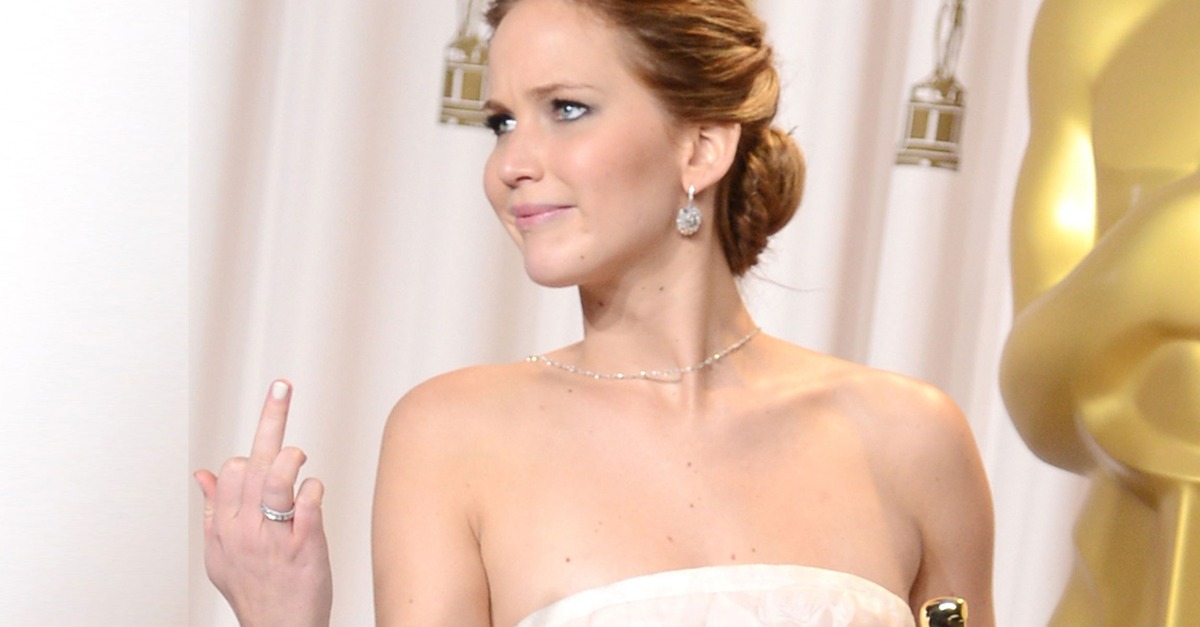
Earlier this week, Oscar winner Jennifer Lawrence’s private photos were hacked off her iCloud. She wasn’t the only one: Rihanna and Kate Upton were hit as well.

This high-security breach naturally leads us lesser mortals to worry about our own data within the Cloud.

But should we?

Apple feels it wasn’t a security breach, but a specific targeted act. This seems to check out, as we’re only hearing of celebrities being hacked and not Jane from down the street. (Of course, if Jane did get hacked, I’m sure Apple wouldn’t want to risk losing their customer base by publicizing that.)

The iCloud has been up and running for nearly three years, and this is the first security breach we’ve seen so far. So the storage service’s track record has been good up until this point. But it is a large, high-visibility blip on the radar, brought into the spotlight by America’s Sweetheart.

Apple’s track record suggests that this is an embarrassing security anomaly, and hopefully a longer-term trend will bear that out.