Trends: #NoPhotoshop

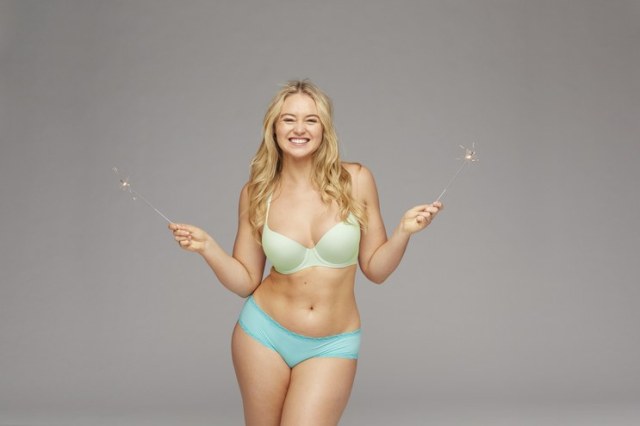
Iskra-Lawrence 'Share Your Spark' AerieReal campaign (Glamour)

Iskra-Lawrence ‘Share Your Spark’ AerieReal campaign (Glamour)

It used to be that brands only used tall, skinny, (mostly) blonde girl in their advertising. This was thought to be aspirational: You wanted to be the girl in the photo, and how best to be that? Buy their clothes (or perfume, or lingerie, or whatever the brand was selling). But the pursuit of one aspirational body type led those who didn’t possess said body type (either by genetic luck-of-the-draw or by carefully-chosen enhancements) to believe themselves unworthy and maybe inferior.

Thankfully, that trend is on its way out. The current thing (which, I hope, stays) is all about positivity and accepting yourself as you are, because you are enough. For women’s brands, this has translated to, among other things, banning Photoshop.

This month, Glamour released its all-women, no Photoshop issue. The magazine’s staff has gone all-in on banning photo retouching: A quick glance at the “Girls” cast on the cover, and you can see that the cellulite on Lena Dunham’s thigh hasn’t been wiped out. And why should it? It’s just a natural part of life.

In January 2014, American Eagle’s underwear brand Aerie launched its #AerieReal campaign, featuring models of all shapes and sizes and no Photoshopping. The intimates brand is aimed at girls ages 15-22, and the campaign has been used to promote body acceptance, positivity and confidence.

Aerie’s gamble has paid off exponentially: Q2 2014 sales were up 9% from the previous quarter, and continued to grow for the rest of the year. In 2015, sales were up by 20%, with Q4 2015 seeing a 26% increase year-over-year. And sales in Q1 2016 were up 32%.

Body acceptance and positivity has also bled into regular women’s lives, and features prominently on social media. Searching #nophotoshop on Instagram brings up 460K+ posts.It’s clear that this trend isn’t going away anytime soon.


#ThrowbackThursday: #AerieReal, 2014

#AerieReal campaign, 2014 (The Huffington Post)

#AerieReal campaign, 2014 (The Huffington Post)

American Eagle’s underwear brand Aerie launched its Aerie Real campaign in January 2014. The campaign, photographed by John Urbano and targeted to teens and women and in their 20s, did away with traditional models (read: skinny, unblemished) and began using “real” women, unretouched in all their glory.


Women Who’ve Headlined Coachella: By The Numbers

Bjork Headlining Coachella, 2002 (Snakkle)

Bjork Headlining Coachella, 2002 (Snakkle)

The Coachella Valley Music and Arts Festival (also known as…Coachella) runs over two weekends in April. Headliners were announced earlier this month, and music superstar/feminist/legend for our times Beyonce will headline each Saturday’s performance at the main Coachella stage.

Why is this significant?

Coachella festivals (#): 18

  • Founded in 1999

Total female headliners (#): 3

Bjork headlined in 2002 and 2007.

Unique female headliners (#): 2

  • Bjork and soon-to-be Beyonce

Female headliners (%): 16.67%

Main stage acts (approximate #): 135

*Source: Coachella Festival line-ups page on Wikipedia


Sonequa Martin-Green Will be the First Black Woman to Star on a “Star Trek” TV Series

Sonequa Martin-Green (Audrey Can)

Sonequa Martin-Green (Audrey Can)

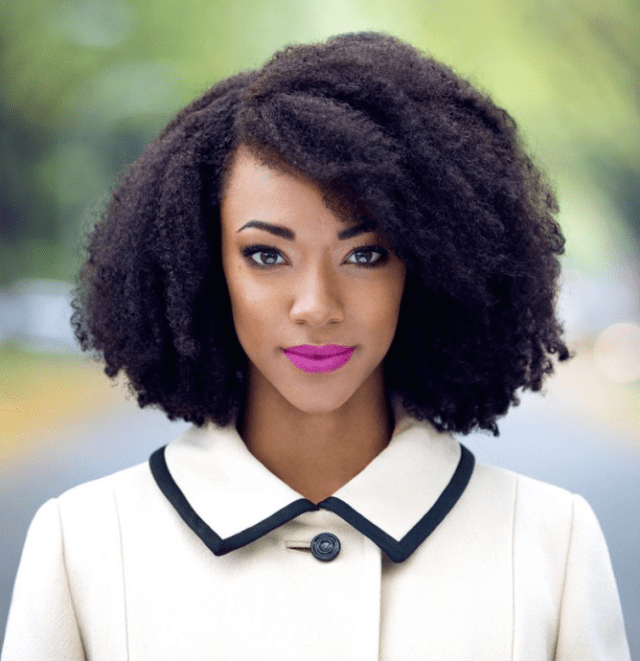
Once again, science fiction imagines a more inclusive world for all of us. This time, “Star Trek” is adding on to its storied universe, and creating its first new franchise in a decade. Sonequa Martin-Green, actress on “The Walking Dead,” will lead the cast as a lieutenant commander in “Star Trek: Discovery.”

Martin-Green’s lead character Rainsford is a first for the series: She’s the first Black woman to star in a “Star Trek” series. In-universe, the lieutenant commander is also a first. Previous to the new series, all the lead characters had been captains. Executive Producer Bryan Fuller has spoken on the need for context and a new perspective, as well as his desire to have a Black woman lead the series.

Martin-Green will lead an inclusive cast, which includes Asian actress Michelle Yeoh playing another starship’s captain and Anthony Rapp as the series’ first gay character on TV.

Black Women Nominees for the Best Actress in a Television Series — Comedy or Musical Golden Globe: By The Numbers

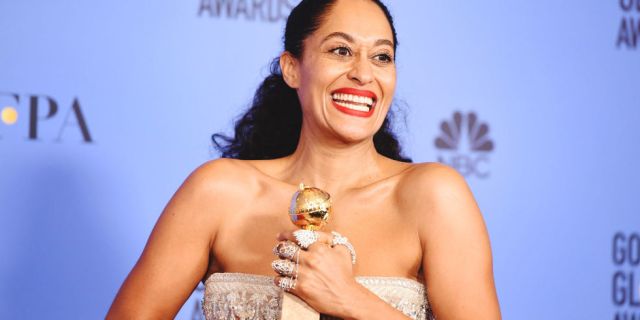
Tracee Ellis Ross with her Golden Globe award, 2017 (Wbli)

Tracee Ellis Ross with her Golden Globe award, 2017 (Wbli)

At the 2017 Golden Globe Awards, actress Tracee Ellis Ross won the Best Actress Television Series Musical or Comedy (BATSMC) for her role of Bow Johnson on the ABC comedy “Blackish.” Ross is only the second Black woman to win in this particular category.

If that doesn’t impress you enough, here are some numbers that put Ross’s win in the larger context (with Best Actress Television Series Musical or Comedy noted as BATSMC):

Number of total Black nominees for BATSMC: 14

Number of unique* Black nominees for BATSMC: 7

*I’m defining unique as actresses who’ve been nominated at least once.

Total nominees for BATSMC, 1963-2017: 54

Percentage of total Black nominees to total overall nominees, 1963-2017: 25.96%

Percentage of total Black winners to total overall winners, 1963-2017: 3.70%

Number of Black actresses who’ve won BTMSC: 2

  • Debbie Allen for “Fame,” 1983
  • Tracee Ellis Ross for “Blackish,” 2017

Number of Years between the first Black winner and second Black winner: 34

Year of the first Black nominee: 1970

  • Diahann Carroll for “Julia”

Number of TV Shows with more than one Black actress nominations:

  • “The Jeffersons:” 5 nominations – 1977, 1978, 1983, 1984, 1985
  • “Fame:” 3 nominations – 1983, 1984, 1985
  • “Gimme a Break!:” 2 nominations – 1983, 1985

Highest number of Black nominees in a single year: 3

  • 1983: Isabel Sanford, “The Jeffersons;” Nell Carter, “Gimme a Break!;” Debbie Allen, “Fame”
  • 1985: Isabel Sanford, “The Jeffersons;” Nell Carter, “Gimme a Break!;” Debbie Allen, “Fame” (No, this isn’t a typo; the exact same three actresses were all nominated again two years later.)

 Number of Black nominees, 2017: 2

  • Tracee Ellis Ross, “Blackish”
  • Issa Rae, “Insecure”

*Sources: Wikipedia’s list of black Golden Globe Award winners and nominees and Golden Globe Award for Best Actress page.

Tracee Ellis Ross Becomes the First Black Woman to Win a Golden Globe for Best Actress in a TV Comedy Since 1983

Tracee Ellis Ross, Golden Globes 2017 (Elle)

Tracee Ellis Ross, Golden Globes 2017 (Elle)

Last night at the Golden Globe Awards, the always amazeballs Tracee Ellis Ross won the award for Best Actress — Television Series Musical or Comedy. Ross plays Bow Johnson, badass doctor and matriarch of the Johnson family in the ABC comedy “Blackish.”

Ross is also the first Black woman to win that category in 34 years. The last Black woman to win in that category was Debbie Allen for “Fame.”

In her historic moment, Ross’s acceptance speech celebrated inclusion, especially for women of color:

This is for all the women, women of color, and colorful people whose stories, ideas, thoughts are not always considered worthy and valid and important. But I want you to know that I see you. We see you.

Congratulations, Tracee, and keep being you!


Trends: Custom Emoji

Kim Kardashian West's Kimoji (Fushion)

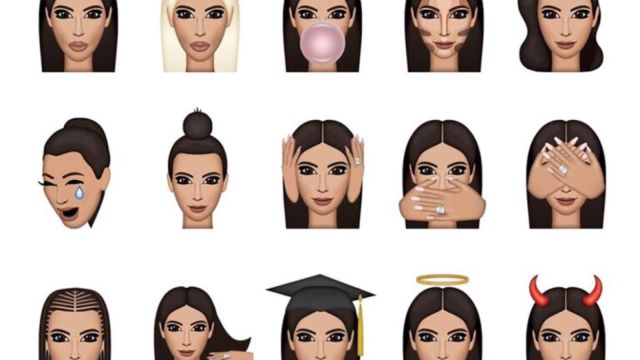
Kim Kardashian West’s Kimoji (Fushion)

Everyone loves emoji. That’s just a fact. Recently, emoji have grown and expanded. Where there used to be just one brand of emoji, now there are several types.

Distribution company Focus Features came up with custom emoji to promote their recent film “Loving.” The film details the history of the 1967 landmark Supreme Court case which struck down miscegenation statues across the United States. The emoji were created to show the range of love between people, and so users could relate to the film in a modern way.

Releasing custom emoji has hit disparate industries and public figures. Professional golfer Bubba Watson released his “Bubbamoji” in April 2016. Stand-up comic and actor Kevin Hart has his line of “Kevmoji,” all modeled after the comedian’s very expressive face. The “Kevmoji” hit #1 on iTunes downloads immediately after its release in September 2016.

But nobody’s dominated the custom emoji space better than America’s most polarizing reality TV family: the Kardashian/Jenners. Members of the family have taken to designing custom emoji for their fans to communicate with like-minded souls. Kim Kardashian West (who’s turned out to be quite the technology and new media mogul) debuted her “Kimoji” in December 2015, and was an immediate hit.

Not to be outdone, Rob Kardashian’s fiancee (and mother of his daughter Dream) Blac Chyna has also released her own line of emoji. But, like anything dealing with the Kardashian/Jenner clan, this has not been without drama: One of the “Chymoji” depicts Chyna slapping a brunette woman presumed to be Kardashian West’s stepsister Kylie Jenner. (If you don’t know why this is a foul, brush up on the history of the feud between the two.)

Another person in the Kardashian Extended Universe (KEU, for short) is feminist activist Amber Rose. (Rose is one of Kanye West’s former paramours. West is now, of course, married to Kim Kardashian West.) Rose dropped her “MuvaMoji” in March 2016, where it earned around $4M. That number includes $2M on release day alone.

It’s clear that launching a set of custom emoji is becoming a necessary step in engaging with fans. So who’ll be next to launch a set?

#ThrowbackThursday: Kim Kardashian West’s Kimoji Launch, 2015

Kim Kardashian West's Kimoji, 2015 (Kim Kardashian West)

Kim Kardashian West’s Kimoji, 2015 (Kim Kardashian West)

Kim Kardashian West’s set of custom emoji, dubbed “Kimoji,” launched on December 21, 2015. Nearly a year later, they continue to be a hit, and paved the way for other celebrities to launch their own custom emoji lines.

Kardashian West’s Kimoji references notable things about her which both hardcore and casual fans would recognize: her waist trainer corset, posing in her white swimsuit, and her notorious crying face.

Ashley Graham is First Plus-Size Model to Cover British “Vogue”

Ashley Graham's January 2017 Vogue U.K. cover (Vogue UK)

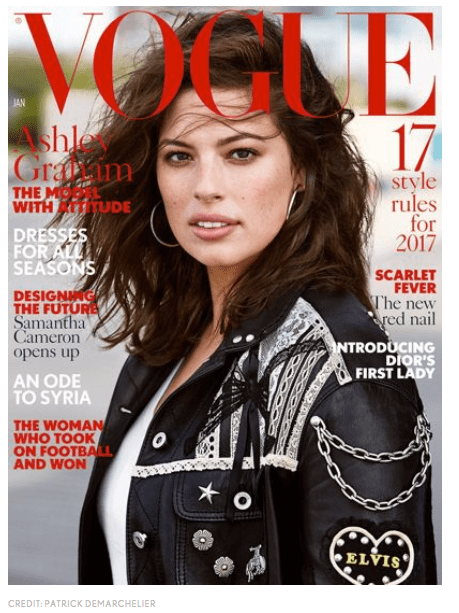
Ashley Graham’s January 2017 Vogue U.K. cover (Vogue UK)

Model Ashley Graham is busting boundaries left and right. Earlier this year, she covered Maxim and the coveted Sports Illustrated Swimsuit Issue. Now, she’s landed the cover of the fashion bible of the U.K., the British version of Vogue. Shot by famed photographer Patrick Demarchelier, Graham’s cover will be for the January 2017 issue.

Graham is a plus-size model, so her covering these storied publications shows that the fashion industry is coming around to including a wider variety of body types. Let’s hope American Vogue sees this, and follows suit.

Graham’s cover for British Vogue arrives on newsstands today.

Amy Schumer is Forbes’ Highest-Paid Female Comedian

Amy Schumer (US Magazine)

Amy Schumer (US Magazine)

Love her or hate her, Amy Schumer is making bank. On this year’s version of Forbes‘ Highest-Paid Comedians, Schumer debuted at #4. The publication estimated her earning power at $17M. Counted within this figure are her Comedy Central show Inside Amy Schumer, her movie Trainwreck, her $8M advance for her book The Girl with the Lower Back Tattoo, commercial work and touring.

Forbes‘ Madeline Berg explains why Schumer’s inclusion in this list is so significant:

Not only is she the only female comic on this year’s list, Schumer is also the only woman to ever make the highest-paid comedians list—a big first as women have historically faced difficulty being taken seriously in the funny business.

In another significant feat, Schumer is the only woman to play, and sell out, Madison Square Garden.

For contrast, the highest-paid comedian on Forbes‘ list is Kevin Hart, who pulled in $87.5M.