By The Numbers: The Gender Pay Gap

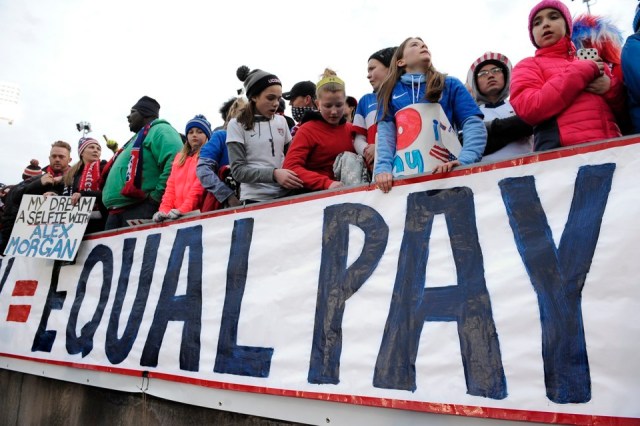
Equal Pay March (The Atlantic)

Equal Pay March (The Atlantic)

Everyone knows that women get paid less than men. (If you don’t know that by now, you’re welcome.) You may have heard that stat that women make 75 cents to every dollar a man makes.

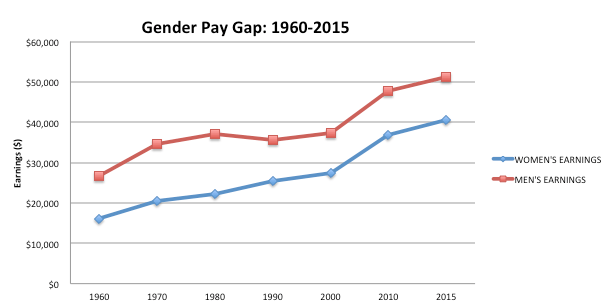
This got me curious to see what the pay gap has been throughout recent history. I found long-range pay gap data from Pay Equity Information. I then made a data table to cherry-pick my desired years:

Gender Pay Gap Data, 1960-2015 (Pay Equity Information)

Gender Pay Gap Data, 1960-2015 (Pay Equity Information)

Then I created a line graph to see the difference visually:

Gender Pay Gap: 1960-2015 chart (Pay Equity Information)

Gender Pay Gap: 1960-2015 chart (Pay Equity Information)

As you can see, the pay gap was worst in 1960-1980. Only after 1980 does the ratio start to approach 70 cents to a dollar. And there’s still so far to go.

NPR Releases 2016 Staff Diversity Numbers

National Public Radio (NPR) Logo (NPR)

National Public Radio (NPR) Logo (NPR)

In April, National Public Radio (known colloquially as NPR) released its staff diversity data for 2016. Here were the main findings for that year:

According to NPR’s human resources department, of the 350 employees in the news division as of Oct. 31, 2016, 75.4 percent were white. Asians made up 8.3 percent of the staff, followed by blacks or African-Americans (8.0 percent), Hispanics or Latinos (5.4 percent), those who identified as two or more races or ethnic identities (2.6 percent) and American Indian (0.3 percent).

NPR has been tracking this data since 2012, and it’s interesting to see how the numbers fare on a long-term basis. Spoiler alert: they pretty much flatlined. This falls in line with long-term newsroom diversity trends. Per the American Society of News Editors (ASNE): “In 2016, minorities comprised about 17 percent of employees at daily newspapers and 23 percent at online-only sites.” Pretty bad.

Here’s where NPR falls in comparison to other media:

NPR is behind The Washington Post (31 percent diverse) and The Los Angeles Times (34 percent). At 25 percent diverse, NPR is just above The New York Times newsroom, which is about 22 percent diverse.

Newsroom diversity has become part of a larger conversation regarding workplace, and companies publicly releasing they diversity data. But some newsrooms are refusing to disclose their data. The ASNE reported that 737 newsrooms responded with data for the 2016 survey. That’s out of 1.7K+ newsrooms contacted, making a 42%+ response rate.


#ThrowbackThursday: “Ghostbusters,” 2016

'Ghostbusters,' 2016 (Geek)

‘Ghostbusters,’ 2016 (Geek)

2016 saw the release of the rebooted “Ghostbusters: Now With More Women!” OK, that wasn’t the actual title, but it might as well have been. The remake of the classic comedy film boasted Melissa McCarthy, Kristen Wiig, Kate McKinnon and Leslie Jones as the titular Ghostbusters. The film battled high expectations from all corners: nail-biting and hand-writing over whether (gasp!) funny women could open a movie, and unreasonable standards from people for whom the original 1984 movie stood as an unassailable classic.

Fortunately, the movie proved that people (and not just women) would turn out to see funny women in a remake. The film ranked second in its opening weekend with $46M+ and went on to rake in $229M+ worldwide.

Going Dark for “A Day Without A Woman”

A Day Without A Woman (Women's March on Washington)

A Day Without A Woman (Women’s March on Washington)

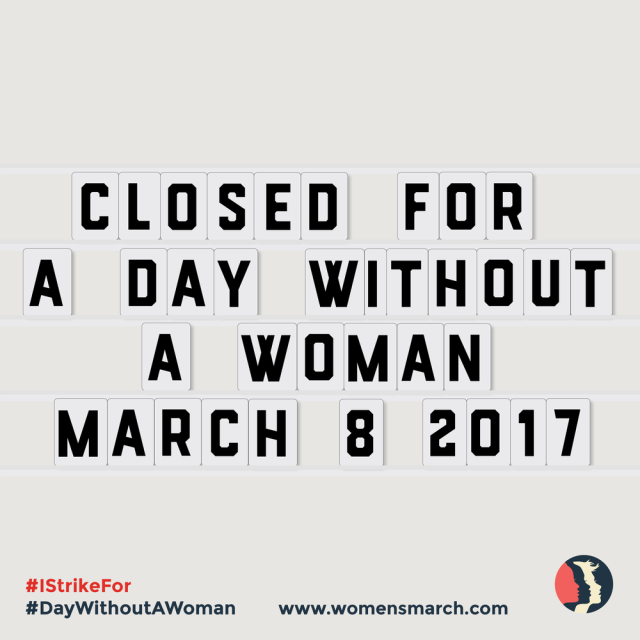
Today, I’m going dark for a cause: A Day Without A Woman.

Guidelines for the day via A Day Without A Woman:

Anyone, anywhere, can join by making March 8th A Day Without a Woman, in one or all of the following ways:

  1. Women take the day off, from paid and unpaid labor
  2. Avoid shopping for one day (with exceptions for small, women- and minority-owned businesses).
  3. Wear RED in solidarity with A Day Without A Woman

This day coincides with International Women’s Day (IWD) and the International Women’s Strike (IWS). The day will also spotlight all the financial power women possess:

The idea behind a women’s general strike is that if women refuse to do all of their typical work for a day, it will force people to notice how important and under-appreciated that work is.

And that economic impact will be felt:

Women make up nearly half of the U.S. labor force and influence about 73% of all household spending.

Though I’ll be working today at my office job, I plan to show my support by wearing red, reading feminist literature (currently deciding between “We Should All Be Feminists” by Chiamanda Ngozi Adichie and “Bad Feminist” by Roxane Gay), and masturbating.

See you on March 9th!

School Districts Shutting Down For “A Day Without A Woman”

1950s female teacher (Masterfile)

1950s female teacher (Masterfile)

Tomorrow is A Day Without A Woman, a day to call attention to women’s economic power and labor (including the unpaid and emotional kind). Because women do have economic power: Studies show that “women make up nearly half of the U.S. labor force and influence about 73% of all household spending.”

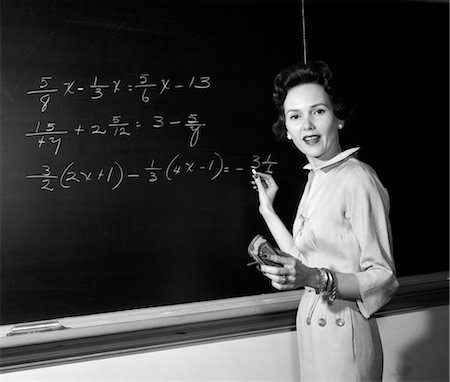
One profession that is traditionally female-dominant is teaching. The National Center for Education Statistics found that for the 2011-2012 school year, female teachers comprised 76% of all public school teachers. (This gap is especially prominent in elementary schools.) These so-called “pink collar” jobs are ones where women dominate, but can be considered to be “lower” in status because of the feminine association (which is wrong, wrong, WRONG!!).

Naturally, the public school system might be hit hard tomorrow. Some school districts have already cancelled classes as a result of teachers taking the day off to strike. The Alexandria, Virginia public school system reported receiving over 300 requests for the day off. Brooklyn preschool The Maple Street School and the Chapel Hill-Carrboro public school system in North Carolina (where 75% of employees are women) will also be closed. All schools in Prince George’s County, Maryland, will also be closed, after 1.7K teachers and 30% of transportation staff requested the day off.

Trends: Muslim Firsts in Popular Culture

Halima Aden covering 'CR Fashion Book' (CR Fashion Book)

Halima Aden covering ‘CR Fashion Book’ (CR Fashion Book)

Recently, Muslims in the U.S. have gained prominence in a series of firsts in mainstream culture.

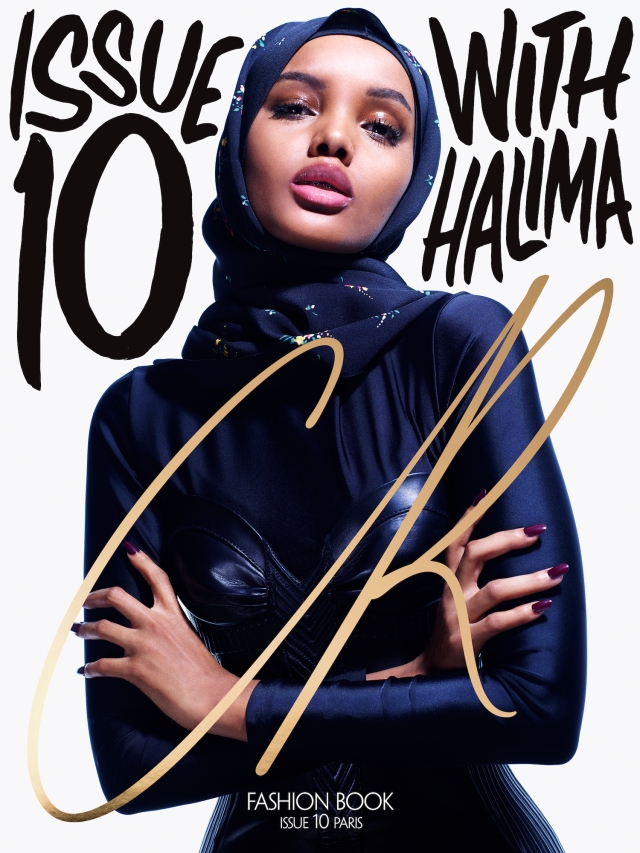
Last year, Halima Aden competed in the Miss Minnesota beauty pageant. Aden wears hijab, and wore a burkini during the swimsuit portion of the event. Though she didm’t win the title, people took notice of her, especially the fashion industry. IMG Models recently signed Aden, who’s now their first hijabi model. (It’s important to note that while Aden is the first hijabi model for the company, she is not their first Muslim model.) Aden recently appeared on the cover of CR Fashionbook, where the headline cemented her one-name-only status (similar to that of Iman, who interviewed Aden for the issue).

Earlier this week, actor Mahershala Ali won the Oscar for Best Supporting Actor for his work in “Moonlight.” This wasn’t a surprise: Ali had been winning awards at all of the awards running up the Oscars. But Ali is the first Muslim actor to win an Academy Award. He spoke about converting to Islam in his acceptance speech for male actor in a supporting role at this year’s SAG Awards, where he warned against letting the minutia of differences overtake the similarities.

Hopefully this exposure normalizes Muslims for people who may not have met one in person. I hope this is just the start of more prominent Muslims in pop culture to come.

Trends: #NoPhotoshop

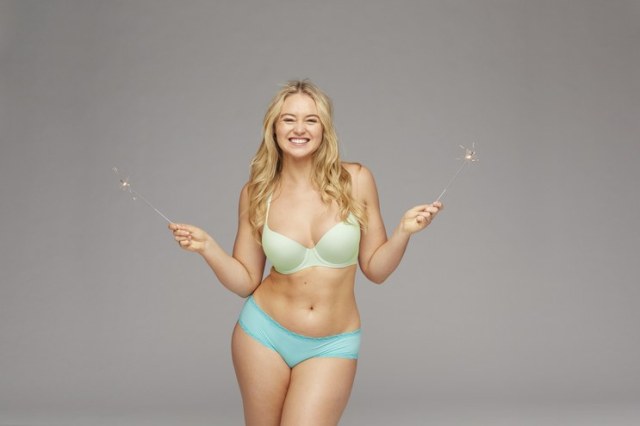
Iskra-Lawrence 'Share Your Spark' AerieReal campaign (Glamour)

Iskra-Lawrence ‘Share Your Spark’ AerieReal campaign (Glamour)

It used to be that brands only used tall, skinny, (mostly) blonde girl in their advertising. This was thought to be aspirational: You wanted to be the girl in the photo, and how best to be that? Buy their clothes (or perfume, or lingerie, or whatever the brand was selling). But the pursuit of one aspirational body type led those who didn’t possess said body type (either by genetic luck-of-the-draw or by carefully-chosen enhancements) to believe themselves unworthy and maybe inferior.

Thankfully, that trend is on its way out. The current thing (which, I hope, stays) is all about positivity and accepting yourself as you are, because you are enough. For women’s brands, this has translated to, among other things, banning Photoshop.

This month, Glamour released its all-women, no Photoshop issue. The magazine’s staff has gone all-in on banning photo retouching: A quick glance at the “Girls” cast on the cover, and you can see that the cellulite on Lena Dunham’s thigh hasn’t been wiped out. And why should it? It’s just a natural part of life.

In January 2014, American Eagle’s underwear brand Aerie launched its #AerieReal campaign, featuring models of all shapes and sizes and no Photoshopping. The intimates brand is aimed at girls ages 15-22, and the campaign has been used to promote body acceptance, positivity and confidence.

Aerie’s gamble has paid off exponentially: Q2 2014 sales were up 9% from the previous quarter, and continued to grow for the rest of the year. In 2015, sales were up by 20%, with Q4 2015 seeing a 26% increase year-over-year. And sales in Q1 2016 were up 32%.

Body acceptance and positivity has also bled into regular women’s lives, and features prominently on social media. Searching #nophotoshop on Instagram brings up 460K+ posts.It’s clear that this trend isn’t going away anytime soon.


#ThrowbackThursday: #AerieReal, 2014

#AerieReal campaign, 2014 (The Huffington Post)

#AerieReal campaign, 2014 (The Huffington Post)

American Eagle’s underwear brand Aerie launched its Aerie Real campaign in January 2014. The campaign, photographed by John Urbano and targeted to teens and women and in their 20s, did away with traditional models (read: skinny, unblemished) and began using “real” women, unretouched in all their glory.


Trends: Actresses Demanding Equal Pay

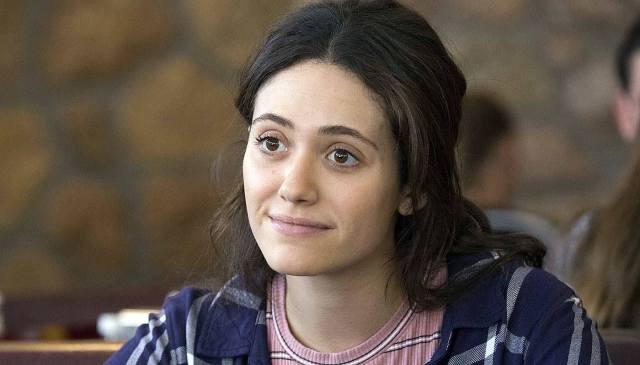
Emmy Rossum in 'Shameless' (TV By The Numbers)

Emmy Rossum in ‘Shameless’ (TV By The Numbers)

“Shameless” actress Emmy Rossum must’ve heard of Levo League’s negotiating slogan #Ask4More, which encourages women to ask for raises and/or equal pay. Earlier this week, Rossum was negotiating to earn equal pay, if not more, than William H. Macy, her co-star on the Showtime series. (And Macy was all for that.) Her reasoning is that her character features significantly in every episode.

Yesterday, Rossum decided to settle her negotiation with a new contract. Though there’s no word on the terms of her new contract, The Hollywood Reporter mentions the following:

Sources say Rossum had an offer of equal pay on the table. It’s unclear if she received more than Macy.

(I, for one, hope she achieved equal or greater pay.)

Actresses speaking up about, and publicly negotiating for, payment parity on par with their male co-stars has become a trend as of late. Robin Wright, the lead actress in Netflix’s “House of Cards,” threatened to take her fight for fair pay public when she realized she was getting paid less than the series’  lead actor Kevin Spacey:

“I was looking at the statistics and Claire Underwood’s character was more popular than [Frank’s] for a period of time. So I capitalized on it. I was like, ‘You better pay me or I’m going to go public.’ And they did.”

Oscar-winning actress Jennifer Lawrence most notably spoke out on the issue of pay parity  in 2015 when she penned an essay for Lenny. Lawrence acknowledged that she and fellow co-star Amy Adams got shortchanged with their pay for “American Hustle:” The two women each got 7% of the overall profits, which the leading men received 9% each. This information became public knowledge during the Sony Pictures Entertainment server hack in late 2014.

Let’s hope that more and more women start speaking up and asking demanding for equal pay. As Lawrence recalls, she “failed as a negotiator because [she] gave up too early.” Don’t give up!!

#ThrowbackThursday: Elizabeth Taylor in “Cleopatra,” 1963

Elizabeth Taylor as 'Cleopatra,' 1963 (First To Know)

Elizabeth Taylor as ‘Cleopatra,’ 1963 (First To Know)

In her heyday, Elizabeth Taylor was a lot of things: raven-haired beauty, husband-stealing vixen, condemned by the Vatican. Oh yeah, she was also an actress. A very good one.

It’s well known that Taylor played the title role in 1963’s “Cleopatra.” But one important aspect of the production is less well-known than it should be: Taylor earned $1M for her role. She was the first actress to be paid that amount for her work.

Due to production delays, that $1M would eventually become $7M. In 2015 currency, that’s $54.2M.