CatalystCon East 2015: By The Numbers

CatalystCon East 2015 (HeyEvent)

CatalystCon East 2015 (HeyEvent)

It’s that time of year again! CatalystCon East 2015 starts tomorrow and runs through Sunday in Arlington, VA. It’s shaping up to be a good one, so here are some basic numbers to pique your interest:

Number of Days: 3

Number of Keynotes: 2

Number of Speakers: 81

Selected Speakers: Jillian Keenan, Ashley Manta, Ela Darling

Number of Sessions: 43

Selected Sessions: “Sex + Millennials: How We are Changing Sexual Landscape,” “Deconstructing Christian Erotophobia” “Sense & Shibari-a Re-Evalution of the Knowledge of Rope Bondage and the Possibilities of Researching Kink”


If you’re going, have fun! I’m jealous!

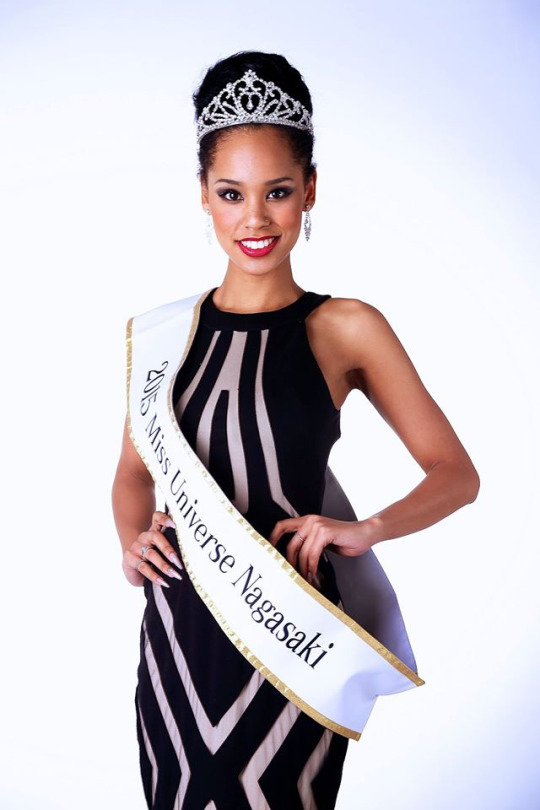
Ariana Miyamoto is the First Mixed-Race Miss Japan

Ariana Miyamoto, Miss Japan 2015 (We Are Wakanda)

Ariana Miyamoto, Miss Japan 2015 (We Are Wakanda)

The newly-crowned Miss Japan Ariana Miyamoto has made history: She’s the first mixed-race woman to win the title. She had previously won the Miss Nagasaki title.

The 20-year-old Miyamoto, born to a Japanese mother and an African-American father, will go on to represent Japan at the Miss Universe 2015 pageant.

This is huge for Japan, as the country is known being very racially homogenous. According to a July 2014 estimate, those who self-identify as Japanese comprise 98.5% of the total population. By contrast, “other” races (under which African-American falls) holds onto only .6%. The estimate puts the country’s population at 127M+, so that would mean “other” races would number around 762K+. (To put that in context, self-identifying Japanese would number around 125M+.)

“Hafu” (mixed-race) marriages have grown steadily since 1980, when the Japanese government recorded 5K+ “international” marriages. In 2004, mixed-race marriages numbered 39K+, which represented 5%+ of all marriages within the country.

Though it’s clear that the number of interracial marriages, and multi-racial citizens, are rising, it’s difficult to find because racial data isn’t collected in Japan (only nationality is acknowledged). But Japanese filmmaker Megumi Nishikura found that “20K+ half-Japanese are born in Japan each year, including both multiethnic and multiracial people” through her documentary “Hafu: The Mixed-Race Experience in Japan.”

Though Miyamoto is already getting backlash for “not being Japanese enough,” she’ll now be seen by the world as the new face of Japan.

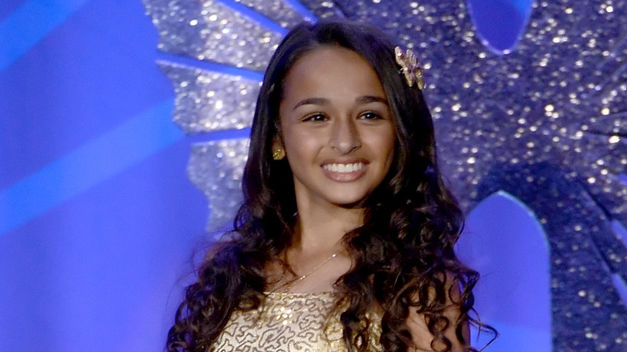
Trans Teen Jazz Jennings is the New Face of Clean & Clear

Trans teen activist Jazz Jennings (The Mary Sue)

Trans teen activist Jazz Jennings (The Mary Sue)

2015 continues to be a big year for the trans community as they make strides towards heightened visibility. Now, the community can add one more mainstream accomplishment: teen models.

Fourteen-year-old Jazz Jennings was named the new face of skincare line Clear & Clear last week. She’ll be fronting their “See the Real Me” promotional campaign, and tells her personal story in a video in an effort to encourage others to share their stories via social media.

Assigned male at birth, Jennings is the first trans model to represent the brand.

Jennings had already made a splash 10 years ago, when she became the youngest-known person diagnosed with gender dysmorphia. As she’s grown up, she’s been very active in advocating for LGBT rights, specifically for teens. Jennings has also written a book “I Am Jazz” detailing her story, and she was named to “Time”‘s Most Influential Teens List in 2014.

I’m sure we’ll be hearing a lot more from Jennings as she grows up and continues to accomplish great things. And we won’t have to wait long: Cable channel TLC will air a docuseries on her titled “All That Jazz.”


Lucy and Maria Aylmer: How Many Twins Look Racially Different?

Twin sisters Lucy and Maria Aylmer (BoredPanda)

Twin sisters Lucy and Maria Aylmer (BoredPanda)

This week, the Internet has been fascinated by a set of English fraternal twins Lucy and Maria Aylmer. But there’s something special about them: Lucy has pale skin and red hair, while Maria has brown skin and brown curly hair.

In other words, one twin looks white, and the other twin looks black.

Their parents have a mixed racial background: their mother is half Jamaican, and their father is white.

Occasionally, stories like theirs pop up every now and again. In 2009, another British mixed-race couple produced not one, but two, sets of identical twins who each looked very racially different from their sibling.

But how common is this?

Unfortunately, there are no statistics that track this. From “The Associated Press:”

The phenomenon is so uncommon that there are no statistics to illustrate its probability, although it is thought likely to become more common because of the growing number of mixed-race couples.

To give you an idea on exactly how uncommon this is (using numbers!), Dr. Sarah Jarvis of Britain’s Royal College of General Pracitioners, said in 2009 (though it still applies today):

“Even non-identical twins aren’t that common. Non-identical twins from mixed parents, of different races, less common still. To have two eggs fertilized and come out different colors, less common still. So, to have it happen twice must be one in millions.”

But that’s just a guess, though the BBC reported chances closer to 1 in 500 in 2011. We won’t know until we actually start tracking the numbers.

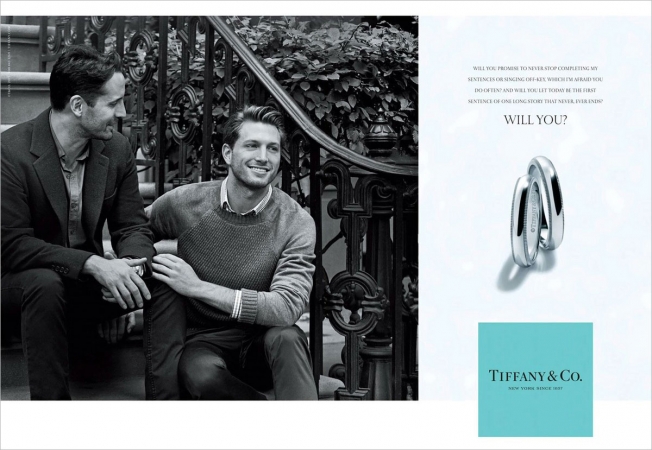
Thursday Trends: Same-Sex Couples Reflected in Advertising

Tiffany's first ad featuring a gay couple (Adweek)

Tiffany’s first ad featuring a gay couple (Adweek)

Advertisements are finally getting with the times, and featuring more diversity than your run-of-the-mill straight white couple.

Last month, jewelry giant Tiffany’s debuted a new print ad for their wedding rings. But this ad had one thing different: it prominently featured a gay couple. And apparently the two men are a couple in real life, and were photographed on their own New York stoop.

This was the first time Tiffany’s has used a same-sex couple in their advertising. But it won’t be the last: Just this week, the brand used the same couple in a TV-spot ad. (The ad also features straight and interracial couples.) It signals that the 178-year-old brand recognizes that love comes in many forms, and they want to be all-inclusive. (And it’s a smart business move.)

Other brands in recent years have featured same-sex couples. Preppy retailer J. Crew used a gay couple in their catalog in spring 2011, and Gap used another couple on a billboard the following year. Incidentally, neither sets of couples are professional models: In the case of the J. Crew couple, one of the men was a designer for the brand. (It seems there’s also a side-trend of using real people.)

Lesbian couples are also increasingly represented. In 2012, JC Penney featured a lesbian couple with their children in a catalog pegged to Mother’s Day. Last year, condom brand Durex used two women being playfully affectionate with each other in an ad for a massage gel. This year, Hallmark showed an ad featuring a real-life lesbian couple describing their feelings for each other in the run up to Valentine’s Day.

It’s clear that things are changing. Even “The Onion” got in the action, with a (mock) article claiming that jewelry company Zales created an ad featuring a polyamorous triad. (But the article did rightfully call out that we, as a whole society, aren’t quite there yet.)

Hopefully this follow its natural progression, and  will eventually lead to more ads featuring same-sex couples with families. It’d be great to see future print and online ads and commercials where we see a family with two dads or two moms, NBD.

After all, this would make complete economic sense for these companies: In 2012, “Adweek” reported that the LGBT market is estimated to be worth around $743B+.

 

“Fifty Shades of Grey” Advance Tickets Selling Out the South

'Fifty Shades of Grey' still (Express UK)

‘Fifty Shades of Grey’ still (Express UK)

Happy Friday! Next week at this time, some of you might be going to see the hotly anticipated “Fifty Shades of Grey” (either willingly or not). Hope you got your tickets early, because it already became the fastest-selling R-rated movie in Fandango’s history.

According to “Deadline Hollywood,” the movie is tracking to open around $60M over four days. Fandango’s data shows that a lot of the advance sales are coming from the South. Says Anthony D’Alessandro:

It’s a remarkable feat for a risque hard-R film in this region, as exhibitors in this area of the country have refused to book NC-17 films.

The top five states for advance sales are all in the South: Mississippi, Arkansas, West Virginia, Kentucky and Alabama. Fandango also crunched the numbers on how much more than expected each state was selling advance tickets. Mississippi led the way at 3.9 times the expected rate, with Arkansas (2.8x) and West Virginia (2.7x) following closely behind. Southern states take up eight of the top 10 states outselling presale estimations.

In terms of Southern cities, Tupelo, MS, Florence, KY and Chattanooga, TN have already sold out.

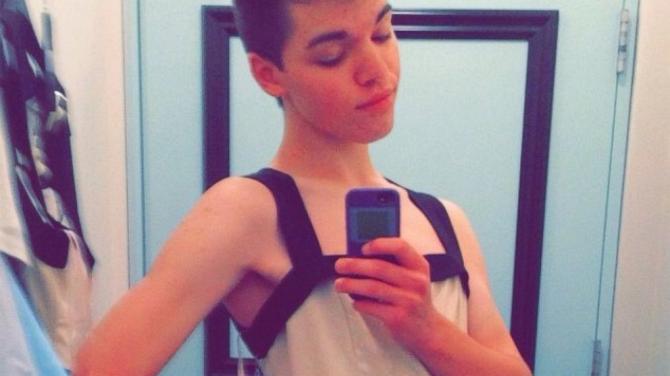
Leelah Alcorn Suicide: Transgender Teen Suicide Stats

Leelah Alcorn (Yahoo News)

Leelah Alcorn (Yahoo News)

Leelah Alcorn was a 17-year-old transgender teen who committed suicide Dec. 28 of this past year. Born a boy named Joseph, she came out to her parents as transgender at 14 years old, and felt she was “a girl trapped in a boy’s body” since the age of four.

Alcorn wrote a suicide note on her Tumblr, published after her death, that called for better dialogue surrounding gender education and trans civil rights. She hoped her death (which could’ve been easily avoided) would spark a discussion and changes.

It’s pretty well-known that LGBT teens have a higher rate of suicides and suicide attempts than straight teens. According to The Trevor Project, LGBT youth (defined as ages 10-24) are “three times more likely to attempt suicide than their straight peers.”

For transgender teens, the numbers get more grim: The Youth Suicide Prevention Program cites national statistics that claim “more than 50% of transgender youth will have had at least one suicide attempt by their 20th birthday.” There seems to be discrepancy here, as The Trevor Project notes that 25% of transgender teens have attempted suicide, and almost 50% have thought about it. Either way, that’s pretty scary.

Familial (and friends’) support plays a big role in all teens’ lives, but is particularly needed for transgender teens. The Trevor Project cites a stat which posits that LGB teens who have “highly rejecting families” are 8.4 times more likely to attempt suicide. Though the site doesn’t include trans teens within this stat, it’s safe to say they probably face similar odds.

Leelah Alcorn’s death didn’t have to happen. It shouldn’t have happened at all. But I hope it begins the discussion she wanted and rightfully deserved.


John Jolie-Pitt: Transgender Children Statistics

John Jolie-Pitt (Refinery 29)

John Jolie-Pitt (Refinery 29)

Happy 2015! I hope everyone had a fun and relaxing holiday season.

Now, let’s get back to business. The business of sex and numbers.

Last month, actors Angelina Jolie and Brad Pitt stepped out with their family for the premiere of Jolie’s new film (and directorial debut) “Unbroken.” Many media outlets commented on their eight-year-old daughter Shiloh wearing a tux to the event. Shiloh has been asked to be referred to as “John” and self-identifies as a boy. (Wonderfully supportive parents Jolie and Pitt have readily obliged.)

John has not publicly identified himself as transgender, and his parents have not identified him as such either.

But how many children might identify as, or fit the label of, transgender?

At the moment, there’s really no hard data answering this question. Either researchers aren’t delving into this topic, or they might not be using the term “transgender” when asking a child to self-identify.

But gender identity tends to be fixed early in life. A PDF on children’s transgender identity for parents from Parents, Families and Friends of Lesbians and Gays (PFLAG) San Francisco notes the following:

“Most people have a sense of their gender identity between ages two and four. If your child expresses a transgender identity since early childhood, it is unlikely they will change their mind as they age. Their sense of themselves will only deepen.”

This makes sense as it relates to John, as Jolie observing that he “wants to be a boy” in a 2010 “Vanity Fair” interview.

It’ll be interesting to watch John Jolie-Pitt grow up and how his gender identity changes or stays the same. No matter which happens, it’s great to see a notable example of a supportive family surrounding him. Hopefully, it’ll change and open some minds.

How Many People Fantasize About Having Sex With Identical Twins?

Twins Jordan and Zac Stenmark (Lyra Mag)

Twins Jordan and Zac Stenmark (Lyra Mag)

I read an NPR article on twins recently, calling millennials “Generation Twin.” This name applied due to the fact that one million more twins were born between 1980 and 2012. (This checks out with my personal anecdotal evidence: I graduated high school in 2004, and my class of 106 students boasted three sets of twins.)

“The Atlantic” goes a bit deeper into why this is: The rise in twins is due to the rise in fertility drugs, most notably IVF. Older women are the ones mostly using fertility drugs, and producing most of the babies. Also, older women are statistically more likely to have twins than younger women.

Here’s a handy table to visualize the rise in twins over the past decades:

Twins' birth rate, 1980-2012 (The Atlantic)

Twins’ birth rate, 1980-2012 (The Atlantic)

That got me wondering if sexual fantasies about twins (both identical and fraternal) have also increased.

After doing some digging, I really couldn’t find anything. I didn’t find any studies about sexual fantasies, or fantasies coming true, involving twins.

The closest I got was the recent study on sexual fantasies by researchers at Canada’s University of Quebec at Trois-Rivieres, published in the “Journal of Sexual Medicine.” “Business Insider” helpfully took all the data for male fantasies and put it together. The closest question the researchers asked the 717 men used about twins was about having sex with two women. Over 84% of men reported this fantasy, but we cannot extrapolate that this necessarily means twins.

The identical-twin fantasy didn’t show up for the women either, but that’s perhaps more understandable: Women aren’t generally depicted as having that particular fantasy (though I’m sure there are some outliers).

I find it strange that a fantasy that looms so large in popular culture (for men, at least) has basically no data to back it up.

Losing It: Average Age of Virginity Loss in the U.S.

Kissing Couple 9.2.14

According to a 2006 study, men and women in the United States first experienced sexual intercourse at age 17 on average.

A 2007 study by Mathmatica Policy Research for The Kinsey Institute notes that 49% of women lose it by age 17, while 46% of men lose it by the same age.

Assuming this holds true with the population recorded in the 2010 Census, here’s how that would break down:

Women:

The 2010 census recorded over 10M women ages 10-14, and over 10.7M women ages 15-19. If we assumed that each age spreads equally (i.e. the same number of 10-year-olds as the number of 19-year-olds), there would be approximately 2M women for each age 10-14, and 2.140M women for each age 15-19.

Let’s also assume that virginity loss commences at adolescence, at age 13. Within the two age brackets, ranging ages 13-17, approximately 10.42M women have lost their virginities during this timeframe.

Putting the 10.42M over the combined age brackets totaling approximately 20.7M yields approximately 50%.

Men:

The 2010 census recorded over 10.5M men ages 10-14, and over 11.3M men ages 15-19. Again, we’re assuming that the various ages spreads equally: Approximately 2.1M men for each age 10-14, and 2.26M men for each age 15-19.

Again taking the 13-17 age range, approximately 10.98M men lose their virginities during this period. This amounts to approximately 50% of the combined age bracket range.


While the average age for virginity loss in women has stayed relatively flat in the three years since 2007 to 2010, men’s average age for the same rite of passage has risen slightly. This could be due to the fact that men are losing it slightly earlier within the age spread, or that there are simply more men within this age range.