Lucy and Maria Aylmer: How Many Twins Look Racially Different?

Twin sisters Lucy and Maria Aylmer (BoredPanda)

Twin sisters Lucy and Maria Aylmer (BoredPanda)

This week, the Internet has been fascinated by a set of English fraternal twins Lucy and Maria Aylmer. But there’s something special about them: Lucy has pale skin and red hair, while Maria has brown skin and brown curly hair.

In other words, one twin looks white, and the other twin looks black.

Their parents have a mixed racial background: their mother is half Jamaican, and their father is white.

Occasionally, stories like theirs pop up every now and again. In 2009, another British mixed-race couple produced not one, but two, sets of identical twins who each looked very racially different from their sibling.

But how common is this?

Unfortunately, there are no statistics that track this. From “The Associated Press:”

The phenomenon is so uncommon that there are no statistics to illustrate its probability, although it is thought likely to become more common because of the growing number of mixed-race couples.

To give you an idea on exactly how uncommon this is (using numbers!), Dr. Sarah Jarvis of Britain’s Royal College of General Pracitioners, said in 2009 (though it still applies today):

“Even non-identical twins aren’t that common. Non-identical twins from mixed parents, of different races, less common still. To have two eggs fertilized and come out different colors, less common still. So, to have it happen twice must be one in millions.”

But that’s just a guess, though the BBC reported chances closer to 1 in 500 in 2011. We won’t know until we actually start tracking the numbers.

No Shit: Colleges Are Underreporting Sexual Assaults

UVA Rotunda (Wikipedia)

UVA Rotunda (Wikipedia)

This should come as a surprise to absolutely no one: A recent study published in “Psychology, Public Policy and Law” found that colleges underreport sexual assaults on their campuses.

Conducted by the American Psychological Association, University of Kansas researcher Corey Rayburn Yung analyzed data pertaining to on-campus sexual assault reports from 31 colleges and universities. (This data came via the Clery Act, a federal law that mandates how colleges self-report crimes.) He specifically looked at “large schools with on-campus housing and 10K students” that were audited between 2001-2012 by the U.S. Department of Education for meeting federal reporting standards.

Here’s what Yung found:

During the audits, the reported numbers of sexual assaults increased by approximately 44 percent on average from previously reported levels. After the audits ended, the reported number of sexual assaults in following years dropped to pre-audit levels, evidence that some schools provided a more accurate picture of sexual assaults on campus only when they were under federal scrutiny, the study concluded.

(The study notes that individual stats for each school weren’t provided, and some didn’t show a spike in reporting during this period.)

It makes sense that a school would be more vigilant in reporting assaults during a government-mandated audit. But holy shit that’s a huge discrepancy. (To his credit, Yung did say that the study’s initial hypothesis was that colleges were underreporting these numbers, so he wasn’t going into this super-naive.)

But here’s another troubling thing, taken from the study’s abstract:

The data indicate[s] that the audits have no long-term effect on the reported levels of sexual assault, as those crime rates return to previous levels after the audit is completed.

So these schools are only on top of things when the Feds are breathing down their neck. Basically you’re shit out of luck if you’re assaulted on-campus during a non-audit timeframe, college women.

It’s probable that issues influencing the underreporting are the schools wanting to cover up the assaults (obviously), and/or schools might attempt the resolve the cases in a timely manner during the audit.

This sheds light on how higher education institutions see sexual assault: more of a potential blight on their reputations than actual concern for victims. Said Yung:

The study shows that many universities continue to view rape and sexual assault as a public relations issue rather than a safety issue. They don’t want to be seen as a school with really high sexual assault numbers, and they don’t want to go out of their way to report that information to students or the media.

What happens to schools that don’t comply with the sexual assault reporting requirements? They’re fined $35K, which pretty much amounts to a student’s (or half a student’s) yearly tuition.

I don’t know about you, but I’ve long suspected this to be the case. A similar phenomenon occurs with reporting unemployment numbers: A person who doesn’t work is counted as “unemployed” only if they’ve been actively looking for work within that past four weeks. If they haven’t done so, they’re not counted at all. Whenever a new jobs report comes out claiming that the unemployment number has dropped, a lot of people who haven’t been looking get hopeful and begin to look for work again, and then the real unemployment number grows. (And then everyone wonders why it’s bigger than before.)

To solve this problem, Yung calls for greater resources allocated to the issue, more frequent audits and greater fines for delinquent schools. I’d say that that’s a good step in the right direction.

The Numbers Behind Stanford University’s Sexual Assault Problem

Stanford University (Stanford)

Stanford University (Stanford)

Last week, Stanford University swimmer Brock Allen Turner was charged with raping an intoxicated and unconscious woman in January. Allen was discovered by two men, who then chased after him. The men tackled and held Allen to prevent him from escaping, while a third man called the police.

Since then, Allen has “voluntarily withdrawn” from the university (more likely, it was either that or face expulsion), and won’t be allowed to re-enroll. His profile has also been removed from the nationally-ranked swim team’s website. Stanford will also conduct its own investigation of the crime.

This is notable for a few reasons. Rapes on college campuses have made headlines recently, notably the “Rolling Stone” UVA article, and subsequent fraternity scandal. But this is the first time we’ve recently seen a school take a hard line against rape. The university made a swift and decisive action, leaving no room for public outcry.

Specifically for Stanford, this is a pretty bold move. According to the “SF Gate,” the school has been one of the schools called out for their sexual assault policies (as in, they’re not stringent enough). Stanford Law professor Michele Landis Dauber prepared a report on sexual assaults at the school, and found the following:

Between 1997 and 2009, just four of 175 reported sexual assaults were formally adjudicated at Stanford, with two of the alleged attackers held responsible.

Doing the math, only 2.29% of reported sexual assaults were tried over a period of 12 years. (And, with what we know about the reporting of sexual assaults, it’s probable that the sheer number of them that occurred was much higher.) The alleged attackers were only held responsible 50% of the time. Pretty shameful.

Dauber noted that the numbers have improved since the report: The university has been “more welcoming” to victims and followed through on investigations (which could mean following through on more investigations, and/or following through more closely). But of course, there’s always room for improvement.

Let’s hope that Stanford’s actions incite other colleges to make the right decisions when, not if, they’re faced with similar situations.

What’s the Most Dangerous Sex Position?

Girl on top (Ethnic Health Court)

Girl on top (Ethnic Health Court)

Happy Friday! Time for a Sex & Stats PSA: This weekend, as you’re getting it on with your partner(s), remember that some positions are more dangerous than others. (But that makes them more exciting, right?) Scientists have recently discovered that girl-on-top sex is the most dangerous position for men.

How did they discover this, you ask? Scientists in Campinas, Brazil (a city northwest of Sao Paolo) examined patients from three local hospitals to study penile fractures and their long-term influence on potential future deformities and erectile and voiding issues.

According to “Advances in Urology,” 42 of the 44 “suspicious cases” (95%+ of the total) were confirmed to be penile fractures. The mean age of the men was 34+ years.

The abstract notes that many of the men presented certain, um, signs of fracture:

Half presented the classical triad of audible crack, detumescence (i.e. becoming flaccid), and pain.

(I totally grimaced just typing that. And I’m a woman.)

The researchers found that most penile fractures resulted from heterosexual intercourse, which happened in 66%+ of the subjects. By contrast, homosexual sex brought on fractures only with 9%+ of subjects.

Now, the good stuff: With heterosexual couples, “woman on top” was the most common position, with 14 participants, exactly 50% of the pool. “Doggy style” was the next most common, with a sample size of eight participants, at 28%+. Four subjects reported that the cause of fracture was “unclear,” which sounds like they did a variety of things that, combined, led to the fracture, or were just too embarrassed to report their activities.

The researchers’ hypothesis on why cowgirl is so dangerous boils down to the fact that women can better control the movement, with her body weight resting on the penis. In this position, men are more liable to injury since they can’t control or stop the movement, and they have the potential for greater injury as a result of “wrong-way penetration.”

Let’s review: 42 cases of penile fracture. 28 people/14 couples participating in heterosexual coitus. “Woman on top” has a full 50% chance of resulting in penile fractures.

So go out and have fun, but don’t end up in the emergency room.

Reported vs. Actual Numbers in Same-Sex Attraction

Male homosexual attraction (Science Daily)

Male homosexual attraction (Science Daily)

One of my (many disparate) areas of interest is the concept of stated preference vs. revealed preference. It means that while you may say one thing, your actions may show another thing. “Preference falsification” (term coined by Duke University’s Timur Kuran) relates to this as positing that people aren’t always completely truthful about their preferences in public. (That’s one of the things that interests me about sexuality data: it’s so easy to lie! And nobody could conceivably find out!)

The study was published in 2013 by the National Bureau of Economic Research, and was performed by Ohio State University. It dealt with admitting sexual attraction in standard vs. veiled polls (veiled meaning anonymous).

Participants were asked about their attitudes towards LGBT people and same-sex attraction. With the “normal” poll (i.e. people’s identities were conjoined with their answers), 11% of respondents didn’t see themselves as heterosexual, and 17% admitted to having a sexual experience with someone of the same sex.

But shit got real during the veiled poll. Now 19% of respondents didn’t see themselves as straight, and 27% admitted a same-sex sexual experience. You don’t have to be good at math to see that that’s a large jump for both aspects of the study.

According to the study’s abstract:

“The veiled method increased self-reports of non-heterosexual identity by 65% (p<0.05) and same-sex sexual experiences by 59% (p<0.01).”

The study also found how religion, in this case Christianity, influenced some of the participants’ answers. The veiled approach inflated the discrepancy so that self-reports of non-heterosexuality and same-sex sexual experiences skyrocketed by 100%+ from the usual poll. Talk about underreporting!

How Many People Experience Same-Sex Attraction (SSA)?

TLC's 'My Husband's Not Gay' (Salon)

TLC’s ‘My Husband’s Not Gay’ (Salon)

With TLC’s special “My Husband’s Not Gay” premiering recently, same-sex attraction (SSA) has come to the forefront of discussion in sexuality. SSA is just what it sounds like: a person is attracted to someone of the same gender, or sex. However, someone with SSA may or may not act on the attraction, and may or may not identify as homosexual, gay or lesbian.

“My Husband’s Not Gay” follows three (hetero) married couples and one single man. All the men featured admit to struggling with SSA. The couples and man reside in Salt Lake City, Utah, and cite their strong Mormon faiths as to why they have a traditional male-female marriage (or, in the case of the single man, why he wants one). Since conservative Christianity, and Mormonism in particular, has traditionally frowned upon homosexuality, these men have made a decision to honor their faith and not their attractions.

I wanted to find some stats on SSA, but couldn’t find any information that weren’t connected to any religious sites (of the “pray the gay away” stripe). Apparently, no university has done a study with people who experience SSA but who do not identify as gay, lesbian or bisexual. (Kinsey Institute, get on this.)


The U.S. Abortion Rate Has Been Decreasing Since 2002

Baby (Santa Banta)

Baby (Santa Banta)

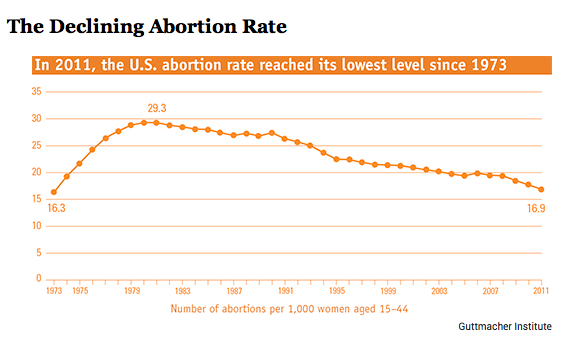
Abortion rates have been falling over the years. The Centers for Disease Control and Prevention (CDC) completed a study last year that analyzed long-term abortion trends, spanning from 1969 to 2011.

The Declining Abortion Rate (The Atlantic)

The Declining Abortion Rate (The Atlantic)

The CDC counted 730K+ abortions in 2011, which works out to 16.9 abortions per 1K women ages 15-44. This is the lowest ratio for abortions since 1973, where 16.3 abortions were recorded for every 1K women within the aforementioned age range. The study’s abstract notes that abortions were highest among adolescents and lowest among women ages 30-39 for the duration of the study. Women in their 20s had the majority of abortions.

Researchers speculate that the decrease in abortions is linked to changing social attitudes about the practice, as well as marriage. When marriage was the socially-acceptable default setting for relationships, abortions were much more rare. But now that marriage rates have decreased, many women are choosing to terminate an unplanned pregnancy rather than have a shotgun wedding with the father.

An article on “The Atlantic” also notes that American attitudes toward abortion have shifted in recent years. While only 20% of the surveyed population would like to see the practice outlawed, 38% surveyed believe it’s “morally objectionable.” This prevailing idea is likely preventing some women from having abortions, and so carrying the fetus the term. It’s very possible that the numbers on abortion are higher than reported, due to any lingering shame or stigma (either internal or external) women who’ve gone through it may face.


Are Male or Female Submissives More Common?

Jamie Dornan as Christian Grey (EW.com)

Jamie Dornan as Christian Grey (EW.com)

In a recent interview with “Elle UK,” actor Jamie Dornan discussed his role in the upcoming “Fifty Shades of Grey.” He will play businessman Christian Gray, who initiates Anastasia Steele (Dakota Johnson) into his world of pleasure and pain.

Dornan described going to a sex dungeon for research and expressed surprise at how large and widespread the lifestyle is. He then claimed that “more men are submissives than women.”

Is this true?

Dornan was probably speaking from his own anecdotal experience of visiting the dungeon. We don’t know if he visited more than one (and where the dungeon or dungeons were located), and so cannot extrapolate any larger trends from his observation.

But a couple of recent studies illuminate how dominant and submissive roles in BDSM break down along gender lines. Naturally, one of the questions asked was how participants self-identify: as doms, as subs, as women, as men.

In 2013, a Dutch study found 33% of the men surveyed identified as submissive, while 48% identified as dominant. Among women, 76% of respondents identified as submissive, and 8% identified as dominant.

Closer to home, a study from Southern California came out, which examined mental health among BDSM practitioners.

Within the study, 26% self-identified as submissive (with 61% self-identifying as dominant). Amongst women, 69% identified as submissive, and 30% identified as dominant.

This might be a stat where the anecdotal evidence differs from the numerical data. The male respondents might not’ve wanted to self-identify as submissive, and so might’ve skewed the data. But that doesn’t mean they don’t exist.

Trojan 2014 Sexual Health Report Card: By The Numbers

Trojan 2014 Sexual Health Report Card (via Twitter)

Trojan 2014 Sexual Health Report Card (via Twitter)

Earlier this year, Trojan (the condom brand, duh) released its 2014 Sexual Health Report Card. Now in its ninth year, the Report Card measures sexual health resources for 140 colleges selected from the Bowl Championship Series. Scoring categories include student health centers’ access to quality information, STI and HIV testing and condom and contraceptive availability, among other points.

This year, PAC-12 school Oregon State wrested the #1 spot from Princeton University. As the Report Card notes, the top spot has typically vacillated between the Ivy League and the Big Ten. The PAC-12 also took spots #4 (University of Arizona) and #5 (Stanford) in the top 10.

I wanted to see if there were any discernible patterns within the data, so I crunched some numbers and played with some pivot tables.

By College Conference:

Trojan Sexual Health Report Card 2014: College Conferences

Trojan Sexual Health Report Card 2014: College Conferences

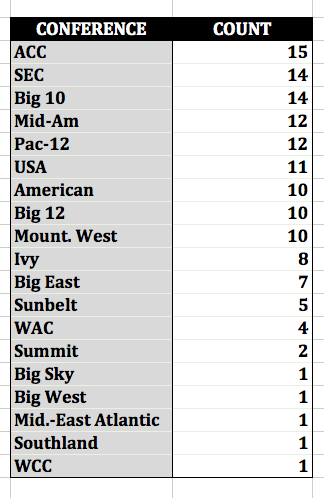
The Atlantic Coast Conference (ACC) took the top spot for conferences with 15 entries, and the Southeastern Conference (SEC) came in tied second with the Big Ten with 14 entries each. The Mid-American and PAC-12 conferences each have 12. Conference USA boasts 11 schools, and the American, Big 12 and Mountain West schools each have 10 schools.

The ACC, SEC and Ivy League all had each of its schools place within the rankings.


By School Type:
Trojan Sexual Health Report Card 2014: School Type

Trojan Sexual Health Report Card 2014: School Type

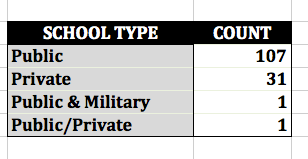
Over 76% of ranked schools were public schools, and 22% of schools were private. Ivies comprised over 25% of private schools listed.

Virginia Tech was categorized as public and military, and University of Pittsburgh was public and private.


By State:
Trojan Sexual Health Report Card 2014: States

Trojan Sexual Health Report Card 2014: States

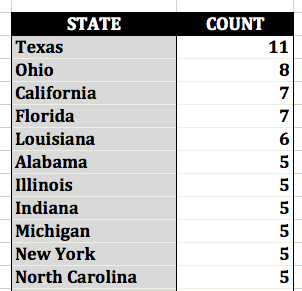
Texas boasts 11 schools ranked, while Ohio has eight schools for second place. California and Florida tie with seven schools each. Louisiana has six, and Alabama, Illinois, Indiana, Michigan, New York and North Carolina each have five schools represented.

On the other end of the scale, several states are one-hit wonders: Hawaii, Maryland, Minnesota, Missouri, Nebraska, New Hampshire, Washington D.C., and Wyoming.

By Region:
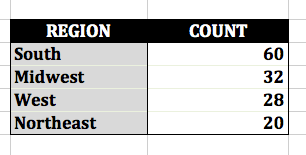
Trojan Sexual Health Report Card 2014: Region

Trojan Sexual Health Report Card 2014: Region

Here’s something interesting: The South makes up 42%+ of the report’s regional breakdown. I didn’t expect that considering the region’s traditionally rocky relationship with sex education.

By contrast, the Northeast comprises only 14%+.


Past Winners:

In the report card’s nine years of age, Ivy League schools have taken the crown four times: Yale (2006, inaugural year), Columbia (2010 and 2011), and Princeton (2013).

Columbia and Princeton have previously topped the list despite not having school-wide Sex Weeks.

Some previous winners have precipitously descended the list since their banner year. University of Minnesota-Twin Cities made #1 in 2007, but has since slid to #24, a rate of 2.8+ spots per year. University of South Carolina-Columbia topped the list in 2009, and is now 29, sliding down the list at a much faster 5+ spots a year. Yale descended to #44 this year, sliding the fastest at 5.3+ spots per year.


Interesting Outliers:

Despite Trojan’s claim to show schools from all 50 states in their report, Alaska is conspicuously absent.

Only one HBCU (historically black college or university) made the cut: Savannah State University in Savannah, Georgia. The school came in at #133. Savannah State has made the list before, ranking #134 in 2013.

Indiana University-Bloomington checks in at #36. This wouldn’t be weird except the university houses the Kinsey Institute. You’d think sexual health would be a priority considering it’s apparently lucrative research.


Methodology:

Trojan outlined the criteria they look for within the report (and even leave room for extra credit), and they’ve ranked schools on a 4.0 scale before. I’d like to learn more transparency about how the different factors were selected and weighted in terms of priority.

One weird thing was that the University of Alabama was listed twice, ranked both #30 and #120. This was confusing and will need to be corrected for future report cards.


Final Thoughts:

I’d love to see more diversity of school represented. It’d be great to see other HBCUs (Spelman, Morehouse, etc.) and art schools (Pratt Institute, RISD, etc.). The National Center for Education Statistics puts the number of four-year colleges at 2.8K+ (as of 2010-2011), and it’d be fantastic to see a wider swath of schools surveyed.


How Many People Fantasize About Having Sex With Identical Twins?

Twins Jordan and Zac Stenmark (Lyra Mag)

Twins Jordan and Zac Stenmark (Lyra Mag)

I read an NPR article on twins recently, calling millennials “Generation Twin.” This name applied due to the fact that one million more twins were born between 1980 and 2012. (This checks out with my personal anecdotal evidence: I graduated high school in 2004, and my class of 106 students boasted three sets of twins.)

“The Atlantic” goes a bit deeper into why this is: The rise in twins is due to the rise in fertility drugs, most notably IVF. Older women are the ones mostly using fertility drugs, and producing most of the babies. Also, older women are statistically more likely to have twins than younger women.

Here’s a handy table to visualize the rise in twins over the past decades:

Twins' birth rate, 1980-2012 (The Atlantic)

Twins’ birth rate, 1980-2012 (The Atlantic)

That got me wondering if sexual fantasies about twins (both identical and fraternal) have also increased.

After doing some digging, I really couldn’t find anything. I didn’t find any studies about sexual fantasies, or fantasies coming true, involving twins.

The closest I got was the recent study on sexual fantasies by researchers at Canada’s University of Quebec at Trois-Rivieres, published in the “Journal of Sexual Medicine.” “Business Insider” helpfully took all the data for male fantasies and put it together. The closest question the researchers asked the 717 men used about twins was about having sex with two women. Over 84% of men reported this fantasy, but we cannot extrapolate that this necessarily means twins.

The identical-twin fantasy didn’t show up for the women either, but that’s perhaps more understandable: Women aren’t generally depicted as having that particular fantasy (though I’m sure there are some outliers).

I find it strange that a fantasy that looms so large in popular culture (for men, at least) has basically no data to back it up.