WordPress 2014 In Review for Sex & Stats

As we all know by now, I love numbers of any kind. When WordPress offered an annual report on my new(ish) blog, I jumped on it and eagerly dug through it! Enjoy!

The WordPress.com stats helper monkeys prepared a 2014 annual report for this blog.

Here’s an excerpt:

A San Francisco cable car holds 60 people. This blog was viewed about 2,900 times in 2014. If it were a cable car, it would take about 48 trips to carry that many people.

Click here to see the complete report.

On Holiday Break!

Christmas Tree Farm (Choose and Cut)

Christmas Tree Farm (Choose and Cut)

I’m taking some time off to spend Christmas and New Year’s relaxing with friends and family (as I hope you’re all doing). Hope everyone has a great holiday season!

Regular posting will resume on Monday, Jan. 5, 2015.

Sex & Stats’ 2014 Year in Review

Beyonce's 'Flawless' performance at the 2014 MTV Video Music Award

Beyoncé’s ‘Flawless’ performance at the 2014 MTV Video Music Awards

We’re almost done with 2014, so let’s take a look back at some important movements in the world of sexuality.

Trans Issues:

After a long time, the trans community has come into the spotlight.

It started back in early March, when Jared Leto took home the Best Supporting Actor Oscar for playing trans woman Rayon in “Dallas Buyers Club.” This was the first time an actor won an Oscar for a trans role, and the second time an actor playing a trans character had been nominated for an Academy Award. (The first time was when Felicity Huffman played a trans woman in 2005’s “Transamerica,” and garnered a Best Actress nomination.) The film also sparked a dialogue about cisgendered actors playing trans roles.

The community has been making strides on a local level as well. This fall, a Texas high school elected its first trans homecoming king.


Anal Play:

“We’ve been experimenting with the butt,” a good friend of mine said recently. Though she was referring to what she and her partner were getting up to, this statement also applies to our culture’s newfound fascination with anal play.

Ever since a stripper alleged that Drake enjoyed having his salad tossed, it seems like anal play and rappers  are having a major intersectionality moment. Nicki Minaj has proven this most frequently with her singles “Anaconda” and “Only,” positing herself in the power position of receiving, and greatly enjoying, having her asshole eaten out.

Anal sex also appeared on our broadcast TV screens in mainstream American homes this fall. The “How To Get Away With Murder” pilot and an episode of “The Mindy Project” both featured the formerly taboo act (the former more explicitly than the latter). Bonus points for both featuring interracial couples as well.


Feminism:

This is technically a holdover from 2013, but feminism continued to stake its claim in culture this year.

“Harry Potter” actress Emma Watson gave an inspiring speech to the United Nations launching the HeForShe campaign, mobilizing men to do their part for feminism. Chanel designer Karl Lagerfeld ended his spring 2015 runway show with models holding up signs painted with feminist slogans. Singer John Legend declared that society would be better if all men were be feminists.

Of course, Beyoncé also had a hand in this. (No surprise there, as her 2013 self-titled album sampled Chiamanda Ngozi Adichie’s now-famous TED talk on feminism.) She started it off strong in January authoring an essay on workplace inequality for “The Shriver Report: A Woman’s Nation Pushes Back From the Brink.”

But that was small compared to what was to come: During the 2014 MTV Video Music Awards, Beyoncé performed “***Flawless” in front of a giant lit marquee, branding herself as a FEMINIST. IN ALL CAPS. It certainly raised consciousness for many people, because Google searches for “feminist” and “beyonce feminist” majorly spiked that week.


2014 has been very eventful, and let’s hope society keeps making sex-positive strides forward in 2015. See you next year!

Trojan 2014 Sexual Health Report Card: By The Numbers

Trojan 2014 Sexual Health Report Card (via Twitter)

Trojan 2014 Sexual Health Report Card (via Twitter)

Earlier this year, Trojan (the condom brand, duh) released its 2014 Sexual Health Report Card. Now in its ninth year, the Report Card measures sexual health resources for 140 colleges selected from the Bowl Championship Series. Scoring categories include student health centers’ access to quality information, STI and HIV testing and condom and contraceptive availability, among other points.

This year, PAC-12 school Oregon State wrested the #1 spot from Princeton University. As the Report Card notes, the top spot has typically vacillated between the Ivy League and the Big Ten. The PAC-12 also took spots #4 (University of Arizona) and #5 (Stanford) in the top 10.

I wanted to see if there were any discernible patterns within the data, so I crunched some numbers and played with some pivot tables.

By College Conference:

Trojan Sexual Health Report Card 2014: College Conferences

Trojan Sexual Health Report Card 2014: College Conferences

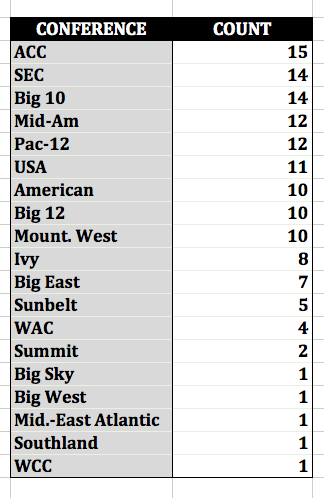
The Atlantic Coast Conference (ACC) took the top spot for conferences with 15 entries, and the Southeastern Conference (SEC) came in tied second with the Big Ten with 14 entries each. The Mid-American and PAC-12 conferences each have 12. Conference USA boasts 11 schools, and the American, Big 12 and Mountain West schools each have 10 schools.

The ACC, SEC and Ivy League all had each of its schools place within the rankings.


By School Type:
Trojan Sexual Health Report Card 2014: School Type

Trojan Sexual Health Report Card 2014: School Type

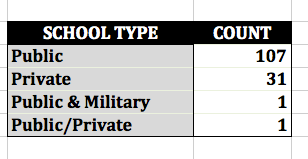
Over 76% of ranked schools were public schools, and 22% of schools were private. Ivies comprised over 25% of private schools listed.

Virginia Tech was categorized as public and military, and University of Pittsburgh was public and private.


By State:
Trojan Sexual Health Report Card 2014: States

Trojan Sexual Health Report Card 2014: States

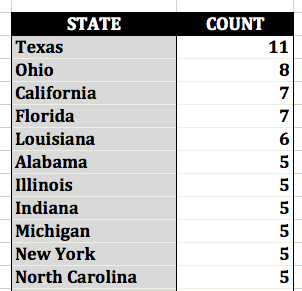
Texas boasts 11 schools ranked, while Ohio has eight schools for second place. California and Florida tie with seven schools each. Louisiana has six, and Alabama, Illinois, Indiana, Michigan, New York and North Carolina each have five schools represented.

On the other end of the scale, several states are one-hit wonders: Hawaii, Maryland, Minnesota, Missouri, Nebraska, New Hampshire, Washington D.C., and Wyoming.

By Region:
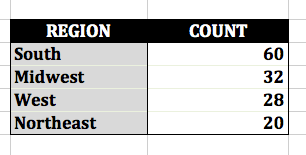
Trojan Sexual Health Report Card 2014: Region

Trojan Sexual Health Report Card 2014: Region

Here’s something interesting: The South makes up 42%+ of the report’s regional breakdown. I didn’t expect that considering the region’s traditionally rocky relationship with sex education.

By contrast, the Northeast comprises only 14%+.


Past Winners:

In the report card’s nine years of age, Ivy League schools have taken the crown four times: Yale (2006, inaugural year), Columbia (2010 and 2011), and Princeton (2013).

Columbia and Princeton have previously topped the list despite not having school-wide Sex Weeks.

Some previous winners have precipitously descended the list since their banner year. University of Minnesota-Twin Cities made #1 in 2007, but has since slid to #24, a rate of 2.8+ spots per year. University of South Carolina-Columbia topped the list in 2009, and is now 29, sliding down the list at a much faster 5+ spots a year. Yale descended to #44 this year, sliding the fastest at 5.3+ spots per year.


Interesting Outliers:

Despite Trojan’s claim to show schools from all 50 states in their report, Alaska is conspicuously absent.

Only one HBCU (historically black college or university) made the cut: Savannah State University in Savannah, Georgia. The school came in at #133. Savannah State has made the list before, ranking #134 in 2013.

Indiana University-Bloomington checks in at #36. This wouldn’t be weird except the university houses the Kinsey Institute. You’d think sexual health would be a priority considering it’s apparently lucrative research.


Methodology:

Trojan outlined the criteria they look for within the report (and even leave room for extra credit), and they’ve ranked schools on a 4.0 scale before. I’d like to learn more transparency about how the different factors were selected and weighted in terms of priority.

One weird thing was that the University of Alabama was listed twice, ranked both #30 and #120. This was confusing and will need to be corrected for future report cards.


Final Thoughts:

I’d love to see more diversity of school represented. It’d be great to see other HBCUs (Spelman, Morehouse, etc.) and art schools (Pratt Institute, RISD, etc.). The National Center for Education Statistics puts the number of four-year colleges at 2.8K+ (as of 2010-2011), and it’d be fantastic to see a wider swath of schools surveyed.




#ThrowbackThursday: Sheik Condoms by Rudolph Valentino

Sheik Condoms (Bag The Web)

Sheik Condoms (Bag The Web)

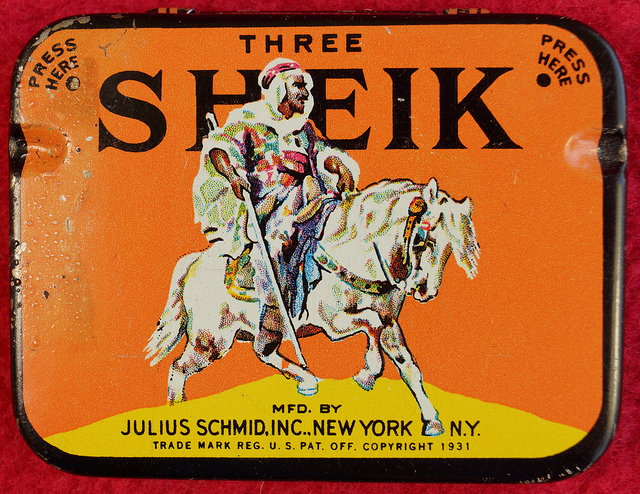
I found this image of an interesting condom tin, and decided to do some sleuthing to find out more. Sheik condoms were part of the Durex brand, and were popular for decades before being phased out.

Some interesting history: Silver screen idol Rudolph Valentino appears on this condom tin. He played a sheik in 1921’s silent movie “The Sheik,” and it became one of his most well-known roles. When his picture appeared on Sheik condoms, prophylactic sales then skyrocketed as average men wanted to get what he had for themselves.

I’m trying to imagine any actors who’d be up for lending their faces to sell condoms, but sadly I think those days are past.

How Many People Fantasize About Having Sex With Identical Twins?

Twins Jordan and Zac Stenmark (Lyra Mag)

Twins Jordan and Zac Stenmark (Lyra Mag)

I read an NPR article on twins recently, calling millennials “Generation Twin.” This name applied due to the fact that one million more twins were born between 1980 and 2012. (This checks out with my personal anecdotal evidence: I graduated high school in 2004, and my class of 106 students boasted three sets of twins.)

“The Atlantic” goes a bit deeper into why this is: The rise in twins is due to the rise in fertility drugs, most notably IVF. Older women are the ones mostly using fertility drugs, and producing most of the babies. Also, older women are statistically more likely to have twins than younger women.

Here’s a handy table to visualize the rise in twins over the past decades:

Twins' birth rate, 1980-2012 (The Atlantic)

Twins’ birth rate, 1980-2012 (The Atlantic)

That got me wondering if sexual fantasies about twins (both identical and fraternal) have also increased.

After doing some digging, I really couldn’t find anything. I didn’t find any studies about sexual fantasies, or fantasies coming true, involving twins.

The closest I got was the recent study on sexual fantasies by researchers at Canada’s University of Quebec at Trois-Rivieres, published in the “Journal of Sexual Medicine.” “Business Insider” helpfully took all the data for male fantasies and put it together. The closest question the researchers asked the 717 men used about twins was about having sex with two women. Over 84% of men reported this fantasy, but we cannot extrapolate that this necessarily means twins.

The identical-twin fantasy didn’t show up for the women either, but that’s perhaps more understandable: Women aren’t generally depicted as having that particular fantasy (though I’m sure there are some outliers).

I find it strange that a fantasy that looms so large in popular culture (for men, at least) has basically no data to back it up.

The UK Bans Certain Sex Acts in Porn

Handcuffs, a.k.a. "physical restraint" (Fleshlight)

Handcuffs, a.k.a. “physical restraint” (Fleshlight)

Earlier this month, the United Kingdom enacted a ban on certain sex acts in porn. The ban amends the 2003 Communications Act, which previously sketched in “unacceptable” acts as ones associated with violence and abuse.

Now, the British Board of Film Censors (BBFC) has narrowed down their lists of “good” and “bad” sexual acts to very specific, fetish-focused ones. Per “The Independent:”

The Audiovisual Media Services Regulations 2014 requires that video-on-demand (VoD) online porn now adhere to the same guidelines laid out for DVD sex shop-type porn by the British Board of Film Censors (BBFC).

The acts listed under “content that is not acceptable” includes a variety of BDSM-related activities, age-play, and female ejaculation. Almost all of the sex acts listed are included under the BBFC’s “Restricted 18” rating, which means that the films can only be shown at licensed adult cinemas and sex shops.

Now this only applies to porn made within the UK, and porn made outside its bounds is totally fair game to have any of these “unacceptable” acts. I have to wonder if this will lead to a rise in Brits importing their porn to see these now-illicit acts. Now foreign porn production houses can get themselves piece of that hardcore caning action:

Pornhub's UK Banned Porn Content Table (The Independent)

Pornhub’s UK Banned Porn Content Table (The Independent)

(Side note: I’d love to know how these nine acts were agreed upon. And how female ejaculation made its way in. It doesn’t seem to fit with the overall theme of violence and pain the rest of the entries have. Seriously, what’s up with that?!)

The UK has had a long, uncomfortable history attempting to regulate porn. (Robert Rosen’s “Independent” article provides some enlightening historical context.) The country only legalized hardcore porn in 2000, about 30 years after the rest of the Western world. And you’d be considered a criminal for possessing “non-realistic sexual images of a minor,” or, in popular parlance, cartoon porn.

This ruling certainly changes the game for British porn producers and consumers, so it’ll be interesting to watch how its landscape changes over time. Who knows, Britain could, at some point, enact a law dictating that only a certain amount of porn can be imported at any given time. After all, Pelchat’s amendment worked for French radio.

How Many Male Newborns Get Circumcised?

Baby boy (CuteNewBaby.com)

Baby boy (CuteNewBaby.com)

A recent NPR article reveals that the Centers for Disease Prevention and Control (CDC) is considering educating men on the health benefits of circumcision. This wouldn’t be limited to newborn babies, but open to men of all ages.

But how many men are circumcised at birth?

Last year, the CDC  released a report analyzing male newborn circumcision long-term trends from 1979 to 2010. The numbers were found using the National Hospital Discharge Survey (NHDS), and examined national and regional circumcision rates. The study didn’t count any circumcisions performed outside the hospital or on older males.

The study found some interesting things: During the time of the long-range study, circumcision rates declined around 10% to land at 58%+ in 2010. Circumcision rates declined in the 1980s, rose until 1998, and then began declining again.

(Via CDC.gov)

National long-term circumcision rates (Via CDC.gov)

The report also tracked how circumcision rates broke down by region. Circumcision in the Midwest mirrored the national trend, while the South saw increasing rates until 1998 (contrary to the national pattern), and then declining rates. The West had a steady decreasing rate throughout the study’s duration.

US Regional Circumcision Rates (via CDC.gov)

US Regional Circumcision Rates (via CDC.gov)

It’s interesting that rates have declined within the past decade-and-a-half.


What Are The Most Common Sexual Fantasies?

Sexual fantasy (E-News 365)

Sexual fantasy (E-News 365)

Happy Friday! Earlier this fall, researchers at the University of Montreal undertook a study of sexual fantasies to determine what constituted “common” and “unusual”sexual fantasies for men and women, later published in “The Journal of Sexual Medicine.” Over 1.5K adults participated in the survey, splitting nearly evenly along gender lines. Participants filled out an Internet survey and responded to given statements about sexual fantasies, and also submitted their own.

Once the data was amassed, fantasies were categorized as rare, unusual, common or typical, depending on volume of responses. Responses characterized as typical comprised 84%+ of the sample.

For women, the three most typical sexual fantasies are feeling romantic emotions during sex (92%+), having an appealing atmosphere and location (86%+), and having sex in a romantic location (84%+).

For men, the three most typical sexual fantasies are feeling romantic emotions during sex (88%+), participating in fellatio/cunnilingus (87%+), and having sex in an unusual place (82%+).

It’s interesting that men and women are primarily fantasizing about the same thing, but then women are more fantasizing about romance during the act, while men are fantasizing more about different and adventurous sex acts. Or at least that’s what the respondents admit to.

So for anyone concerned that their tastes might be out of the box (or maybe too much within it), “Business Insider” has the whole breakdown. Enjoy!

Rap Singles’ Analingus References: By The Numbers

Nicki Minaj 'Anaconda' Still (YouTube)

Nicki Minaj ‘Anaconda’ Still (YouTube)

Analingus seems to all over right now, and has lodged itself into our continuing conversation on “acceptable” sexual mores. It seemingly all started earlier this year when a stripper alleged that she tossed Drake’s salad, and then we were off to the races on the topic. (Drake has neither confirmed nor publicly denied these allegations.)

Since we’re talking about it, I wanted to see if popular music reflected the trend. I looked at certain rap artists’ lyrics to see if analingus infiltrated any rap singles released this year, looking for such tell-tale phrases as “anal,” “booty,” “salad tossing,” etc.

Drake:

Drake released two singles this year, “Worst Behavior” (from 2013’s “Nothing Was The Same”) and “0 to 100/The Catch Up” (from next year’s “Views From The 6”).

Neither song directly references analingus.


Lil’ Wayne: 

Lil’ Wayne dropped five singles this year: “Rich As Fuck,” “Krazy,” “Gotti,” “Start A Fire,” “Believe Me” and “Grindin’.” (Drake features on the last two songs). All singles were off “Tha Carter V.”

None of the songs reference eating booty.


Wiz Khalifa:

Aside from his contributions to the “Teenage Mutant Ninja Turtles” and WWE 2K15 soundtracks (we’re not counting gun-for-hire works), Khalifa released six singles from “Blacc Hollywood:” “We Dem Boyz,” “KK,” “You and Your Friends,” “Stayin Out All Night,” “Promises” and “So High.”

In “We Dem Boyz,” Khalifa doesn’t mention his booty-eating preferences, but seemingly calls out Nicki Minaj on hers: “Do it just like Nicki gon’ and bend it over.”

Overall, Khalifa’s much more interested in smoking weed that eating out anyone’s ass.


Trey Songz:

Songz also released six singles this year: “NaNa,” “Smart Phones,” “Foreign,” “Change Your Mind,” “What’s Best For You,” and “Touchin’, Lovin'” (featuring Nicki Minaj).

In “Foreign,” Songz throws in a few references to a woman’s ass (that it’s large and she’s tweaking), but he stops short of implying analingus.

Though Minaj guests on “Touchin’, Lovin'” and raps abut her sexual prowess, she only talks about her penetrative sexual prowess and doesn’t mention giving or receiving analingus.


Nicki Minaj:

It’s been a banner year for Nicki Minaj, and her ass. The rapper has brought her signature aggressive, take-no-prisoners style into the analingus arena, and we’re all eating it up (ha). We’ve heard about her booty getting love in two separate singles this year.

In “Anaconda,” from “this dude named Michael:” “he toss my salad like his name Romaine”

In “Only,” subverting the traditional passive female tone and telling us what she’d have Drake and Lil Wayne do: “menage with ’em and let ’em eat my ass like a cupcake.”


I find it very interesting that a woman is the only one opening putting it out there that she enjoys analingus.  Since women have traditionally and culturally been seen as docile and passive sexual beings (when they’re even afforded that agency), I love that Nicki Minaj is subverting the expectation and going on the offensive and owning it.

Though analingus awareness is growing, it isn’t yet resonating within rap lyrics, with the exception of Minaj. That might change as the act goes more mainstream.