The New Abercrombie & Fitch Will Feature Less Sex (NSFW)

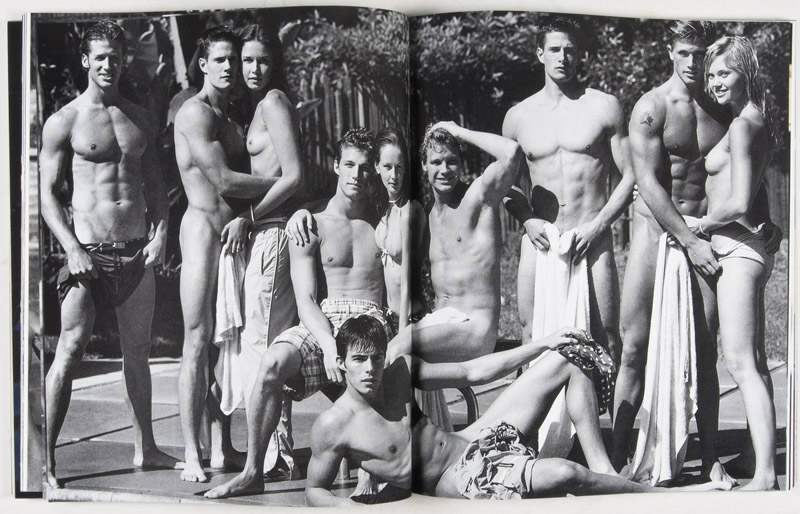
'A&F Quarterly' Spring Break Issue 2001 (Kline Books)

‘A&F Quarterly’ Spring Break Issue 2001 (Kline Books)

Happy Friday! If you’re in your mid-20s or older, you probably remember (and hell, wore) some Abercrombie & Fitch (A&F) back in the day. The stylishly distressed, yet massively overpriced, clothes were a status signifier back in middle and high school, when everyone wanted to be part of the cool crowd (which was comprised solely of all-American, apple-cheeked near-Aryans). And of course, who can forget those sex-drenched ads and catalogs?

The A&F of yore will now be changing that particular aspect. According to “The Washington Post,” the chain will no longer hire “models” (their term for sales associates) based on “body type or physical attractiveness.” They’ll also phase out the “sexualized marketing” (suggestive ads, shirtless models at storefront openings) by July.

This all comes as A&F tries to revamp its image, and project a more inclusive one. Former CEO Mike Jeffries was known for promoting the brand as exclusionary to everyone but his coveted “cool crowds,” and didn’t offer larger sizes. He stepped down from his post last December. The move came amid reports that the retailer’s shares have decreased 39% over the past year, and profits shrunk 5%+ last year.

It’ll be interesting to see if A&F can actually pull off this drastic brand reinvention, and if consumers will respond to it.
Thursday Trends: Same-Sex Couples Reflected in Advertising

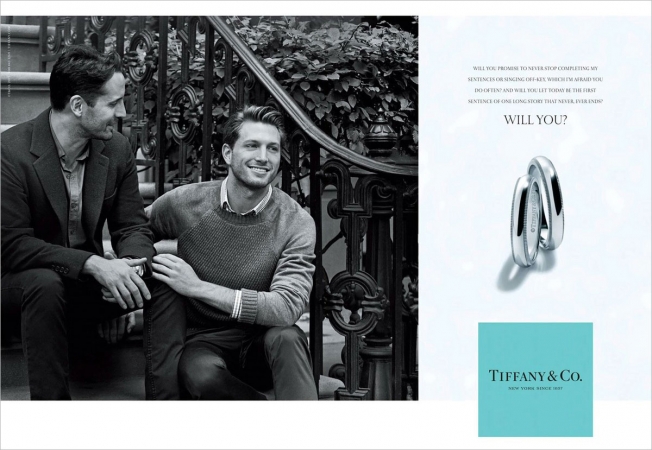
Tiffany's first ad featuring a gay couple (Adweek)

Tiffany’s first ad featuring a gay couple (Adweek)

Advertisements are finally getting with the times, and featuring more diversity than your run-of-the-mill straight white couple.

Last month, jewelry giant Tiffany’s debuted a new print ad for their wedding rings. But this ad had one thing different: it prominently featured a gay couple. And apparently the two men are a couple in real life, and were photographed on their own New York stoop.

This was the first time Tiffany’s has used a same-sex couple in their advertising. But it won’t be the last: Just this week, the brand used the same couple in a TV-spot ad. (The ad also features straight and interracial couples.) It signals that the 178-year-old brand recognizes that love comes in many forms, and they want to be all-inclusive. (And it’s a smart business move.)

Other brands in recent years have featured same-sex couples. Preppy retailer J. Crew used a gay couple in their catalog in spring 2011, and Gap used another couple on a billboard the following year. Incidentally, neither sets of couples are professional models: In the case of the J. Crew couple, one of the men was a designer for the brand. (It seems there’s also a side-trend of using real people.)

Lesbian couples are also increasingly represented. In 2012, JC Penney featured a lesbian couple with their children in a catalog pegged to Mother’s Day. Last year, condom brand Durex used two women being playfully affectionate with each other in an ad for a massage gel. This year, Hallmark showed an ad featuring a real-life lesbian couple describing their feelings for each other in the run up to Valentine’s Day.

It’s clear that things are changing. Even “The Onion” got in the action, with a (mock) article claiming that jewelry company Zales created an ad featuring a polyamorous triad. (But the article did rightfully call out that we, as a whole society, aren’t quite there yet.)

Hopefully this follow its natural progression, and  will eventually lead to more ads featuring same-sex couples with families. It’d be great to see future print and online ads and commercials where we see a family with two dads or two moms, NBD.

After all, this would make complete economic sense for these companies: In 2012, “Adweek” reported that the LGBT market is estimated to be worth around $743B+.


Why is Argentina Battling a Tampon Shortage?

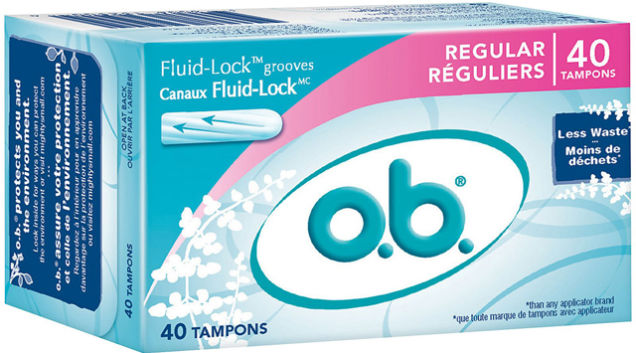
o.b. Tampons (Jezebel)

o.b. Tampons (Jezebel)

“The Cut” recently reported that Argentina is currently experiencing a woman’s worst nightmare: a tampon shortage.

According to the Associated Press, the shortage has been going on for over two weeks. The problem stems from an impasse between importers and the government. Businesses think the Argentinean government has been slow in issuing permits for imports (Argentina imports most of its tampons from nearby Brazil), while the government feels that businesses are driving up the prices to increase profits.

A spokesman for Johnson & Johnson claims that only the most popular tampon brands and quantities are affected by the shortage.

The situation isn’t uncommon for the country. Argentina periodically has experienced shortages of medical supplies such as needles and latex gloves.

The U.S. experienced a similar situation form 2009 to 2011. Johnson & Johnson took o.b. tampons off shelves in 2009, citing a “temporary supply interruption.”  The tampons are beloved for not having an applicator and for being environmentally-friendly. The supply shortage emptied drugstore shelves and drove demand up to $99 a box on eBay. The o.b. black market ended when stores began to restock the popular tampon.

No explanation was ever given for the shortage.

What Are The Most Common Sexual Fantasies?

Sexual fantasy (E-News 365)

Sexual fantasy (E-News 365)

Happy Friday! Earlier this fall, researchers at the University of Montreal undertook a study of sexual fantasies to determine what constituted “common” and “unusual”sexual fantasies for men and women, later published in “The Journal of Sexual Medicine.” Over 1.5K adults participated in the survey, splitting nearly evenly along gender lines. Participants filled out an Internet survey and responded to given statements about sexual fantasies, and also submitted their own.

Once the data was amassed, fantasies were categorized as rare, unusual, common or typical, depending on volume of responses. Responses characterized as typical comprised 84%+ of the sample.

For women, the three most typical sexual fantasies are feeling romantic emotions during sex (92%+), having an appealing atmosphere and location (86%+), and having sex in a romantic location (84%+).

For men, the three most typical sexual fantasies are feeling romantic emotions during sex (88%+), participating in fellatio/cunnilingus (87%+), and having sex in an unusual place (82%+).

It’s interesting that men and women are primarily fantasizing about the same thing, but then women are more fantasizing about romance during the act, while men are fantasizing more about different and adventurous sex acts. Or at least that’s what the respondents admit to.

So for anyone concerned that their tastes might be out of the box (or maybe too much within it), “Business Insider” has the whole breakdown. Enjoy!