#ThrowbackThursday: Micheline Bernardini in a Bikini, 1946

Micheline Bernardini in a bikini (Culturify)

Micheline Bernardini in a bikini (Culturify)

You may not recognize Micheline Bernardini’s name, but you know her impact: Bernardini was the first woman ever to wear a bikini.

In 1946, French engineer Louis Reard cut up some fabric and sewed four triangles to get the first bikini. He wanted to announce his new invention to the world with a press conference. There was only one problem: he couldn’t find a woman willing to wear his creation. Reard eventually hired teenage exotic dancer Micheline Bernardini to model the bikini.

The bikini gets its name from Bikini Atoll, where nuclear weapons were tested on war artillery. The first test was completed five days before Reard announced his new sartorial creation.

Apple’s iOS 10 Emoji Will Bust Gender Stereotypes

iOS 10 Emoji (Australian Broadcasting Corporation)

iOS 10 Emoji (Australian Broadcasting Corporation)

Apple’s iOS update will also bring a slew of emoji changes to the Messages app. But these emoji will now be more diverse and gender-inclusive.

Women will now be represented with professions that had previously only be available for men, such as surfing, police officers and doctors. The reverse will hold true for the men, who will now have the option to use emoji depicting haircuts and massages.

There will also be new family emoji, showing single mothers and fathers with their children. A rainbow flag has also made it into the mix, signifying Apple’s support for marriage equality (insert hallelujah-hands emoji here).

This spring, Google first brought new emoji designs to the Unicode Consortium, the committee that oversees the selection, development and implementation of new emoji. Apple is also a member of the Consortium, and moved forward in developing its own emoji.

This isn’t the first time emoji have been updated for diversity. Last year’s release of iOS 9.1 included the debut of multiple skin tones. This upcoming batch of new inclusive emoji will have 100+ iterations, taking skin tone into account.

iOS 10 will debut later this fall.

The HPV Vaccine is the Most Underused Immunization for Children

HPV Vaccine (Fearless Parent)

HPV Vaccine (Fearless Parent)

Once they’re born, children receive a range of vaccinations against seemingly every possible disease. But one vaccination has been severely under-used: the human papillomavirus (HPV) vaccine.

According to the Centers for Disease Prevention and Control (CDC), HPV is the “most common sexually transmitted infection (STI).” The virus affects 14M+ people every year, and will affect almost everyone who is sexually active at some point in their lives. HPV causes 90% of cervical cancers, and other cancers associated with orifices used during sexual activity (think vagina, anus, etc.).

A 2014 study done by researchers at Harvard Medical School and the University of North Carolina (UNC) showed that a “sizable minority” of doctors recommended the vaccine “inconsistently, behind schedule or without urgency.”

Here’s what that translates to numerically:

As of 2014, only 40 percent of girls and 21 percent of boys ages 13 to 17 had received all three doses of the HPV vaccine, whereas 88 percent of boys and girls had been vaccinated against tetanus-diphtheria-pertussis and 79 percent had gotten the meningococcal vaccine.

But why aren’t children getting this vaccination? One reason is that doctors may be reluctant to talk about sexual activity with children, even if it’s future sexual activity. The vaccination does not rank high on the list of children’s immunizations, and isn’t required in many states. There also has not been a public health scare to drive home the importance of this immunization to parents.

The virus was only approved in 2006, and can be cost-prohibitive: the three-shot series can run up to $1K.

Children, both girls and boys, should receive the vaccination around ages 11-12. Boys can get catch-up vaccines until they’re 21, and girls can do the same until they’re 26. But the vaccine has proven less effective when given during the later years.

Burkini Sales Rise by 200% After French Ban

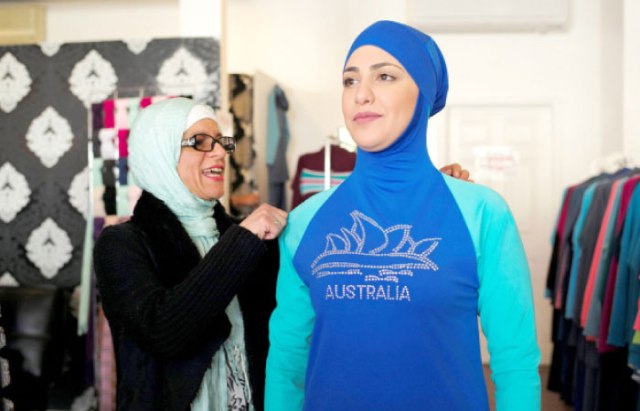
Burkini designer Aheda Zanetti (Saudi Gazette)

Burkini designer Aheda Zanetti (Saudi Gazette)

Earlier this summer, coastal French towns courted controversy when their respective mayors decided to ban burkinis on beaches. The burkini consists of a long-sleeved top with long pants and a head covering, and was developed for women who follow Islamic modesty standards so that they could go swimming while still covered. The term “burkini” comes from a portmanteau of the words “burqa” and “bikini.”

Despite the ban, burkini creator Aheda Zanetti says that online sales of now-famous swimwear have risen over 200%+ recently. (Now, we don’t know what her sales had been previously, or what the year-over-year change has proved to be, so unfortunately we have incomplete information.)

Zanetti says that her customers are not homogeneously Muslim. She reports that about 40% of her customers are from other faith traditions, such as Judaism and Mormonism, that adhere to modest dress standards.

The burkini ban stems from a stringent French view on separating religion from the state. The French government has banned religious symbols from government buildings since 2004. A ban specifically on burqas was passed in 2011.

Right now, about 30 French towns have instituted the ban, though the town of Villeneuve-Loubet has since overturned it.


Trends: All-Female Reboots

"Ghostbusters," 2016 (Geek.com)

“Ghostbusters,” 2016 (Geek.com)

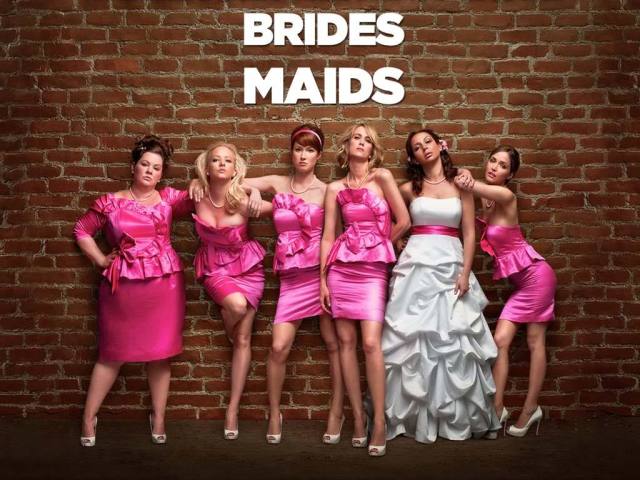
The 2011 movie “Bridesmaids” was very funny, no doubt about that. The film, which starred a cadre of funny women led by Kristen Wiig and Maya Rudolph, centered on the escapades of the titular group as they helped their friend (played by Rudolph) on the way to getting hitched. The movie was well-liked by audiences, and that showed in the revenue. At the end of the year, “Bridesmaids” ranked #14 at the domestic box office with $169M+ in revenue, and #20 in the worldwide box office with $289M+ in revenue.

But it also had an effect on movies that we’re still feeling: “Bridesmaids” convinced studios that audiences (both women and men, shocker) would see a movie with an all-woman cast. Well…duh. And now studios have sat up and taken notice.

The waves from “Bridesmaids” have hit an interesting formula: to remake a beloved movie with an all-female cast. The rationale goes that if the men liked the original, then the women will love the remake! (And there’s the assumption that the men will be dragged to the movie from their ladies, but it’s OK because it’s a nostalgic property.)

One high-profile all-female remake has already come out: this year’s “Ghostbusters.” The reboot has Kristen Wiig, Melissa McCarthy, Kate McKinnon and Leslie Jones investigate paranormal happenings in New York. The movie has a strong “Saturday Night Live” heritage: In addition to Wiig, McKinnon and Jones logging time on the show, the movie also featured current cast member Cecily Strong in a notable part. “Ghostbusters” debuted at #2 on opening weekend, and as thus far grossed $124M+ domestically and $208M+ worldwide.

Another all-female project announced recently was a reboot of the 2001 heist movie “Ocean’s 11” (which itself is a remake of the 1960 movie of the same name). Sandra Bullock, Cate Blanchett, Rihanna, Mindy Kaling, Anne Hathaway, Helena Bonham Carter, and Nora Lum (better known by her rap name Awkwafina) will make up the ensemble. No release date yet, but I know I’ll be seeing it in the theatre because I vote with my dollars.

It’s great to see so many movies getting made with all-female ensembles, but I can’t wait to get to the point where it’s not noteworthy anymore, but unremarkable and accepted.


#ThrowbackThursday: “Bridesmaids,” 2011

"Bridesmaids," 2011 (Scoopify)

“Bridesmaids,” 2011 (Scoopify)

If you didn’t see “Bridesmaids” when it came out five years ago, you clearly hate women in comedy. As you might guess from the movie title, the story revolved around a group of bridesmaids, led by Kristen Wiig, and their antics leading up to their friend’s wedding day.

Before “Bridesmaids” premiered in May 2011, the movie had gotten a lot of press for being an all-female comedy. Lots of questions prevailed: Were women actually funny? Would women see it? More importantly (ha, in the eyes of Hollywood), would men see it?

The answer to these questions was a resounding “yes!” The movie did well at the box office, ranking #14 at the domestic box office with $169M+ in revenue and #20 worldwide with $289M+ in revenue. It also opened the door a little wider to allow more female-driven  movies and women in gross-out comedy (remember the bridal atelier scene?).

How Many People Check Their Phones During Sex?

Woman texting in bed (Khurki)

Woman texting in bed (Khurki)

I don’t know about you, but I was taught not to be rude. In any situation (if I can help it). And that respect extends to my bedroom, and whatever partner is lucky enough to occupy it with me for that time.

This includes minimizing distractions so I can concentrate on getting it on and getting off. And in our super-connected state, what could be more distracting than your phone? Turns out others were also curious about that, and now there are, not one, but two, studies that exist on the topic.

A 2013 study done in England surveyed 1.7K+ men and women. The results found that 62% of women and 48% of men had interrupted sex to play with their phone. It broke down into specifics: Answering a call was 34% of the time, answering a text was 24%, and answering an email comprised 22%. Weirdly, the results didn’t break down the specifics by gender.

Oh yeah, and 34% of respondents claimed to be OK with the fact that their partner had turned their attention to their phone during the act. Sure, sounds legit. (I’d be mad as hell, but that’s just me.)

Also, we don’t know the ages of the respondents. I’d be tempted to speculate that the people who can’t leave their phones alone during sex would be of the millennial cohort (since my generation’s phones are practically appendages), but of course I can’t be certain.

But wait, there’s more!

Earlier this year, researchers at the University of Virginia presented findings focused on how our phones are distracting us from everything. Including, yes, sex.

(Side note: the scientists presented said research at the aptly-named Association for Computing Machinery’s Human-Computer Interaction conference. Who knew one existed?!)

Anyway, here’s an interesting discrepancy: only 10% of people admitted picking up their phones during sex. That’s a large gap between the 48-62% that the English study claimed. I don’t know whether this boils down to different social/sexual/technological mores across the pond, but that’s a huge gap in self-reporting.

Either way, it doesn’t matter. Come on, using your phone during sex is just inexcusable. Give your partner your full attention!

If you’re one of those people, do your current/future partners a favor and put that shit on airplane mode when you’re getting down.

Lesbians Report More Orgasms Than Straight Women

Women kissing (Wallhaven)

Women kissing (Wallhaven)

That headline got your attention, didn’t it?

Yes, it’s true: Women with same-sex partners orgasm more than women in heterosexual partnerships and also bisexual women.

A 2014 study by Garcia, Lloyd, Wallen and Fisher examined the orgasm frequency of 6K+ women and men. (No word on how it broke down via gender and orientation identifications.) Participants self-selected to take the 2011 survey. Data was used from 1.4K+ men and 1.3K+ women who’d had sex within the past year.

The study found that heterosexual women experienced an orgasm 61%+ of the time, bisexual women had an orgasm 58% of the time, and lesbian women had an orgasm 74%+ of the time. Needless to say, those are some very large gaps to attribute to orientation.

But why is this? There are a few reasons: First, a woman would theoretically be able to get her female partner off more easily, because she’s working with the same equipment (so to speak). She would also be more comfortable with her own body, allowing her to orgasm more. Another reason mentioned is a bit more about social conditioning in terms of sexual etiquette: A 2013 study reveals that women in heterosexual partnerships don’t expect to have an orgasm during a sexual encounter, whereas women in homosexual partnerships do have that expectation.

Link Between Tonsils and Appendix and Fertility Discovered

Tonsils (Daily Mail UK)

Today in “Things You (Probably) Wouldn’t Guess:” Scientists have discovered that the presence of tonsils or an appendix affects fertility.

A study conducted by University of Dundee and University College London found that if woman had either organ removed, they were more likely to both to become pregnant, but also to get pregnant earlier in life. (If you remember from middle school math class, this is what’s called an inverse relationship.) The study followed 530K+ women in the UK over a 15-year period. Over 54K women had their appendix removed, 112K+ women had their tonsils removed, and 10K+ women had both appendices and tonsils removed.

Women who’d had their appendix removed got pregnant at a 34% higher rate than women who still had their appendix. Women who’d had their tonsils removed got pregnant at a 49% (!) higher rate than women who still had their tonsils. And women who’d had both procedures got pregnant at a 43% higher rate than women who had not undergone both procedures.

It’s not clear yet why these things are linked together. But it flies in the face of long-time conventional medical wisdom, which had previously declared that removing a woman’s appendix affected her future fertility due to scarring around her fallopian tubes (a crucial passage for her eggs).


#ThrowbackThursday: Kim Kardashian’s Latex Dresses, 2014 and 2015

Kim Kardashian's latex dresses (E! Online)

Kim Kardashian’s latex dresses (E! Online)

Kim Kardashian always knows how to leave an impression. In 2014, Kardashian attended a couple of events wearing dresses made from latex. You wouldn’t normally think of latex as eveningwear material, but Kardashian pulled it off – twice. She attended the Australian launch of her fragrance while wearing the pink dress, and her husband Kanye West’s concert while wearing the black version.

Both dresses were designed by Atsuko Kudo, who specializes in “couture latex design.”