Google Trends: Hillary Clinton vs. Donald Trump

Hillary Clinton and Donald Trump (CNN)

Hillary Clinton and Donald Trump (CNN)

With all the craziness surrounding this election, I’ve gotten more and more curious about how the Google Trends numbers stack up for both Hillary Clinton and Donald Trump. Let’s take a look!

First, here’s a Google Trends graph of searches for the presidential candidates within the past week (Oct. 24-Oct. 31):

National search interest in the candidates, past week (Google Trends)

National search interest in the candidates, past week (Google Trends)

Here’s the long-term trend of Google users searching “hillary clinton” over the past five years:

Search term 'hillary clinton' interest over time (Google Trends)

Search term ‘hillary clinton’ interest over time (Google Trends)

Check out those spikes!! That first large spike is from Jul. 24-30, 2016. The second spike is Sept. 11-17, 2016.

And here’s the same for “donald trump:”

Search term 'donald trump' interest over time (Google Trends)

Search term ‘donald trump’ interest over time (Google Trends)

Here’s how searches for the two candidates look over time (fittingly, Clinton’s in blue, Trump’s in red):

Search terms 'hillary clinton' and 'donald trump' over time (Google Trends)

Search terms ‘hillary clinton’ and ‘donald trump’ over time (Google Trends)

Here’s “hillary clinton” and “donald trump” searched over the past 12 months only in the U.S.:

Search terms 'hillary clinton' and 'donald trump' over the past 12 months in the U.S. (Google Trends)

Search terms ‘hillary clinton’ and ‘donald trump’ over the past 12 months in the U.S. (Google Trends)

To be honest, I really don’t know how to parse this data. It seems that people who are searching for Trump…Google him more often? Needless to say, we won’t get any clear answers here.

Asian-Americans Shifting Away from the Republican Party

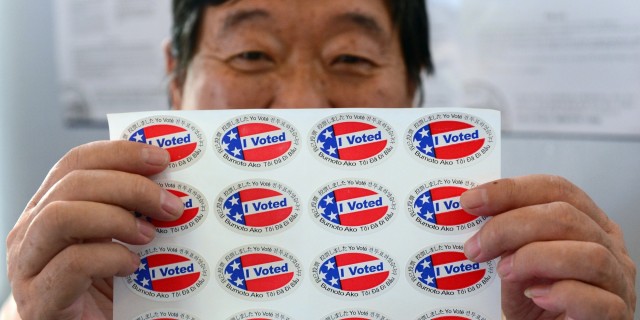
Asian-American voter (The Huffington Post)

Asian-American voter (The Huffington Post)

Recent data shows that Asian-Americans are leaving the Republican party to vote Democrat.

Through the 1990s, Asian-Americans were more likely to vote Republican. It’s thought that Asian-American generally voted for the Republican candidate due to connecting with fiscally and socially conservative platforms. Asian-Americans voted Republican around 55% of the time during the 1992 presidential election between Republican George H.W. Bush and Democrat Bill Clinton (who ended up winning). The 2000 election became a turning point when more Asian-Americans began supporting the Democrat candidate. In 2012, Barack Obama won with Asian voters by “nearly 50 percentage points.” Karthick Ramakrishnan of the National Asian American Survey attributes this outcome to Democrats actively trying to win the Asian-American vote.

Party Identification Among Asian-Americans (NPR)

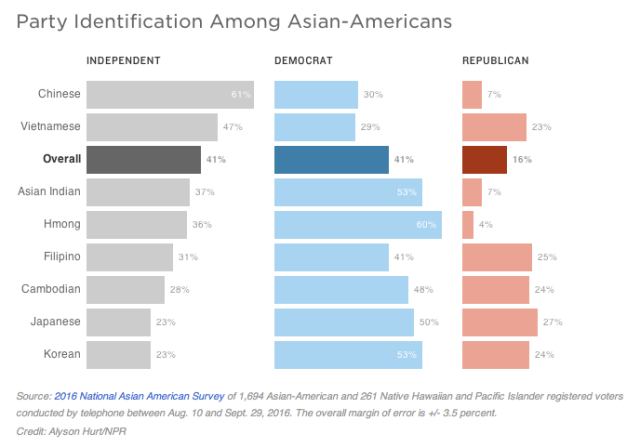
Party Identification Among Asian-Americans (NPR)

Over time, Asian-Americans gravitating towards the Democrats doesn’t seem like a big deal, and more like a natural shift over time. Except that it might not be. This fact becomes more important in this election where surveys have shown Asian-Americans rejecting many points of Republican presidential candidate Donald Trump’s platform: keeping out and deporting immigrants, diplomacy with China, among other aspects.

But it’s too early to tell whether this shift for Asian-Americans toward the Democrats is a blip on the radar or foretelling a larger, more long-term trend. According to Ramakrishnan, it’s too early to tell. In 2015, 47% of Asian-Americans identified as politically independent.

In October 2016, a survey found that registered Asian-American voters supported Hillary Clinton over Trump by a 4-to-1 lead.


California Will Vote to Require Condoms on Porn Shoots

Condoms (StyleCaster)

Condoms (StyleCaster)

This year, California residents will head to the polls, and be asked to vote on something unique to the Golden State: what happens on a porn shoot.

Proposition 60, a.k.a. the Condoms in Pornographic Films Initiative, proposes that adult performers wear condoms during scenes where they “actually engage in vaginal or anal penetration by a penis.” (Side note: can we just appreciate that this language made it into a ballot measure?) Aside from that essential fact, the measure requires producers of pornographic films to pay for medical vaccinations and testing related to sexually transmitted diseases (STDs), and to obtain the state health license.

This measure would cover the San Fernando Valley, where the majority of the porn industry’s films are shot. The measure is not without precedent: In 2012, 56% of voters approved a similar measure, called Measure B, that covered Los Angeles County.

A recent University of Southern California Dornsife/LA Times poll showed that 55% of respondents would support the measure if they had to vote that day. Over 1K people were surveyed.

But Prop 60 also has the potential to harm one of California’s booming industries. Right now, perfumers get tested regularly for STDs, and shooting shuts down if an outbreak occurs. It’s pretty self-governed. But passing the measure might open up liability for independent producers and private companies that distribute porn films.

One reason behind opposing Prop 60 hinges on the fact that it could drive the business elsewhere, to a place that has less stringent (or no) regulations. This concern also has precedent in data: In 2012, the year Measure B passed in Los Angeles, FilmLA reported that there were 480 permits pulled for shoots involving “nonsimulated sex.” In 2013, that number plummeted drastically to 40 permits, and has been dropping year-over-year since. Implementing Prop 60 would also cost the state around $1M to “license and regulate film production, and an additional several million dollars in lost taxes if the industry flees California.”

As you can see, there are many aspects to consider whether you’re for or against Prop. 60. Californians, make sure you do your research before you vote!


Single Women are the Most Powerful Voting Demographic

A single lady's ring finger (NY Mag The Cut)

A single lady’s ring finger (NY Mag The Cut)

Single women are a force.

Granted, they’ve always been a force to be reckoned with. But now they’re becoming a powerful voting bloc that could decide this election.

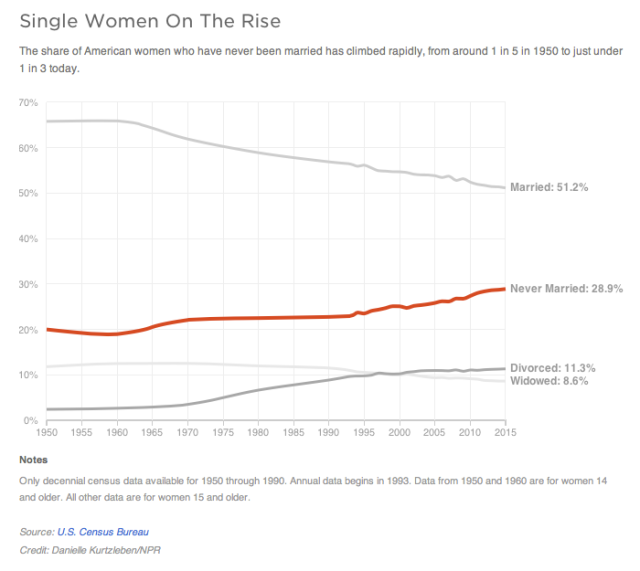
This hasn’t gone unnoticed. Author Rebecca Traister’s book All the Single Ladies: Unmarried Women and the Rise of an Independent Nation focused on this demographic and how its members are shaping and redefining social norms when the book was released earlier this year. One of Traister’s sources, Page Gardner, predicted that “there could be more unmarried women in the electorate this year than married women — and they vote super left.”

Single Women On The Rise (NPR)

Single Women On The Rise (NPR)

This trend gained steam in 2012. Single women comprised 53% of the voting population, and supported President Barack Obama at around 55%. Compare this to men, who supported Obama at around 45%.

And beware, these single ladies are selective with their votes: The results of the American Women Web survey in the Elle March 2016 issue found that 86% of single women, and 84% of overall women, would not vote for a candidate that was anti-women. This wasn’t partisan, since 73% of Republican women agreed with that statement.

Welcome to Sex & Election 2016 Week!

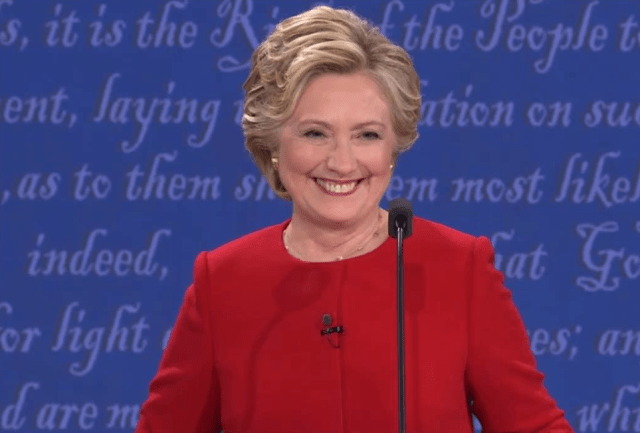
Hillary Clinton (YouTube)

Hillary Clinton (YouTube)

Welcome to Sex & Election 2016 Week on Sex & Stats! From now until Tuesday, Nov. 8th (Election Day for those in the U.S.), I’m bringing you the best in political-themed statistics that intersect with sexuality, gender, race, etc. And this presidential race has been a veritable GOLD MINE for this shit. I’m not even joking (as you’ll find out this week).

Until 11:59 p.m. PST, you’ll get two posts a day on this topic. (Yes, even on Friday!) Get ready for 11 more posts that will make you laugh, cry, and possibly weep for the state of the country, all using data.


Don Draper’s Conquests: By The Numbers UPDATED

'Mad Men' Don Draper, Midge Daniels, Megan Calvet Draper, Betty Draper, and Dr. Faye Miller (Vulture)

‘Mad Men’ Don Draper, Midge Daniels, Megan Calvet Draper, Betty Draper, and Dr. Faye Miller (Vulture)

Today’s post is an update of this post, in celebration/memoriam of last night’s “Mad Men” series finale. Now that the series has ended, we can make more definitive statements on what kind of women Don prefers. 

Everyone who watched the show knows that Don Draper (Jon Hamm) is a serial womanizer. Even when he’s married, he can’t stay faithful. It’s part of what makes him so intriguing: we know he’s wrong, but we couldn’t stop watching!

There’s been some ink spilled on the types of women he tends to bed, such as preferring docile women for marriage versus favoring strong-willed career women for affairs. But I was curious to find out if there were any other patterns, and so had some fun with Excel.

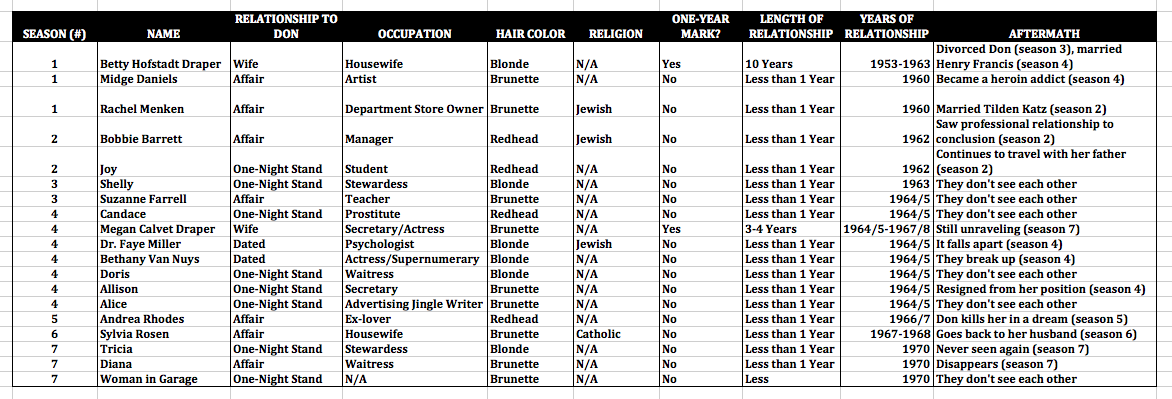
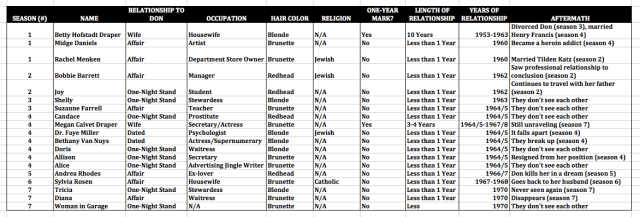
For fun, here’s what my entire Excel spreadsheet looked like:
'Mad Men' Don Draper Conquests Excel Spreadsheet UPDATED

‘Mad Men’ Don Draper Conquests Excel Spreadsheet UPDATED

If you can’t see, I listed the names of Don’s 19 partners by season, their relationship to Don, occupation, hair color, religion, and overall length of the relationship. (Some of these metrics I didn’t end up using.) Some of these things I tried finding information as accurate as possible (such as the years each relationship spanned), but sometimes had to make a close guess. So if you see an error, please correct me and I’ll recalculate.

Now, let’s find some patterns via pivot tables.


Don’s Relationships by Type:

I broke down Don’s relationships into three types: wife, affair and one-night-stand. I defined affair as on-going with an emotional component, whereas I defined one-night stand as purely sexual, even though it may have happened more than once (as is the case with season 4’s Candace and season 7’s Tricia).

That being said, here’s the data:

'Mad Men' Don's Relationships by Type  Excel Pivot Table UPDATED

‘Mad Men’ Don’s Relationships by Type Excel Pivot Table UPDATED

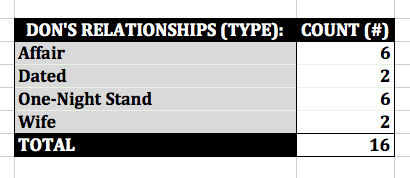
We know he’s been married twice (I’m not counting Anna Draper, as she was never a conquest), so no surprise there. I figured Don has had more casual partners than serious ones, but I didn’t realize how much it would skew. Don’s had over three times as many affairs and one-night stands combined as he has married and dated partners combined. Interesting.


Partners’ Occupation:

I was interested to see if Don had any particular type in terms of career. Though every woman was different, four occupations reoccurred, and all of them roughly at the same rate.

Two of the 16 women (12.5%) were housewives, which were his first wife Betty and later season 6’s Sylvia Rosen. Another pattern that emerged were two actresses, who also held other jobs when Don knew them. These two were season 4’s Bethany Van Nuys (whose other job was a supernumerary) and his second wife Megan Calvet (who began as a secretary).

Don’s partners in season 7 made a couple more occupations a trend. Tricia was the second stewardess, with the first being season 3’s Shelly. Waitress Diana came after season 4’s Doris, also a waitress.


Partners’ Hair Color:

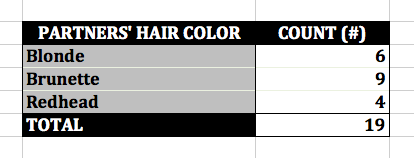
Gentlemen prefer blondes, but does Don? Let’s take a look:

'Mad Men' Don's Partners' Hair Color Excel Pivot Table UPDATED

‘Mad Men’ Don’s Partners’ Hair Color Excel Pivot Table UPDATED

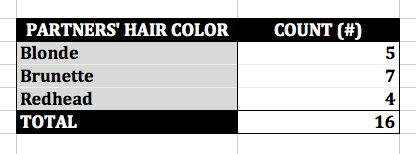
No, Don’s more of a brunette man, with nearly half his partners sporting the color. He prefers blondes slightly more than redheads.


Religion:

I initially wanted to see how each partner’s religion broke down. Several did not mention or show any religious leanings, so I referred to their respective affiliations as “N/A,” because I didn’t want to automatically put partners into a “default Christian” category.

Only two of the 16 partners (12.5%) were overt about their religious affiliation: season 1’s Jewish department store heiress Rachel Menken, and the Catholic Sylvia Rosen (season 6, though she’s married to a Jewish man).

Other partners signaled their religious leanings indirectly. Season 4’s Dr. Faye Miller (Cara Buono), referenced her Jewish heritage in passing, using a Yiddish phrase. Season 2’s Bobbie Barrett was confirmed to be Jewish by none other than show creator Matthew Weiner himself.

What we can take from this is that while religion certainly isn’t a conscious preference of Don for his partners, he has selected distinctly Jewish women.


Duration of Relationship:

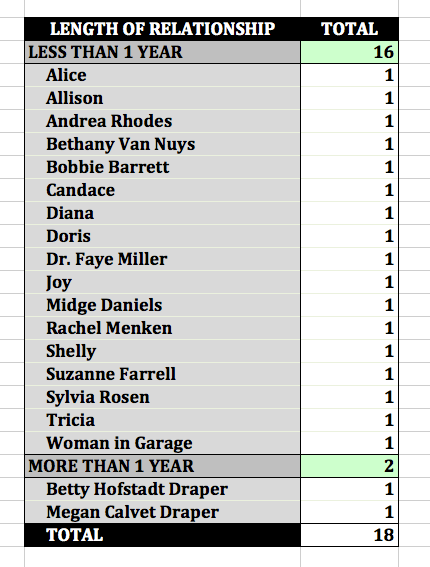
How long did each of Don’s dalliances last? Unsurprisingly for most of them, not very long:
'Mad Men' Don's Length of Relationships Pivot Table UPDATED

‘Mad Men’ Don’s Length of Relationships Pivot Table UPDATED

I initially had assumed that some would’ve spanned more than a year, but the only partners with proven staying power have been his wives Betty and Megan.


Conclusion:

Delving into the metrics of Don’s sexual partners reveals some interesting findings: He prefers brunettes, doesn’t discriminate on the basis of religion or career, and has a short attention span when it comes to women.

Sex & The ’60s: Joan Holloway Inspires Brits to Get Boob Jobs

'Mad Men' season 1 still with Christina Hendricks (The Telegraph UK)

‘Mad Men’ season 1 still with Christina Hendricks (The Telegraph UK)

This week, we’re examining sexuality data from the 1960s, in celebration of the upcoming final half-season of “Mad Men” beginning Apr. 5th.

Happy Friday! Bombshell Joan Holloway (and the gorgeous actress behind the character, Christina Hendricks) has become well-known for her dangerous curves throughout the course of “Mad Men.” (That’s not editorializing, that’s a fact, and everyone agrees.) In Britain, Hendricks is credited with sparking an increase in breast implants.

In a 2011 article in “The Telegraph,” the British Association of Aesthetic Plastic Surgeons (BAAPS) found that the number of women having “breast augmentations” rose 10%+ in 2010 from the 2009 figure. This equals out to 9K+ British women per year.

The BAAPS estimates that overall plastic surgery procedures have tripled from 10.7K+ in 2003 to 36.4K+ in 2009.

A BAAPS source suggested that Hendricks was an influence, especially with the hourglass figure coming back into fashion. But the source wasn’t the only one to name-check Hendricks for her curves. Britain’s Equalities Minister and Liberal Democrat MP Lynne Featherstone proclaimed Hendricks to be “fabulous” while urging the need for more curvy role models. And she would know: Featherstone was voted the “most fanciable MP in Parliament” in 2010.


Sex & The ’60s: Don Draper’s Conquests By The Numbers

'Mad Men' Don Draper, Midge Daniels, Megan Calvet Draper, Betty Draper, and Dr. Faye Miller (Vulture)

‘Mad Men’ Don Draper, Midge Daniels, Megan Calvet Draper, Betty Draper, and Dr. Faye Miller (Vulture)

This week, we’re examining sexuality data from the 1960s, in celebration of the upcoming final half-season of “Mad Men” beginning Apr. 5th.

Everyone who watches the show knows that Don Draper (Jon Hamm) is a serial womanizer. Even when he’s married, he can’t stay faithful. It’s part of what makes him so intriguing: we know he’s wrong, but we can’t stop watching!

There’s been some ink spilled on the types of women he tends to bed, such as preferring docile women for marriage versus favoring strong-willed career women for affairs. But I was curious to find out if there were any other patterns, and so had some fun with Excel.

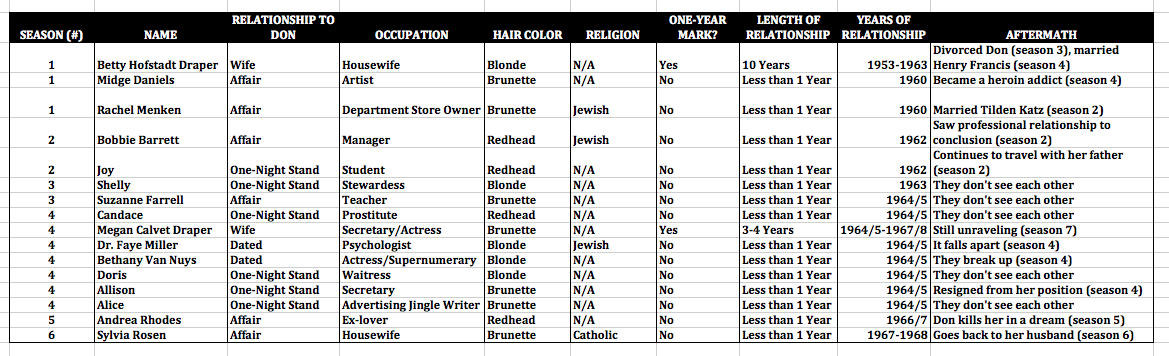
For fun, here’s what my entire Excel spreadsheet looked like:

'Mad Men' Don Draper Conquests Excel Spreadsheet

‘Mad Men’ Don Draper Conquests Excel Spreadsheet

If you can’t see, I listed the names of Don’s 16 partners by season, their relationship to Don, occupation, hair color, religion, and overall length of the relationship. (Some of these metrics I didn’t end up using.) Some of these things I tried finding information as accurate as possible (such as the years each relationship spanned), but sometimes had to make a close guess. So if you see an error, please correct me and I’ll recalculate.

Now, let’s find some patterns via pivot tables.


Don’s Relationships by Type:

I broke down Don’s relationships into three types: wife, affair and one-night-stand. I defined affair as on-going with an emotional component, whereas I defined one-night stand as purely sexual, even though it may have happened more than once (as is the case with Candace the prostitute).

That being said, here’s the data:

'Mad Men' Don's Relationships by Type Excel Pivot Table

‘Mad Men’ Don’s Relationships by Type Excel Pivot Table

We know he’s been married twice (I’m not counting Anna Draper, as she was never a conquest), so no surprise there. I figured Don has had more casual partners than serious ones, but I didn’t realize how much it would skew. Don’s had three times as many affairs and one-night stands combined as he has married and dated partners combined. Interesting.


Partners’ Occupation:

I was interested to see if Don had any particular type in terms of career. But every woman was so different that only two things reoccurred. Two of the 16 women (12.5%) were housewives, which were his first wife Betty and later season 6’s Sylvia Rosen. Another pattern that emerged were two actresses, who also held other jobs when Don knew them. These two were season 4’s Bethany Van Nuys (whose other job was a supernumerary) and his second wife Megan Calvet (who began as a secretary).


Partners’ Hair Color:

Gentlemen prefer blondes, but does Don? Let’s take a look:

'Mad Men' Don's Partners' Hair Color Excel Pivot Table

‘Mad Men’ Don’s Partners’ Hair Color Excel Pivot Table

No, Don’s more of a brunette man, with nearly half his partners sporting the color. Blonde and redhead are nearly equal, with blonde pulling ahead by one partner.


Religion:

I initially wanted to see how each partner’s religion broke down. Several did not mention or show any religious leanings, so I referred to their respective affiliations as “N/A,” because I didn’t want to automatically put partners into a “default Christian” category.

Only two of the 16 partners (12.5%) were overt about their religious affiliation: season 1’s Jewish department store heiress Rachel Menken, and the Catholic Sylvia Rosen (season 6, though she’s married to a Jewish man).

Other partners signaled their religious leanings indirectly. Season 4’s Dr. Faye Miller (Cara Buono), referenced her Jewish heritage in passing, using a Yiddish phrase. Season 2’s Bobbie Barrett was confirmed to be Jewish by none other than show creator Matthew Weiner himself.

What we can take from this is that while religion certainly isn’t a conscious preference of Don for his partners, he has selected distinctly Jewish women.


Duration of Relationship:

How long did each of Don’s dalliances last? Unsurprisingly for most of them, not very long:

'Mad Men' Don's Length of Relationships Pivot Table

‘Mad Men’ Don’s Length of Relationships Pivot Table

I initially had assumed that some would’ve spanned more than a year, but the only partners with proven staying power have been his wives Betty and Megan.


Conclusion:

Delving into the metrics of Don’s sexual partners reveals some interesting findings: He prefers brunettes, doesn’t discriminate on the basis of religion or career, and has a short attention span when it comes to women.


#ThrowbackThursday: Don Draper and Bobbie Barrett’s BDSM Session, “Mad Men” 2008

'Mad Men' season 2 still (Live Auction Group)

‘Mad Men’ season 2 still (Live Auction Group)

This week, we’re examining sexuality data from the 1960s, in celebration of the upcoming final half-season of “Mad Men” beginning Apr. 5th.

Remember this scene? In season 2, Don (Jon Hamm) began sleeping with Bobbie Barrett (Melinda McGraw), the wife of a performer that Sterling Cooper hired for an Utz Potato Chips commercial. In the episode “Maidenform,” we learn she has a penchant for being tied up during sex. But she doesn’t get satisfied, as she tells Don she’s been discussing his sexual prowess. He abruptly leaves, and that’s the end of their affair.

It’s actually the first of two BDSM-tinged scenes the show has depicted. The second one occurred in the sixth season during one of Don’s sessions with Sylvia Rosen (Linda Cardellini). Each scene effectively ended its respective affair. While two instances aren’t enough data from which to extrapolate a pattern, it’s certainly worth noting.


Sex & The ’60s: How Many Live Births Occurred During the Decade?

'Mad Men' season 3 still (LA Times Blogs)

‘Mad Men’ season 3 still (LA Times Blogs)

This week, we’re examining sexuality data from the 1960s, in celebration of the upcoming final half-season of “Mad Men” beginning Apr. 5th.

On “Mad Men,” two significant female characters, Don’s wife Betty Draper (January Jones) and his subordinate Peggy Olson (Elisabeth Moss), gave birth to sons. (Oops, spoiler alert?) While each character made different decisions regarding their progeny, it became a pivotal moment for both of them.

Tracking the number of live births within a population is an essential checkpoint to determine how healthily a population is growing. We’ve already looked at population and marriage stats from the 1960s; now let’s look at birth stats from the decade.

I found a table put together by the Centers for Disease Prevention and Control (CDC) cataloging registered live births from 1933 to 1998, breaking down the data by the age and race of the mother. For our purposes, we’ll look at age only and narrow it down to mothers ages 15-49.

Here’s the data table:

1960s Live Births by Mother's Age and Year Data Table

1960s Live Births by Mother’s Age and Year Data Table

But the patterns are a little hard to see. So I made a line graph:

1960s Registered Live Births by Mother's Age and Year Line Graph

1960s Registered Live Births by Mother’s Age and Year Line Graph

Now we can begin to see some patterns.

It appears that 1964 was a tipping-point year, as some of the age-ranges pivoted from their determined patterns at that year. The number of mothers ages 20-24, the largest group in the series, dropped below 1.4M+ that year, and settled around 1.3M+-1.5M+ for the remainder of the decade. Likewise, the number of live registered births for the 25-29 cohort hit 1M+ that year for the last time that decade. For the rest of the 1960s, births for women ages 25-29 stayed within the six-figure range.

Previous to 1964, women ages 30-34 numbered around 600K+ live births. But 1964 began a drop into the 500K+ range for a couple of years, before ending the decade within the 400K+ range.

Women ages 15-19 (well, teens) stayed within the same range of births throughout the decade (585K+ to 605K+, with an outlier of 621K+ in 1966). But the line graph above makes it appear as if the cohort had a more dramatic rise, but that’s because it’s set off by the 30-34 range’s changes.

In terms of the “Mad Men” characters, Peggy Olson would’ve been 21 years old, and would’ve given birth around 1960. That places her in the largest age cohort of that year. (Ages 20-24 outstripped the next-highest range, ages 25-29, by 334K+ births.) Betty Draper was around 31 years old in 1963 when she gave birth. So she was within the largest of the age ranges that year which didn’t hit 1M+ live births, but still on the downswing of common pregnancies. (Women ages 30-34 registered 610K+ live births).

It seems that showrunner Matthew Weiner’s obsessiveness towards period accuracy extended even to birth ages of his female characters.