California Will Vote to Require Condoms on Porn Shoots

Condoms (StyleCaster)

Condoms (StyleCaster)

This year, California residents will head to the polls, and be asked to vote on something unique to the Golden State: what happens on a porn shoot.

Proposition 60, a.k.a. the Condoms in Pornographic Films Initiative, proposes that adult performers wear condoms during scenes where they “actually engage in vaginal or anal penetration by a penis.” (Side note: can we just appreciate that this language made it into a ballot measure?) Aside from that essential fact, the measure requires producers of pornographic films to pay for medical vaccinations and testing related to sexually transmitted diseases (STDs), and to obtain the state health license.

This measure would cover the San Fernando Valley, where the majority of the porn industry’s films are shot. The measure is not without precedent: In 2012, 56% of voters approved a similar measure, called Measure B, that covered Los Angeles County.

A recent University of Southern California Dornsife/LA Times poll showed that 55% of respondents would support the measure if they had to vote that day. Over 1K people were surveyed.

But Prop 60 also has the potential to harm one of California’s booming industries. Right now, perfumers get tested regularly for STDs, and shooting shuts down if an outbreak occurs. It’s pretty self-governed. But passing the measure might open up liability for independent producers and private companies that distribute porn films.

One reason behind opposing Prop 60 hinges on the fact that it could drive the business elsewhere, to a place that has less stringent (or no) regulations. This concern also has precedent in data: In 2012, the year Measure B passed in Los Angeles, FilmLA reported that there were 480 permits pulled for shoots involving “nonsimulated sex.” In 2013, that number plummeted drastically to 40 permits, and has been dropping year-over-year since. Implementing Prop 60 would also cost the state around $1M to “license and regulate film production, and an additional several million dollars in lost taxes if the industry flees California.”

As you can see, there are many aspects to consider whether you’re for or against Prop. 60. Californians, make sure you do your research before you vote!


Welcome to Sex & Election 2016 Week!

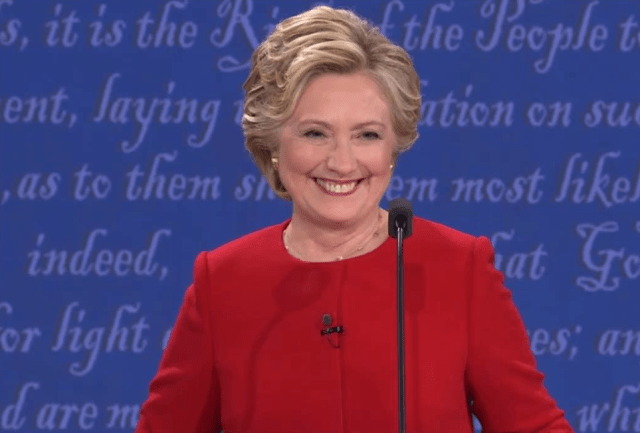
Hillary Clinton (YouTube)

Hillary Clinton (YouTube)

Welcome to Sex & Election 2016 Week on Sex & Stats! From now until Tuesday, Nov. 8th (Election Day for those in the U.S.), I’m bringing you the best in political-themed statistics that intersect with sexuality, gender, race, etc. And this presidential race has been a veritable GOLD MINE for this shit. I’m not even joking (as you’ll find out this week).

Until 11:59 p.m. PST, you’ll get two posts a day on this topic. (Yes, even on Friday!) Get ready for 11 more posts that will make you laugh, cry, and possibly weep for the state of the country, all using data.


“Loving” Film Releases Interracial Emoji Couples

Love-Moji ('Glamour' en Espanol)

Love-Moji (‘Glamour’ en Espanol)

Given our current obsession with all things tech, Focus Features has found a fitting way to promote the company’s upcoming film “Loving:” custom emojis.

The Love-Mojis feature a variety of emojis of interracial couples in about every combination you could think of. So if you’re in an interracial couple, and you haven’t yet felt your coupling properly represented by the Unicode Consortium, your time has finally come!

Why is this important? Let’s start with the film itself: “Loving” follows Richard and Mildred Loving, a Virginia couple who got married in 1958. This wouldn’t be so remarkable except that Richard was white and Mildred was black. Their marriage happened during a time where interracial dating, much less marriage, was frowned upon, to put it lightly. Interracial marriage could bring a charge of miscegenation (race mixing, in plain terms).

The Lovings were arrested after their marriage for the crime of their relationship, and forced to leave Virginia. Once in D.C., they began legal proceedings. The Loving v. Virginia case went all the way to the U.S. Supreme Court. In 1967, the Supreme Court ruled anti-miscegenation laws unconstitutional, which struck down said laws that were on the books of sixteen states. (All sixteen states were in the South. Shocker.)

Needless to say, this was a landmark case.

But why use emojis to promote it?

Since emojis debuted, the options for emoji couples were pretty stark. They didn’t show the breadth of real-life relationships in terms of race and also sexual preference. The new Love-Moji take this into account, and rectify the oversight.

There’s also the fact that using emojis has become a convenient visual shorthand for emotions we don’t particularly feel like typing out in words.

You can get the Love-Moji via app stores and at VoteLoving.com.

“Loving” comes out on Friday, Nov. 4th.

Wonder Woman Will Be the U.N.’s Honorary Ambassador for Female Empowerment

Lynda Carter as Wonder Woman (Vulture)

Lynda Carter as Wonder Woman (Vulture)

In addition to being the Amazonian Princess of Themyscira and civilian Diana Prince, Wonder Woman can add another title to her resume: United Nations’ Honorary Ambassador.

Wonder Woman’s promotion will kick off a campaign dedicated to women’s empowerment. This ties into the U.N.’s sustainable development goal 5, which promotes worldwide gender equality.

Though Wonder Woman will be used as a symbol of women’s empowerment throughout the world, it’s worth noting that most of the top U.N. jobs are held by men.

Wonder Woman will be formally announced as the honorary ambassador on October 21st, 75 years after her character first debuted. Actresses Lynda Carter, who’s played the character in the 1970s TV show, and Gal Gadot, who’ll depict the character in a big-budget DC Comics movie next year, are expected to attend the ceremony.

Obama Signs Bill That Requires Babies’ Changing Tables in Every Public Bathroom

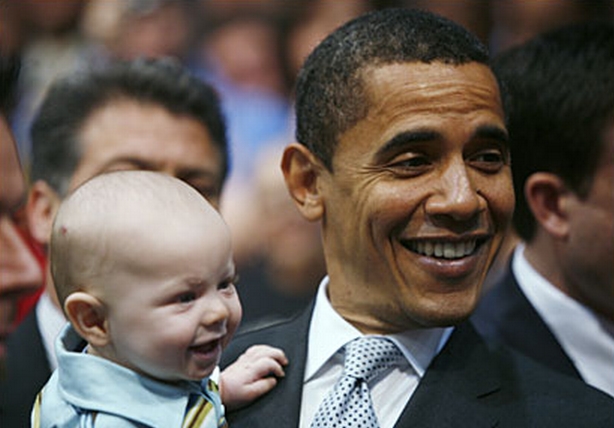
U.S. President Barack Obama and baby (Winwes)

U.S. President Barack Obama and baby (Winwes)

Earlier this month, President Obama signed a very important bill. The Bathrooms Accessible in Every Situation (BABIES) Act requires government and federally-run buildings to provide babies’ changing tables in every restroom on the the premises. That’s right, babies’ changing tables will now be in both women’s and men’s bathrooms.

Previously, there was no such act that mandated changing tables in public bathrooms. And it’s common knowledge that changing tables are a much more common sight in women’s bathrooms than in men’s.

The BABIES Act was proposed in April by Rhode Island Democratic Representative David Cicilline. The measure was co-sponsored by 26 fellow Democrats and one Republican.

It’s fitting that the act was introduced and passed now: The move comes as parental leave, gender equality and division of household labor (which includes childcare) have become top of mind to many people, and a hot topic during this election season.

The new changing tables must be added within the next two years.

Hillary Clinton Spoke 38% of the Time During the First Presidential Debate

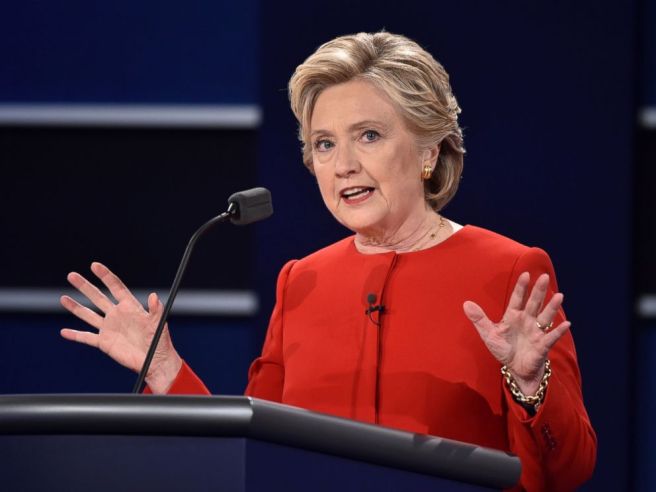
Hillary Clinton (ABC News)

Hillary Clinton (ABC News)

The first presidential debate aired this past Monday night between Democratic nominee Hillary Clinton and Republican nominee Donald Trump. It was clear that Trump interrupted Clinton many times (51 times, to be exact), but his talking time massively negatively impacted Clinton’s.

Clinton spoke only 38% of the debate running time.

How do we know this? Twitter crunched some numbers surrounding the frequency of the hashtag #debates, and possibly how many times the two nominees’ names (and maybe quotes) were mentioned. (I couldn’t find the methodology behind Twitter’s data, so I couldn’t delve into it. Sad.)

By contrast, Trump spoke for 62% of the time. Given his verbose tendencies, this hardly comes as a surprise.

Burkini Sales Rise by 200% After French Ban

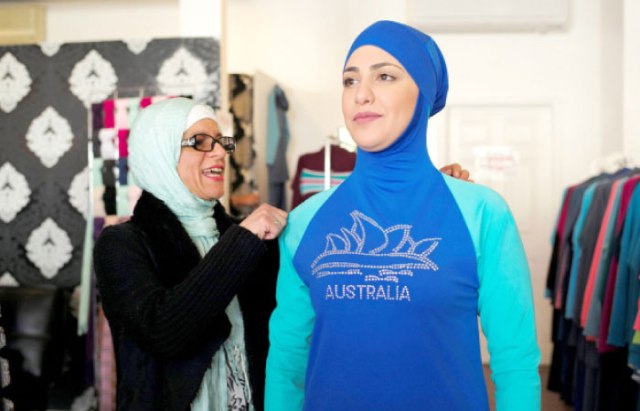
Burkini designer Aheda Zanetti (Saudi Gazette)

Burkini designer Aheda Zanetti (Saudi Gazette)

Earlier this summer, coastal French towns courted controversy when their respective mayors decided to ban burkinis on beaches. The burkini consists of a long-sleeved top with long pants and a head covering, and was developed for women who follow Islamic modesty standards so that they could go swimming while still covered. The term “burkini” comes from a portmanteau of the words “burqa” and “bikini.”

Despite the ban, burkini creator Aheda Zanetti says that online sales of now-famous swimwear have risen over 200%+ recently. (Now, we don’t know what her sales had been previously, or what the year-over-year change has proved to be, so unfortunately we have incomplete information.)

Zanetti says that her customers are not homogeneously Muslim. She reports that about 40% of her customers are from other faith traditions, such as Judaism and Mormonism, that adhere to modest dress standards.

The burkini ban stems from a stringent French view on separating religion from the state. The French government has banned religious symbols from government buildings since 2004. A ban specifically on burqas was passed in 2011.

Right now, about 30 French towns have instituted the ban, though the town of Villeneuve-Loubet has since overturned it.


Geraldine Roman is the Philippines’ First Transgender Congresswoman

Filipina Congresswoman Geraldine Roman (CNN)

Filipina Congresswoman Geraldine Roman (CNN)

The Philippines made history earlier this month when the country’s congress elected its first transgender member.

Geraldine Roman won her seat with 62% of the vote, judging by reporting from 99% of districts, and she’ll represent the northern Bataan province’s first district.

Roman’s platform included banning any anti-LGBT discrimination and making gender changes legal.

This is a giant progressive step for a country in which divorce, abortion, and same-sex marriage are illegal. It’s also illegal for a transperson to change their name and sex. There have also not been any gay or lesbian politicians serving at the national level.

How Many People Support North Carolina’s HB2 Law?

North Carolina Governor Pat McCrory (Instinct Magazine)

North Carolina Gov. Pat McCrory speaks during a news conference, Monday, Jan. 7, 2013, in Raleigh, N.C. In one of his first acts as governor, McCrory issued an executive order to repeal the nonpartisan judicial nominating commission established by former Gov. Bev Perdue. (AP Photo/The News & Observer, Takaaki Iwabu)

The outcry against North Carolina’s HB2 law, also known as the famously-derided “bathroom bill,” has been swift and fierce. But can we measure the reaction? And is it representative of the whole?

Fortunately, a recent poll provides some insight. CNN and ORC International polled 1K+ adults via phone (both landlines and cells), and asked those surveyed about North Carolina’s new law. Respondents also could self-identify as Democrat, Republican, or Independent. As the study notes, the sample was weighted to resemble the country as a whole.

When asked about equal protections for transpeople, 75% of respondents “favor law guaranteeing equal protection.” For equal protections for gays and lesbians, that number rose slightly to 80%.

Now, one might be tempted to correlate the former stat with the rise of transgender visibility in mainstream society. But that’s not the case. Respondents were also asked if they had a close family member or friend who’s transgender, and 80% did not. That’s huge! Things really are changing.

The U.S. Department of Justice Sues North Carolina over Controversial LGBT Law

U.S. Attorney General Loretta Lynch (WCNC)

U.S. Attorney General Loretta Lynch (WCNC)

The federal government has spoken, and it is not happy. Yesterday, the Department of Justice (DOJ) sued the state of North Carolina over its controversial HB2 law.

Quick recap: the non-infamous law bars any anti-discrimination legislation against any members of the LGBT community. Also commonly known as the “bathroom bill,” the law also decrees that any transgender person must use the bathroom of their assigned sex at birth instead of the one with which they identify. (For example, a transwoman would use the men’s restroom, regardless of her physical appearance.)

But what happened first is that the DOJ (led by Attorney General Loretta Lynch, who was born in Greensboro, North Carolina) gave North Carolina governor Pat McCrory, a.k.a. the one who started this whole mess, until Monday morning to negate the horrid new law. And guess what McCrory didn’t do?

Instead, McCrory decided to sue the DOJ, claiming that there needs to be legislation regulating “transgender bathroom use” (??) at the national level.

So guess what the DOJ did? The DOJ sued North Carolina right back.

This wasn’t completely out of the blue. The DOJ had previously threatened legal action if HB2 wasn’t repealed. The DOJ is now suing on the grounds that the bathroom restrictions discriminate against transgender people (no shit).

I’m very interested to see how this will play out. I have no doubt that justice will prevail, and McCrory will end up on the wrong side of the law/history. But how long will it take, and what other complications could come up?