How Many Asian Actors Have Been Nominated for Oscars?

Yul Brynner in 'The King and I,' 1956 (Gold Derby)

Yul Brynner in ‘The King and I,’ 1956 (Gold Derby)

The Oscars are this weekend (Sunday, Feb. 28th), and the big controversy this year has centered around the lack of non-white acting nominees (and continues last year’s #OscarsSoWhite hashtag). But when talked about in detail, the conversation has seemed to focus more on including Black nominees and narratives. And that’s great! But there are a wealth of other races and ethnicities that need to be included in the conversation and given a place at the table.

This led me to wonder: how many Asian acting nominees and winners have there been in the history of the Academy Awards? Spoiler alert: not all that many, sadly.

The Best Actor category has seen the most Asian men win the award: Yul Brynner in 1956, and Ben Kingsley in 1982. These two men comprise two-thirds of the category’s Asian nominees.

Actress Merle Oberon was the first Asian nominated for any Oscar, and the first nominated for Best Actress. (The category was called “Best Lead Actress” when she was nominated in 1935.) She remains the sole Asian woman nominee of the category.

Of the seven Asian men who received Best Supporting Actor nominations spanning 1957 to 2003, only one has won: Haing S. Ngor in 1984. Six Asian women have received Best Supporting Actress nominations, but only one has won: Miyoshi Umeki in 1957.

Considering that these categories have five nominees each, and the Academy Awards have been occurring since 1930, this nominations/wins-to-visibility ratio is…fucking pathetic.

I really hope this year teaches the Academy a lesson, and we’ll begin to see more diverse characters and stories not just on screen, but materially validated by the old guard as well.


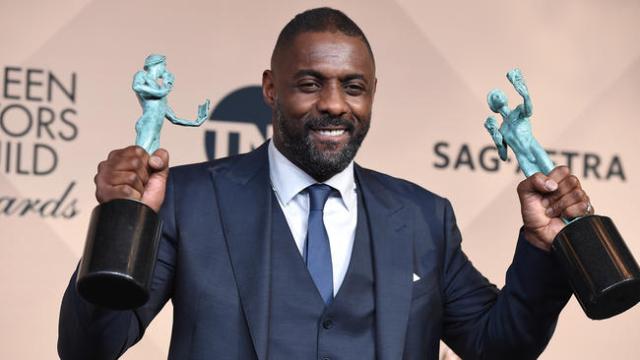
Idris Elba Makes History at the 2016 SAG Awards

Idris Elba at the 2016 SAG Awards (LA Times)

Idris Elba at the 2016 SAG Awards (LA Times)

The world’s hottest man (not editorializing, this is a fact and everyone agrees) made history Saturday night at the annual Screen Actors Guild (SAG) Awards.

Idris Elba (you know him as Stringer Bell from “The Wire”) not only became the first man to win two SAG awards in one night; he became the first African-American man to do so. Elba won for Best Male Actor in a Supporting Role in a Motion Picture for “Beasts of No Nation,” and for Best Male Actor in a Television Movie or Mini Series for “Luther.” This is especially impressive as it’s the first year he was nominated for a solo acting award. Go Idris!

But Elba’s wins made a splash for another, more sobering reason: He’s the only film winner that wasn’t nominated for an Oscar. His fellow winners (Leonardo DiCaprio for “The Revenant,” Brie Larson for “Room,” and Alicia Vikander for “The Danish Girl“) are all nominated. With the conversation around the Oscars’ diversity occurring for the second year in a row (#OscarsSoWhiteRedux), it’s worth noting for the future.

With Queen Latifah (“Bessie“), Uzo Aduba (“Orange is the New Black“), and Viola Davis (“How to Get Away with Murder“) also winning awards, Elba welcomed us all into the future with the following words:

“Ladies and gentleman, welcome to diverse TV.”

I, for one, cannot wait to see how things progress.

All of the Oscar Acting Nominees Are White. WTF?


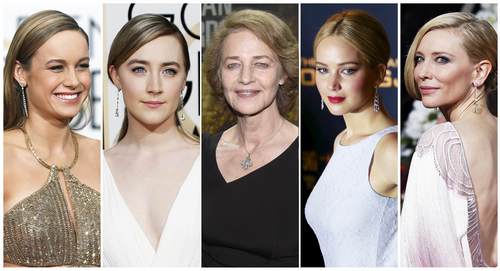
Oscars 2016 Best Actress Nominees (Reuters)

Oscars 2016 Best Actress nominees (Reuters)

Last week, the Oscar nominations were announced. Selected by the Academy of Motion Picture Arts and Sciences (AMPAS), the winners will be revealed Feb. 28. But this year continued a disturbing trend that began last year: Not one of the nominees in any of the acting categories (Best Actress, Best Actor, Best Supporting Actress, Best Supporting Actor) were people of color (POC).

I use the word “disturbing” as it seems the Academy is determined to ignore stories and narratives that don’t fit within their very narrow worldview. It’s becoming increasingly clear that non-white stories are not only valuable (as we knew already), but make bank, both in terms of box office and in social influence. (See this past year’s examples of TV smash “Empire,” and movies “Straight Outta Compton” and “Dope.”) The Academy needs to wake up and see that rewarding diverse stories can only help their bottom line.

In terms of the numbers, here are some of the most recent POC nominees (counted if they didn’t win) and winners:

Best Actress:

Winner: Halle Berry (“Monster’s Ball,” 2001)

Nominee: Quvenzhane Wallis (“Beasts of the Southern Wild,” 2012)

Best Actor:

Winner: Forest Whitaker (“The Last King of Scotland,” 2006)

Nominee: Chiwetel Ejiofor (“12 Years a Slave,” 2013)

Best Supporting Actress:

Winner: Lupita Nyong’o (“12 Years a Slave,” 2013)

Nominee: Taraji P. Henson (“The Curious Case of Benjamin Button,” 2008)

Best Supporting Actor:

Winner: Djimon Hounsou (“Blood Diamond,” 2006)

Nominee: Barkhad Abdi (“Captain Phillips,” 2013)


#ThrowbackThursday: Luise Ranier in “The Good Earth,” 1937

Luise Ranier, 'The Good Earth' (Rotten Tomatoes)

Luise Ranier, ‘The Good Earth’ (Rotten Tomatoes)

In 1937, actress Luise Ranier starred in a film adaptation of Pearl S. Buck’s novel “The Good Earth.” The plot centers on  the rise and fall of a Chinese family’s fortunes. Ranier played O-Lan, the family matriarch.

Ranier, who was born and spent her childhood in Germany, was Caucasian.

She became one of the first instances of Hollywood’s whitewashing: casting a white actor in a non-white role. Thus began the film industry’s troubled history with diversity on screen. But I guess it worked out for Ranier: she won an Oscar for Best Actress.

Thursday Trends: Censorship of Cunnilingus on Film

'Black Swan' cunnilingus (That Just Won't Do)

‘Black Swan’ cunnilingus (That Just Won’t Do)

With the announced remake of the 1973 film “Don’t Look Now” on the horizon, there’s a good chance that one of the film’s most controversial scenes will once again make the cut: Laura Baxter receiving cunnilingus from her husband John. (Julie Christie and Donald Sutherland played the roles in the original film.) But this time, it might not raise much of an outcry.

Movies began to be bolder about depicting cunnilingus around the end of the last decade. In the 2009 movie “Away We Go,” the opening scene shows Burt (John Krasinski) going down on his partner Verona (Maya Rudolph). Two years later, “Blue Valentine” showed Dean (Ryan Gosling) pleasuring Cindy (Michelle Williams). However, this depiction led to some pushback on the part of the Motion Picture Association of America (MPAA), which tried to give the movie an NC-17 rating. Interestingly, the 2010 film “Black Swan” was in theaters, which also featured an oral sex scene, but with two women: Mila Kunis and Natalie Portman. “Blue Valentine” star Ryan Gosling spoke out against the hypocrisy of rating a film with an oral scene involving two women an R, while a film that depicts the act with a heterosexual couple (as well as within marriage) would get slapped with an NC-17. “Blue Valentine” eventually received an R rating.

Within the past two years, more films involving cunnilingus scenes have been released: “Wild,” “Charlie Countryman,” and “The Counselor.” A very notable example occurred in 2014’s “Gone Girl.” Amy (Rosamund Pike) ecstatically receives pleasure from Nick (Ben Affleck) after their first date, which occurs within the first 15 minutes of the film. There was no pushback from the MPAA regarding ratings for this one (presumably, they didn’t need to fight that battle twice).

It’s great to see cunnilingus depicted as normal within the smorgasbord of sexual acts. Let’s hope media depictions of the act continue to grow so more people become normalized to it.

#ThrowbackThursday: “Don’t Look Now,” 1973

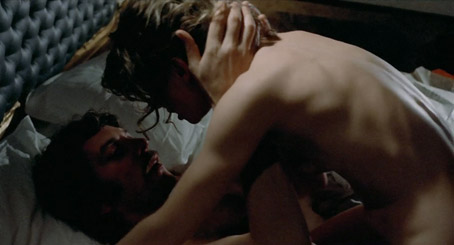
'Don't Look Now' sex scene, 1973 (Film Strategy)

‘Don’t Look Now’ sex scene, 1973 (Film Strategy)

Last week, “The Hollywood Reporter” reported that StudioCanal is remaking “Don’t Look Now,” the 1973 occult thriller starring Donald Sutherland and Julie Christie. The movie follows a married couple (Sutherland and Christie) as they travel to Venice and meet with clairvoyants to try and connect with their recently deceased daughter.

The film immediately became notorious for an explicit sex scene between Sutherland and Christie. Debates exists today as to whether the actors actually had sex during the scene. But it did blaze the way for female pleasure: It’s one of the first depictions of cunnilingus on film.

“Don’t Look Now” received an R rating in the U.S. and an X rating in Britain.


How Has “Fifty Shades of Grey” Impacted the Sex Toy Industry?

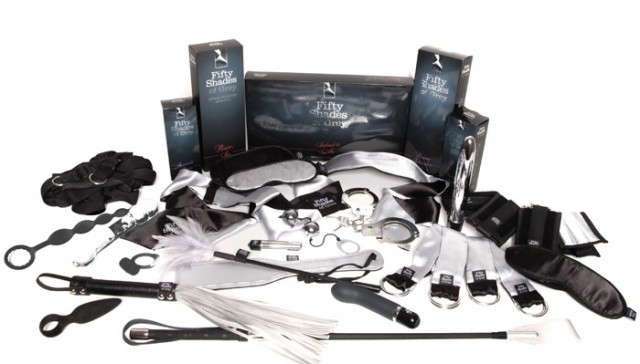
'Fifty Shades of Grey'-themed sex toys (Crushable)

‘Fifty Shades of Grey’-themed sex toys (Crushable)

With the recent “Fifty Shades of Grey” movie coming out last month (along with the requisite storm of thinkpieces), the sex toy industry is seeing an impact on the bottom line.

Different sex toy retailers are feeling an impact. “Variety” reports that Manhattan-based The Pleasure Chest was offering “Fifty Shades”-themed classes every night leading up to the movie’s premiere (though it doesn’t say for many weeks this went on).

Online retailer Adam & Eve, which holds the largest market share at 4%, has also gained a boost in sales. They’re also selling their own toy line “Scarlet Couture” pegged to the movie, in addition to the official “Fifty Shades”-inspired line.

“The Hollywood Reporter” has a piece which came out before the movie opened giving us some hard numbers. The U.K. sex toy brand Lovehoney made the line of “Fifty Shades”-inspired toys, which includes blindfolds, riding crops and feather ticklers. Demand for the “Inner Goddess” Ben Wa balls (or vaginal balls) sold out Europe in pre-orders. (Full disclosure: I was actually given a box of these when I attended a sexual health conference in January.)

THR reports that Lovehoney’s profits “tripled from $1.1 million the year before to $3.39 million by January 2014.” The “Fifty Shades” line has already sold 1.2M units worldwide, and is estimated to boost sales by 40% once the movie debuts.

If you’re looking for lingerie, Bluebella has you covered. The lingerie line has three “Fifty Shades”-inspired collections, and they anticipate a spike in sales not only from the movie, but also from Valentine’s Day.

“Inc.” also had a comprehensive article on this cultural phenomenon, and puts it in the larger context of a sea change. Market research firm IBISWorld found the following:

Between 2008 and 2013, sex toy sales in the U.S. increased by approximately 12.5 percent annually, raking in $610 million in 2013 overall.

The article notes that it’s more the smaller companies seeing a boon to their bottom line. But there’s also been a shift in who the sex toy industry’s customers are:

In 2013, women made up approximately 67 percent of U.S. industry patronage, which was a 12 percent increase from 2008.

It’ll be interesting to see if this is just a one-time sales spike, specifically in BDSM gear, or if this trend will continue, eventually making the practice almost, dare I say, vanilla.


“Fifty Shades of Grey” Morning After: Opening Weekend Box Office

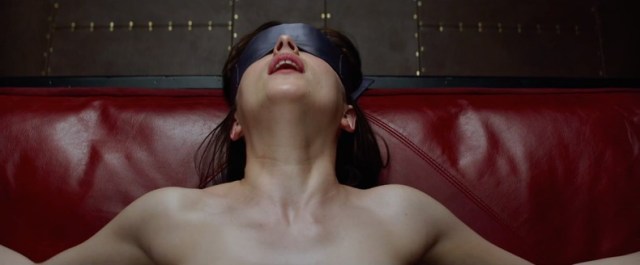
'Fifty Shades of Grey' still (Nova FM)

‘Fifty Shades of Grey’ still (Nova FM)

Last week, we examined different aspects of “Fifty Shades of Grey,” in preparation for the then-upcoming movie. 

Who saw “Fifty Shades of Grey” this weekend? I did, twice (and I own my choices).

The collective ticket-buying (and swooning over Jamie Dornan) is estimated to make $81M+ its three-day opening weekend (comprising Friday, Saturday and Sunday). The movie opened at 3.6K+ theaters (“the widest release to date for an R-rated film,” as “The Hollywood Reporter” notes), and is projected to make $90M+ over the four-day holiday weekend (which includes Monday). If it hits this number, “Fifty Shades of Grey” will hold the honor of having the biggest President’s Day opening weekend in history.

Internationally, the movie has opened to #1 in 56 markets to nab $158M+, doing very well in Europe and Latin America. “Deadline Hollywood” reports that five countries have yet to release it, including Korea and the United Arab Emirates, through Mar. 5. China will release the movie next weekend. So far, the global total numbers $248M+.

Needless to say, “Fifty Shades” is doing gangbusters business. It’s safe to say the movie will turn a profit: it was only made for $40M.

The movie has also hit another milestone: it’s the biggest opening for a female director. Catherine Hardwicke previously held this record for directing the first “Twilight” film, released in November 2008. (Incidentally, the “Fifty Shades” trilogy started out as “Twilight” fan fiction.) That movie took in $69M+ its first weekend.

It’s unclear whether director Sam Taylor-Johnson would try to repeat that feat with the next two movies in the “Fifty Shades” trilogy. So far, there have not been any discussions of her returning, as she only signed a deal to make one movie.

Hopefully, this stunning showing will open the door for more female-led erotic films, both in front of and behind the camera.

“Fifty Shades of Grey:” BDSM Practitioners’ Personality Profile

'Fifty Shades of Grey' still (Lovelace Media)

‘Fifty Shades of Grey’ still (Lovelace Media)

This week, we’re examining different aspects of “Fifty Shades of Grey,” in preparation for the upcoming movie, opening on Feb. 13th. 

In the “Fifty Shades of Grey” book, billionaire BDSM sex-god Christian Grey is portrayed as…well, exactly that. But as far as personality goes, he’s shown to be narcissistic (it’s all about him and his pleasure) and obsessive (always harping on Ana’s eating habits), and a total stalker (just happens to show up at Ana’s workplace, a mere 2.5 hours from his home base of Seattle) among other undesirable traits.

A person with no experience or knowledge of BDSM might well believe that these characteristics are typical of a participant in The Lifestyle. That person might have the idea that someone into BDSM is not a “good” person. But this is far from true, as several studies have confirmed. As it turns out, BDSM practitioners possess quite a few beneficial traits:

1. Openness to experimentation:

An Australian study from the University of New South Wales done in 2001-2002, and published by Northern Illinois University in 2008, found that those who participated in BDSM were more sexually adventurous overall. Researchers found that BDSM enthusiasts were more likely to have watched porn, had group sex and/or slept with someone else besides their regular partner within the past year.

2. More socially outgoing:

Related to being sexually adventurous, a 2013 Dutch study found BDSM practitioners to be more extraverted and social (because how else will you find partners for group sex?). They’re also less sensitive to rejection, enabling them to seek out novel (and/or vanilla) experiences with no shame.

3. Less anxious:

The Dutch study also found that BDSM enthusiasts tend to be less neurotic. Roni Jacobson of “The Cut” recently wrote an article in she interviewed doms and subs. During scenes, the doms and subs each reported entering beneficial mental states, such as having “feelings of deep focus and concentration” (termed “topspace”) and an “altered state of consciousness where one feels released from stress and present in the moment” (termed “subspace”), respectively. The mindfulness naturally replaces any anxiety during and after the scene.

4. More relationship closeness and conscientiousness:

A 2009 study by Northern Illinois University found that a good sadomasochism (here abbreviated as SM) scene resulted in decreasing cortisol (stress) and increasing relationship closeness between participants. Likewise, the aftercare (always part of a BDSM scene) also helped aid the closeness:

The increases in relationship closeness combined with the displays of caring and affection observed as part of the SM activities offer support for the modern view that SM, when performed consensually, has the potential to increase intimacy between participants.

The aforementioned Dutch study found that BDSM participants ranked higher on conscientiousness than the non-BDSMer control group. This makes sense, as a mutually satisfying scene involves looking out for your partner every step of the way.

5. Love of language and wordplay:

Kinky sexpert Jean Franzblau of Sexual Esteem with Jean has found, through her own personal experiences, that BDSM enthusiasts are also enthralled with language and wordplay. Even though it might sound harsh to those unfamiliar with The Lifestyle, it’s just part of the scene.

“In the BDSM community, we use very dastardly language. But underneath it, it’s all good,” she said in her “Welcome to Kink” class at the Los Angeles Academy of Sex Education last fall.

6. Holds advanced degrees:

In tandem with loving language and wordplay, Franzblau’s anecdotal data suggests that BDSM practitioners value education, as they are more likely to hold advanced degrees. This would make sense, as education and open-mindedness to new experiences have long thought to be positively correlated.

7. Greater self-acceptance:

Dr. Juliet Richters, author of the University of New South Wales study, told Australia’s “Sydney Morning Herald” that the study’s BDSM participants scored higher on measures of psychological wellbeing. She interpreted that as meaning the participants were happier:

It might just be that they’re more in harmony with themselves because they’re into something unusual and are comfortable with that. There’s a lot to be said for accepting who you are.


With this list in mind, I’d say the benefits far outweigh any risks. Just remember to keep your play safe, sane and consensual.


Thursday Trends: Female Directors and Erotic Mainstream Films

'Sleeping Beauty' film still (Australian Broadcasting Media)

‘Sleeping Beauty’ film still (Australian Broadcasting Media)

This week, we’re examining different aspects of “Fifty Shades of Grey,” in preparation for the upcoming movie. 

As we mentioned earlier this week, the upcoming “Fifty Shades of Grey” movie bears an interesting distinction: Women are in prominent positions behind the camera. Aside from author E.L. James, Sam Taylor-Johnson is directing off a script written by Kelly Marcel. In an industry where female directors comprise only 29%+ of total directors, this trifecta will no doubt prove a competitive advantage in adapting a property beloved by so many women worldwide.

It might usher in a new film concept as well: the mainstream erotic, yet female-friendly, film. So far, the closest we’ve come has been with “Sleeping Beauty,” released in 2011. Debuting during the Cannes Film Festival, Australian director/screenwriter Julia Leigh’s film focuses on university student Lucy (Emily Browning) who moonlights as an erotic freelancer. Lucy’s job is to sleep peacefully in a large bed, while paying male customers sleep next to her, following the establishment’s “no penetration” rule. The film was Leigh’s directorial debut.

In France, director Catherine Breillat is known for depicting realistic sexuality and intimacy onscreen, even casting Italian porn star Rocco Siffredi in two films. Her work tends to examine facets of female sexuality. Breillat’s films “Virgin” and “Fat Girl” specifically focus on budding female teenage sexuality. Incidentally, she also has a film titled “The Sleeping Beauty.”

It’s interesting to note that most of the erotic films that are (relatively) mainstream come from overseas, where sexual mores are a bit looser. And this holds true for the “Fifty Shades of Grey” movie: Though produced by three American production companies and distributed by Universal (all American companies), James, Taylor-Johnson, and Marcel are all British.

The closest mainstream American BDSM film we’ve had with a female presence has been “Secretary,” released in 2002. Written by Erin Cressida Wilson from a short story by Mary Gaitskill, the script won Wilson a Best First Screenplay award at the 2003 Independent Spirit Awards. But the prominent women in behind-the-camera positions stop there.

Hopefully, “Fifty Shades of Grey” will open more doors for female directors and screenwriters, particularly for films of an erotic nature. But with American’s puritanical take on sex, progress might happen at a snail’s pace.