It’s Canon: Wonder Woman Is Queer

Wonder Woman (The Mary Sue)

Wonder Woman (The Mary Sue)

Last week, the bisexual community gained heightened mainstream visibility through a Golden Age of Comics-era character: Wonder Woman.

DC comics writer Greg Rucka said that it’s “logical” that Wonder Woman is queer, given that she comes from an island inhabited solely by women warrior princesses. Wonder Woman’s homeland of Themyscira is supposed to be paradise, where inhabitants can have fulfilling relationships. But Rucka points out that despite the only options for romantic/sexual/emotional relationships, the concept of queerness doesn’t exist.

How would Rucka know this? He writes DC’s Wonder Woman: Year One series. So this revelation is obviously canon. But Rucka says that this revelation will continue to be subtle, and doesn’t feel the need to scream it at readers or make that Wonder Woman’s defining characteristic. (Real talk: I am such a fan of this line of reasoning.)

So far, Rucka is the only DC writer to speak definitively on Wonder Woman’s sexuality. As for whether the character has had same-sex relationships:

As [artist Nicola Scott] and I approach it, the answer is obviously yes. And it needs to be yes for a number of reasons.

Though this is big news, it’s not so shocking: Wonder Woman officiated a same-sex wedding in a story released last year.

The character, who’s also known as Diana Prince in her civilian life and Princess Diana of Themyscira in her homeland, debuted in Dec. 1941. The big-screen movie adaptation starring Gal Gadot will arrive in theaters on Jun. 2, 2017. It will be the first movie centered on a female superhero for the DC universe.

At this time, it’s unclear whether the upcoming movie will include this aspect of Wonder Woman.
Hillary Clinton Spoke 38% of the Time During the First Presidential Debate

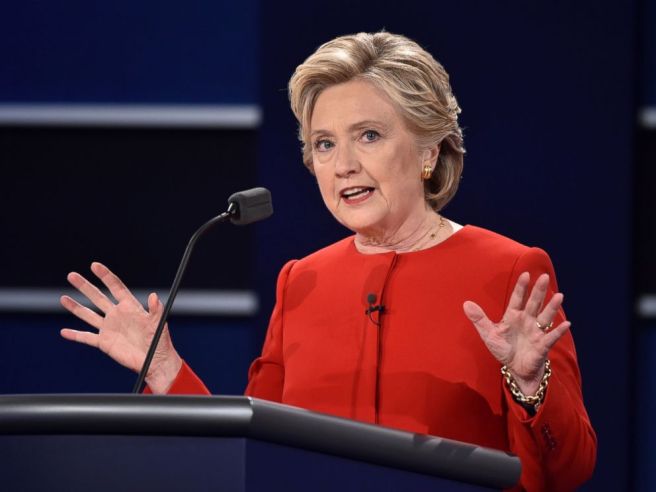
Hillary Clinton (ABC News)

Hillary Clinton (ABC News)

The first presidential debate aired this past Monday night between Democratic nominee Hillary Clinton and Republican nominee Donald Trump. It was clear that Trump interrupted Clinton many times (51 times, to be exact), but his talking time massively negatively impacted Clinton’s.

Clinton spoke only 38% of the debate running time.

How do we know this? Twitter crunched some numbers surrounding the frequency of the hashtag #debates, and possibly how many times the two nominees’ names (and maybe quotes) were mentioned. (I couldn’t find the methodology behind Twitter’s data, so I couldn’t delve into it. Sad.)

By contrast, Trump spoke for 62% of the time. Given his verbose tendencies, this hardly comes as a surprise.

#ThrowbackThursday: Viola Davis Wins an Emmy, 2015

Viola Davis, Emmys 2015 (Betches)

Viola Davis, Emmys 2015 (Betches)

At the Emmys this past weekend, actress Viola Davis was nominated for Best Actress in a  Drama Series for her lead role in ABC’s “How to Get Away with Murder.” Though she didn’t win on Sunday night, she won the award in 2015, and made history in the process. Davis became the first Black woman to win the Best Actress award.

Crazy that seemingly simple milestones are still only now being surpassed.

Trends: Latina Actress Firsts


Melissa Villasenor (Remezcla)

Melissa Villasenor (Remezcla)

Earlier this week, new additions to the “Saturday Night Live” cast were announced for the upcoming season. Among the three new cast members is comedian Melissa Villasenor. Villasenor’s hiring is significant because she’ll be the first Latina cast-member since “SNL” debuted 41 years ago.

How in the hell did it take Forty. One. Years?!?!?!

Villasenor’s hiring is just the latest achievement for Latinas in the entertainment industry, and she’s not the first to bust down a barrier.

Mexican actress Dolores del Rio worked in Hollywood from the 1920s until the ’40s, and achieved cross-over success with American audiences. She was the first Mexican actress to do so, and she worked with Hollywood luminaries such as Fred Astaire. (Fun fact: In the 1933 film “Flying Down to Rio,” del Rio danced with Astaire in the same film where he first paired with Ginger Rogers.)

Actress Rita Moreno overachieved with the firsts. Not only did she win the Best Supporting Actress Oscar in 1961, but she won the same award at the Tonys in 1975. Moreno went on to be the second person ever to get the EGOT honor (that is, she won an Emmy, Grammy, Oscar and Tony).

Villasenor’s hiring opens the door for more diversity at “SNL,” but more Latina achievement in entertainment.


Trends: The Bikini in 1960s Film

Ursula Andress in "Dr. No," 1962 (YouTube)

Ursula Andress in “Dr. No,” 1962 (YouTube)

This year, the bikini turns 70 years old. How can it be that old?! And love it or hate it, the iconic swimsuit isn’t not going anywhere anytime soon.

The bikini’s invention is credited to French engineer Louis Reard. When he went to the beach, he noticed women trying to get a better tan by adjusting their suits. Sensing a hole in the market, he designed the first bikini out of 30 square inches of fabric in 1946.

Though the bikini took some time to catch on with the average consumer, it caught fire on film in the 1960s. The decade featured some instantly iconic bikini moments, ensuring that the garment had earned its place in fashion and film history.

One of the first to appear was in 1962’s James Bond film “Dr. No.” Ursula Andress, playing shell diver Honey Ryder, appears from the ocean clad in a white bikini. Bikini sales rose after audiences saw the movie, and the bikini was later auctioned off for $61.5K in 2001.

After that head-turning debut, bikinis became a wardrobe staple of the beach party genre, starting with 1963’s “Beach Party” with Annette Funicello. In 1966’s “One Million Years B.C.,” actress Raquel Welch rocked a deerskin bikini.

But why were bikinis taking off during the 1960s? There are a few reasons. One is that women’s dress standards had somewhat relaxed due to the sexual revolution. While a woman might’ve felt a bikini was too revealing in the 1950s, many women grew comfortable showing their bodies (up to a point) in the 1960s.

Though the bikini gained popularity a good 15 years after its debut, the classic women’s swimwear item shows no signs of slowing down in the near or distant future.


Trends: All-Female Reboots

"Ghostbusters," 2016 (Geek.com)

“Ghostbusters,” 2016 (Geek.com)

The 2011 movie “Bridesmaids” was very funny, no doubt about that. The film, which starred a cadre of funny women led by Kristen Wiig and Maya Rudolph, centered on the escapades of the titular group as they helped their friend (played by Rudolph) on the way to getting hitched. The movie was well-liked by audiences, and that showed in the revenue. At the end of the year, “Bridesmaids” ranked #14 at the domestic box office with $169M+ in revenue, and #20 in the worldwide box office with $289M+ in revenue.

But it also had an effect on movies that we’re still feeling: “Bridesmaids” convinced studios that audiences (both women and men, shocker) would see a movie with an all-woman cast. Well…duh. And now studios have sat up and taken notice.

The waves from “Bridesmaids” have hit an interesting formula: to remake a beloved movie with an all-female cast. The rationale goes that if the men liked the original, then the women will love the remake! (And there’s the assumption that the men will be dragged to the movie from their ladies, but it’s OK because it’s a nostalgic property.)

One high-profile all-female remake has already come out: this year’s “Ghostbusters.” The reboot has Kristen Wiig, Melissa McCarthy, Kate McKinnon and Leslie Jones investigate paranormal happenings in New York. The movie has a strong “Saturday Night Live” heritage: In addition to Wiig, McKinnon and Jones logging time on the show, the movie also featured current cast member Cecily Strong in a notable part. “Ghostbusters” debuted at #2 on opening weekend, and as thus far grossed $124M+ domestically and $208M+ worldwide.

Another all-female project announced recently was a reboot of the 2001 heist movie “Ocean’s 11” (which itself is a remake of the 1960 movie of the same name). Sandra Bullock, Cate Blanchett, Rihanna, Mindy Kaling, Anne Hathaway, Helena Bonham Carter, and Nora Lum (better known by her rap name Awkwafina) will make up the ensemble. No release date yet, but I know I’ll be seeing it in the theatre because I vote with my dollars.

It’s great to see so many movies getting made with all-female ensembles, but I can’t wait to get to the point where it’s not noteworthy anymore, but unremarkable and accepted.


Porn Site Blocks North Carolina IP Addresses

Typing on a laptop keyboard (Free Stock Photos)

Typing on a laptop keyboard (Free Stock Photos)

By now, we’ve all heard about what’s going on in North Carolina with the House Bill 2 (HB2), which has abolished statewide anti-discrimination legislation against the LGBT community. Many companies are unhappy about it, and have either threatened to, or already have, pulled their business from the state.

One company is doing something a little different. Porn site xHamster has begun blocking any inbound users from any North Carolina (NC) IP addresses. At first, users with these addresses saw only a black screen. Later, NC users were asked if they supported HB2. If they answered affirmatively, they see numbers relating to NC users who search for “gay” and “she male” as keywords for their porn consumption. (Spoiler alert: the numbers for those are not insignificant.)

xHamster.com homepage for NC IP addresses (@xhamstercom)

xHamster.com homepage for NC IP addresses (@xhamstercom)

It is unclear how many IP addresses are registered in NC, and how many visitors xHamster.com receives in a given month.


No Shit: Entertainment Isn’t Diverse: By The Numbers

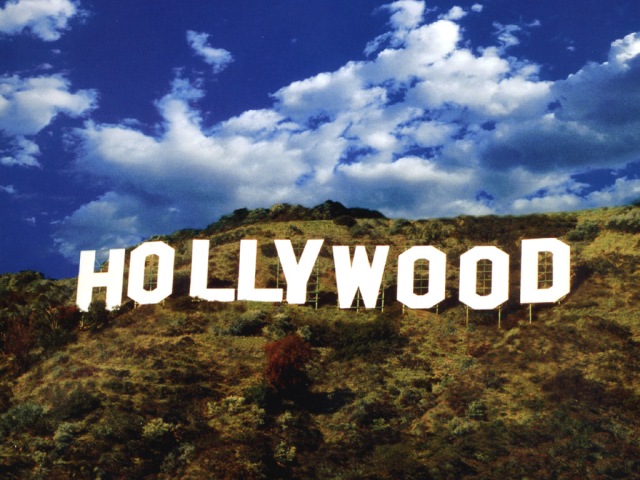
Hollywood sign (Mapping Megan)

Hollywood sign (Mapping Megan)

A new study released this week by the University of Southern California (USC) Annenberg School for Communication and Journalism once again stated the obvious: Entertainment isn’t diverse.

If you don’t want to read the full report (though I’d recommend it), here are some choice stats:

Percentage of female speaking roles in film: 28.7%

Percentage of female film directors: 3.4%

Percentage of female screenwriters: 28.9%

Percentage of cable TV shows that have no Asian characters: 51%

Percentage of cable TV shows that have no Black characters: 23%


Still not convinced the #OscarsSoWhite hashtag is needed?

#ThrowbackThursday: Lupita Nyong’o, Oscars 2014

Lupita Nyong'o Oscar acceptance, 2014 (CBS News)

Lupita Nyong’o Oscar acceptance, 2014 (CBS News)

The Oscars are this weekend (Sunday, Feb. 28). If you’ve been following awards season this year, you know that the #OscarsSoWhite reared its ugly head again. This is the second year in a row that there have been no non-white nominees in the four acting categories. Shameful isn’t a strong enough word.

So I’m throwing it back to the last time we had a non-white winner in an acting category. That was back in 2014, at the 86th Annual Academy Awards. Lupita Nyong’o won Best Supporting Actress for her role in 2013’s “12 Years A Slave.” She’s both the most recent POC nominee and winner.

And because I couldn’t choose just one photo of Nyong’o, here’s another one that showcases her incredible Prada dress:

Lupita Nyong'o backstage at the Oscars, 2014 (Fiction Diversity WordPress)

Lupita Nyong’o backstage at the Oscars, 2014 (Fiction Diversity WordPress)


How Many Asian Actors Have Been Nominated for Oscars?

Yul Brynner in 'The King and I,' 1956 (Gold Derby)

Yul Brynner in ‘The King and I,’ 1956 (Gold Derby)

The Oscars are this weekend (Sunday, Feb. 28th), and the big controversy this year has centered around the lack of non-white acting nominees (and continues last year’s #OscarsSoWhite hashtag). But when talked about in detail, the conversation has seemed to focus more on including Black nominees and narratives. And that’s great! But there are a wealth of other races and ethnicities that need to be included in the conversation and given a place at the table.

This led me to wonder: how many Asian acting nominees and winners have there been in the history of the Academy Awards? Spoiler alert: not all that many, sadly.

The Best Actor category has seen the most Asian men win the award: Yul Brynner in 1956, and Ben Kingsley in 1982. These two men comprise two-thirds of the category’s Asian nominees.

Actress Merle Oberon was the first Asian nominated for any Oscar, and the first nominated for Best Actress. (The category was called “Best Lead Actress” when she was nominated in 1935.) She remains the sole Asian woman nominee of the category.

Of the seven Asian men who received Best Supporting Actor nominations spanning 1957 to 2003, only one has won: Haing S. Ngor in 1984. Six Asian women have received Best Supporting Actress nominations, but only one has won: Miyoshi Umeki in 1957.

Considering that these categories have five nominees each, and the Academy Awards have been occurring since 1930, this nominations/wins-to-visibility ratio is…fucking pathetic.

I really hope this year teaches the Academy a lesson, and we’ll begin to see more diverse characters and stories not just on screen, but materially validated by the old guard as well.