“Loving” Film Releases Interracial Emoji Couples

Love-Moji ('Glamour' en Espanol)

Love-Moji (‘Glamour’ en Espanol)

Given our current obsession with all things tech, Focus Features has found a fitting way to promote the company’s upcoming film “Loving:” custom emojis.

The Love-Mojis feature a variety of emojis of interracial couples in about every combination you could think of. So if you’re in an interracial couple, and you haven’t yet felt your coupling properly represented by the Unicode Consortium, your time has finally come!

Why is this important? Let’s start with the film itself: “Loving” follows Richard and Mildred Loving, a Virginia couple who got married in 1958. This wouldn’t be so remarkable except that Richard was white and Mildred was black. Their marriage happened during a time where interracial dating, much less marriage, was frowned upon, to put it lightly. Interracial marriage could bring a charge of miscegenation (race mixing, in plain terms).

The Lovings were arrested after their marriage for the crime of their relationship, and forced to leave Virginia. Once in D.C., they began legal proceedings. The Loving v. Virginia case went all the way to the U.S. Supreme Court. In 1967, the Supreme Court ruled anti-miscegenation laws unconstitutional, which struck down said laws that were on the books of sixteen states. (All sixteen states were in the South. Shocker.)

Needless to say, this was a landmark case.

But why use emojis to promote it?

Since emojis debuted, the options for emoji couples were pretty stark. They didn’t show the breadth of real-life relationships in terms of race and also sexual preference. The new Love-Moji take this into account, and rectify the oversight.

There’s also the fact that using emojis has become a convenient visual shorthand for emotions we don’t particularly feel like typing out in words.

You can get the Love-Moji via app stores and at VoteLoving.com.

“Loving” comes out on Friday, Nov. 4th.

Beyonce and Solange’s #1 Albums: By The Numbers

Beyonce and Solange Knowles (ET Online)

Beyonce and Solange Knowles (ET Online)

Musicians/performers/all-around FLAWLESS women Beyonce and her sister Solange each have achieved something many artists dream of: cracking the Billboard 200 chart. And now each have achieved the distinction of having an album reach #1.

But they also sit in a rarefied strata: Beyonce and Solange are only the third pair of siblings to make the Billboard 200 chart. They’re also the only sisters to achieve this feat.

Since this is such an impressive distinction for the Knowles sisters, here are some numbers that put their joint accomplishment in perspective:

Number of Siblings Who’ve Also Scored #1 Albums: 2

  • Michael and Janet Jackson
  • Master P and Silkk the Shocker

Number of Siblings Who’ve Also Hit #1 in a Calendar Year: 1

  • Michael and Janet Jackson, 2001

Number of Times the Knowles Sisters’ Albums Have Hit #1: 

  • Beyonce: 6
  • Solange: 1

Number of Times Beyonce Hit #1 With Destiny’s Child Albums: 2

Number of Solo Albums Each Knowles Sister Has Released:

  • Beyonce: 6
  • Solange: 3

2016 Album that Hit #1 for Each Knowles Sister:

  • Beyonce: Lemonade
  • Solange: A Seat at the Table

Number of Units Consumed Within First Week of 2016’s Album Release (includes full albums, streaming- and track-equivalents):

Number of Sales Within First Week of 2016’s Album Release:

Best-Selling Album for Each Knowles Sister:

#ThrowbackThursday: Solange, ‘True,’ 2012

Solange, 'True' (The Jewel Wicker Show)

Solange, ‘True’ (The Jewel Wicker Show)

It’s no secret I’m a fan of Beyonce. I’ve seen her three times in concert (The Mrs. Carter Tour 2013, On the Run 2014, and Formation 2016) because I think she’s one of the performers we’ll tell our grandkids about.

I also really like Solange, Beyonce’s sister. And the release of her new album “A Seat at the Table has led me to revisit “True,” her 2012 EP. The above still is from her song of the same name, which Solange filmed in Cape Town, South Africa with members of Les Sape Society. The entire video is beautiful, so definitely watch it if you haven’t yet. The EP’s excellent, too.

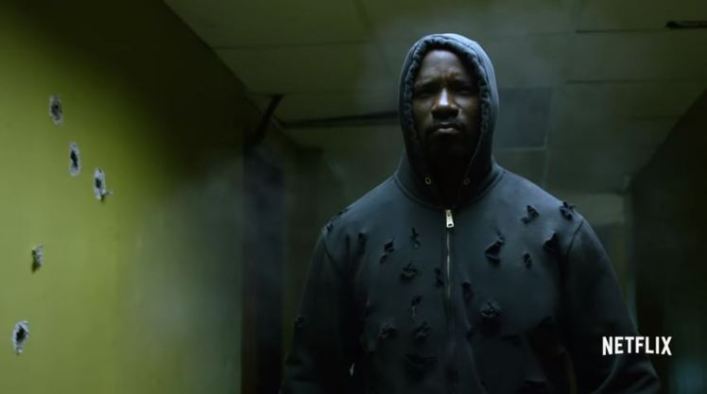
“Luke Cage” Breaks Netflix

Luke Cage on Netflix (Metro UK)

Luke Cage on Netflix (Metro UK)

Marvel’s newest superhero Luke Cage only arrived less than two weeks ago, but he’s already made a name for himself. And not just for his heroic deeds.

The titular character’s thirteen-episode first season dropped on Friday night, Sept. 30th. Not even a day later, Netflix received so much traffic that the site went down for two to three hours on Saturday afternoon. The outage affected the U.S. and most of the UK.

It’s posited that so many viewers streaming the new series at the same time led to the site crashing.

If anything, Netflix’s crash proves that there’s a very real audience for non-white superheroes that’s been underserved for far too long. I hope the success of “Luke Cage” changes that.

Trends: Emmys 2016 Diversity

Rami Malek, Emmys 2016 (Telegraph UK)

Rami Malek, Emmys 2016 (Telegraph UK)

The Emmy Awards aired this past Sunday night, honoring the best in TV. The twin themes  that popped out from the night were diversity and inclusion. And they played out in many ways.

Mr. Robot actor Rami Malek won Best Actor in a Drama Series, becoming the first Egyptian-American to do so. Malek also became the first non-white actor to win the award since 1998, when Andre Braugher won for Homicide: Life on the Street. On the actress side, Black-ish lead Tracee Ellis Ross was nominated for Best Actress in a Comedy Series. Though she didn’t win, Ellis was the first Black woman to be nominated for the award in 30 years; Phylicia Rashad was nominated in 1986 for The Cosby Show. Ellis was only the fifth Black woman ever to be nominated for Best Actress in a Comedy Series.

Inclusivity also prevailed behind the camera. Comedian Aziz Ansari and Alan Yang won Best Writing for a Comedy Series for Ansari’s Netflix series Master of None. (Ansari was also nominated for Best Actor in a Comedy Series.) Women directors were honored: Jill Soloway won Best Directing for a Comedy Series for Amazon’s Transparent, and Susanne Bier won Best Directing for a Limited Series, Movie or Dramatic Special for AMC’s The Night Manager.

Diverse narratives are gaining more traction. Transparent actor Jeffrey Tambor won Best Actor in a Comedy Series for the second consecutive year for his role as a transwoman.

It was good to see some progress made this year in terms of inclusion, but there’s still a long way to go.


#ThrowbackThursday: Viola Davis Wins an Emmy, 2015

Viola Davis, Emmys 2015 (Betches)

Viola Davis, Emmys 2015 (Betches)

At the Emmys this past weekend, actress Viola Davis was nominated for Best Actress in a  Drama Series for her lead role in ABC’s “How to Get Away with Murder.” Though she didn’t win on Sunday night, she won the award in 2015, and made history in the process. Davis became the first Black woman to win the Best Actress award.

Crazy that seemingly simple milestones are still only now being surpassed.

Trends: Latina Actress Firsts


Melissa Villasenor (Remezcla)

Melissa Villasenor (Remezcla)

Earlier this week, new additions to the “Saturday Night Live” cast were announced for the upcoming season. Among the three new cast members is comedian Melissa Villasenor. Villasenor’s hiring is significant because she’ll be the first Latina cast-member since “SNL” debuted 41 years ago.

How in the hell did it take Forty. One. Years?!?!?!

Villasenor’s hiring is just the latest achievement for Latinas in the entertainment industry, and she’s not the first to bust down a barrier.

Mexican actress Dolores del Rio worked in Hollywood from the 1920s until the ’40s, and achieved cross-over success with American audiences. She was the first Mexican actress to do so, and she worked with Hollywood luminaries such as Fred Astaire. (Fun fact: In the 1933 film “Flying Down to Rio,” del Rio danced with Astaire in the same film where he first paired with Ginger Rogers.)

Actress Rita Moreno overachieved with the firsts. Not only did she win the Best Supporting Actress Oscar in 1961, but she won the same award at the Tonys in 1975. Moreno went on to be the second person ever to get the EGOT honor (that is, she won an Emmy, Grammy, Oscar and Tony).

Villasenor’s hiring opens the door for more diversity at “SNL,” but more Latina achievement in entertainment.


#ThrowbackThursday: Rita Moreno, 1961

Rita Moreno, 1961 (Pinterest)

Actress Rita Moreno poses with her Oscar after she was named best supporting actress at the Academy Awards in Los Angeles on April 9, 1962. She won for her roll in “West Side Story

In 1961, actress Rita Moreno won the Oscar for Best Supporting Actress for her portrayal of Anita in “West Side Story.” She was the first Latina actress to win that award.

Moreno didn’t stop there: In 1975, she won the Tony for Best Supporting Actress for “The Ritz.” And she was the first Latina actress to win that award as well.

Two years later, Moreno became the second person ever to achieve the EGOT: winning an Emmy, Grammy, Oscar and Tony. She’s continued working steadily and blazing trails today.

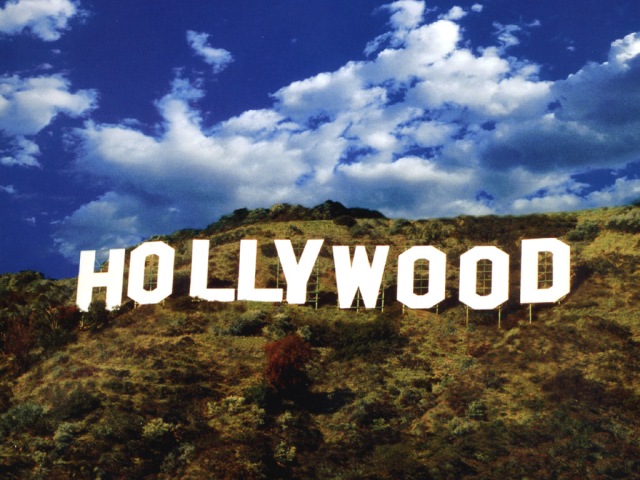
No Shit: Entertainment Isn’t Diverse: By The Numbers

Hollywood sign (Mapping Megan)

Hollywood sign (Mapping Megan)

A new study released this week by the University of Southern California (USC) Annenberg School for Communication and Journalism once again stated the obvious: Entertainment isn’t diverse.

If you don’t want to read the full report (though I’d recommend it), here are some choice stats:

Percentage of female speaking roles in film: 28.7%

Percentage of female film directors: 3.4%

Percentage of female screenwriters: 28.9%

Percentage of cable TV shows that have no Asian characters: 51%

Percentage of cable TV shows that have no Black characters: 23%


Still not convinced the #OscarsSoWhite hashtag is needed?

#ThrowbackThursday: Lupita Nyong’o, Oscars 2014

Lupita Nyong'o Oscar acceptance, 2014 (CBS News)

Lupita Nyong’o Oscar acceptance, 2014 (CBS News)

The Oscars are this weekend (Sunday, Feb. 28). If you’ve been following awards season this year, you know that the #OscarsSoWhite reared its ugly head again. This is the second year in a row that there have been no non-white nominees in the four acting categories. Shameful isn’t a strong enough word.

So I’m throwing it back to the last time we had a non-white winner in an acting category. That was back in 2014, at the 86th Annual Academy Awards. Lupita Nyong’o won Best Supporting Actress for her role in 2013’s “12 Years A Slave.” She’s both the most recent POC nominee and winner.

And because I couldn’t choose just one photo of Nyong’o, here’s another one that showcases her incredible Prada dress:

Lupita Nyong'o backstage at the Oscars, 2014 (Fiction Diversity WordPress)

Lupita Nyong’o backstage at the Oscars, 2014 (Fiction Diversity WordPress)