Porn Site Blocks North Carolina IP Addresses

Typing on a laptop keyboard (Free Stock Photos)

Typing on a laptop keyboard (Free Stock Photos)

By now, we’ve all heard about what’s going on in North Carolina with the House Bill 2 (HB2), which has abolished statewide anti-discrimination legislation against the LGBT community. Many companies are unhappy about it, and have either threatened to, or already have, pulled their business from the state.

One company is doing something a little different. Porn site xHamster has begun blocking any inbound users from any North Carolina (NC) IP addresses. At first, users with these addresses saw only a black screen. Later, NC users were asked if they supported HB2. If they answered affirmatively, they see numbers relating to NC users who search for “gay” and “she male” as keywords for their porn consumption. (Spoiler alert: the numbers for those are not insignificant.)

xHamster.com homepage for NC IP addresses (@xhamstercom)

xHamster.com homepage for NC IP addresses (@xhamstercom)

It is unclear how many IP addresses are registered in NC, and how many visitors xHamster.com receives in a given month.


No Shit: Entertainment Isn’t Diverse: By The Numbers

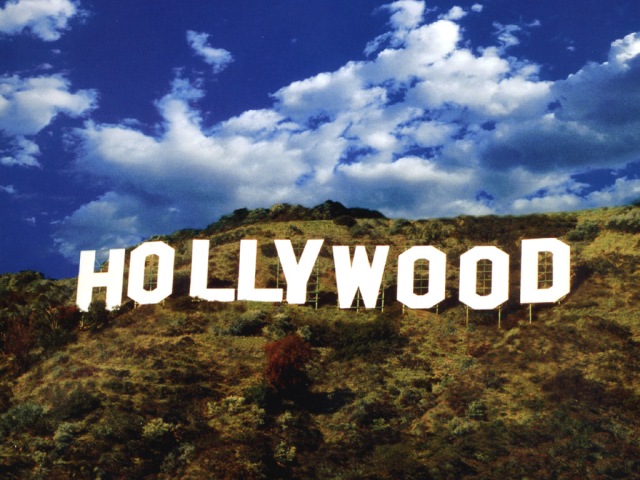
Hollywood sign (Mapping Megan)

Hollywood sign (Mapping Megan)

A new study released this week by the University of Southern California (USC) Annenberg School for Communication and Journalism once again stated the obvious: Entertainment isn’t diverse.

If you don’t want to read the full report (though I’d recommend it), here are some choice stats:

Percentage of female speaking roles in film: 28.7%

Percentage of female film directors: 3.4%

Percentage of female screenwriters: 28.9%

Percentage of cable TV shows that have no Asian characters: 51%

Percentage of cable TV shows that have no Black characters: 23%


Still not convinced the #OscarsSoWhite hashtag is needed?

Channing Dungey is the First Black Woman to Run ABC

Channing Dungey and ABC logo (Variety)

Channing Dungey and ABC logo (Variety)

Big news on the entertainment/broadcast networks front: Channing Dungey was named President of ABC Entertainment last week. She’s the first Black woman to run a broadcast network’s entertainment division.

Dungey replaces outgoing president Paul Lee.

Before her new role, Dungey ran development of ABC’s shows. She’s worked with the “Thank God It’s Thursday” (TGIT)-block of “Scandal,” “How to Get Away With Murder,” and “Grey’s Anatomy,” earning her nickname of “the Shonda Rhimes whisperer.”

I’m eager to see how ABC’s programming will change as a result of Dungey’s promotion. Based on her glowing history with show runners, it sounds like viewers are in for a treat.


Barbie Gets Three New Body Types

New Barbies (CNBC)

New Barbies (CNBC)

For decades, Barbies have been a constant presence in many girls’ toy boxes. Her body barely changed for over 50 years: tall, thin, big boobs, small waist (for that coveted 7:10 waist-to-hip ratio) and balancing on her tiptoes.

For many years, her physical assets have been a point of contention for feminists and activists for positive body image and acceptance. (I can confirm: I’ve been told my grandmother wouldn’t let my mom play with Barbies when she was growing up on the grounds that the doll was too “buxom.” I mean, she wasn’t exactly wrong.) It seems that their concerns have finally been acknowledged.

Barbie will be sold in three different body types: petite, curvy, and tall. Mattel, the company that’s made the doll since its inception in 1959, is also expanding the line in terms of ethnicity and race options:

Barbie dolls will come in seven skin tones, 22 eye colors, 24 hairstyles, and even a flat foot.

This move comes as consumers seek dolls that resemble themselves, or the little girls in their lives. For many women, Barbie is the first doll they could envision as themselves, and dreaming big. and it’s even better that now more dolls will resemble the consumer base’s diversity. Mattel has already begun diversifying their Barbies: the company broadened the range of “skin tones, eye colors and hair styles” available.

The new Barbies will debut this spring in stages. It’ll be interesting to see how the new dolls impact Mattel’s bottom line: Worldwide sales fell 4% in Q4 2015, and the company’s stock price has dropped 43% since a high in 2013.

Beth Comstock is GE’s First Female Vice Chair

GE Vice Chair Beth Comstock (Fast Company)

GE Vice Chair Beth Comstock (Fast Company)

Big news from a major corporation: Conglomerate General Electric named Beth Comstock a new Vice Chair. She oversees marketing for the company, becoming chief marketing officer in 2003. Oh yeah, she’s the first woman to hold the executive position (no big!). She joins three other men as her fellow vice chairs.

Comstock’s official title is Vice Chair of Business Innovations (pretty cool, huh?). Per “Fast Company,” here’s what the Business Innovations unit actually is and does:

[It] accelerates new business and helps established commercial ventures transition into GE’s technology universe. The Business Innovations arm houses GE Lighting, GE Ventures & Licensing, software commercialization and corporate marketing, sales, and communications.

Comstock is credited with helping GE focus on the future, in terms of the “industrial internet.” The concept marries data analysis with GE’s traditional, industrial products. CEO Jeff Immelt has called her “a catalyst for digital innovation and growth.”

I can’t wait to see how she’ll evolve GE into the future.

Trends: Companies Expanding Maternity/Paternity Leave Policies

Netflix 2014 logo (Under Consideration)

Netflix 2014 logo (Under Consideration)

A very positive trend has sprung up recently: Companies are their expanding parental leave policies. The main goal is to recruit more women with work-life balance policies, and to retain talent by allowing time off for family matters. Because trouble at home often means distracted employees and lower productivity. (I feel like that’s on a modern-day Mather Work Incentive poster somewhere.)

Big strides have been made this year: Consulting powerhouse Accenture bumped up its maternity leave policy to 16 weeks in March, which applies to both full-time and part-time employees. In April, Johnson & Johnson announced a new eight-week paid leave policy. In June, major bank Goldman Sachs began offering new fathers and “non-primary caregivers” four weeks of paid leave. (The company currently offers 16 weeks of paid maternity leave.) The U.S. Navy and Marines mandated an 18-week maternity leave policy, effective immediately, in July.

This trend has become especially prevalent in the tech industry, with a lot of changes occurring just this past month. In August, Microsoft recently announced a new parental leave policy, in which employees would get paid at 100% of their salary for 12 weeks. New mothers will have eight weeks of paid maternity leave, which, combined with disability leave, could entitle them to 20 weeks of paid leave.

Adobe’s policy also changed: Mothers will now receive 26 weeks of paid leave, up from the nine weeks off from the previous policy. It’ll be a combination of medical leave (10 weeks) and paternal leave (16 weeks).

Netflix announced they’re bumping up their maternity and paternity leave policies to an unlimited amount of time. New mothers and fathers are allowed to take as much time off as they like during a child’s first year, whether though birth or adoption. (Netflix isn’t a stranger to expanding time off: Employees already get unlimited vacation time.) But the policy isn’t all inclusive: It only applies toward salaried employees, so hourly workers aren’t able to take advantage of it.

It’ll be interesting to see if (when) other companies follow suit, and if paid parental leave will eventually be federally mandated. These are definitely steps in the right direction.


#ThrowbackThursday: Paid Maternity Leave Around the World

Paid Maternity Leave Around the World (Blogspot)

Paid Maternity Leave Around the World (Blogspot)

Yeah, this is a #TBT, but it’s relevant to today. In fact, it’s still happening today. The United States is one of the few countries left in the world that doesn’t pay for maternity leave. Crazy, right?!

This map just lays it out. I hope the U.S. comes to its senses soon, and enacts paid maternity leave for all new (and reoccurring) mothers.

Rome Considers Zone of Tolerance for Prostitutes

Italian prostitutes (The Telegraph)

Italian prostitutes (The Telegraph)

The Roman neighborhood of EUR is considering enacting various “zones of tolerance” around the city within which prostitution would be legal. Certain places would off-limits, such as public parks, churches and schools. This makes sense: A country-wide law dictates that cities can issue boundaries on where prostitution can and cannot occur. This is a bit of a legal loophole in Italy, where aiding prostitution is illegal (but restricting it to certain areas is fine), but paying for sex is totally cool.

Naturally, the prostitutes themselves are not happy with this, as it would cut into their business. The Catholic Church isn’t too pleased either, for obvious reasons.

There are precedents for these zones: In 2012, Montreal was mulling a similar thing, but wanted to restrict it to one street, away from the busy main thoroughfare. In 2006, the English town of Ipswich considered a tolerance zone after a spate of prostitute murders shook the community.

EUR hasn’t come (heh) to a conclusion yet, but it’ll be interesting to see what precedent this sets for the city, Italy and the rest of the world.


How Many Countries Offer Paternity Leave?

Dad with newborn baby (Babble)

Dad with newborn baby (Babble)

Happy Friday! Last month, Massachusetts passed a law requiring businesses to give eight weeks of paternity leave. That’s right, paternity leave. For the fathers. The U.S. doesn’t have a paid paternity leave policy (come on, we don’t even have a paid maternity leave policy), though the 1993 Family and Medical Leave Act offers 12 weeks of protection, but only if the employee has been working for the company for over a year and the company contains over 50 people. The new law would include companies with a minimum of six employees.

Work-life balance is increasingly becoming more of a concern for men as well as women, and the concept comes sharply into focus with the addition of children. The U.S. lags behind other countries in our paternity leave policies. A 2013 Pew Research Center study examined 38 countries, and found that 25 of them have guaranteed paternity leave for new fathers. Time off can range from less than one week to over eight weeks.

Several countries that offer paternity leave are within Europe. Norway, Ireland, Iceland, Slovenia, Sweden and Germany have protected paternity leave, which would allow a new father time off secure that he’ll be able to return to his job without being fired or let go. At least a portion of this time off is required to be paid, except in Ireland.

South Korea also has a paternity leave policy, in which new fathers can take up to five days off. But parents with children under three years old can request to work part- or full-time for one year to care for their child. It appears that this policy applies to both mothers and fathers.

Hopefully this new law will push policy towards a national paid leave policy, for both mothers and fathers.

Auction Prices of “Playboy”‘s First Issue: By The Numbers

Marilyn Monroe cover for 'Playboy,' Dec. 1953 (NY Daily News)

Marilyn Monroe cover for ‘Playboy,’ Dec. 1953 (NY Daily News)

As I noted earlier today, a first issue of “Playboy” is scheduled to be auctioned off later at Nate D. Sanders in Los Angeles. (For all I know, it could’ve already happened.) The issue is expected to be sold for about $2.7K.

I wanted to see if this estimate was in line with how much previous first issues of the periodical sold for.

A 2011 “Icons and Idols Hollywood” auction held by Julien’s Auctions opened bidding for the “Playboy” first issue at $1K-1.5K. The winning bid was $7K+. I also checked eBay, but all the first issues listed were for reprints, not originals, so I didn’t count those.

If this auction proceeds (or proceeded) anything like Julien’s did four years ago, the issue could very well sell for a lot higher.