Thursday Trends: Whitewashing Asian Characters in Film

Emma Stone, 'Aloha' (Jezebel)

Emma Stone, ‘Aloha’ (Jezebel)

Let me be clear: this is not a good trend. At all. It should never have even started. And yet, here we are.

It’s still a problem.

Historically, Hollywood has always had a problem of “whitewashing,” i.e. casting white actors in roles specifically created for non-whites. The thinking is that whites are more “bankable,” but there aren’t many roles and opportunities for non-white actors as it is. So a white actor ends up taking a role from a non-white one, and many non-white people are deprived of seeing depictions of themselves on-screen.

This tends to happen a lot with Asian actors. Most recently, director Cameron Crowe came under fire for casting Emma Stone in his latest movie “Aloha.” Stone was cast as a character named Allison Ng, whose ancestry is one-quarter Chinese and one-quarter Hawaiian. (Having white and Asian or Pacific Islander ancestry is traditionally known as “hapa,” deriving from the Hawaiian Pidgin word for half. So Ng’s heritage would be termed “hapa” or “hapa haole,” to include the European ancestry.)

Look at the picture above and tell me with a straight face that Emma Stone resembles anyone remotely half-Asian.

Fortunately, Crowe caught some heat for this decision, and has publicly apologized for his choice. (But he covered his ass a little, saying that the character was meant to be frustrated that her features belied her mixed-race heritage.) But Crowe could’ve easily cast an Asian or mixed-race Asian for his film. He just chose not to.

This whitewashing of Asian characters tends to come up every few years. 2010’s “The Last Airbender” received a public outcry when it was revealed that the cast was mostly non-white actors, save for Dev Patel. (The debacle coined the term “race bending.”) This was odd considering that the TV series (on which the movie was based) was set in a world with obvious Asian elements, and it was animated using anime influence.

The 2008 movie “21” centered on the real-life story of the MIT Blackjack Team, a group of current and former students who beat the casinos at their own game by counting cards. Though many of the group were of Indian and Asian descent, the movie whitewashed the cast, using mostly Caucasian actors.

And then there are the times when white actors are actually put in yellowface. 2012’s “Cloud Atlas,” which had the ensemble actors playing various characters, actually had two examples of this, and took it past the point of no return: Jim Sturgess (who was also in “21”) and James D’Arcy both played Korean men at one point. Sturgess and D’Arcy are both white men, but they both spent extensive time in makeup to more realistically resemble Asian men.

This is far from a new problem. The 1956 film “Teahouse of the August Moon” featured legendary actor Marlon Brando as Japanese villager Sakini, donning full-on yellowface to physically embody the role. And everyone who’s seen 1961’s “Breakfast at Tiffany’s” remembers Mickey Rooney as Holly Golightly’s Japanese neighbor I.Y. Yunioshi, who, seen through modern eyes, was a jaw-droopingly offensive caricature. (“The New York Times” review of the film called Rooney “broadly exotic.”) Fortunately, the distance of time and perspective have allowed people to see that these portrayals were very offensive towards Asians, and it was wrong to a) write/portray the characters in such stereotypical ways, and b) cast actors not of the specific ethnicity to play these parts.

But maybe the message isn’t sinking in as much as it should be: Blonde, Caucasian actress Scarlett Johansson will star in DreamWorks’ adaptation of the anime title “Ghost in the Shell.”

Here’s the thing: There are so many asian and mixed-Asian actors out there. Kristin Kreuk, Chloe Bennet, Olivia Munn, John Cho, Steven Yeun, Daniel Henney, Harry Shum Jr., Sendhil Ramamurthy. And those are only the ones I didn’t need to Google off the top of my head. Point being, there’s massive opportunity here for diverse casting that reflects reality. So let’s get on it!

How Many People Don’t Trust Their Partners?

Jada Pinkett-Smith and Will Smith (Word On Da Street)

Jada Pinkett-Smith and Will Smith (Word On Da Street)

Happy Friday! Actress Jada Pinkett-Smith always has something to say on marriage or sex that some find controversial. But most of the time, what she has to say is very realistic, and more people should heed her advice.

Her most recent interview Wednesday on “Howard Stern” is a prime example. Pinkett-Smith’s marriage to actor Will Smith has frequently been plagued by cheating allegations, all of which she’s dismissed. On Stern’s radio show, she laid out why she’s not worried about her man’s actions:

You’ve got to trust who you’re with. And at the end of the day, I’m not here to be anybody’s watcher. I’m not his watcher. He’s a grown man.

Pinkett-Smith went on to say that as long as Smith could look himself in the mirror, it was all good.

She brings up a great point: Many people (most, it seems) don’t trust their partners, and live in fear that their significant other will cheat.

How widespread is this mindset? Pretty common. According to the 2013 book “The Normal Bar,” which shares secrets of successful couples, less than 40% of women and just over 50% of men claim to trust their partners. Scary, isn’t it?

We should all relax a little and take a page from Pinkett-Smith’s book.


Thursday Trends: Female Celebrities’ Fluid Sexuality

Maria Bello (Salon)

Maria Bello (Salon)

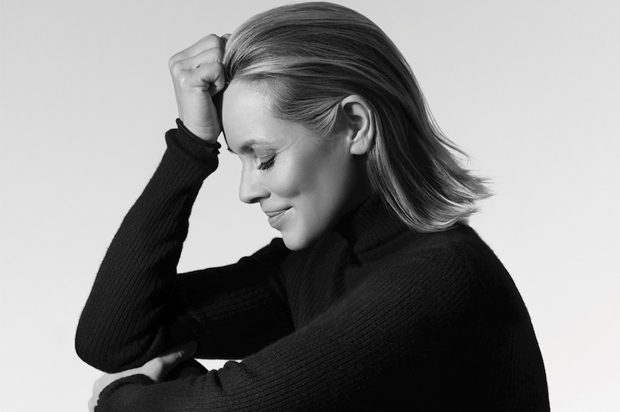
Last week, actress Maria Bello released her new memoir. “Whatever…Love Is Love” chronicles Bello’s journey as a single mom who self-identified as straight, but then unexpectedly fell in love with her female best friend. She penned a piece for “The New York Times” in 2013 that centered on worrying how her son would react to the news. (If you’re wondering, his response is her memoir title verbatim.) From there, Bello decided to redefine her relationships in a way that worked for her, and she now sexually identifies as a “whatever.”

Bello isn’t the only female public figure whose sexuality has shifted within the public eye. Oscar-winning actress Tatum O’Neal recently revealed that she likes and has been dating mostly women for some time now. O’Neal didn’t self-identify as lesbian or bisexual (she had previously been married to, and had children with, tennis ace John McEnroe), and says she’s “not one or the other.”

The millennial generation also has its share of sexually fluid women who eschew labels. Actress Amber Heard dated photographer Tasya van Ree before marrying actor Johnny Depp earlier this year. She also doesn’t label herself “one way or another.” Actress Lindsay Lohan famously had a volatile relationship with DJ Samantha Ronson, but then publicly self-identified as straight years after the relationship was over.

Though the majority of examples come from entertainment, the political sphere can claim on entrant. Chirlane McCray, wife of New York City mayor Bill de Blasio, self-identified as a lesbian when she met her now-husband in 1991. Years earlier in 1979, McCray had written an essay for “Essence,” titled “I Am A Lesbian,” which centered on gays and lesbians within the black community. McCray’s essay didn’t receive much attention until just before her husband decided to run for mayor in 2012.

What’s interesting about McCray’s case is how others in the media reacted to it: Many termed her some variation of “former lesbian.” But McCray never self-identified as anything remotely resembling that. Here’s how she responded in 2013 when asked if she self-identified as bisexual:

I am more than just a label. Why are people so driven to labeling where we fall on the sexual spectrum? Labels put people in boxes, and those boxes are shaped like coffins. Finding the right person can be so hard that often, when a person finally finds someone she or he is comfortable with, she or he just makes it work.

It’s fantastic how so many women (and people in general) are gaining the courage to step outside the box and do what works for them, especially in terms of sexuality and relationships. What I love about the above examples is that they’re all open to new experiences and don’t use labels to limit them. And that’s just beautiful.

#ThrowbackThursday: Angelina Jolie and Jenny Shimizu, 1996

Angelina Jolie and Jenny Shimizu (The Daily Mail UK)

Angelina Jolie and Jenny Shimizu (The Daily Mail UK)

Long before she become a well-known humanitarian with perfect bone structure and Mrs. Brad Pitt, Oscar-winning actress Angelina Jolie was kind of a wild child. But before wearing Billy Bob Thornton’s blood in a vial around her neck, she did something that (rightfully) now seems like no big deal.

Jolie began dating actress/model Jenny Shimizu on the set of their 1996 film “Foxfire.” Jolie claims that she fell in love with Shimizu “the first second [she] saw her,” and would’ve married Shimizu if she wasn’t already married to actor Jonny Lee Miller.

Reports put the definitive end of the relationship around 2005 (coincidentally the same year she starred in “Mr. & Mrs. Smith” opposite Pitt), but imagine an alternate universe where Jolie and Shimizu are the ultimate Hollywood bisexual power couple. Intriguing, right? Too bad it’ll only happen in our minds.

Caitlyn (Formerly Bruce) Jenner Covers “Vanity Fair”

Caitlyn Jenner on the 'Vanity Fair' cover (Us Magazine)

Caitlyn Jenner on the ‘Vanity Fair’ cover (Us Magazine)

Another Kardashian (well, Jenner) woman has broken the Internet.

The latest issue of “Vanity Fair” debuted today, and with it, the introduction of Caitlyn Jenner. And she. Is. Beautiful.

Caitlyn, previously known as Bruce, first publicly confirmed her transition in April during an interview with Diane Sawyer for “20/20.” Since then, things have moved quickly: Jenner said she’d transition “sometime during the spring” and would wait to debut a female name. Just last week, sources reported that Jenner would cover “Vanity Fair” sometime this summer. But I’m sure nobody thought it’d be this soon.

This interview also marks the first time Jenner has used female pronouns to describe herself. Taking her cue, other media outlets are following suit.

All of this has paid off in terms of web traffic: “Vanity Fair” reported that the Jenner piece set a new traffic record, netting 6M+ unique visitors in just hours.

(Side note: Caitlyn evidently took a few notes from her step-daughter Kim Kardashian in terms of self-promotion, not that that’s a bad thing. She’s also overshadowing Kim’s announcement that she’s pregnant with her second child with husband Kanye West.)

It’s safe to say that Caitlyn is literally the most high-profile transwoman right now. (And she would know, having been part of the Kardashian/Jenner clan for decades.) Covering “Vanity Fair,” a staple in entertainment and society journalism, really marks a debut of her true self.

It’s very inspiring to see someone blossom once they’re so comfortable in their own skin, and this is definitely the case with Caitlyn.

#ThrowbackThursday: Helen Mirren’s Stripper Shoes, 2013

Helen Mirren's stripper shoes (The Cut)

Helen Mirren’s stripper shoes (The Cut)

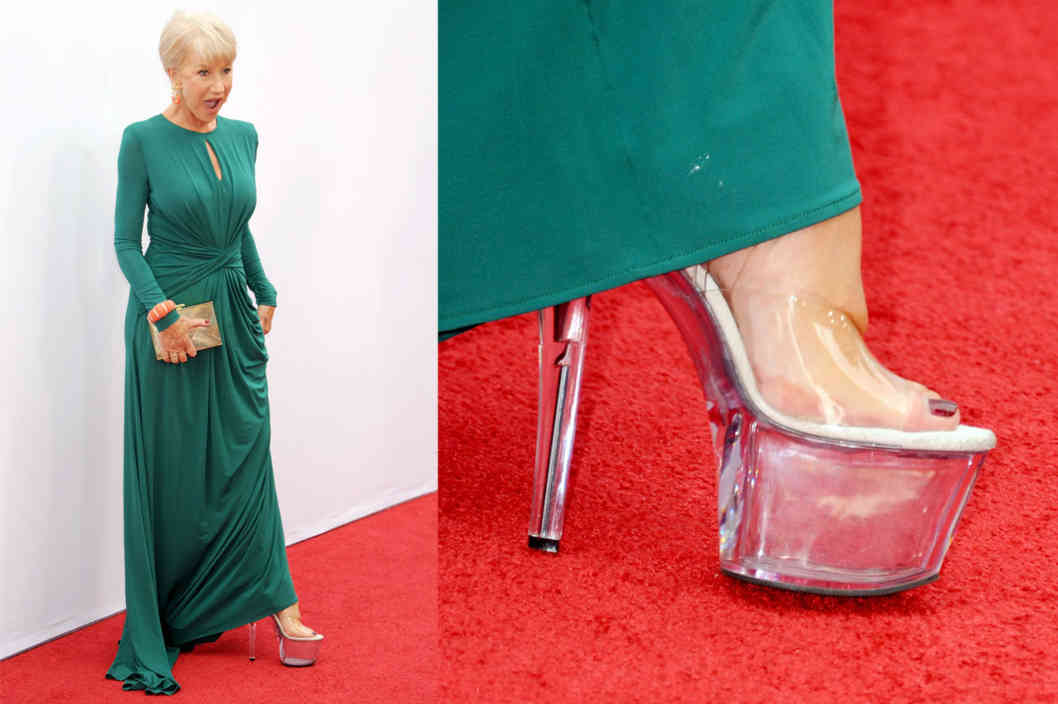
In 2013, Academy Award-winning actress Helen Mirren showed up to the LA premiere of “Red 2” wearing an elegant emerald dress…and clear, extremely high stripper shoes. She referred to the shoes as her personal leg-lengthening trick, and has apparently owned them for years.

I love seeing an older woman who hasn’t been shoved aside and told that she’s irrelevant, and is instead living her life with gusto and enthusiasm. (Also, I love Helen Mirren.) It’s rare to see, but I always hope more people follow suit.


Kim Kardashian Magazine Nudity: By The Numbers

Kim Kardashian, 'Paper' Magazine 2014

Kim Kardashian, ‘Paper’ Magazine 2014

“Break the Internet,” indeed. Kim Kardashian’s “Paper” magazine cover shoot debuted yesterday, and it’s already the talk of the town (and inter webs) due to her various nude shots.

In photos taken by Jean-Paul Goude, Kardashian poses mooning the camera (as the image above teases), and then goes balls (or boobs) to the wall and poses full frontal holding up her dress around her knees. This is the first time Kardashian has shown so much in a more artsy magazine.

Let’s take a look at how Kardashian’s nude magazine appearances in 2014 compare to the “W” magazine ones in 2010. (In terms of nude posing in magazines, we’re not counting “Playboy” because that would skew the sample.)

“W” Magazine, 2010:

Number of Cover Shots: 2

Number of Total Shots: 10

Number of Shots Sans Clothes: 10

Bare Butt: 2* (*one more prominent)

Bare Boobs: 2* (*shots where nipple is visible)

Full Frontal: 1* (*everything bare from the navel up)

(Technically, both cover shots are full-frontal, but text bars obscure the good stuff.)


“Paper” Magazine, 2014:

Number of Cover Shots: 1

Number of Total Shots: 4

Number of Shots Sans Clothes: 3

Bare Butt: 2

Bare Boobs: 2

Full Frontal: 1


#ThrowbackThursday: Kim Kardashian Nude in “W” Magazine, 2010 (NSFW)

Kim Kardashian, 'W' Magazine 2010

Kim Kardashian, ‘W’ Magazine 2010

Kim Kardashian’s “Paper” magazine photo shoot wasn’t the first time she’s stripped down for a magazine. That would be back in 2010 for “W” magazine and its accompanying article, “Kim Kardashian: Queen of Reality TV.”

In this shoot, her body was covered in silver paint (as above). She was reportedly upset with the result, telling her sisters Kourtney and Khloe, “I’ve definitely learned my lesson. I’m never taking my clothes off again, even if it’s for ‘Vogue.’” But later it’s reported she changed her mind and was proud of her photos.

Apparently, that only lasted a few years.


Jennifer Lawrence Nude Photo Hack: Is Our Cloud Data Safe?

Jennifer Lawrence Oscars 2013

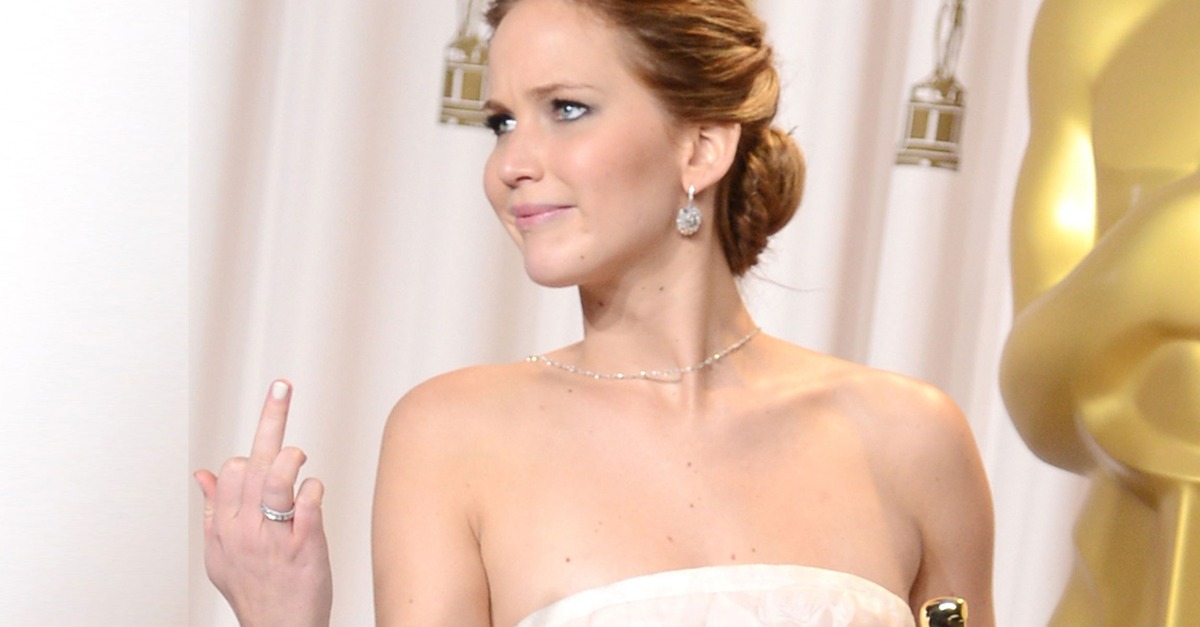
JLaw is not amused.

Earlier this week, Oscar winner Jennifer Lawrence’s private photos were hacked off her iCloud. She wasn’t the only one: Rihanna and Kate Upton were hit as well.

This high-security breach naturally leads us lesser mortals to worry about our own data within the Cloud.

But should we?

Apple feels it wasn’t a security breach, but a specific targeted act. This seems to check out, as we’re only hearing of celebrities being hacked and not Jane from down the street. (Of course, if Jane did get hacked, I’m sure Apple wouldn’t want to risk losing their customer base by publicizing that.)

The iCloud has been up and running for nearly three years, and this is the first security breach we’ve seen so far. So the storage service’s track record has been good up until this point. But it is a large, high-visibility blip on the radar, brought into the spotlight by America’s Sweetheart.

Apple’s track record suggests that this is an embarrassing security anomaly, and hopefully a longer-term trend will bear that out.