Female/POC Video of the Year Winners at the MTV VMAs: By The Numbers

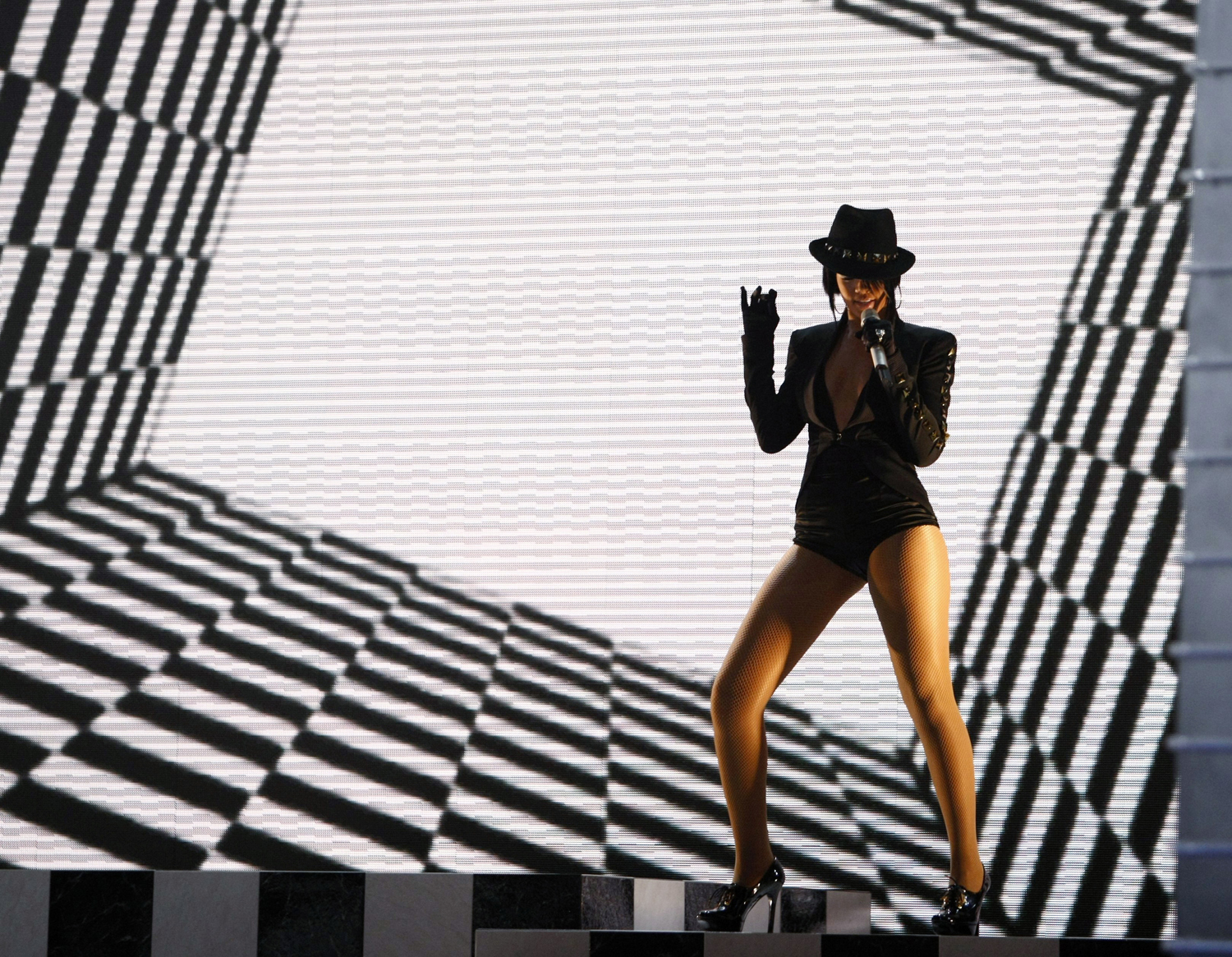
Singer Rihanna performs "Umbrella" at the 2007 MTV Video Music Awards in Las Vegas September 9, 2007. Rihanna won the award for Monster Single of the Year for the song. REUTERS/Mike Blake (UNITED STATES)

Singer Rihanna performs “Umbrella” at the 2007 MTV Video Music Awards in Las Vegas September 9, 2007. Rihanna won the award for Monster Single of the Year for the song. REUTERS/Mike Blake (UNITED STATES)

When the nominees for MTV’s Video Music Awards (VMAs) were announced earlier this summer, acclaimed rapper Nicki Minaj pointed out the glaring absence of women of color in the Video of the Year category. She had a point: The video for her song “Anaconda” broke VEVO viewing records, racking up 19.6M+ views in 24 hours, and propelled a huge cultural impact. (I know you know of at least one person who dressed in one of Nicki’s outfits for Halloween.) To have Minaj’s video snubbed ignores all of those not-insignificant achievements.

I had a sneaking suspicion that the numbers were pretty dismal, not just for women performers of color, but also for women performers in general. I wanted to see exactly how skewed the numbers were, so I looked up the data.

First, some context:

31: Years the Video of the Year Award has been presented (this year will be the 32nd)

69: Number of solo musicians who’ve been nominated

16: Number of solo musicians who’ve won

67: Number of groups who’ve been nominated (including feature artists, not counting 2015 nominees)

15: Number of groups who’ve won (including feature artists)


Let’s look at the stats of the women:

13: years where women solo artists or groups won

0: years after the award began that the first woman artist was nominated (Cyndi Lauper in 1984, nominated during the Award’s first year)

6: years after the Award began that the first woman artist won (Sinead O’Connor in 1990)

4: times Madonna has been nominated

1: time Madonna has won (1998)


And the stats of women of color:

9: years after the Award began that a female group of color was nominated (En Vogue in 1993)

11: years after the Award began that a female group of color won (TLC in 1995)

1: times a women of color group won (TLC in 1995)

  • If you counted the “Lady Marmalade” group who won in 2001, which had Lil’ Kim, Missy Elliott, and Mya, the number goes up to 2.

1: time Missy Elliott has been a double-nominee in the category (2001)

2: winners that have won twice (Missy Elliott in 2001 and 2003, Rihanna in 2007 and 2012)

1: time that Beyoncé has won (2009)

2: times that Beyoncé has been nominated, not counting her 2015 nomination (2007 and 2009)


You don’t have to be a math genius to see that Minaj was correct about the institutional bias in the music industry with regards to awards, and that this should not be tolerated.

This year’s VMAs will air on Sunday, Aug. 30th.

Planned Parenthood Hacks: By The Numbers

Planned Parenthood site outage (Planned Parenthood)

Planned Parenthood site outage (Planned Parenthood)

You may have heard that Planned Parenthood’s website got hacked earlier this week. But did you know it got hacked twice?

That’s right. It actually happened twice in one week. Planned Parenthood was first hacked this past Sunday night, and then again on Wednesday. The hacking on Sunday was performed by a group called 3301. The group hacked employees’ personal contact information and internal emails and files. According to 3301’s leader E, the breach was possible due to the organization’s “extremely outdated and broken” coding.

While previously unknown, this group holds some extreme anti-abortion views, and feels that what Planned Parenthood does is “a very ominous practice.” The hacking was prompted by some recent leaked videos showing Planned Parenthood officials “discussing the sale of aborted fetal tissue.”

3301 calls its members “social justice warriors.”

The hacking on Wednesday interfered with the organization’s usual flow of web traffic. It was a large “distributed denial-of-service” (DDoS), where users couldn’t access the site due to the server getting flooded with voluminous quantities of data.

(And for those who wish I’d write about something else this week: yes, I know I just covered another prominent website’s hacking, but I couldn’t let this one pass by unacknowledged.)

Here are the numbers behind the hacking:

1: day that Planned Parenthood took their own site offline

2: times the site has been hacked this week

2: Government agencies (Department of Justice and the FBI) investigating the data breaches

300: number of Planned Parenthood employees whose personal information has already been leaked

200K: number of people who visit Planned Parenthood’s site daily

2.7M: Number of people that Planned Parenthood helps in a given year

Diversity Amongst Principal Dancers in Top Ballet Companies: By The Numbers

San Francisco Ballet's Yuan Yuan Tan and Davit Karapetyan in George Balanchine's 'Scotch Symphony,' 2012 (Odette's Ordeal)

San Francisco Ballet’s Yuan Yuan Tan and Davit Karapetyan in George Balanchine’s ‘Scotch Symphony,’ 2012 (Odette’s Ordeal)

It’s a well-known fact that classical ballet companies aren’t known for their diversity. With the news that American Ballet Theatre (ABT) dancer Misty Copeland has been promoted to principal, I was curious to see just how (non-) diverse the major ballet companies are.

First, I identified the top classical ballet companies in the U.S.: ABT, New York City Ballet (NYCB), San Francisco Ballet, Pacific Northwest Ballet, and Houston Ballet. (I didn’t look at Chicago’s Joffrey Ballet because the company doesn’t use traditional levels, as far as I could tell.)

Next, I looked at each company’s roster, looking for diversity. I decided to narrow my search to solely the principal dancers to save time. I then made a spreadsheet of my findings:

Principal Dancer Diversity at Top Ballet Companies Excel Spreadsheet

Principal Dancer Diversity at Top Ballet Companies Excel Spreadsheet

The first glaring thing is none of the companies have any Black principals at this time. (Copeland will change that when she begins her new position in August.) Every company listed has at least one principal of Asian descent, and San Francisco has two.

Here’s how the various companies break down.

American Ballet Theatre (ABT):

ABT has 15 principal dancers. Four Latino/Latina dancers make up 25%+ of the company’s diversity.

Houston Ballet:

Houston Ballet has the smallest group of principals with just eight dancers. The one Asian dancer and one Latina dancer combine to make up 25% of the diversity.

New York City Ballet (NYCB):

NYCB has the highest number of principal dancers at 24. Latino/Latina dancers comprise 12%+. Though not noted above, NYCB also features one dancer of South Asian descent.

Pacific Northwest Ballet:

This company has the worst diversity score. No Black or Latino/Latina dancers, and only one Asian dancer, in a group of 12 principals.

San Francisco Ballet:

With six dancers among 20 principals, San Francisco Ballet’s Latino/Latina contingent make up 30% of that company’s diversity, the largest of the studied cohort. Though not noted above, the company also features one dancer of South Asian descent.

By The Numbers: How Many States Require an Ultrasound Viewing Before an Abortion?

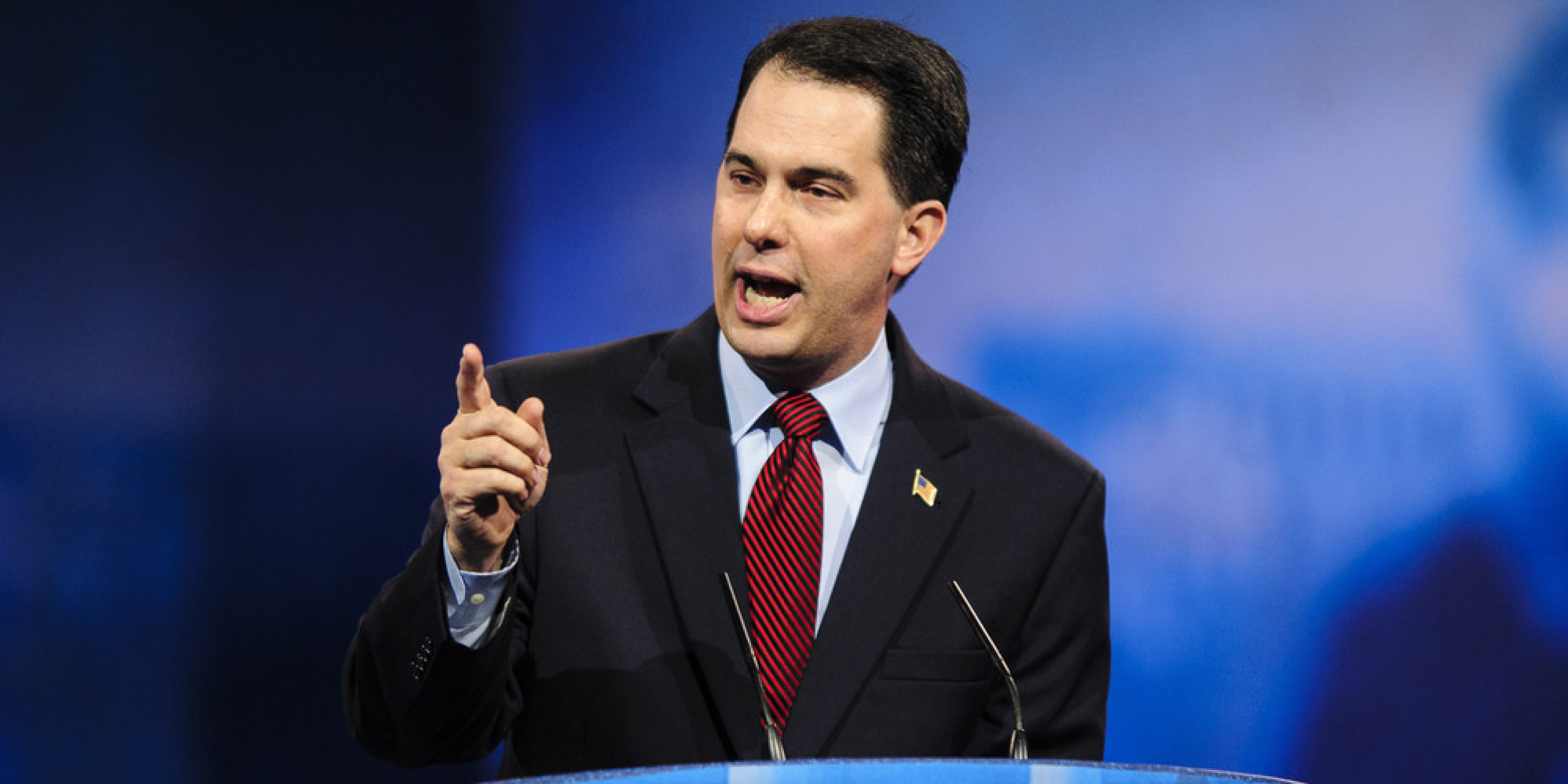
WASHINGTON, DC - MARCH 16: Wisconsin Gov. Scott Walker speaks at the 2013 Conservative Political Action Conference (CPAC) March 16, 2013 in National Harbor, Maryland. The American Conservative Union held its annual conference in the suburb of Washington, DC to rally conservatives and generate ideas.  (Photo by Pete Marovich/Getty Images)

WASHINGTON, DC – MARCH 16: Wisconsin Gov. Scott Walker speaks at the 2013 Conservative Political Action Conference (CPAC) March 16, 2013 in National Harbor, Maryland. The American Conservative Union held its annual conference in the suburb of Washington, DC to rally conservatives and generate ideas. (Photo by Pete Marovich/Getty Images)

Earlier this week, Wisconsin Republican governor/maybe-presidential hopeful Scott Walker signed a new law requiring that women who wanted to get abortions be required to get an ultrasound of the fetus before making their decision. Walker’s reasoning was that he wanted women to make informed choices (i.e. choose life!) about their unborn children. (Side note: he also referred to ultrasounds as “a cool thing out there.” I’m not touching that one.)

I wanted to find out how widespread the practice of requiring expectant mothers to view an ultrasound before proceeding with an abortion was. So I turned to trusty source The Guttmacher Institute for some stats.

Number of states that require giving contextual information (i.e. written materials and/or verbal counseling) around the ultrasound: 12

Number of states that require the abortion provider to show and describe the ultrasound: 3

Number of states that require the abortion provider to offer a viewing of the ultrasound if it’s part of the abortion process: 9

The Guttmacher has more numbers on this topic. Personally, I find it fascinating that these laws are essentially banking on the assumed fact that women are ruled by their emotions and are baby-crazy, and so seeing an ultrasound before an abortion would change their minds.

Auction Prices of “Playboy”‘s First Issue: By The Numbers

Marilyn Monroe cover for 'Playboy,' Dec. 1953 (NY Daily News)

Marilyn Monroe cover for ‘Playboy,’ Dec. 1953 (NY Daily News)

As I noted earlier today, a first issue of “Playboy” is scheduled to be auctioned off later at Nate D. Sanders in Los Angeles. (For all I know, it could’ve already happened.) The issue is expected to be sold for about $2.7K.

I wanted to see if this estimate was in line with how much previous first issues of the periodical sold for.

A 2011 “Icons and Idols Hollywood” auction held by Julien’s Auctions opened bidding for the “Playboy” first issue at $1K-1.5K. The winning bid was $7K+. I also checked eBay, but all the first issues listed were for reprints, not originals, so I didn’t count those.

If this auction proceeds (or proceeded) anything like Julien’s did four years ago, the issue could very well sell for a lot higher.

Sexual Health Expo 2015: By The Numbers

SHE 2015 (Gold Star)

SHE 2015 (Gold Star)

The Sexual Health Expo is being held again, this time in Phoenix! It looks to be a great time, just like the one held in L.A. in January. Still wavering on whether or not to go? Here are some numbers that’ll convince you to take the leap:

Number of Days: Apr. 25-26 (Saturday and Sunday)

Number of Workshops: 27

– Selected Workshops: Talk Dirty to Me (with Ashley Manta), Cuddle Party (with Leela Sullivan), Sex and Your Emotional Health (with Laurie Handlers)

Number of Instructors: 24

– Selected Instructors: Rebecca Alvarez, Dr. Jess, Lynn Brown Rosenberg

If you’re going, enjoy! (I’m jealous!)

Colleges and Universities with Graduate-Level Sexuality Programs: By The Numbers

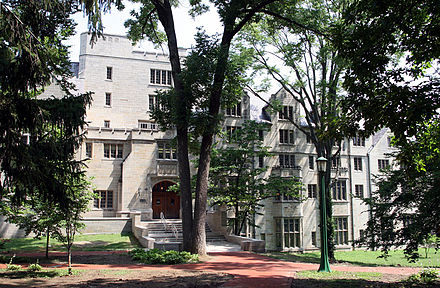
The Kinsey Institute (Wikipedia)

The Kinsey Institute (Wikipedia)

For those who are thinking (or planning on) making a career in the study of sexuality and would like to go the academic route, there are some schools which offer programs geared towards the subject. Several schools have undergrad courses and certifications, but there are also some graduate programs in which one can get a master’s or a Ph.D. degree.

This is by no means a comprehensive list, but a general smattering of the options out there.

Number in California: 2

San Francisco State University:

Program: Sexuality Studies

California Institute of Integral Studies (CIIS):

Program: Human Sexuality

– Concentrations: Clinical Psychology or Sexual Policy Leadership


Number in Indiana: 1

Indiana University Bloomington:

ProgramThe Kinsey Institute for Research in Sex, Gender, and Reproduction


Number in Hawaii: 1

University of Hawaii at Manoa

Program: Pacific Center for Sex and Society


As I mentioned, there are several programs out there, but these should be enough to pique your interest!

Obscenity Tests via Federal Standards: By The Numbers

Kim Kardashian in 'Playboy,' 2007 (The Trent)

Kim Kardashian in ‘Playboy,’ 2007 (The Trent)

I’ve never wanted to go into law (except when I watch “How to Get Away with Murder”), but if I did, there are two areas of the field that I’ve always found fascinating: intellectual property and obscenity laws. The first topic doesn’t apply here, but the second topic has all the business in the world of being covered here.

There are so many facets of obscenity, but today we’re looking at how federal standards define the term, as the First Amendment of free speech doesn’t extend to protect obscenity. A few different tests have been put in place from time to time to establish a baseline of what’s obscene and what isn’t.

Here’s how that’s changed over the years:

Number of obscenity tests: 3

The Hicklin Test, 1879 

This one was adapted from an 1860s British case. It became standard stateside when it was used in 1879 to prosecute D.M. Bennett, who was charged with obscenity when he tried to send out free-love information through the mail (this also upheld the Comstock Act).

The Hicklin test defined obscenity as material designed to corrupt impressionable minds (whether they were young or not).

– The Roth Test, 1957

This test overturned the Hicklin test, and set a new standard: Material would be considered obscene if the nature of the work deviated from a conventional norm and turned into “a prurient interest.” (Nerdy side note: in statistics terms, would that be two or three deviations from the mean? Would it be 95% or 97%? Would the prurient interests exist in the remaining 5% and/or the 2%?)

But exactly what a “prurient interest” was was never defined further.

Years later, this one was also responsible for Justice Potter Stewart’s now-famous quote on obscenity: “I’ll know it when I see it.”

– The Miller Test, 1973

Here, the Supreme Court Justices got slightly more specific as they struggled to define obscenity. Here are the three main points:

(a) whether “the average person, applying contemporary community standards” would find that the work, taken as a whole, appeals to the prurient interest

(b) whether the work depicts or describes, in a patently offensive way, sexual conduct specifically defined by the applicable state law

(c) whether the work, taken as a whole, lacks serious literary, artistic, political, or scientific value

In layman’s terms, this would be:

a) Is it creepy, disgusting and/or explicit (according to your vanilla friends and neighbors)?

b) Does it run afoul of state law?

c) Is it worth anything to the greater good/society?


I love how all of these descriptions are so vague. Seriously, no one can define obscenity. What’s “prurient” to one person may be perfectly standard to another. But then, studies have shown that there’s not really such a “normal” fantasy, but there are varying degrees along the spectrum. And I’m willing to bet it’s the same with defining obscenity.


U.S. Sex Education Academies: By The Numbers

Los Angeles Academy of Sex Education Logo (Brown Paper Tickets)

Los Angeles Academy of Sex Education Logo (Brown Paper Tickets)

Love to learn about sex, in any capacity? A few lucky cities around the U.S. have sex education academies. Adults can attend classes to learn about different aspects of sexuality, which are welcome to all orientations.

Tickets are $25, and are available to purchase in the weeks leading to each class. It’s highly recommended you purchase them ahead of time. Classes run around 90 minutes.

The Los Angeles Academy of Sex Education begins this year’s slate of classes next Monday on Feb. 2nd (full disclosure: I volunteer there), and I wanted to look at some other sex education academies around the country.

Los Angeles Academy of Sex Education:

Founded: 2014

Director: Elle Chase (Education Coordinator & Lead Sex Educator)

First Class of 2015: “The Art of Finding Partners: Dating Doesn’t Have to Be Terrible” with Patricia Elzie, Feb. 2nd.

Previous Classes: “Boning 101” with Sex Nerd Sandra, “Prostate Pleasure” with Charlie Glickman, “Welcome to S&M: A Gentle Introduction” with Jean Franzblau


New York Academy of Sex Education:

Founded: 2013

Director: Ducky DooLittle (Education Coordinator & Lead Sex Educator)

First Class of 2015: N/A

Previous Classes: “Writing Erotica for Pleasure & Money” with Rachel Kramer Bussel, “Ready, Sexy, Able: A Sex & Disability Q&A” with Robin Mandell, “Female Orgasms: Physiology, Arousal & Techniques that Deliver” with Kate McCombs and Louise Bourchier


Portland Academy of Sex Education:

Founded: 2014

Director: JoEllen Notte (Education Coordinator & Lead Sex Educator)

First Class of 2015: N/A

Previous Classes: “Introduction to Rope Bondage” with Stella Harris, “Embodied Consent” with Charlie Glickman, “Sh*t Happens: A Frank Discussion on Butt Fun” with Lorax of Sex


Philadelphia Academy of Sex Education:

Founded: 2014

Director: Caitlin Murphy (Education Coordinator & Lead Sex Educator)

First Class of 2015: “Detox: Avoiding Toxicity in Sexual Pleasure and Health Products” with Caitlin M.

Previous Classes: N/A

Black Stars on “Vogue” Covers in 2014: By The Numbers

Lupita Nyong'o, 'Vogue' Magazine Jul. 2014 (IB Times)

Lupita Nyong’o, ‘Vogue’ Magazine Jul. 2014 (IB Times)

A recent “Daily Mail” article points out that (American) “Vogue” had more black cover stars during 2014 than during any previous year.

While this still isn’t ideal in terms of diversity, it seems the magazine is on the right path in including equal representation, both on the cover and within its pages. Let’s just hope things keep progressing upwards.

Here’s how the numbers break down:

Number of “Vogue” issues in 2014: 12

Number of cover stars in 2014: 15

Number of black cover stars: 4 (26%+)

Number of black models: 1 (Joan Smalls, who shared the cover with Cara Delevingne and Karlie Kloss)

Number of black actresses: 1 (Lupita Nyong’o)

– Number of black musicians: 2 (Rihanna and Kanye West)


Number of black cover stars in recent years:

– 2013: 2 (Michelle Obama and Beyoncé)

– 2012: 1 (Serena Williams)

– 2011: 1 (Rihanna)


Most recent time the September issue featured a black star: 2010 (Halle Berry)

Previous to 2010, the last time the September issue featured a black star: 1989, 21 years previously (Naomi Campbell)


Number of “Vogue” publications that did not use any black/people of color cover stars in 2014: 5 (“Vogue UK,” “Vogue Paris,” “Vogue Ukraine,” “Vogue Netherlands,” “Vogue Russia”)