Just How Popular Is Analingus?

Nicki Minaj's "Anaconda" cover

Nicki Minaj’s “Anaconda” cover

Rimming. Salad tossing. Eating booty.

All of a sudden, it’s the sex act everyone can’t stop talking about (or reading about). But who’s actually actually doing it?

Sadly, I couldn’t find any specific surveys dedicated to purely analingus. (Kinsey Institute, want to get on that?) But we can deduce a couple of things from general anal sex stats.

A 2010 “Psychology Today” article states that “recent surveys” found that around 15% of Americans engage or have engaged in “some form” of anal sex. This amounts to around 20M people. (Also, props to the author for noting upfront that he couldn’t find any analingus stats himself.) But this doesn’t tell us a) how often, or not, Americans are engaged in anal play, and b) what exactly they’re doing with the ass. We also don’t know how “recent” these surveys were, or what length of time they covered.

Slightly more recently, the CDC’s 2011 National Health Statistics report found that 36% of women and 44% of men reported engaging in anal sex, using the cohort group of men and women ages 25-44. But again, this only tells us about one specific act, unless participants were lumping rimming under the general “anal sex” umbrella.

Unless we get an actual study devoted to analingus analytics, we’ll never know for sure. But anecdotally, in mainstream culture, the prevalence of the act appears to be on the rise.

Child Sexual Abuse: By The Numbers

Sad Child

Sad Child

Not all sexual stats are fun. Sometimes, we have to get heavy here. Child sexual abuse is never a easy topic for anyone, but it’s useful to know the facts to stop and prevent it.

All numbers from the National Sex Offender Public Website stats page:

Ratio of girls sexually abused before age 18: 1 in 4

Ratio of boys sexually abused before age 18: 1 in 6

Victims ages 12-14: 26%

Victims ages 9 and younger: 34%

Percentage of female juvenile victims: 82%

Percentage of sexual assaults that occur between the ages of 12-17: 35.8%

Approximate number of U.S. adolescent victims: 1.8M


If you’re a victim of sexual abuse, you can call the National Sexual Assault Hotline at (800) 656-HOPE. Your call is anonymous, confidential and free of charge. For more details on how to help a victim, visit Help and Support for Victims.


#ThrowbackThursday: Helmut Newton

"Saddle I, Paris (at the Hotel Lancaster), 1976," Helmut Newton

“Saddle I, Paris (at the Hotel Lancaster), 1976,” Helmut Newton

Earlier this week, I was talking with a friend about erotic photography, and remembered Helmut Newton. I used to be very into art and art history when I was younger, and Helmut Newton was, and still is, my favorite photographer.

Newton loved women, especially their power as it related to their sexuality. He often posed his subjects in BDSM-tinged scenes, and tended to highlight women’s’ curves. On charges that his work made him a chauvinist, he countered that he was a feminist. He might been one of the first vocal supporters of sex-positive feminism, years before it was cool.

The above photo is one of his most famous photographs. It was taken in 1976 in Paris, as part of his “Sleepless Nights” series, and created in 1984 as a gelatin silver print. It caused a scandal at the time, but since has taken its place in the 20th century canon.

Vaginal Orgasms: How Many Women Have Them?

Female Orgasm

Female Orgasm

Are vaginal orgasms the new yeti?

A new study published in “Clinical Anatomy came out on Oct. 6th, taking on various aspects of womens’ orgasms. The study claims that the vagina has no such structure that would lend itself to producing orgasms, and therefore there is no such thing as a vaginal orgasm. It also suggests that the vaginal orgasm some women claim to experience is caused by surrounding “orgasm triggers.”

(If you’re having trouble wading through the abstract, “The Cut” has a pretty good summary.)

Popular wisdom has always stated that most women do not regularly experience vaginal orgasms. But is this truly the case?

A 2009 article from “Psychology Today states that only 25% of women consistently experience vaginal orgasms. (In fact, that’s pretty much the opening sentence.) This percentage was found using a long-range combination of 33 studies over 80 years, so it’s decently comprehensive. The article doesn’t mention whether said women also experienced clitoral orgasms, or exactly what timeframe was used to measure consistency.

Contrary to Freud’s belief, the conclusions this new study is drawing might make women think they’re inferior if they are having vaginal orgasms. Because if you have a vaginal orgasm, and then are told they don’t exist, did you even O at all?


Mutual Masturbation: How Common Is It?

Couple at sunset

Couple at sunset

I learned an interesting stat last night: According to The Kinsey Institute, 85% of men have masturbated with another person in the room, while 66% of women have done the same. The sex educator who told me this said the numbers were higher than previously  thought, and could be higher still due to self-reporting.

What do you think? Are you surprised by these stats?

How Common is Having Sex While Sleeping?

Sleeping Woman

Sleeping Woman

Sleepwalking is no laughing matter. And neither is sleep sex.

Sexsomnia occurs when one partner engages in sexual activity with a secondary partner in his or her bed. According to a 2010 study, the disorder occurs in around 8% of patients with a sleep disorder. It occurs more frequently in men (11%) than in women (4%).

The study also notes that less than 1% of the study’s 832 participants mentioned this to their doctors. This could be due to potential embarrassment, but if you’re suffering, it’s a good idea to speak up.

How Many People in the US Have an STD?

Graphic from "RA Magazine"

Graphic from “RA Magazine”

Here’s a fun number to keep in mind as we head into the weekend: more than 110M people have an STD.

According to two studies in the “Sexually Transmitted Diseases” journal, twenty million more people in the US get an STD each year, with half of these people ages 15-24. (The article doesn’t mention the overall age range of the study.)

Assuming the US population is the same as it was for the 2010 Census, that would mean 35%+ of the population has an STD.

Just something to keep in mind. Happy Friday!

Italian Marriage Stats: By The Numbers

Rome Wedding shot by Dmitri Markine

Rome Wedding shot by Dmitri Markine

Inspired by this post on “The Cut,” on Italian marital affairs, I wanted to know about Italian marriage stats. All stats are from 2012:

Average age for first marriage for Italian men: 34

Average age for first marriage for Italian women: 31

Percentage of marriages with one Italian partner and one foreign partner: 68%

Percentage of weddings with at least one foreign partner: 15%

Number of marriages per 1K inhabitants: 3.5


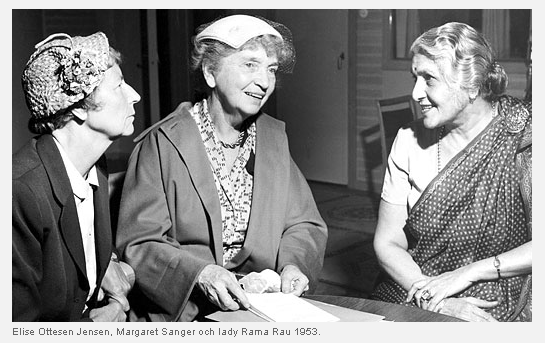
#ThrowbackThursday: Dhanvanthi Rama Rau

Elise Ottesen-Jensen, Margaret Sanger and Dhanvanthi Rama Rau 1953

Elise Ottesen-Jensen, Margaret Sanger and Dhanvanthi Rama Rau in 1953

I stumbled upon Dhanvanthi Rama Rau yesterday, and learned a little about her work. She founded and was president of the Family Planning Association of India, and lobbied for birth control and family planning measures after India gained independence in 1947. She later served as president for the International Planned Parenthood Federation.

Here’s a photo of Rau (right) speaking with American birth control advocate Margaret Sanger (middle) and Norwegian-Swedish sex educator Elise Ottesen-Jensen in 1953.


At What Age Do Women Begin to Menstruate?

Teenage Girl

Teenage Girl

Getting your period for the first time is a huge milestone for every young girl. It’s exciting and a little scary all at the same time, and you’re wondering if you got yours earlier or later than normal, or right on time.

The National Survey of Family Growth (part of the Centers for Disease Control and Prevention) surveyed women ages 15-44 years old, both in 2002 and from 2006-2010. The mean time of first menstruation has decreased slightly from 12.6 years in 2002 to 12.5 years in 2006-2010. No doubt this will continue to decrease, as many are noting that puberty in girls is occurring earlier than ever before.