How Common are Sexual Reassignment Surgeries (SRS)?

Lili Elbe, 1926

Lili Elbe, 1926

Last week, it was announced that English actor Eddie Redmayne will play Lili Elbe in an upcoming film. Elbe, a Dutch painter, was one of the first recipients of sexual reassignment surgery (SRS). Elbe was born Elnar Mogens Wegener in 1882 and started the surgery in 1930 in Germany. SRS was very experimental at the time, and she went through a series of five operations that spanned over two years.

Naturally, this made me wonder how common SRS surgeries (both male-to-female and female-to-male) are in the U.S.

In 2008, Dr. Mary Ann Horton published a paper on just that, where she examined all SRS surgeries performed within calendar year 2001.

She found that 1.1K+ overall SRS surgeries were performed, 740 being MTF and 430 being FTM.

The incidence of SRS followed an overall ratio to 1:240K. This broke down to 1:190 for MTF and 1:330 for FTM.

Unfortunately, it’s not clear how we can project these numbers to grow and/or change moving forward.


In any case, the development with Redmayne’s casting is significant is that cis-woman Nicole Kidman was initially cast in the role five years ago. Cis-man Redmayne’s casting might signal a shift in how Hollywood perceives depictions of tradespeople.
 

How Thick is the Average Condom?

Condoms

Condoms

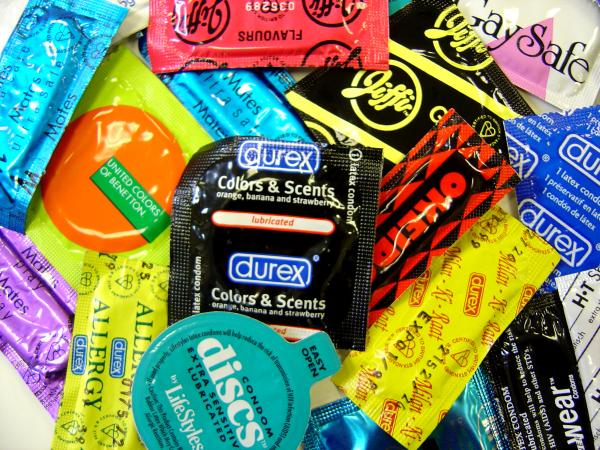
Happy Friday! Just in time for the weekend, I’m wondering about how thick condoms are.

The Brunswick Centre, a charity that provides sexual health services based in the UK, sheds some light on this: Condoms are measured in microns. One micron is .01 mm (one/one-hundreth of a millimeter).

Their FAQ sheet on condoms breaks it down:

“An extra thin condom is around 4 microns thick, an average condom is around 7 microns thick and an extra thick condom is around 9 microns thick.”

Knowledge is power. Go forth and use it.

Sodomy Laws in the US: By The Numbers

US Sodomy Laws by Year of Repeal/Struck Down

US Sodomy Laws by Year of Repeal/Struck Down

While many states are passing laws allowing gay marriage, some areas regarding sexuality are still in the Dark Ages: Fourteen states still have laws on the books banning sodomy. And these laws aren’t just for the LGBT crowd; they’re for everyone, regardless of orientation.

Contrary to popular belief equating sodomy with only anal sex, these laws can also cover oral sex, and certain sexual acts between homosexual couples, unmarried heterosexual couples and even married couples.

Though these “crimes against nature” laws were invalidated in 2003 with the Lawrence v. Texas Supreme Court case, some remain, and are still enforced, in certain states.

How common are these laws? Let’s take a look:

Number of states with active sodomy laws: 14

Number of states outlawing anal sex: 27

Number of states outlawing oral sex: 24

Number of states outlawing both anal and oral sex: 24

Number of states with laws including certain acts between homosexual couples: 27

Number of states with laws including certain acts between unmarried heterosexual couples: 20

US Sodomy Laws by Year of Repeal/Struck Down

US Sodomy Laws by Year of Repeal/Struck Down

Number of states with laws including certain acts between married couples: 16


If you’d like more information, Wikipedia has a very helpful matrix.

#ThrowbackThursday: German “Aquaglide” Ad

Aquaglide ads

Aquaglide ads

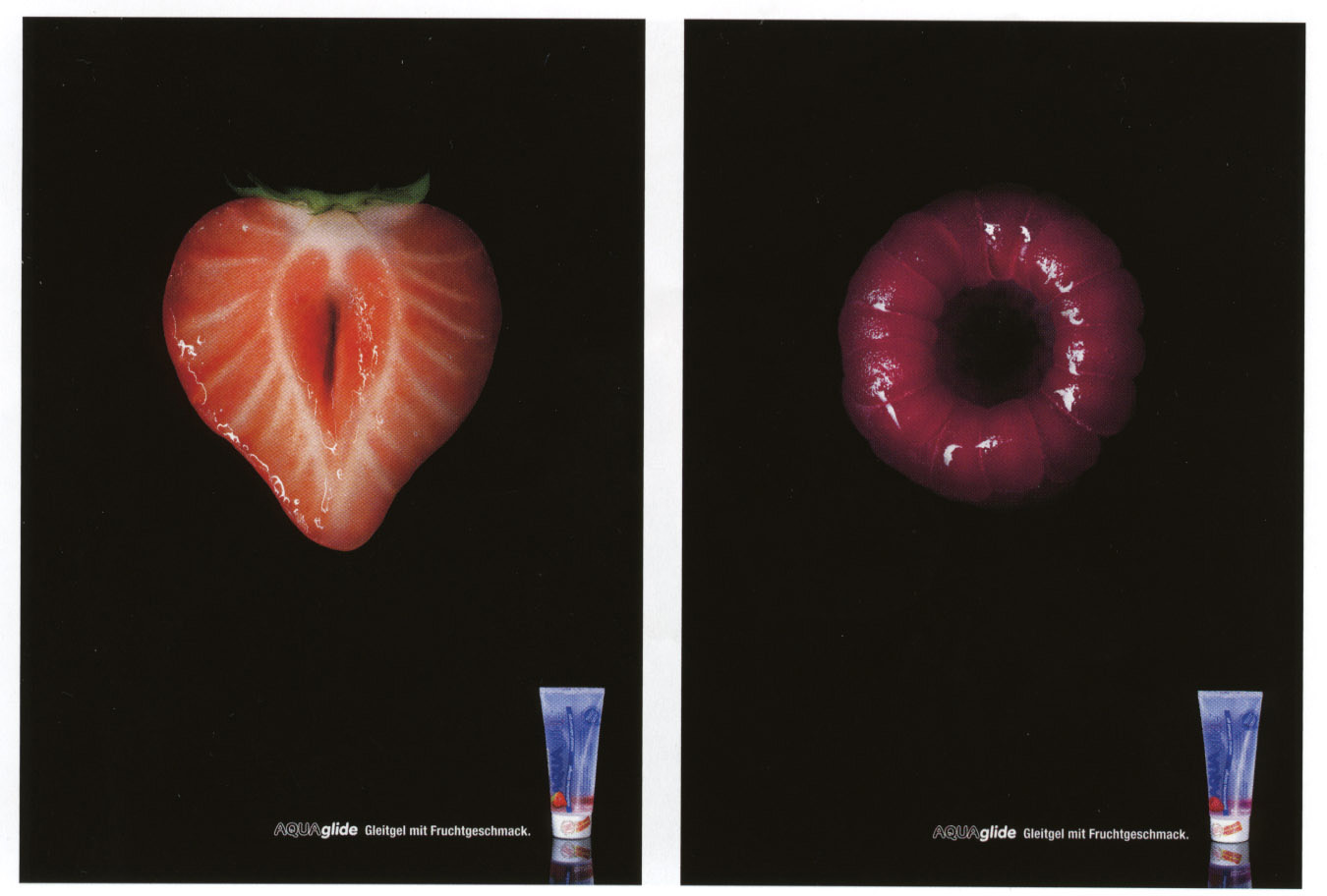
I found this pair of ads for “Aquaglide,” and realized, on further inspection, that they were in German. I already prefer these ads to most ads I see in the US.

Turns out it’s a line from German sex company Joy Division, which features a line of flavored lubes (which the ad references).

Makes me want to check out a new product, don’t you think?


Prostate Health Boosted by Having Lots of Sex

Prostate screening patient

Prostate screening patient

You’re not being a man-whore, you’re protecting your health: A new study out of the University of Montreal says that having intercourse with 20 or more women helps men’s risk in developing prostate cancer decrease by 28%.

However, this effect only holds true for straight men: Men who had sex with 20 or more men were twice as likely to get the disease.

The study had 3K+ men answer an questionnaire about their sex lives. In the course of the study running Sept. 2005-Aug. 2009, 1.5K+ men were diagnosed with prostate cancer.

The article doesn’t mention how exactly 20 was determined to be the break-even point. It also begs the question as to what other numbers of partners do for preventing the cancer (for example, how does having 17 partners help, or hurt?).

I’d love to know more about this. Wouldn’t you?

Lena Dunham Allegations: How Common is Sibling Sexual Abuse?

Lena Dunham

Lena Dunham

In the past few days, the Internet has exploded in calling “Girls” creator and actress Lena Dunham a sexual abuser. In her memoir “Not That Kind of Girl,” Dunham details pulling apart the lips of her baby sister’s vagina, among other instances.

Whether or not Dunham deserves the abuser label remains to be seen (we haven’t heard anything direct from her sister yet), but it does bring up the question of how common sexual abuse at the hands of siblings is.

Pandora’s Project, a sexual abuse survivors’ resource site, makes the main point that child sexual abuse is, at its core, an imbalance of power between siblings. It notes that around 15% of people report “some sort of sexual activity with a sibling in childhood.” (However, this doesn’t distinguish between healthy curiosity and abuse.) Studies have also shown that between 2% and 4% of people “have been sexually victimized by a sibling as the sexual contact involved some degree of forced or coercive activity.”

Pandora’s Project also defines the age range at which curiosity becomes abuse as “a significant difference in developmental age,” determined as more than three years. In her essay, Dunham was seven years old, and her sister was a one year-old.

Maybe this revelation will start a new conversation on sibling sexual abuse. It’ll be interesting to see if Dunham receives any further backlash from this: She’s already canceled two upcoming European appearances.

Female Condoms’ Failure Rate Over Long-Term Use

Female Condom demonstrator

Female Condom demonstrator

It seems like everyone is talking about female condoms lately. Maybe your friend has just tried it, or someone else swears by them, but mainstream awareness of the contraceptive measure seems to be growing by the day.

One thing that’s on everybody’s mind: its failure rate.

The Guttmacher Institute (headquartered in New York and Washington D.C.) is way ahead of the curve on this one, having done a female condom usage study on this back in 2005 (almost a decade ago!). From 1995-1998, they observed 869 women ages 18-35 within 2 STI clinics. The control group received only male condoms to use, while the variable group got both female condoms and male condoms as a back-up measure. The women were educated on female condom use. Prior to the study, only three women had used a female condom, and 95% practiced inserting it at the clinic.

The study found that 11% of female condoms slipped out at first use, while declined to less than 1% when used over 15 times. Overall, 3% of all female condoms slipped out, out of 7K+ female condoms used.

For comparison, 7% of male condoms broke when used for the first time, and declined to 2% when used over 15 times. Three percent of male condoms overall broke during use, out of 12K+ male condoms used.

I couldn’t find any studies on female condom use over the long-term from more recent times (within the past five years or so), so it’ll be interesting to see whether the new cultural awareness of the method will result in more people using female condoms more frequently.


Women’s DIY Halloween Costumes: By The Numbers

Sexy Rosie the Riveter costume

Sexy Rosie the Riveter costume

DIY has been a big trend for a few years now. It makes sense that it’s spread to Halloween costumes, where the major goals are to display creativity and individuality.

With this in mind, I wanted to see how many women’s magazines were touting DIY costumes, and parsing out any trends I could see. I initially wanted to find three lists from three different publications from this year, but had to settle for those from varying years. I looked lists from “Glamour” (published in 2010), “Marie Claire” (2013) and “Cosmopolitan” (2014).

Let’s take a look at what I found:

“Glamour:”

Year Published: 2010

Number of Entries: 21

Number of Movie-Referenced Costumes: 1

Number of TV-Referenced Costumes: 5

Number of Children’s Pop-Culture-Referenced Costumes: 0

Number of Iconic Cultural Figure References: 4

Outliers: includes 1 music-inspired costume, 9 creative* costumes


Marie Claire:”

Year Published: 2013

Number of Entries: 10

Number of Movie-Referenced Costumes: 4

Number of TV-Referenced Costumes: 2

Number of Children’s Pop-Culture-Referenced Costumes: 0

Number of Iconic Cultural Figure References: 1

Outliers: includes 1 celebrity baby costume, 1 music-inspired costume


Cosmopolitan:”

Year Published: 2014

Number of Entries: 20

Number of Movie-Referenced Costumes: 10

Number of TV-Referenced Costumes: 3

Number of Children’s Pop-Culture-Referenced Costumes: 5

Number of Iconic Cultural Figure References: 2

Outliers: includes 2 comic-book-referenced costumes, 4 Disney characters, 1 school girl costume


Overlaps:

Sandy from “Grease:” “Marie Claire” and “Cosmopolitan”

Rosie the Riveter: “Marie Claire” and “Cosmopolitan”

Sookie Stackhouse from “True Blood: “Glamour” and “Cosmopolitan”


Conclusions:

These three lists are virtually the same in that they focus heavily on referencing pop culture, mostly through movies and TV (see the overlaps list above). The “Glamour” list was on of the worst offenders here, as many of the ideas should’ve stayed in that year.

But the same “Glamour” list also had the most creative costumes (see asterisk above in said section), in that clever, out-of-the-ordinary costumes were included.

Overall, these DIY Halloween idea lists need a fresh look, and more space given to clever costumes and not ones just blindly referencing popular cultural aspects.

#ThrowbackThursday: ‘”Playboy” Halloween Party

'Playboy' Halloween Party

‘Playboy’ Halloween Party

Does it surprise anyone that Hugh Hefner throws an annual Halloween bash? Because it shouldn’t. (Full disclosure and no joke, the man is one of my personal heroes.)

I love that this picture shows the old “Girls Next Door” crowd: Kendra Wilkinson, Bridget Marquardt, and Holly Madison. Those were some great seasons.