
Taiwan Elects First Female President

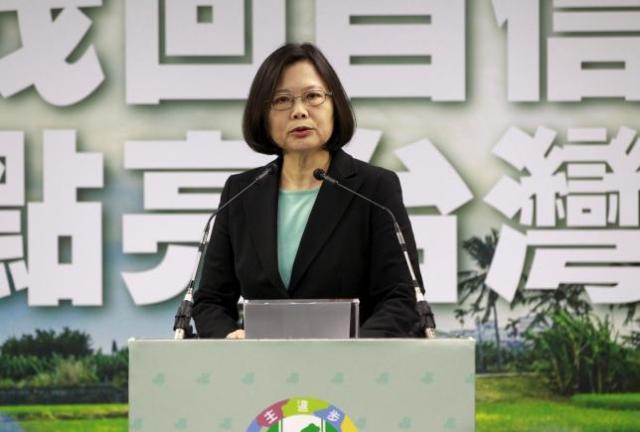
Taiwan's main opposition Democratic Progressive Party (DPP) Chairperson Tsai Ing-wen gives a speech during a news conference in Taipei

Taiwan’s main opposition Democratic Progressive Party (DPP) Chairperson Tsai Ing-wen gives a speech during a news conference in Taipei April 15, 2015. REUTERS/Pichi Chuang

Taiwan hit a milestone last week: Citizens elected Tsai Ing-wen, making her the first female president of the country. She heads the Democratic Progressive Party (DPP), and won 56% of the vote.

Tsai’s concerns for the country including growing the economy and ensuring that China respects Taiwan’s democracy. It’ll be interesting to see how she implements these measures, and how both Taiwan and China react.

El Salvadorian Government Advises Women Not Get Pregnant Due to Zika Virus

Baby with microcephaly (Health Then More)

Baby with microcephaly (Health Then More)

Despite arriving on the viral diseases scene just recently, the Zika virus has already made a large impact. The first cases in the Americas were reported in Brazil last spring, where the virus was linked to birth defects that affected brain development. The most commonly cited birth defect was microcephaly, which results in an abnormally small brain. Earlier this year, the Centers for Disease Control and Prevention (CDC) here in the U.S. have advised that pregnant women should not travel to the 14 countries affected by the virus.

Now, the government of El Salvador (one of the affected countries) is going one step further and advising women of childbearing age to refrain from getting pregnant until 2018. The announcement came after 5K+ cases of the virus were detected in women in 2015 and early this year. Of this number, it’s suspected that 96 women had contracted the virus, but so far, none have resulted in microcephaly. I couldn’t find information on how high-risk El Salvador is for the Zika virus, but this measure would lead me to believe that it looks pretty dire.

The government of Colombia has released a similar warning, but is advising women to wait six to eight months. Colombia has the second-highest rate of Zika infections after Brazil.

In terms of each country’s birth rates (counted as births per 1K people), El Salvador has 16.79. It just edges past Colombia with a birth rate of 16.73. By contrast, Brazil has a birth rate of 14.72. It’ll be interesting to see how El Salvador and Colombia’s birth rates are affected this year by their respective government’s measures.

The Zika virus is transmitted via mosquito, and is characterized by joint pain, fever, rash and red eyes.


Trends: Opening Up About Miscarriages

Mark Zuckerberg and Priscilla Chan, 2015 (Business Insider)

Mark Zuckerberg and Priscilla Chan Zuckerberg (Business Insider)

When Facebook founder Mark Zuckerberg announced that his wife was pregnant with their first child last summer, he made another important statement: that his wife Priscilla had endured three miscarriages over the course of three years.

It’s a huge thing to acknowledge, especially since it seems that any narrative other than an easy pregnancy is given short shift. I applaud Zuckerberg for speaking up about what he and his wife went through, and what many more people work through.

But he hasn’t been the only one. Lately, many celebrities/people with social influence have been speaking up about that painful time in their lives.

Actress Eva Amurri Martino experienced a miscarriage as well, and spoke about it publicly two weeks after Zuckererg’s announcement. Martino’s miscarriage occurred around nine weeks after conception. Earlier this year, actress Kimberly McCullough revealed that she’d suffered a miscarriage last year, losing her baby at 22 weeks.

Shining a light on something helps to normalize it, and hopefully these confessions will encourage others to open up about their personal experiences. We need to keep talking about miscarriages to destigmatize them.

#ThrowbackThursday: Mark Zuckerberg and Pregnant Priscilla Chan, 2015

Mark Zuckerberg and Priscilla Chan, 2015 (Business Insider)

Mark Zuckerberg and Priscilla Chan Zuckerberg (Business Insider)

On July 31, 2015, Facebook founder Mark Zuckerberg announced on (where else?) Facebook that he and his wife Priscilla were expecting a baby girl. He also revealed that the couple had weathered three miscarriages in the span of two years.

Zuckerberg rarely posts personal things on his own site, so this was a break from routine for him. The confession earned him praise.

The Zuckerbergs’ daughter Max was born on Dec. 1, 2015.

Zika Virus Linked to Birth Defects

Mosquito (NPR)

Mosquito (NPR)

Earlier this month, the Centers for Disease Prevention and Control (CDC) released a travel warning for pregnant women. They’ve issued the warning for 14 countries where the Zika virus has been confirmed to be transmitted.

Transmitted through bites of infected mosquitos, the Zika virus symptoms include fever, rashes and red eyes. It’s also been linked to birth defects.

Brazil was the first country to report birth defects linked to Zika. Specifically, the virus manifests as microcephaly, where newborns will have an unusually small head that leads to abnormal brain development. Over 2.4K cases of newborns affected by Zika were recorded in 2015, up from only 147 cases in 2014. This was a 1,532%+ year-over-year increase.

And the U.S. is no longer exempt from Zika’s reach: A baby with microcephaly was confirmed to have the virus. The baby was born in Hawaii last week.


All of the Oscar Acting Nominees Are White. WTF?


Oscars 2016 Best Actress Nominees (Reuters)

Oscars 2016 Best Actress nominees (Reuters)

Last week, the Oscar nominations were announced. Selected by the Academy of Motion Picture Arts and Sciences (AMPAS), the winners will be revealed Feb. 28. But this year continued a disturbing trend that began last year: Not one of the nominees in any of the acting categories (Best Actress, Best Actor, Best Supporting Actress, Best Supporting Actor) were people of color (POC).

I use the word “disturbing” as it seems the Academy is determined to ignore stories and narratives that don’t fit within their very narrow worldview. It’s becoming increasingly clear that non-white stories are not only valuable (as we knew already), but make bank, both in terms of box office and in social influence. (See this past year’s examples of TV smash “Empire,” and movies “Straight Outta Compton” and “Dope.”) The Academy needs to wake up and see that rewarding diverse stories can only help their bottom line.

In terms of the numbers, here are some of the most recent POC nominees (counted if they didn’t win) and winners:

Best Actress:

Winner: Halle Berry (“Monster’s Ball,” 2001)

Nominee: Quvenzhane Wallis (“Beasts of the Southern Wild,” 2012)

Best Actor:

Winner: Forest Whitaker (“The Last King of Scotland,” 2006)

Nominee: Chiwetel Ejiofor (“12 Years a Slave,” 2013)

Best Supporting Actress:

Winner: Lupita Nyong’o (“12 Years a Slave,” 2013)

Nominee: Taraji P. Henson (“The Curious Case of Benjamin Button,” 2008)

Best Supporting Actor:

Winner: Djimon Hounsou (“Blood Diamond,” 2006)

Nominee: Barkhad Abdi (“Captain Phillips,” 2013)
 

Planned Parenthood Endorses Hillary Clinton

Hillary Clinton (The Washington Times)

Hillary Clinton (The Washington Times)

Planned Parenthood has endorsed a candidate for the primary election: Hillary Clinton, the only woman running for the Democratic nomination. This is the first time in Planned Parenthood’s 100-year history that the organization has endorsed a candidate.

For this who’ve been living under a rock, Planned Parenthood provides a number of serves for womens’ reproductive health, including birth control, Pap smears and abortions.

It’s becoming increasingly clear that women’s issues will take up a prominent share of issues discussed leading up to this year’s election. Last week, Republicans in the Senate voted to defund Planned Parenthood. Thankfully, they didn’t get very far, since President Obama vetoed it.

I hope this endorsement brings out women (and men!) to the polls who might not’ve voted otherwise come November.


Birth Control Is Now Available Over The Counter in Oregon

Birth control pills (Salon)

Birth control pills (Salon)

Good news for those who may not have insurance, or don’t want to visit the doctor: Birth control is (slowly) becoming available over-the-counter at your nearest pharmacy. That’s right, soon (depending on where you live) you won’t need a prescription.

Right now, the service is only available in Oregon, and it kicked into effect Jan. 1st of this year. Here’s how it works: A woman can walk into her local pharmacy, and fill out a questionnaire about her health. If all systems go, she can get birth control. If the pharmacist refuses to supply her on the grounds of religious reasons, the pharmacist is required to provide suggestions as to where the customer can find birth control.

This all applies if the woman is over 18 years old. If she’s under 18, she’ll still need a doctor’s prescription, though this standard will be relaxed at some point in the future.

It’s also pretty significant that a woman signed this into law: Oregon’s governor Kate Brown signed the bill into law last July.

But Oregon might not be the only state with this law in place for long: California is working out its own law, which is set to go into effect in March. And Colorado and Washington have introduced similar laws within their own respective states. Let’s hope the other 46 states soon see the light and follow suit.


China’s (Now Ended) One-Child Policy: By The Numbers

Chinese One-Child Policy poster (The Galloping Beaver)

Chinese One-Child Policy poster (The Galloping Beaver)

Most people have heard of China’s infamous one-child policy. it’s exactly what it sounds like: each married couple is only allowed to have one child.

Now the policy has ended. Actually, it ended on Jan. 1st, less than a week ago.

A lot of people don’t know the story behind the concept, and why it was initially implemented. Here are some numbers that made the one-child policy look like a sensible idea at the time:

China’s total population:

1960: 667.1M

1970: 818.3M

China’s population grew 151.2M in 10 years, or at the rate of 15.12M per year. The government was worried that the population would continue growing exponentially at the same rate, with the country eventually becoming unsustainable.

Fertility rate:

1960: 5.76 births/1 woman

1970: 5.47 births/1 woman

The fertility rate stayed stable (and strong) throughout the 1960s.

Crude birth rate:

1960: 20.9

1970: 33.4

This metric shows the “number of of live births occurring during the year, per 1,000 population estimated at midyear.” The number hit a high in 1963 with 43.4, no doubt sending the Chinese government into a full-fledged panic.

With the above stats as historical context, it’s a bit easier to see why the Chinese government implemented the One-Child Policy, and kept it for the 35 years they did.

Japan’s Surviving Comfort Women Will Receive Reparations

Korean comfort women (Japan Daily Press)

Korean comfort women (Japan Daily Press)

On Dec. 28, the heads of Japan and South Korea came to an agreement over making reparations for the remaining comfort women.

For those who are unfamiliar, comfort women were Korean women who served Japan’s Imperial Army before and during World War II…as sex slaves. This happened during Japan’s colonial rule over South Korea, which lasted from 1910 to 1945, and contributed to strained relations that continue to this day.

It’s difficult to pinpoint exactly how many comfort women existed, since accurate records weren’t kept. Most estimates put it at a range around 100K to 200K. Women began coming forward about their experiences in the early 1990s.

Of the 238 women who’ve come forward in South Korea, only 46 survive.

Obviously, this is a huge abuse of women (not to mention that of human rights), so it’s good that Japanese Prime Minister Shinzo Abe and South Korean Foreign Minister Yun Byung-se are trying to make it right 70 years later.

In addition to a formal apology, Japan will provide $8.3M-worth of reparations. However, the money won’t go directly to the survivors; it’ll be used by South Korea to establish healthcare for the women.

These reparations are significant because it’s the first time the Japanese government will provide the money. In 1993, Japan set up donations provided by private donors, but it wasn’t fully accepted by South Korea. At that time, 60 South Korean women received aid from the donations.

It’ll be interesting to see how these reparations make a difference for the women, and how the action changes Japan and South Korea’s relationship.