How Many Countries Offer Paternity Leave?

Dad with newborn baby (Babble)

Dad with newborn baby (Babble)

Happy Friday! Last month, Massachusetts passed a law requiring businesses to give eight weeks of paternity leave. That’s right, paternity leave. For the fathers. The U.S. doesn’t have a paid paternity leave policy (come on, we don’t even have a paid maternity leave policy), though the 1993 Family and Medical Leave Act offers 12 weeks of protection, but only if the employee has been working for the company for over a year and the company contains over 50 people. The new law would include companies with a minimum of six employees.

Work-life balance is increasingly becoming more of a concern for men as well as women, and the concept comes sharply into focus with the addition of children. The U.S. lags behind other countries in our paternity leave policies. A 2013 Pew Research Center study examined 38 countries, and found that 25 of them have guaranteed paternity leave for new fathers. Time off can range from less than one week to over eight weeks.

Several countries that offer paternity leave are within Europe. Norway, Ireland, Iceland, Slovenia, Sweden and Germany have protected paternity leave, which would allow a new father time off secure that he’ll be able to return to his job without being fired or let go. At least a portion of this time off is required to be paid, except in Ireland.

South Korea also has a paternity leave policy, in which new fathers can take up to five days off. But parents with children under three years old can request to work part- or full-time for one year to care for their child. It appears that this policy applies to both mothers and fathers.

Hopefully this new law will push policy towards a national paid leave policy, for both mothers and fathers.

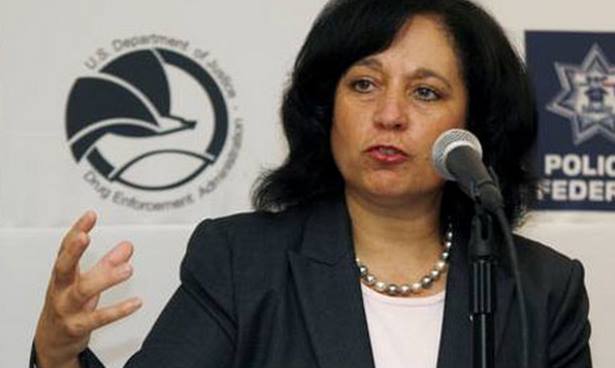
“Federal Agents Gone Wild:” The Department of Justice Has a Prostitute Problem

DEA chief Michele Leonhart (Girls Just Wanna Have Guns)

DEA chief Michele Leonhart (Girls Just Wanna Have Guns)

Yesterday, Michele Leonhart announced that she’d resign from her post as chief of the Drug Enforcement Agency (DEA) in early May. This comes after reports surfaced that some male employees were enjoying sex parties with prostitutes which were paid for by drug cartels in Colombia. And it had been going on for years. Conflict of interest much?

Earlier this month, Attorney General Eric Holder had to issue a department-wide memo for Department of Justice employees, reminding them that they are not allowed to solicit prostitutes under any circumstance. His point was that any employee who does this opens up himself, and the agency, to potential blackmail, extortion and leaking private information. (Seems like common sense to me.) I bet he never thought he’d have to write this kind of memo.

I tried to find if there were any other instances of this happening (since it was apparently uncovered during a routine Inspector General report), but couldn’t find anything. All stats I could find were more related to prostitution stats that the DOJ itself had reported on.

It’ll be interesting to watch how this all plays out, and what (if any) further punishments the DOJ partying employees will receive. (So far, employees who’ve confessed have only been suspended, but only up to a week-and-a-half.) It’s one thing to indulge in sex parties off the clock, but it’s another thing entirely to blur professional lines against those you’re supposed to be against (though I’m sure that was part of the appeal).


#ThrowbackThursday: The Comstock Act, 1873

The New York Society for the Suppression of Vice seal (Loyno)

The New York Society for the Suppression of Vice seal (Loyno)

Praise be for mail-order sex toys. We wouldn’t have that option if the Comstock Act was enforced.

Enacted on Mar. 3, 1873, the Comstock Act (named after the bill’s cheerleader/goody-two-shoes Anthony Comstock) made it illegal to send sex toys, erotica, and items used in abortions, as well as information pertaining to said items, through the U.S. Postal Service. All of these things were classified as “obscene, lewd or lascivious.” The full title of the act was “The Act for the “Suppression of Trade in, and Circulation of, Obscene Literature and Articles of Immoral Use”. (What a mouthful, no wonder it was cut down to the Comstock Act.)

But what exactly was banned was a bit confusing. In some cases, medical textbooks showing basic human anatomy weren’t allowed to be sent through the mail. Because of this, the Act was understandably difficult to enforce. Though it remains on the books today, aspects of it have been torn down.

Thank god, because I can’t imagine a world where Adam & Eve, The Pleasure Chest and countless other retailers aren’t allowed to exist and flourish, and send us hours of pleasure packed in a brown-paper-wrapped box labeled with discreet shipping.

Michelle Bachelet Proposes Lifting Chile’s Total Abortion Ban

Chilean President Michele Bachelet (Slate)

Chilean President Michele Bachelet (Slate)

Late last month, Chilean President Michelle Bachelet proposed lifting her country’s total abortion ban.

Chile is one of seven Latin American countries to completely ban abortion. Bachelet’s bill allows for the measure in case of rape, or if the mother and/or baby are at risk of dying during the pregnancy. The procedure would be allowed up until the 12th week (3rd month) of pregnancy, or until the 18th week for girls younger than 14 years of age. Girls ages 14 to 17 would need their parents’ permission for the procedure.

Abortion has been outlawed in Chile since 1989, imposed under former dictator Augusto Pinochet during his rule. Anyone breaking this law faces up to five years in jail. (Before the ban, abortions were allowed in extenuating circumstances.) Twelve bills decriminalizing the procedure have been proposed since 1991, but none (so far) have passed through the country’s Congress.

The measure would cut down the number of women taking chances on risky, “back-street” abortions detrimental to their health. A “Reuters” estimate puts the number of illegal abortions between 15K and 160K. (Since the numbers would have to be self-reported in this case, it’s difficult to get an accurate count.)

According to an interview in Spanish newspaper “El Pais,” Bachelet was originally planning on proposing the bill in late 2014.

Bachelet faces opposition from anti-abortion activists, and from UDI, the opposing political party. Culturally, the country is also very socially conservative, owing to a large Catholic stronghold. But despite this, recent public polls found that 70% of Chileans support the bill.

This isn’t the first time Bachelet has worked to reform family planning: In her first term as president (2006-2010), she made the morning-after pill free in government hospitals available to women ages 14 and older, with parental consent unneeded.

This is one time where I think having a politician make laws about women’s bodies could work: In addition to being a woman, Bachelet is also a registered pediatrician. #FemaleLeadersKnowBest

No Shit: Colleges Are Underreporting Sexual Assaults

UVA Rotunda (Wikipedia)

UVA Rotunda (Wikipedia)

This should come as a surprise to absolutely no one: A recent study published in “Psychology, Public Policy and Law” found that colleges underreport sexual assaults on their campuses.

Conducted by the American Psychological Association, University of Kansas researcher Corey Rayburn Yung analyzed data pertaining to on-campus sexual assault reports from 31 colleges and universities. (This data came via the Clery Act, a federal law that mandates how colleges self-report crimes.) He specifically looked at “large schools with on-campus housing and 10K students” that were audited between 2001-2012 by the U.S. Department of Education for meeting federal reporting standards.

Here’s what Yung found:

During the audits, the reported numbers of sexual assaults increased by approximately 44 percent on average from previously reported levels. After the audits ended, the reported number of sexual assaults in following years dropped to pre-audit levels, evidence that some schools provided a more accurate picture of sexual assaults on campus only when they were under federal scrutiny, the study concluded.

(The study notes that individual stats for each school weren’t provided, and some didn’t show a spike in reporting during this period.)

It makes sense that a school would be more vigilant in reporting assaults during a government-mandated audit. But holy shit that’s a huge discrepancy. (To his credit, Yung did say that the study’s initial hypothesis was that colleges were underreporting these numbers, so he wasn’t going into this super-naive.)

But here’s another troubling thing, taken from the study’s abstract:

The data indicate[s] that the audits have no long-term effect on the reported levels of sexual assault, as those crime rates return to previous levels after the audit is completed.

So these schools are only on top of things when the Feds are breathing down their neck. Basically you’re shit out of luck if you’re assaulted on-campus during a non-audit timeframe, college women.

It’s probable that issues influencing the underreporting are the schools wanting to cover up the assaults (obviously), and/or schools might attempt the resolve the cases in a timely manner during the audit.

This sheds light on how higher education institutions see sexual assault: more of a potential blight on their reputations than actual concern for victims. Said Yung:

The study shows that many universities continue to view rape and sexual assault as a public relations issue rather than a safety issue. They don’t want to be seen as a school with really high sexual assault numbers, and they don’t want to go out of their way to report that information to students or the media.

What happens to schools that don’t comply with the sexual assault reporting requirements? They’re fined $35K, which pretty much amounts to a student’s (or half a student’s) yearly tuition.

I don’t know about you, but I’ve long suspected this to be the case. A similar phenomenon occurs with reporting unemployment numbers: A person who doesn’t work is counted as “unemployed” only if they’ve been actively looking for work within that past four weeks. If they haven’t done so, they’re not counted at all. Whenever a new jobs report comes out claiming that the unemployment number has dropped, a lot of people who haven’t been looking get hopeful and begin to look for work again, and then the real unemployment number grows. (And then everyone wonders why it’s bigger than before.)

To solve this problem, Yung calls for greater resources allocated to the issue, more frequent audits and greater fines for delinquent schools. I’d say that that’s a good step in the right direction.

How Many States Back Same-Sex Marriage?

Same-sex marriage figurines (The Missouri Times)

Same-sex marriage figurines (The Missouri Times)

Earlier this month, Alabama became the 37th state to legalize same-sex marriage. That’s nearly 3/4ths of the nation now that have legalized the institution!

I was curious to see which region (if any) had the monopoly on backing same-sex marriage. Using the Census’s regional boundaries, and information pulled from ProCon.org, here’s what I found:

Pivot table of states that legalize same-sex marriage

Pivot table of states that legalize same-sex marriage

Unsurprisingly, the West is setting the pace for approving same-sex marriage, comprising 26% of the nation’s approvals. The South and the Northeast are neck-in-neck for second place at 18% each, and the Midwest lags behind with 12% of approvals. Hopefully this year will bring more states legalizing it!

India Elects First Transgender Mayor

Indian hijras (Deviant Didg/Nikki Rixon)

Indian hijras (Deviant Didg/Nikki Rixon)

An Indian transgender woman has made history: She is the first trans woman to be elected as mayor within the country.

Madhu Bai Kinnar will represent Raigarh in the state of Chhattisgarh. She beat her rival by 4.5K+ votes.

It’s estimated that India has around 2M transgender people. India’s population in 2013 was 1.252B, so transgender people would comprise around .15% of the total.

It’s not only a victory for trans people, but also for those in the lower classes. Kinnar was a member of the Dalit lowest caste, sometimes termed “the untouchables.”

India has made great strides in trans issues recently. Last year, the Indian Supreme Court ruled to recognize transgender persons as “third-gender,” termed “hijra.” The ruling came five years after the country introduced the “other” option for gender on ballot forms.


The UK Bans Certain Sex Acts in Porn

Handcuffs, a.k.a. "physical restraint" (Fleshlight)

Handcuffs, a.k.a. “physical restraint” (Fleshlight)

Earlier this month, the United Kingdom enacted a ban on certain sex acts in porn. The ban amends the 2003 Communications Act, which previously sketched in “unacceptable” acts as ones associated with violence and abuse.

Now, the British Board of Film Censors (BBFC) has narrowed down their lists of “good” and “bad” sexual acts to very specific, fetish-focused ones. Per “The Independent:”

The Audiovisual Media Services Regulations 2014 requires that video-on-demand (VoD) online porn now adhere to the same guidelines laid out for DVD sex shop-type porn by the British Board of Film Censors (BBFC).

The acts listed under “content that is not acceptable” includes a variety of BDSM-related activities, age-play, and female ejaculation. Almost all of the sex acts listed are included under the BBFC’s “Restricted 18” rating, which means that the films can only be shown at licensed adult cinemas and sex shops.

Now this only applies to porn made within the UK, and porn made outside its bounds is totally fair game to have any of these “unacceptable” acts. I have to wonder if this will lead to a rise in Brits importing their porn to see these now-illicit acts. Now foreign porn production houses can get themselves piece of that hardcore caning action:

Pornhub's UK Banned Porn Content Table (The Independent)

Pornhub’s UK Banned Porn Content Table (The Independent)

(Side note: I’d love to know how these nine acts were agreed upon. And how female ejaculation made its way in. It doesn’t seem to fit with the overall theme of violence and pain the rest of the entries have. Seriously, what’s up with that?!)

The UK has had a long, uncomfortable history attempting to regulate porn. (Robert Rosen’s “Independent” article provides some enlightening historical context.) The country only legalized hardcore porn in 2000, about 30 years after the rest of the Western world. And you’d be considered a criminal for possessing “non-realistic sexual images of a minor,” or, in popular parlance, cartoon porn.

This ruling certainly changes the game for British porn producers and consumers, so it’ll be interesting to watch how its landscape changes over time. Who knows, Britain could, at some point, enact a law dictating that only a certain amount of porn can be imported at any given time. After all, Pelchat’s amendment worked for French radio.

First Person Convicted Under California’s Revenge Porn Law

Facebook (Huffington Post)

Facebook (Huffington Post)

Last week, Los Angeles man Noe Iniguez became the first person to be convicted under California’s Revenge Porn law. The law, enacted in October 2013, forbids “unauthorized posting of nude or sexual images of an individual with the purpose of causing emotional distress.”

In December 2013, Iniguez posted degrading comments and a topless photo of his ex-girlfriend on her company’s Facebook page in a bid to get her fired. He will serve one year in jail and three years’ probation.

As of now, California is one of 13 states that have enacted laws against revenge porn since 2013. (No word on if any of the other states have convicted anyone yet.) Let’s hope other states will follow suit.

California’s New Consent Law: Yes Means Yes

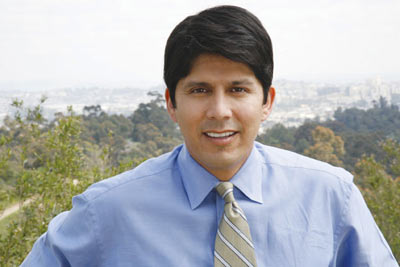
California State Senator Kevin de Leon, who sponsored the state's affirmative consent bill

California State Senator Kevin de Leon, who sponsored the state’s affirmative consent bill

Today, California passed an affirmative consent, or “yes means yes,” law. This is the first law of its kind, and is less ambiguous than the previously-accepted “no means no” stance.

This is also the first time there’s been a sexual consent law for a state. (Each state sets an age of consent law, but does not specify general consent.) It will be interesting to see whether, or how quickly, other states follow suit in proposing or adopting similar laws.