Channing Dungey is the First Black Woman to Run ABC

Channing Dungey and ABC logo (Variety)

Channing Dungey and ABC logo (Variety)

Big news on the entertainment/broadcast networks front: Channing Dungey was named President of ABC Entertainment last week. She’s the first Black woman to run a broadcast network’s entertainment division.

Dungey replaces outgoing president Paul Lee.

Before her new role, Dungey ran development of ABC’s shows. She’s worked with the “Thank God It’s Thursday” (TGIT)-block of “Scandal,” “How to Get Away With Murder,” and “Grey’s Anatomy,” earning her nickname of “the Shonda Rhimes whisperer.”

I’m eager to see how ABC’s programming will change as a result of Dungey’s promotion. Based on her glowing history with show runners, it sounds like viewers are in for a treat.


Ashley Graham is the First Size-14 Model to Cover the “Sports Illustrated” Swimsuit Edition

Ashley Graham, 'Sports Illustrated' Swimsuit Edition, 2016 (Mashable)

Ashley Graham, ‘Sports Illustrated’ Swimsuit Edition, 2016 (Mashable)

Big news for “Sports Illustrated:” the famed Swimsuit edition came out this past weekend, and featured three different models on three different covers. One of the covers featured Ashley Graham, who’s now the first size-14 model to cover the Swimsuit Edition (and appear within its pages).

This is a huge leap for Graham: Last year, she appeared in the Swimsuit Edition, but only in an ad.

In addition to Graham, this year’s Swimsuit Edition’s other cover girls are mixed martial artist Ronda Rousey and model Hailey Clauson.

Barbie Gets Three New Body Types

New Barbies (CNBC)

New Barbies (CNBC)

For decades, Barbies have been a constant presence in many girls’ toy boxes. Her body barely changed for over 50 years: tall, thin, big boobs, small waist (for that coveted 7:10 waist-to-hip ratio) and balancing on her tiptoes.

For many years, her physical assets have been a point of contention for feminists and activists for positive body image and acceptance. (I can confirm: I’ve been told my grandmother wouldn’t let my mom play with Barbies when she was growing up on the grounds that the doll was too “buxom.” I mean, she wasn’t exactly wrong.) It seems that their concerns have finally been acknowledged.

Barbie will be sold in three different body types: petite, curvy, and tall. Mattel, the company that’s made the doll since its inception in 1959, is also expanding the line in terms of ethnicity and race options:

Barbie dolls will come in seven skin tones, 22 eye colors, 24 hairstyles, and even a flat foot.

This move comes as consumers seek dolls that resemble themselves, or the little girls in their lives. For many women, Barbie is the first doll they could envision as themselves, and dreaming big. and it’s even better that now more dolls will resemble the consumer base’s diversity. Mattel has already begun diversifying their Barbies: the company broadened the range of “skin tones, eye colors and hair styles” available.

The new Barbies will debut this spring in stages. It’ll be interesting to see how the new dolls impact Mattel’s bottom line: Worldwide sales fell 4% in Q4 2015, and the company’s stock price has dropped 43% since a high in 2013.

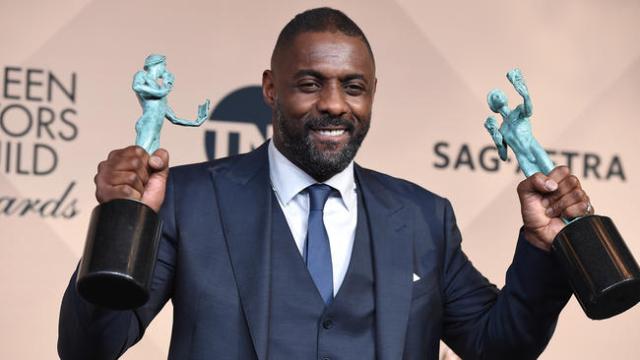
Idris Elba Makes History at the 2016 SAG Awards

Idris Elba at the 2016 SAG Awards (LA Times)

Idris Elba at the 2016 SAG Awards (LA Times)

The world’s hottest man (not editorializing, this is a fact and everyone agrees) made history Saturday night at the annual Screen Actors Guild (SAG) Awards.

Idris Elba (you know him as Stringer Bell from “The Wire”) not only became the first man to win two SAG awards in one night; he became the first African-American man to do so. Elba won for Best Male Actor in a Supporting Role in a Motion Picture for “Beasts of No Nation,” and for Best Male Actor in a Television Movie or Mini Series for “Luther.” This is especially impressive as it’s the first year he was nominated for a solo acting award. Go Idris!

But Elba’s wins made a splash for another, more sobering reason: He’s the only film winner that wasn’t nominated for an Oscar. His fellow winners (Leonardo DiCaprio for “The Revenant,” Brie Larson for “Room,” and Alicia Vikander for “The Danish Girl“) are all nominated. With the conversation around the Oscars’ diversity occurring for the second year in a row (#OscarsSoWhiteRedux), it’s worth noting for the future.

With Queen Latifah (“Bessie“), Uzo Aduba (“Orange is the New Black“), and Viola Davis (“How to Get Away with Murder“) also winning awards, Elba welcomed us all into the future with the following words:

“Ladies and gentleman, welcome to diverse TV.”

I, for one, cannot wait to see how things progress.

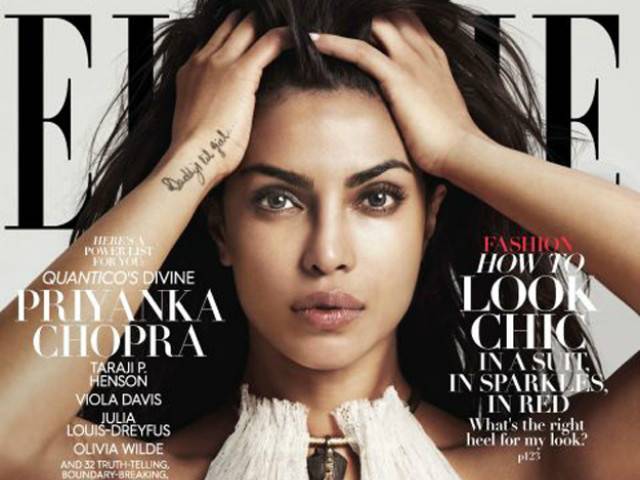
Elle’s Women in TV List Is Most Diverse Ever

Priyanka Chopra, %22Elle%22 (Tribune)

Priyanka Chopra, “Elle” (The Express Tribune)

Fashion magazine “Elle” doesn’t exactly have the best track record in terms of showcasing diverse women. Over the years, they’ve lightened Gabourey Sidibe’s skin, and photographed Mindy Kaling in close-up. (Incidentally, Kaling was photographed for a cover of the Women in TV list for 2014.) But it looks like they’re finally getting it: The magazine’s 2016 Women in TV list is its most diverse yet, and three of its five cover stars are women of color.

Taraji P. Henson (from FOX’s “Empire”), Viola Davis (ABC’s “How to Get Away With Murder”), and Priyanka Chopra (ABC’s “Quantico”) each received their own special cover. And none are in closeup or otherwise “hidden.”

This is heartening step forward for non-white women to see themselves represented and recognized in mainstream fashion magazines. I certainly hope it lasts and grows from here.

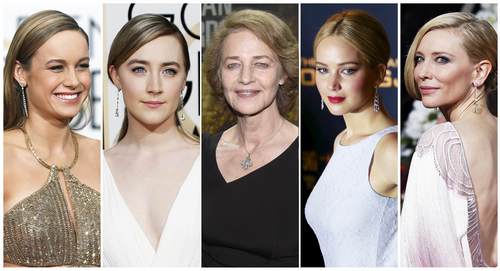
All of the Oscar Acting Nominees Are White. WTF?


Oscars 2016 Best Actress Nominees (Reuters)

Oscars 2016 Best Actress nominees (Reuters)

Last week, the Oscar nominations were announced. Selected by the Academy of Motion Picture Arts and Sciences (AMPAS), the winners will be revealed Feb. 28. But this year continued a disturbing trend that began last year: Not one of the nominees in any of the acting categories (Best Actress, Best Actor, Best Supporting Actress, Best Supporting Actor) were people of color (POC).

I use the word “disturbing” as it seems the Academy is determined to ignore stories and narratives that don’t fit within their very narrow worldview. It’s becoming increasingly clear that non-white stories are not only valuable (as we knew already), but make bank, both in terms of box office and in social influence. (See this past year’s examples of TV smash “Empire,” and movies “Straight Outta Compton” and “Dope.”) The Academy needs to wake up and see that rewarding diverse stories can only help their bottom line.

In terms of the numbers, here are some of the most recent POC nominees (counted if they didn’t win) and winners:

Best Actress:

Winner: Halle Berry (“Monster’s Ball,” 2001)

Nominee: Quvenzhane Wallis (“Beasts of the Southern Wild,” 2012)

Best Actor:

Winner: Forest Whitaker (“The Last King of Scotland,” 2006)

Nominee: Chiwetel Ejiofor (“12 Years a Slave,” 2013)

Best Supporting Actress:

Winner: Lupita Nyong’o (“12 Years a Slave,” 2013)

Nominee: Taraji P. Henson (“The Curious Case of Benjamin Button,” 2008)

Best Supporting Actor:

Winner: Djimon Hounsou (“Blood Diamond,” 2006)

Nominee: Barkhad Abdi (“Captain Phillips,” 2013)


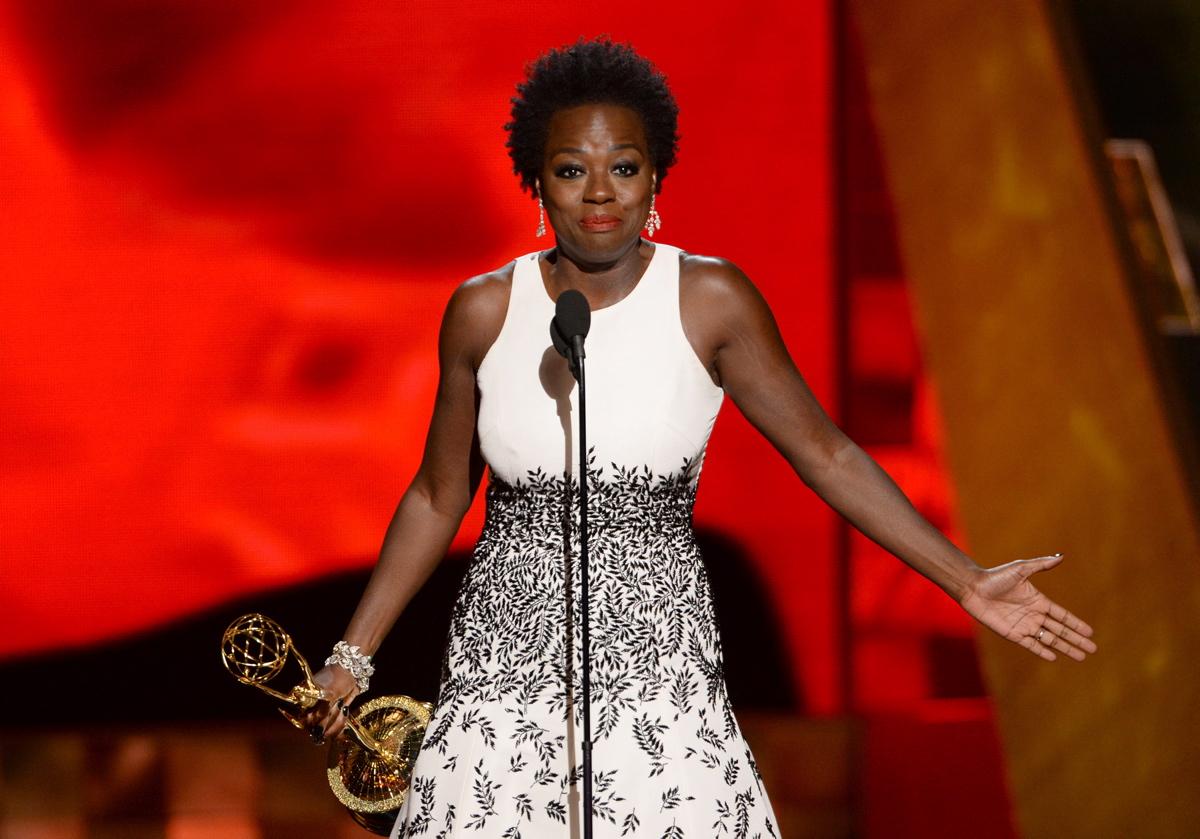
Viola Davis is the First African-American Woman to Win the Emmy for Outstanding Lead Actress

Emmy-winning actress Viola Davis (NY Daily News)

Emmy-winning actress Viola Davis (NY Daily News)

Acclaimed actress Viola Davis made history last night when she became the first African-American actress to win the Primetime Emmy Award for Outstanding Lead Actress in a Drama Series. Davis plays lawyer and law professor Annalise Keating in ABC’s “How to Get Away with Murder,” now in its second season.

The Academy of Television Arts & Sciences is finally beginning to recognize more diverse talent. Davis was up against Taraji P. Henson for “Empire,” which was the first time two Black women were nominated in the same category. Davis acknowledged Henson and 2013 and 2014 nominee Kerry Washington in her acceptance speech.

Some context for this win and occasion: The category has been awarded since 1953. Debbie Allen was the first Black woman nominated in the category in 1982. It begs the question: what took so long?!

Twitter Announces Diversity Goals for 2016

Twitter logo (Design Trend)

Twitter logo (Design Trend)

Last week, Twitter announced its goals to diversify the company’s employees in 2016. The goals focused on increasing the presence of female and non-white employees. For the women, this includes reaching 35% women overall in the company, with 16% of tech roles going to women and 25% of leadership roles getting filled by women. For minorities, the goals are bringing the number to 11% in the overall company, with 9% of tech roles and 6% of leadership roles. Interestingly, the goals for minorities are marked with a literal asterisk, and apply to within the US only. (I’d like to know the reasoning behind that, and I’m sure I’m not the only one.)

This follows Twitter’s identifying and committing to diversity as a workplace issue. Last year, the company shared its diversity numbers. Spoiler alert (or not): it’s a whole lotta white dudes. While the company overall is about 70% male/30% female, it skews more guy-heavy in the tech section. Ethnically speaking, white and Asian employees comprise the largest portions, at nearly 60% and 30% respectively. Employees who self-identify as Hispanic or Latino or as Black or African-American make up only about 5% of the Twitter workforce.

Even though it looks like Twitter’s taking some big steps forward, Julia Greenberg at “Wired” points out that these steps are actually pretty small:

As it stands now, the company already has 34 percent women on its staff, with 13 percent in tech roles and 22 percent in leadership roles—not too far off from its goals. With 4,100 employees worldwide currently, the difference would be adding at least 41 women to reach its overall gender goal (though it would depend on the company’s growth).

Twitter is just the latest in a line of tech companies who’ve released their not-so-diverse data (following Facebook and Google, among others). It’ll be interesting to see how these goals will change due to supply and demand over time.

Thursday Trends: Whitewashing Asian Characters in Film

Emma Stone, 'Aloha' (Jezebel)

Emma Stone, ‘Aloha’ (Jezebel)

Let me be clear: this is not a good trend. At all. It should never have even started. And yet, here we are.

It’s still a problem.

Historically, Hollywood has always had a problem of “whitewashing,” i.e. casting white actors in roles specifically created for non-whites. The thinking is that whites are more “bankable,” but there aren’t many roles and opportunities for non-white actors as it is. So a white actor ends up taking a role from a non-white one, and many non-white people are deprived of seeing depictions of themselves on-screen.

This tends to happen a lot with Asian actors. Most recently, director Cameron Crowe came under fire for casting Emma Stone in his latest movie “Aloha.” Stone was cast as a character named Allison Ng, whose ancestry is one-quarter Chinese and one-quarter Hawaiian. (Having white and Asian or Pacific Islander ancestry is traditionally known as “hapa,” deriving from the Hawaiian Pidgin word for half. So Ng’s heritage would be termed “hapa” or “hapa haole,” to include the European ancestry.)

Look at the picture above and tell me with a straight face that Emma Stone resembles anyone remotely half-Asian.

Fortunately, Crowe caught some heat for this decision, and has publicly apologized for his choice. (But he covered his ass a little, saying that the character was meant to be frustrated that her features belied her mixed-race heritage.) But Crowe could’ve easily cast an Asian or mixed-race Asian for his film. He just chose not to.

This whitewashing of Asian characters tends to come up every few years. 2010’s “The Last Airbender” received a public outcry when it was revealed that the cast was mostly non-white actors, save for Dev Patel. (The debacle coined the term “race bending.”) This was odd considering that the TV series (on which the movie was based) was set in a world with obvious Asian elements, and it was animated using anime influence.

The 2008 movie “21” centered on the real-life story of the MIT Blackjack Team, a group of current and former students who beat the casinos at their own game by counting cards. Though many of the group were of Indian and Asian descent, the movie whitewashed the cast, using mostly Caucasian actors.

And then there are the times when white actors are actually put in yellowface. 2012’s “Cloud Atlas,” which had the ensemble actors playing various characters, actually had two examples of this, and took it past the point of no return: Jim Sturgess (who was also in “21”) and James D’Arcy both played Korean men at one point. Sturgess and D’Arcy are both white men, but they both spent extensive time in makeup to more realistically resemble Asian men.

This is far from a new problem. The 1956 film “Teahouse of the August Moon” featured legendary actor Marlon Brando as Japanese villager Sakini, donning full-on yellowface to physically embody the role. And everyone who’s seen 1961’s “Breakfast at Tiffany’s” remembers Mickey Rooney as Holly Golightly’s Japanese neighbor I.Y. Yunioshi, who, seen through modern eyes, was a jaw-droopingly offensive caricature. (“The New York Times” review of the film called Rooney “broadly exotic.”) Fortunately, the distance of time and perspective have allowed people to see that these portrayals were very offensive towards Asians, and it was wrong to a) write/portray the characters in such stereotypical ways, and b) cast actors not of the specific ethnicity to play these parts.

But maybe the message isn’t sinking in as much as it should be: Blonde, Caucasian actress Scarlett Johansson will star in DreamWorks’ adaptation of the anime title “Ghost in the Shell.”

Here’s the thing: There are so many asian and mixed-Asian actors out there. Kristin Kreuk, Chloe Bennet, Olivia Munn, John Cho, Steven Yeun, Daniel Henney, Harry Shum Jr., Sendhil Ramamurthy. And those are only the ones I didn’t need to Google off the top of my head. Point being, there’s massive opportunity here for diverse casting that reflects reality. So let’s get on it!

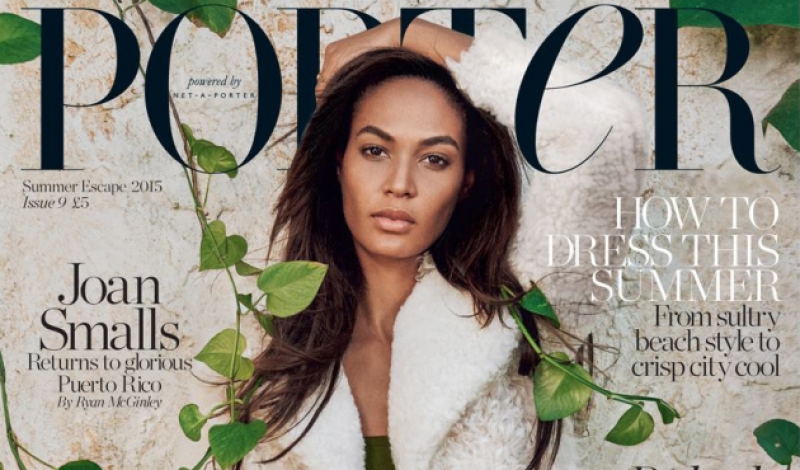
Joan Smalls is “Porter” Magazine’s First Woman of Color Cover Model

Joan Smalls for 'Porter' Magazine (Fashion Week Daily)

Joan Smalls for ‘Porter’ Magazine (Fashion Week Daily)

Supermodel Joan Smalls covers the summer edition of “Porter” magazine. She’s a model, she’s gorgeous; no big deal, right? Except, this time, it is: Smalls is the first woman of color to grace the cover.

The Puerto Rican beauty joins fellow supermodels Gisele Bundchen and Karlie Kloss in the “Porter” cover girl pantheon.

This isn’t the first time Smalls has made history, even in this decade: She became the first Latina model for Estée Lauder cosmetics in 2011.

Fashion companies and publications are finally recognizing to the fact that white isn’t the only skin tone that exists (“Vogue” has had a particular problem with this), and realizing that customers want to see models that resemble themselves. I just hope it’s not a trend but a step towards a large-scale change.