Black Women Covering the September Issue for “Vogue:” By The Numbers

Beyonce's 'Vogue' Cover, September 2015 (PopSugar)

Beyonce’s ‘Vogue’ Cover, September 2015 (PopSugar)

Sadly, the number of Black women covering the famed September issue of “Vogue” is very short. It really needs to be longer (how the hell is it 2015, and we’re still talking about this?!), and I have no doubt that it will be. Someday. But not soon enough.

As everyone knows by now, the ***Flawless Beyoncé will be covering the fashion bible’s September issue, which comes out Aug. 25th. It’s her first time covering the issue, though it’ll be her third time around as a “Vogue” cover model.

3: The number of Black women covering the September issue solo

1989: Supermodel Naomi Campbell covers the September issue

2010: Academy Award-winning actress Halle Berry covers the September issue.

The fashion industry is notoriously slow to change its ways (look at how many Black women were on “Vogue” covers in 2014). I hope Queen B’s new issue means we’ll see more diverse cover models, and soon.

#ThrowbackThursday: Beyoncé’s “Vogue” Covers, 2009 and 2013

Beyoncé's 'Vogue' covers, April 2009 and March 2013 (Celebuzz)

Beyoncé’s ‘Vogue’ covers, April 2009 and March 2013 (Celebuzz)

Last week, fashion bible “Vogue” announced its cover star for the always-hotly-anticipated September issue: the one, the only Beyoncé Knowles-Carter. But you may know the acclaimed singer solely by her first name.

This will mark Beyoncé’s third turn as the magazine’s cover model: She had previously appeared on the April 2009 and March 2013 covers. But this time is significant: It’ll be the first time she’s covered the September issue. Beyoncé will be only the third Black woman to cover the biggest issue of the year solo. (Her predecessors are supermodel Naomi Campbell and Academy Award-winning actress Halle Berry.)

The issue will hit newsstands Aug. 25th.


American Ballet Theatre Promotes Filipina-American Stella Abrera to Principal Dancer

Stella Abrera (Ballet UK)

Stella Abrera (Ballet UK)

By now, I’m sure you’ve heard that New York City’s American Ballet Theatre (ABT) recently promoted dancer Misty Copeland to principal, making her the first Black principal in the company’s 75-year history. But that wasn’t the only important promotion that was made.

Stella Abrera became the first Filipina-American to ascend to the rank of principal. (Two promotions, two history-makers this round for the ABT, if you’re keeping track.) She was born in the Philippines and moved to the U.S. when she was four years old. Beginning in Pasadena, Abrera also studied ballet in San Diego and Sydney, Australia. She joined ABT in 1996, and became a soloist in 2001. Abrera’s various roles have included the titular role in “Cinderella,” Emilia in “Othello,” and Clara and The Snow Queen in different versions of “The Nutcracker.”

Ballet is an art form notorious for having little diversity. I hope Abrera’s promotion (and Copeland’s) opens the door for more non-white dancers.


Diversity Amongst Principal Dancers in Top Ballet Companies: By The Numbers

San Francisco Ballet's Yuan Yuan Tan and Davit Karapetyan in George Balanchine's 'Scotch Symphony,' 2012 (Odette's Ordeal)

San Francisco Ballet’s Yuan Yuan Tan and Davit Karapetyan in George Balanchine’s ‘Scotch Symphony,’ 2012 (Odette’s Ordeal)

It’s a well-known fact that classical ballet companies aren’t known for their diversity. With the news that American Ballet Theatre (ABT) dancer Misty Copeland has been promoted to principal, I was curious to see just how (non-) diverse the major ballet companies are.

First, I identified the top classical ballet companies in the U.S.: ABT, New York City Ballet (NYCB), San Francisco Ballet, Pacific Northwest Ballet, and Houston Ballet. (I didn’t look at Chicago’s Joffrey Ballet because the company doesn’t use traditional levels, as far as I could tell.)

Next, I looked at each company’s roster, looking for diversity. I decided to narrow my search to solely the principal dancers to save time. I then made a spreadsheet of my findings:

Principal Dancer Diversity at Top Ballet Companies Excel Spreadsheet

Principal Dancer Diversity at Top Ballet Companies Excel Spreadsheet

The first glaring thing is none of the companies have any Black principals at this time. (Copeland will change that when she begins her new position in August.) Every company listed has at least one principal of Asian descent, and San Francisco has two.

Here’s how the various companies break down.

American Ballet Theatre (ABT):

ABT has 15 principal dancers. Four Latino/Latina dancers make up 25%+ of the company’s diversity.

Houston Ballet:

Houston Ballet has the smallest group of principals with just eight dancers. The one Asian dancer and one Latina dancer combine to make up 25% of the diversity.

New York City Ballet (NYCB):

NYCB has the highest number of principal dancers at 24. Latino/Latina dancers comprise 12%+. Though not noted above, NYCB also features one dancer of South Asian descent.

Pacific Northwest Ballet:

This company has the worst diversity score. No Black or Latino/Latina dancers, and only one Asian dancer, in a group of 12 principals.

San Francisco Ballet:

With six dancers among 20 principals, San Francisco Ballet’s Latino/Latina contingent make up 30% of that company’s diversity, the largest of the studied cohort. Though not noted above, the company also features one dancer of South Asian descent.

#ThrowbackThursday: Lauren Anderson in the Houston Ballet’s “Don Quixote,” 2006

Lauren Anderson, with Carlos Acosta, in Houston Ballet's 'Don-Quixote' (DanseTrack)

Lauren Anderson, with Carlos Acosta, in Houston Ballet’s ‘Don-Quixote’ (DanseTrack)

Misty Copeland may be the most recognizable Black almost-principal ballet dancer right now. But she’s not the first.

Lauren Anderson danced with the Houston Ballet from 1983 until her retirement in 2006. Born and bred in Houston, she began training at the company’s Ben Stevenson Academy (named for the company’s artistic director, now emeritus) before joining the company itself.

In 1990, Anderson was named principal dancer. She was the Black woman to achieve the rank within the Houston Ballet, but also became one of the most visible Black classical ballet principal dancers within a major company.

The above photo shows Anderson dancing with Carlos Acosta in the Houston Ballet’s 2006 production of “Don Quixote.”

Misty Copeland is American Ballet Theatre’s First Black Principal Dancer

Misty Copeland in 'Swan Lake' (Vanity Fair)

Misty Copeland in ‘Swan Lake’ (Vanity Fair)

Last week, the American Ballet Theatre (ABT) in New York City promoted dancer Misty Copeland to principal. Copeland is the first Black woman to attain the level of principal (the highest level possible for a dancer) in ABT’s 75-year history. (ABT has previously had one Black man reach principal: Desmond Richardson, who achieved the level in 1997.) Since she’s considered a classical ballet dancer, this is all the more rare.

Copeland is considered to be a ballet prodigy since she began studying at age 13, and began dancing in pointe shoes a mere three months (!) later. She came to the larger public’s attention when she starred in the now-famous UnderArmour 2014 ad spot “I Will What I Want,” which featured her dancing. Since then, Copeland has written a biography and a children’s book, appeared on the cover of “Time” for their 2015 Top 100 list, and was the subject of a documentery, “A Ballerina’s Tale,” that premiered at the Tribeca 2015 Film Festival.

Copeland’s notable roles include the titular role in “The Firebird,” Swanhilda in “Coppélia,” and the dual roles of Odette/Odile in “Swan Lake.” The “Swan Lake” roles were significant for Copeland, and the rest of the ballet world:

It was a symbolically significant moment in American arts, in which a black woman danced the role of ballet’s famed white swan—and sold out all of her performances from the moment tickets went on sale months earlier.

Copeland became a member of ABT’s corps de ballet in 2001, and was promoted to soloist in 2007. She’ll start as principal dancer on August 1st.

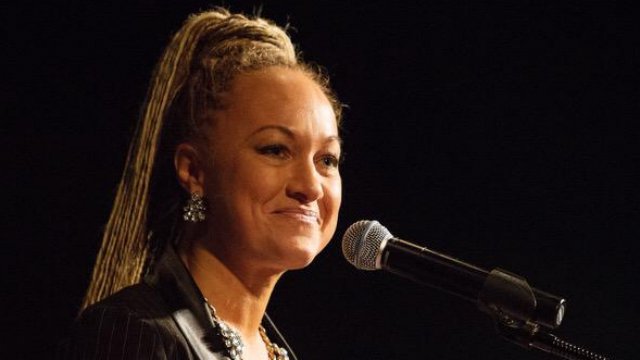
Rachel Dolezal: How Many White People Have Passed As Black?

Rachel Dolezal (Young Cons)

Rachel Dolezal (Young Cons)

This is pretty insane: It came out last week that Rachel Dolezal, the president of the National Association for the Advancement of Colored People (NAACP) chapter in Spokane, Washington, isn’t black at all. Not one drop.

She’s actually white.

Her story came out after a reporter asked her point-blank if she was black. Dolezal dodged the question. Since then, other aspects of Dolezal’s life have come to light: attending Howard University, telling people her adopted black brother (who lived with her) was really her son, and teaching classes on African-American culture at Eastern Washington University. Dolezal also claimed to have received hate mail.

Dolezal began identifying as black in 2007, after years of identifying with the culture.

I wanted to see if there were any stats on white people passing as black in the larger culture. I don’t mean in terms of appropriating dress or mannerisms, but actually altering one’s physical appearance and living an elaborate lie.

And I couldn’t find anything. Shocker (but not really). This is such a strange situation that I’m not surprised there haven’t been enough subjects to be studied.

The only white person who’s done anything remotely similar was John Howard Griffin, author of “Black Like Me.” Griffin underwent physical changes, including darkening his skin under heat lamps, to pass for a black man and report on racial injustices in the South firsthand. But obviously, his motives were very different than Dolezal’s.

It’ll be interesting to see how Dolezal’s case plays out, and if she’ll drop her black identity now that she’s been exposed.

Thursday Trends: Whitewashing Asian Characters in Film

Emma Stone, 'Aloha' (Jezebel)

Emma Stone, ‘Aloha’ (Jezebel)

Let me be clear: this is not a good trend. At all. It should never have even started. And yet, here we are.

It’s still a problem.

Historically, Hollywood has always had a problem of “whitewashing,” i.e. casting white actors in roles specifically created for non-whites. The thinking is that whites are more “bankable,” but there aren’t many roles and opportunities for non-white actors as it is. So a white actor ends up taking a role from a non-white one, and many non-white people are deprived of seeing depictions of themselves on-screen.

This tends to happen a lot with Asian actors. Most recently, director Cameron Crowe came under fire for casting Emma Stone in his latest movie “Aloha.” Stone was cast as a character named Allison Ng, whose ancestry is one-quarter Chinese and one-quarter Hawaiian. (Having white and Asian or Pacific Islander ancestry is traditionally known as “hapa,” deriving from the Hawaiian Pidgin word for half. So Ng’s heritage would be termed “hapa” or “hapa haole,” to include the European ancestry.)

Look at the picture above and tell me with a straight face that Emma Stone resembles anyone remotely half-Asian.

Fortunately, Crowe caught some heat for this decision, and has publicly apologized for his choice. (But he covered his ass a little, saying that the character was meant to be frustrated that her features belied her mixed-race heritage.) But Crowe could’ve easily cast an Asian or mixed-race Asian for his film. He just chose not to.

This whitewashing of Asian characters tends to come up every few years. 2010’s “The Last Airbender” received a public outcry when it was revealed that the cast was mostly non-white actors, save for Dev Patel. (The debacle coined the term “race bending.”) This was odd considering that the TV series (on which the movie was based) was set in a world with obvious Asian elements, and it was animated using anime influence.

The 2008 movie “21” centered on the real-life story of the MIT Blackjack Team, a group of current and former students who beat the casinos at their own game by counting cards. Though many of the group were of Indian and Asian descent, the movie whitewashed the cast, using mostly Caucasian actors.

And then there are the times when white actors are actually put in yellowface. 2012’s “Cloud Atlas,” which had the ensemble actors playing various characters, actually had two examples of this, and took it past the point of no return: Jim Sturgess (who was also in “21”) and James D’Arcy both played Korean men at one point. Sturgess and D’Arcy are both white men, but they both spent extensive time in makeup to more realistically resemble Asian men.

This is far from a new problem. The 1956 film “Teahouse of the August Moon” featured legendary actor Marlon Brando as Japanese villager Sakini, donning full-on yellowface to physically embody the role. And everyone who’s seen 1961’s “Breakfast at Tiffany’s” remembers Mickey Rooney as Holly Golightly’s Japanese neighbor I.Y. Yunioshi, who, seen through modern eyes, was a jaw-droopingly offensive caricature. (“The New York Times” review of the film called Rooney “broadly exotic.”) Fortunately, the distance of time and perspective have allowed people to see that these portrayals were very offensive towards Asians, and it was wrong to a) write/portray the characters in such stereotypical ways, and b) cast actors not of the specific ethnicity to play these parts.

But maybe the message isn’t sinking in as much as it should be: Blonde, Caucasian actress Scarlett Johansson will star in DreamWorks’ adaptation of the anime title “Ghost in the Shell.”

Here’s the thing: There are so many asian and mixed-Asian actors out there. Kristin Kreuk, Chloe Bennet, Olivia Munn, John Cho, Steven Yeun, Daniel Henney, Harry Shum Jr., Sendhil Ramamurthy. And those are only the ones I didn’t need to Google off the top of my head. Point being, there’s massive opportunity here for diverse casting that reflects reality. So let’s get on it!

#ThrowbackThursday: Luise Ranier in “The Good Earth,” 1937

Luise Ranier, 'The Good Earth' (Rotten Tomatoes)

Luise Ranier, ‘The Good Earth’ (Rotten Tomatoes)

In 1937, actress Luise Ranier starred in a film adaptation of Pearl S. Buck’s novel “The Good Earth.” The plot centers on  the rise and fall of a Chinese family’s fortunes. Ranier played O-Lan, the family matriarch.

Ranier, who was born and spent her childhood in Germany, was Caucasian.

She became one of the first instances of Hollywood’s whitewashing: casting a white actor in a non-white role. Thus began the film industry’s troubled history with diversity on screen. But I guess it worked out for Ranier: she won an Oscar for Best Actress.