By The Numbers: NPR Releases 2017 Staff Diversity Data

National Public Radio (NPR) Logo (NPR)

National Public Radio (NPR) Logo (NPR)

National Public Radio (NPR) has committed to inclusive hiring practices by releasing its newsroom diversity data each year. Last month, the diversity data for 2017 was released for 377 employees. All data was self-reported. I also compared these numbers to NPR’s 2016 diversity data.

Here’s the race/ethnicity breakdown:

White: 75.1%

  • Change Year-Over-Year – White: -.3%

Latino: 6.1%

  • Change Year-Over-Year – Latino: .7%

Black: 8.8%

  • Change Year-Over-Year – Black: .8%

Asian: 7.7%

  • Change Year-Over-Year – Asian: -6.%

Two or More Reported: 2.1%

  • Change Year-Over-Year – Two or More Reported: -.5%

American Indian: .3%

  • Change Year-Over-Year – American Indian: 0%

Here’s the gender split:

Male: 43.8%

  • Change Year-Over-Year – Male (%): -1.1%

Female: 56.2%

Change Year-Over-Year – Female (%): +1.1%

Obviously, there are some problems here. The first problem is that the data is self-reported, so we can assume that respondents self-selected to participate. The second problem is that there is not nearly enough diversity on staff. The third problem is that progress towards more diversity is proceeding too slowly. More progress needs to be made!
#ThrowbackThursday: Alice Dunnigan, Date Unknown

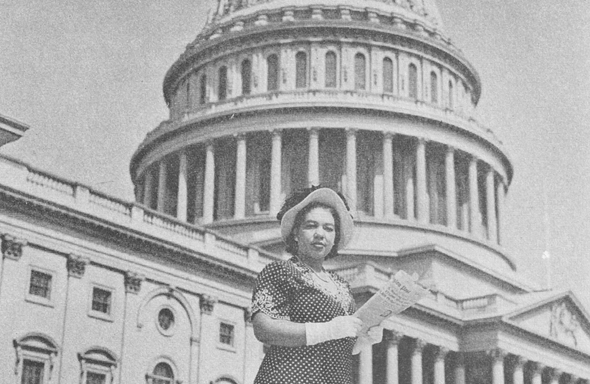
Alice Dunnigan (Columbia Journalism Review Archive)

Alice Dunnigan (Columbia Journalism Review Archive)

Alice Dunnigan should be more well-known. This is not editorializing, this is just a fact. As a journalist WOC, Dunnigan pioneered many firsts. She was the first African-American woman to have press access to the White House, first African-American female member of the Senate and House of Representatives press galleries. Dunnigan was also the first African-American woman to travel with a presidential candidate, when she traveled with Harry S. Truman during the 1948 presidential campaign.

Dunnigan paved the way for other African-American female journalists, among them Gwen Ifill, Nikole Hannah-Jones, and Oprah Winfrey.

By The Numbers: African-American Best Director Oscar Nominees

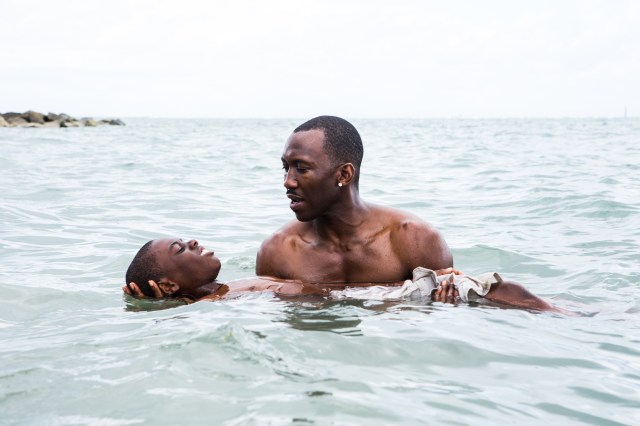
'Moonlight,' 2016 (Collider)

‘Moonlight,’ 2016 (Collider)

Jordan Peele hit the trifecta of Oscar nominations (Best Picture, Best Director, and Best Original Screenplay) with his debut feature “Get Out.” (Definitely see it if you haven’t yet!!) Peele achieved this with his debut feature, making him only the third director and the first African-American director to do so.

Here are some stats on African-American nominees for the Best Director Oscar:

Estimated Number of Best Director Oscar Nominees, 1927-2017: 451

  • This number covers 90 years of the Academy Awards, with an average of 5 directors nominated per year.

Number of African-American Best Director nominees: 5

  • John Singleton for “Boyz N The Hood” (1991)
  • Lee Daniels for “Precious” (2009)
  • Steve McQueen for “12 Years a Slave” (2013)
  • Barry Jenkins for “Moonlight” (2016)
  • Jordan Peele for “Get Out” (2017)

Percentage of African-American Best Director nominees to total Best Director nominees: 1.11%

Decades with the highest number of African-American Best Director nominees:

  • 2010s: 3
  • 2000s: 1
  • 1990s: 1

African-American Best Director winners: 0

  • I want Peele to win!!

These numbers are terrible! The Academy needs to not only recognize, but reward, inclusive stories and storytellers!!

#ThrowbackThursday: John Singleton and “Boyz N The Hood,” 1991

'Boys N The Hood,' 1991 (Pinimg)

Boyz N The Hood, made by John Singleton in 1991, was the story of three friends — played by(from left) Morris Chestnut, Cuba Gooding, Jr. and Ice Cube – growing up in South Central Los Angeles.

The first African-American nominee for Best Director was John Singleton. Like Peele, Singleton was nominated for his debut film. Singleton’s film “Boys n the Hood” featured Ice Cube (in his acting debut), Cuba Gooding Jr. and Angela Bassett. Singleton’s nomination also made history because he was the youngest-ever nominee for Best Director, nominated at age 24.

This year, Jordan Peele hit the trifecta of Oscar nominations with “Get Out,” receiving nominations for Best Picture, Best Director and Best Screenplay. Peele is only the fifth African-American director to be nominated for a Best Director Oscar.

How Common is Gestational Surrogacy?

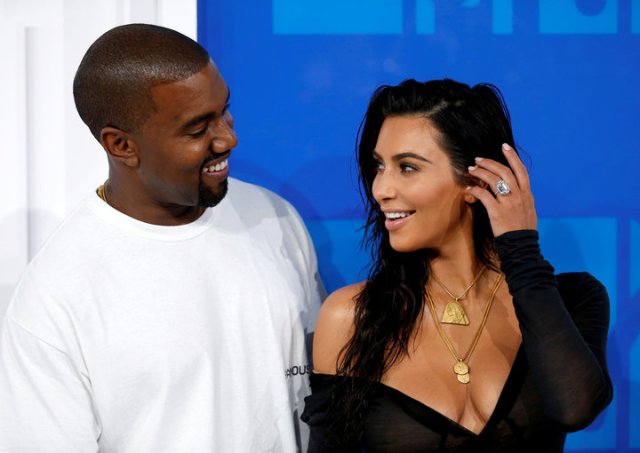
Kim Kardashian and Kanye West arrive at the 2016 MTV Video Music Awards in New York (The Huffington Post)

FILE PHOTO – Kim Kardashian and Kanye West arrive at the 2016 MTV Video Music Awards in New York, U.S., August 28, 2016. REUTERS/Eduardo Munoz/File Photo

Last month, reality TV personality Kim Kardashian West and her husband Kanye West announced the birth of their third child. The couple’s daughter Chicago was carried via a gestational surrogate. She was created from a fertilized egg taken from Kardashian West, and had no genetic tie to the surrogate.

How common is gestational surrogacy?

It’s not that common, but it’s difficult to nail down exact numbers. The Society for Assisted Reproductive Technology (SART) reported 1.5K+ babies born from gestational surrogates in 2011, up from 1.3K+ babies born via the method in 2009. Another source reports 1.4K+ babies born via gestational surrogacy.

It’s difficult to pin down an actual number, because some cases of gestational surrogacy may not reported. It’s also difficult to tell when the sample size is so small.

As the procedure becomes more widely available, we’ll be able to see how common gestational surrogacy really is.

GLAAD Reports 11% Increase in LGBTQ Discrimination in 2017

Rainbow Flag (Sauk Valley)

Rainbow Flag (Sauk Valley)

It’s no secret that the LGBTQ community has faced discrimination throughout history. And it looked like that things were getting better (to rip from Dan Savage). But the data tells a different story.

LGBT organization GLAAD recently released the results from its Accelerating Acceptance study at the World Economic Forum. GLAAD has put out this study every year since 2014 to measure attitudes towards people who identify as LGBTQ. This year’s study polled 2.1K+ people, and found that, we’re not making progress as one might reasonably expect. We’re actually backsliding.

The study found that non-LGBTQ people have become more uncomfortable in everyday situations where they might interact with members of the LGBTQ community. Situations included “having LGBT members at my place of worship” and “seeing a same-sex couple holding hands.” The percentage of respondents reporting discomfort ticked upwards at least two percentage points year-over-year (2016 vs. 2017) in each category.

Non-LGBT people are also shying away from calling themselves allies: The term dropped 2% in preference year-over-year. “Detached supporters” (defined as non-LGBT people whose comfort level depended on the situation) gained 4% in popularity.

LGBT people also reported more discrimination in 2017, leading to an 11% increase in reported harassment from 2016. It doesn’t take a genius to draw parallels between this stat and the kind of person who currently occupies the Oval Office.

Here’s where it gets interesting: Despite the decreases in the numbers of non-LGBT people reporting being comfortable around the LGBT community, the reported support for equal rights for LGBT people held steady year-over-year at 79%.

One thing that’s unclear is the methodology used: Are these results self-reported, or were respondents selected by another method? And did people lie about supporting equal rights, but tell the truth everywhere else? I’d love to know this.

This study is very disheartening. We still have a long way to go until it truly gets better.


Only 17% of Startups Had a Female Founder in 2017

Whitney Wolfe, Founder of Bumble (Travel + Leisure)

Whitney Wolfe, Founder of Bumble (Travel + Leisure)

Quick, how many female founders of startups can you name (without Googling)? Let’s see, there’s Sophia Amoruso of NastyGal (RIP!), Whitney Wolfe of Bumble, Jenn Hyman of Rent the Runway, and…who else?

Contrast that with how many male startup founders you could name (Bill Gates, Steve Jobs, Mark Zuckerberg, Elon Musk, etc.) and you could go on for days. And that’s without Googling. And without naming their respective companies (Microsoft, Apple, Facebook, and Tesla, in case you’e wondering.)

Why can’t we name more female founders? Do they exist?

Well, yes and no. Crunchbase, a platform that crunches (heh) data for many companies around the world, has been running a study on female founders of start-ups since 2015. And what they found will SHOCK you.

Actually, no it won’t. Only 17% of startups had a female founder as of Q1 2017 (the last recorded study). 17 PERCENT. THIS IS NOT PARITY.

What makes this number worse is that this percentage has persisted since 2012. So women have only have the best seats at the table less than 1/5th of the time for 5 years.

Ladies, let’s start some companies!! Who’s with me?!

By The Numbers: Female Best Director Oscar Nominees

Greta Gerwig at the 2018 Golden Globe Awards (Elk Grove Tribune)

Greta Gerwig at the 2018 Golden Globe Awards (Elk Grove Tribune)

Oscar nominations dropped earlier this week, and actress/director Greta Gerwig received a nomination for Best Director for her feature “Lady Bird.”

Gerwig is only the fifth woman to be nominated for Best Director! Isn’t that insane?! Especially since the Oscars have been occurring since 1927…

Here are some stats on female nominees for the Best Director Oscar:

Estimated Number of Best Director Oscar Nominees, 1927-2017: 451

  • This number covers 90 years of the Academy Awards, with an average of 5 directors nominated per year.

Number of female Best Director nominees: 5

  • Lina Wertmuller for “Seven Beauties” (1976)
  • Jane Campion for “The Piano” (1993)
  • Sofia Coppola for “Lost in Translation” (2003)
  • Kathryn Bigelow for “The Hurt Locker” (2009)
  • Greta Gerwig for “Lady Bird” (2017)

Percentage of female Best Director nominees to total Best Director nominees: 1.11%

Number of American female Best Director nominees: 3

  • Sofia Coppola for “Lost in Translation” (2003)
  • Kathryn Bigelow for “The Hurt Locker” (2009)
  • Greta Gerwig for “Lady Bird” (2017)

Female Best Director winners: 1

  • Kathryn Bigelow for “The Hurt Locker” (2009)

Percentage of Female Best Director Winners to Total Best Director Winners: 1.11%

Number of American female Best Director winners: 1

  • Kathryn Bigelow for “The Hurt Locker” (2009)

Obviously, these numbers need to change. More women need to be recognized and rewarded for their achievements!

#ThrowbackThursday: Kathryn Bigelow Wins Best Director for “The Hurt Locker,” 2010

Kathryn Bigelow at the 2010 Oscars (Zimbio)

Kathryn Bigelow at the 2010 Oscars (Zimbio)

Prior to directing the 2009 film “The Hurt Locker,” Kathryn Bigelow was known for science fiction “Strange Days” and action film “Point Break.” “The Hurt Locker” raised her profile, and pushed her into the spotlight when she won the Best Director Oscar for the film.

Bigelow is the only woman to win the Best Director Oscar. She was the fourth woman to be nominated for the award.

Jordan Peele Is the First African-American to Receive The Trifecta Oscar Nominations

Jordan Peele (The Hollywood Reporter)

Jordan Peele (The Hollywood Reporter)

Jordan Peele just had the best day ever.

Oscar nominations hit yesterday, and the nominations for Peele’s movie “Get Out” put him in rarefied territory. “Get Out” received nominations for Best Picture, Best Director, and Best Original Screenplay for Peele.

These honors make Peele the third filmmaker to get the trifecta of honors as a first-time director. (Yes, hard to believe, but “Get Out” was his first feature!) Warren Beatty and James L. Brooks preceded Peele in this trifecta with their respective features “Heaven Can Wait” and “Terms of Endearment.” Not only that, but Peele is the first African-American to achieve this!

Congrats Jordan! I can’t wait to see what comes next for you! Crossing my fingers that you’ll win all Oscars!!