Women in Entertainment: Female Best Director Oscar Nominees and Winners, By The Numbers

Kathryn Bigelow at the 2010 Oscars (Zimbio)

Kathryn Bigelow at the 2010 Oscars (Zimbio)

This post was originally published on January 25, 2018 and is being republished as part of Women in Entertainment Week. It has been updated from the original.

The Oscars are this weekend, and actress/director Greta Gerwig is in the running for Best Director for her feature “Lady Bird.”

Gerwig is only the fifth woman to be nominated for Best Director! Isn’t that insane?! Especially since the Oscars have been occurring since 1927…

Here are some stats on female nominees for the Best Director Oscar:

Estimated Number of Best Director Oscar Nominees, 1927-2017: 451

  • This number covers 90 years of the Academy Awards, with an average of 5 directors nominated per year.

Number of female Best Director nominees: 5

  • Lina Wertmuller for “Seven Beauties” (1976)
  • Jane Campion for “The Piano” (1993)
  • Sofia Coppola for “Lost in Translation” (2003)
  • Kathryn Bigelow for “The Hurt Locker” (2009)
  • Greta Gerwig for “Lady Bird” (2017)

Percentage of female Best Director nominees to total Best Director nominees: 1.11%

Number of American female Best Director nominees: 3

  • Sofia Coppola for “Lost in Translation” (2003)
  • Kathryn Bigelow for “The Hurt Locker” (2009)
  • Greta Gerwig for “Lady Bird” (2017)

Female Best Director winners: 1

  • Kathryn Bigelow for “The Hurt Locker” (2009)

Percentage of Female Best Director Winners to Total Best Director Winners: 1.11%

Number of American female Best Director winners: 1

  • Kathryn Bigelow for “The Hurt Locker” (2009)

Obviously, these numbers need to change. More women need to be recognized and rewarded for their achievements!

Women in Entertainment: Lina Wertmuller Directing “Seven Beauties,” 1975 #ThrowbackThursday

Lina Wertmuller directing 'Seven Beauties' (Pinimg)

Lina Wertmuller directing ‘Seven Beauties’ (Pinimg)

The first woman nominated for the Best Director Oscar was Lina Wertmuller in 1975 for her film “Seven Beauties.” The film follows an Italian man throughout his life, and the title comes from his seven sisters. “Seven Beauties” was her tenth film.

The next woman nominated for the Best Director Oscar was Jane Campion for her 1993 film “The Piano.”

Women in Entertainment: 80% of Women Directors Made Only 1 Movie Within 10 Years

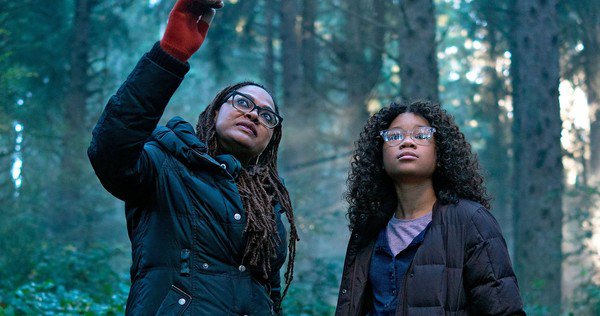
Ava DuVernay directing 'A Wrinkle in Time' (Movieweb)

Ava DuVernay directing ‘A Wrinkle in Time’ (Movieweb)

The entertainment industry has made it clear that it’s a man’s world. And now we have data to back it up.

The Annenberg School for Communication and Journalism at University of Southern California (USC) put out a study last year through their Media, Diversity & Social Change initiative. The study, titled “Inclusion in the Director’s Chair?,” examined the gender, race and age of directors for the top-grossing 1,000 movies from 2007 to 2016.

Among the interesting findings was the revelation that 80% of women directors made just one film within the 10-year timeframe. This counted them as “one and done.” By contrast, only 54%+ men directed only one film during the same length of time.

The study also called out gender ratios: Across the 1,000 films examined, there were 1,114 directors. (The study did not define if this number was for unique – i.e. only occurring once in the list – directors or not.) The male-to-female director ratio was 24:1.

Across the 1,114 total directors, there were only 35 (!) unique female directors across the stated timeframe. (Ava DuVernay, pictured above, was one of those 35.) That’s 3% of all the directors surveyed. That’s pretty bad!!

Clearly, we have a long way to go before we achieve parity behind the camera.


Women in Entertainment: Women Hire Women (No Shit)

'Pitch Perfect 3,' 2018 (Indiewire)

‘Pitch Perfect 3,’ 2018 (Indiewire)

Does it surprise anyone that women are more likely to hire women than men are likely to hire women? No? Great, than this next piece of information will totally make sense: The Center for the Study of Women in Television and Film put out a recent study that examined women’s employment in the entertainment industry in certain high-level behind-the-scenes capacities (director, writer, composer, etc.) for the top 250 films of 2017 and the top 100 and top 500 films of 2015.

What this study, aptly titled “The Celluloid Ceiling,” found was that on films with more than one female director, more women were hired for other top roles. The study looked at the incidence of women being hired as writers, editors, cinematographers and composers, and that incidence went up dramatically (ha) when women were also directors, or at least one director.

How dramatically? Women directors employed women writers at a 60% increase than male directors, and employed women composers at a 10% increase than male directors.

For those who require their data in visual form, here’s a graph of said increases:

Graph examining incidence of women hired for top-level behind-the-scenes work with at least one female director vs. exclusively male directors ('The Celluloid Ceiling' Report 2018)

Graph examining incidence of women hired for top-level behind-the-scenes work with at least one female director vs. exclusively male directors (‘The Celluloid Ceiling’ Report 2018)

I have to level with everyone here: I definitely assumed I’d see a sizable uptick in women being hired if there was already a women in the top spot (i.e. director). But I had no idea it’s be this large of a difference.

This also begs the question: Which movies are more likely to have women as directors? Though the “The Celluloid Ceiling” report doesn’t answer that directly, it does shed some light on certain genres which may favor women directors a bit more:

By genre, the largest percentage of women, relative to men, worked in documentaries (30%), followed by comedies (23%), dramas (22%), sci-fi features (20%), animated features (19%), horror features (18%), and action features (13%).

Personally, I’d like to see more women in dramas, sci-fi, and horror, but any gain works! Now let’s make more of them!!

Women in Entertainment: Some Basic Stats

Sofia Coppola (Junkee)

Sofia Coppola (Junkee)

Let’s kick off some basic stats about women in entertainment, shall we? Because knowledge is power, and let’s change this shit! I pulled these from a variety of sources; all figures are from 2017 unless otherwise noted.

Film:

(All figures for the top 100 domestic highest-grossing films of 2017)

  • Women comprised 10% of directors, 8% of writers, and 2% of cinematographers.
  • Women comprised 37% of major characters, and comprised 34% of all speaking characters.
  • In terms of female characters’ race and ethnicity, 68% of female characters were white, 16% were Black, 7% were Latina, 7% were Asian, and 2% were defined as “other” (no delineation given).
  • Women comprised 5% of total leaders depicted, compared to 8% for men.


TV:

(All data pulled from the 2016-2017 television season)

  • Women comprised “42% of major characters on broadcast network, cable, and streaming programs.”
  • For womens’ speaking roles with respect to race and ethnicity, Black women spoke in 19% of all roles, Asian women spoke in 6% of all roles, and Latina women spoke in 5% of all roles. Each group showed gains year-over-year.
  • Women comprised 28% of creators, directors and writers and other above-the line functions as defined by the survey.
  • Four women or fewer were employed in certain behind the scenes roles at 50% of programs.

And finally, this gem:

Hollywood’s top paid union executive—a man—earned 60 percent more than the highest-paid female union executive.

Makes you want to burn it all down, doesn’t it? And there are many more of these depressing and disappointing statistics out there.

Hopefully with all the awareness and dialogue surrounding gender disparity in the field right now, we’re on track to make some BIG changes.

Welcome to Women in Entertainment Week!

Directors Patty Jenkins, Sofia Coppola, Dee Rees, and Greta Gerwig (Vulture)

Directors Patty Jenkins, Sofia Coppola, Dee Rees, and Greta Gerwig (Vulture)

Welcome to Women in Entertainment Week here on Sex & Stats! This week, we’ll be devoting content to the various statistics surrounding women who work in the entertainment field. When you’re watching the Oscars on Sunday, you’ll know your stats! Enjoy!

By The Numbers: “Black Panther”‘s Audience Breakdown

Shuri (Letitia Wright) in 'Black Panther, 2018 (ESPN FiveThirtyEight)

Shuri (Letitia Wright) in ‘Black Panther, 2018 (ESPN FiveThirtyEight)

As you no doubt have heard by now (and if you haven’t, where are you?!), “Black Panther” is breaking records left and right: It has the second-highest box office gross in its first four days, and is the highest-grossing movie to open over President’s Day weekend (among other records).

One thing that’s happened with the release of the movie is that the audience makeup is slightly different than the usual. Here’s the breakdown!

First, let’s look at race:

Typical Superhero Movie (2016 Average):

  • African-American: 15%
  • Caucasian: 52%
  • Hispanic: 21%

“Black Panther:”

  • African-American: 37%
  • Caucasian: 35%
  • Hispanic: 18%

For those of you who need a visual:

'Black Panther' Audience Make-Up by Demographic (Quartz)

‘Black Panther’ Audience Make-Up by Demographic (Quartz)

Check that out!! The percentage of African-Americans seeing “Blank Panther” was more than double that of the average superhero movie.

The Typical Superhero numbers were pulled from a Motion Picture Association of America (MPAA) Theatrical Market Statistics report from 2016. “Black Panther” numbers came from audience tracking platform comScore.

Gender:

Typical Superhero Movie’s Opening Weekend:

  • Male: 60-65%
  • Female: 35-40%

“Black Panther” Opening Weekend:

  • Male: 55%
  • Female: 45%

This is big too! More women wanted to see “Black Panther” on opening weekend than the usual superhero fare. One explanation is that the movie positions many strong, dynamic female characters front and center: Nakia (Lupita Nyong’o), Shuri (Letitia Wright) and Okoye (Danai Gurira).

There you have it, folks: Hard data on the fact that representation matters in media. If you represent inclusivity in your movie, you’ll give a more inclusive audience. And that will translate to bigger bank.

#ThrowbackThursday: “The Fate of the Furious,” 2017

'The Fate of the Furious,' 2017 (Junkee)

‘The Fate of the Furious,’ 2017 (Junkee)

“Black Panther” smashed many records within its first week of opening. One of the records it broke was the biggest opening for an African-American director. Ryan Coogler now holds that crown.

The previous record holder was F. Gary Gray, who directed “The Fate of the Furious.” The movie made $98M last year. Gray has also directed the films “Set It Off” (1996), “A Man Apart” (2003) and “Straight Outta Compton” (2015) and music videos for TLC (“Waterfalls” in 1995) and OutKast (“Ms. Jackson” in 2000).

“Black Panther” Has the Biggest President’s Day Box Office with $40.2M

Chadwick Boseman in 'Black Panther' (Marvel Cinematic Universe Wiki)

Chadwick Boseman in ‘Black Panther’ (Marvel Cinematic Universe Wiki)

The highly-anticipated Marvel movie “Black Panther” opened last Thursday night, and has already broken records.

“Black Panther” made $40.2M on President’s Day, making it the biggest Monday ever. The record was previously held by “Star Wars: The Force Awakens” in 2016, which made $40.1M.

“Black Panther” also made the second-most amount of money in its first four days of opening with $241.6M. The movie now holds the record for the biggest President’s Day weekend opening, “Deadpool” was the previous recordholder, making $152M in 2016. The only movie that made more within its first four days was (you guessed it) “The Force Awakens, which made $288.1M.

Among movie theater chain AMC, the movie became the highest-grossing title in the chain’s history for 80 theaters, which accounts for over 10% of the chain’s theaters. The movie opened in 661 theaters.

Worldwide, “Black Panther” made $426.6M. The movie has yet to open in China, Japan and Russia.


“Fifty Shades Freed” Makes $38M+ in Its Opening Weekend

'Fifty Shades Freed' (CW Theaters)

‘Fifty Shades Freed’ (CW Theaters)

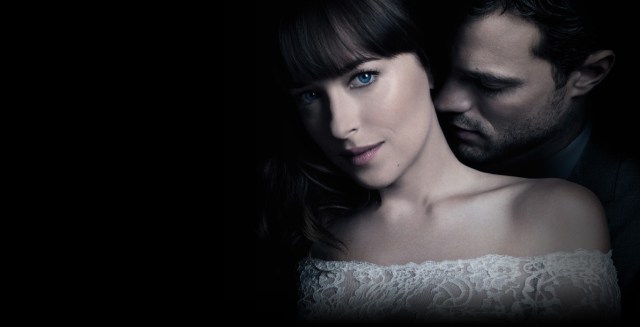
“Fifty Shades Freed,” the third and last entry in the “Fifty Shades of Grey” trilogy, hit theaters this past weekend. The movie took in $38.8M+ in the US for its opening weekend. It played in 3,678 theaters, averaging $10,549.21 per theater.

This opening weekend actually decreased from previous entries in the trilogy. The opening weekend of “Fifty Shades of Grey” performed 54% better, and “Fifty Shades Darker” performed 16% better than the current movie.

The gender split for this movie was a little different than the previous two films: Women comprised 75% of the audience, making it the highest ratio of male-to-female audience members for the trilogy.

Overseas, the movie made $98.1M. The movie made the highest opening day of the year in the UK, Spain and Mexico. It’s interesting to note that both of the previous films made 70% of their revenue off overseas audiences, so we’ll see if the same pattern repeats. “Fifty Shades Freed” opened in 57 overseas markets, and was #1 in 54 of those markets.

Worldwide, the entire franchise has grossed over $1.085B.