The Pentagon Will Pay to Freeze Troops’ Sperm and Eggs

Military troops (The Political Insider)

Military troops (The Political Insider)

Family-friendly policies have been proliferating workplace culture within the past year, and now there’s another company to add to that list: the Pentagon.

The Defense Department will a pilot program that allows troops to freeze sperm and eggs in an effort to retain service members. This policy is especially aimed at women: After 10 years of service (which would place a woman in her late 20s, assuming she enlisted when she was 18), women’s retention rate is 30% less than that of men’s. The cost is estimated to be around $150M for five years, or  $30M per year.

The move comes as the Defense Department noted changing policies that allowed for longer maternity leaves and “improved child care.” After creating a plan, the Defense Department will outline a plan, and will evaluate two years after implementation. The Defense Department is following in the footsteps of certain Silicon Valley companies such as Facebook, which recently began offering female employees the option of freezing their eggs.

So far, the Defense Department is the only government agency that will allow freezing sperm and eggs within their healthcare policy.

It’ll be interesting to see how the pilot program goes, and how it changes the quality of life for military members.

Japan’s Surviving Comfort Women Will Receive Reparations

Korean comfort women (Japan Daily Press)

Korean comfort women (Japan Daily Press)

On Dec. 28, the heads of Japan and South Korea came to an agreement over making reparations for the remaining comfort women.

For those who are unfamiliar, comfort women were Korean women who served Japan’s Imperial Army before and during World War II…as sex slaves. This happened during Japan’s colonial rule over South Korea, which lasted from 1910 to 1945, and contributed to strained relations that continue to this day.

It’s difficult to pinpoint exactly how many comfort women existed, since accurate records weren’t kept. Most estimates put it at a range around 100K to 200K. Women began coming forward about their experiences in the early 1990s.

Of the 238 women who’ve come forward in South Korea, only 46 survive.

Obviously, this is a huge abuse of women (not to mention that of human rights), so it’s good that Japanese Prime Minister Shinzo Abe and South Korean Foreign Minister Yun Byung-se are trying to make it right 70 years later.

In addition to a formal apology, Japan will provide $8.3M-worth of reparations. However, the money won’t go directly to the survivors; it’ll be used by South Korea to establish healthcare for the women.

These reparations are significant because it’s the first time the Japanese government will provide the money. In 1993, Japan set up donations provided by private donors, but it wasn’t fully accepted by South Korea. At that time, 60 South Korean women received aid from the donations.

It’ll be interesting to see how these reparations make a difference for the women, and how the action changes Japan and South Korea’s relationship.


China Ends Its Famous One-Child Policy

Chinese One-Child Policy poster (The Galloping Beaver)

Chinese One-Child Policy poster (The Galloping Beaver)

Whoa. Here’s something I didn’t expect to happen within my lifetime: Last week, China officially ended its one-child-per-family policy. Now, married couples are allowed to have up to two children. Crazy! (Though I kind of doubt that many couples will get crazy, and have more than two.)

The one-child policy was informally adopted (i.e. “strongly encouraged”) in 1975, made into law by the country’s Communist Party four years later. The law followed China’s population exceeding 800M+ people in 1970, with leaders realizing that the then-current growth rate was unsustainable.

However, the law has been relaxed for exceptions. In 1984, parents were allowed to have two children if one parent was an only. In 2013, this became alright if only one parent was an only child.

It’s estimated that the policy has prevented 400M+ births.

But why was the policy abolished, and why now? There are a few reasons. One is that the male-to-female sex ratio is becoming unbearably skewed, which tends to happen when preference for one sex greatly outweighs the other. (In this case, the Chinese preferred boys to girls, even going so far as to commit infanticide if a child was born a girl.) The birth rate is also declining, and the mortality rate is on track to outpace it. Per “The New York Times:”

China’s working-age population, those 15 to 64, grew by at least 100 million people from 1990 until a couple of years ago. But that expansion is petering out, and more people are living longer, leaving a greater burden on a shrinking work force. Now, about 10 percent of the population is 65 or older, and according to earlier estimates, that proportion is likely to reach 15 percent by 2027 and 20 percent by 2035.

China’s population is now 1.3B+, with 30% being over 50. It’s estimated that the decision will affect 100M+ couples.


Viola Davis is the First African-American Woman to Win the Emmy for Outstanding Lead Actress

Emmy-winning actress Viola Davis (NY Daily News)

Emmy-winning actress Viola Davis (NY Daily News)

Acclaimed actress Viola Davis made history last night when she became the first African-American actress to win the Primetime Emmy Award for Outstanding Lead Actress in a Drama Series. Davis plays lawyer and law professor Annalise Keating in ABC’s “How to Get Away with Murder,” now in its second season.

The Academy of Television Arts & Sciences is finally beginning to recognize more diverse talent. Davis was up against Taraji P. Henson for “Empire,” which was the first time two Black women were nominated in the same category. Davis acknowledged Henson and 2013 and 2014 nominee Kerry Washington in her acceptance speech.

Some context for this win and occasion: The category has been awarded since 1953. Debbie Allen was the first Black woman nominated in the category in 1982. It begs the question: what took so long?!

Yahoo CEO Marissa Mayer is Pregnant with Twin Girls

Yahoo CEO Marissa Mayer (The New Yorker)

Yahoo CEO Marissa Mayer (The New Yorker)

Last week, Marissa Mayer, best-known as Yahoo’s CEO (one of the most-well known female CEOs in tech, if not the world), announced that she’s pregnant with twin girls. She made the announcement in a way befitting her industry: on Yahoo’s Tumblr.

The twins will be the second and third children for Mayer and her husband, Zachary Bogue. Mayer gave birth to her first child, her son Macallister, in September 2012. (That year was a momentous one for her: She became CEO of Yahoo earlier in July.) Mayer announced her pregnancy the same day that Yahoo announced her as their new CEO.

Mayer has said she’ll work through her pregnancy before her due date in December. She also worked through most of her first pregnancy.

After her son’s birth, Mayer famously didn’t take a break for maternity leave, returning to work only two week after giving birth. She also installed a nursery right next door to her office.

It’ll be interesting to see if having to care for two babies at once slows her down at all, and if she changes her views on feminism and working from home.


Why Is the Number of Sexual Assaults Rising in New York City?

New York City skyline (The Huffington Post)

New York City skyline (The Huffington Post)

Certain types of violence are on the rise in the city that never sleeps. In addition to shooting and homicides increasing year-over-year, the number of rapes and sexual assaults has also increased.

But is it enough to panic over? Let’s look at the numbers. “The New York Times” reports:

From Jan. 1 to May 31, there were 540 rapes recorded in the city, an 8 percent increase over the same period last year, and more than 1,128 misdemeanor sex crimes, representing a rise of 18 percent.

But on the bright side, some types of sexual violence has declined within the city:

According to national data from the Centers for Disease Control in 2012, the rate of stranger rape as a percentage of all rape is 14 percent; in New York City this year, the rate is half that. Of the 540 reported rapes, 39 were committed by someone the victim did not know, according to the police.

But why are the overall numbers climbing? The phenomenon can be attributed to a simple economic principle: the complement effect. Numbers are climbing because more people are reporting them. And that’s a good thing! The more people that are aware of these crimes and can report them, the more accurate a picture we can get of just how rampant sexual assaults are.

I’m interested to see if this is, or will be, the case in other cities.


The White House Hires Its First Transgender Staffer

Raffi Freedman-Gurspan (ABC News)

Raffi Freedman-Gurspan (ABC News)

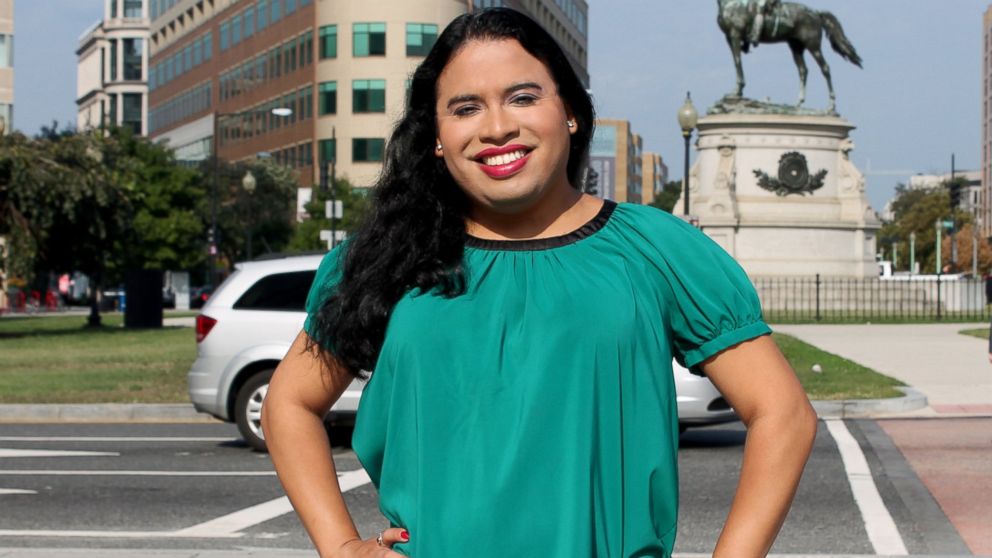
Last week, the Obama administration made a historic hiring: Raffi Freedman-Gurspan is the first transgender person hired to serve the White House. She’s not only the first transgender person, but also the first transwoman.

Freedman-Gurspan comes with a lot of experience to her new role: She had previously served as policy adviser at the National Center for Transgender Equality, and will be the recruitment and outreach director on Obama’s staff.

While the administration has hired other transgender people to other government agencies, this is the first time a transgender person will work directly with the White House.

The hiring indicates that President Obama is becoming more comfortable in openly supporting the LGBT community: Earlier this year, he spoke out about ending conversion therapy for LGBT youth.


FDA Approves “Female Viagra” Addyi

The experimental drug flibanserin, made by Sprout Pharmaceuticals, is at the center of a regulatory controversy.

The experimental drug flibanserin, made by Sprout Pharmaceuticals, is at the center of a regulatory controversy.

Yesterday, the Food and Drug Administration (FDA) approved Addyi (also known by its generic name Flibanserin) for public consumption. The drug, produced by Sprout Pharmaceuticals, is being touted as a “female Viagra,” a way to “even the score” sexually against men (who have many option to treat waning sexual desire). In some circles, it’s seen as a big breakthrough for women’s sexual health.

Interestingly, Addyi is the first drug to specifically treat waning sex drives for both men and women. (Viagra solved a purely medical/physical issue rather than a psychological one.) Addyi targets the central nervous system, putting it in line with an antidepressant.

Addyi purports to help women with hypoactive sexual disorder (i.e. lack of sexual desire.) But it works on a woman’s mind instead of her body. Rather than facilitating blood flow to the genital region, as Viagra does, the drug takes a two-pronged approach:

Flibanserin targets two neurotransmitters in the brain that can help inspire sexual desire. The first is dopamine, which helps control the brain’s reward and pleasure centers and could help drive up our interest in sex. The second is norepinephrine, which affects parts of the brain that control our attention and our response to things in our environment and could help direct our attention to a sexual partner.

The ultimate goal is that a woman’s level of desire would increase over time.

(Side note: Apparently, Viagra was marketed to women in 2004. The drug did increase blood flow to the women’s genitals, but didn’t affect their level of sexual desire.)

But the drug isn’t completely out of the woods yet: there are still some concerns regarding side effects. Doctors and pharmacists will need to undergo specific training of the drug before dispensing it, and will need to keep track of the women who take it. The biggest side effects include low blood pressure, sleepiness and “sudden fainting,” especially when taken with alcohol. (I have to say, I don’t really understand the point of making a drug to help with sex that can’t be paired with alcohol, but that’s just me.)

There’s also an argument that the drug “doesn’t work safely enough to justify its approval:” Women who took the drug during clinical trials reported a 37% increase in sexual desire, which averaged out to not even two more “satisfying sexual experiences” per month. The boost over the placebo group was even smaller.

It’s expected that Addyi will be covered under most health insurance plans, requiring a co-pay, and will inhabit a price range similar to that of Viagra. The drug should hit the market as soon as October (i.e. less than two months), with some outlets reporting an exact date of Oct. 17th.

I have to say, I’m really curious to see how this will do. I want to see how well it’ll perform (heh) sales-wise, and how many women report the side effects. But most of all, I want to see how this drug will influence the female-desire drugs that will surely come after it.

The Boy Scouts Will Allow Gay Scout Leaders

'Boy Scout Handbook,' 1962 (Envisioning the American Dream)

‘Boy Scout Handbook,’ 1962 (Envisioning the American Dream)

The Boy Scouts of America will soon undergo a momentous change: The organization will begin to allow gay adults to serve as troop leaders. This follows a sea change of public opinion, and several years of declining Boys Scouts membership. Nothing on paper has been been implemented yet, but the change is expected to be officially announced soon.

However, there is a catch: Troops backed by religious institutions will be able to deny troop leaders on the basis of their sexual orientation. The Boys Scouts are conscious that many members come from within religious folds, and feel those world views must be honored, respected and given a place at the table.

Here’s some context on how long it’s taken the organization to begin embracing gay participants: The Boy Scouts of America were founded in 1910. Gay troop members have been allowed within the organization only since 2013 (a mere two years ago!).

It’ll be interesting to me to see whether we’ll see an upsurge in gay leaders (either statistically or self-reported), and how long it will take to become noticeable. I’m also curious about how this will effect the Boy Scouts’ overall membership, since the organization will be seen as a (somewhat) more inclusive space. (And I wouldn’t be surprised if they began rebranding as such.)

Misty Copeland is American Ballet Theatre’s First Black Principal Dancer

Misty Copeland in 'Swan Lake' (Vanity Fair)

Misty Copeland in ‘Swan Lake’ (Vanity Fair)

Last week, the American Ballet Theatre (ABT) in New York City promoted dancer Misty Copeland to principal. Copeland is the first Black woman to attain the level of principal (the highest level possible for a dancer) in ABT’s 75-year history. (ABT has previously had one Black man reach principal: Desmond Richardson, who achieved the level in 1997.) Since she’s considered a classical ballet dancer, this is all the more rare.

Copeland is considered to be a ballet prodigy since she began studying at age 13, and began dancing in pointe shoes a mere three months (!) later. She came to the larger public’s attention when she starred in the now-famous UnderArmour 2014 ad spot “I Will What I Want,” which featured her dancing. Since then, Copeland has written a biography and a children’s book, appeared on the cover of “Time” for their 2015 Top 100 list, and was the subject of a documentery, “A Ballerina’s Tale,” that premiered at the Tribeca 2015 Film Festival.

Copeland’s notable roles include the titular role in “The Firebird,” Swanhilda in “Coppélia,” and the dual roles of Odette/Odile in “Swan Lake.” The “Swan Lake” roles were significant for Copeland, and the rest of the ballet world:

It was a symbolically significant moment in American arts, in which a black woman danced the role of ballet’s famed white swan—and sold out all of her performances from the moment tickets went on sale months earlier.

Copeland became a member of ABT’s corps de ballet in 2001, and was promoted to soloist in 2007. She’ll start as principal dancer on August 1st.