#ThrowbackThursday: Loving v. Virginia, 1967

Mildred and Richard Loving (The New York Times)

Mildred and Richard Loving (The New York Times)

Virginia newlyweds Richard and Mildred Loving were arrested shortly after their wedding in 1958. The reason? As Life magazine would later put it, “the crime of being married.”

The Lovings had violated Virginia’s Racial Integrity Act of 1924, which banned interracial relationships and marriage. The couple avoided prison time be agreeing to leave Virginia and not come back for 25 years.

In 1964, the couple took their case to the American Civil Liberties Union (ACLU), which eventually went all the way to the Supreme Court. On June 12, 1967, the Supreme Court unanimously ruled that the Racial Integrity Act was unconstitutional. The decision made states’ anti-miscegenation laws unenforceable (though many of the laws remained on the books for years later).

Today, nearly 50 years later, the Loving v. Virginia case continues to resonate. In 2015, the decision was cited in Obergefell v. Hodges in arguments in favor of marriage equality to the case’s success. A documentary “The Loving Story” was released in 2011, and “Loving” was released in 2016 with Joel Edgerton and Ruth Negga as the historic couple.


The Philippines Might Get Access to Free Birth Control

Birth control pills (Salon)

Birth control pills (Salon)

Women in the Philippines might soon get access to free birth control.

The Philippine President Rodrigo Duterte signed an executive order for women of the country to receive free birth control, as well as access to further reproductive health services.

The order implements the Responsible Parenthood and Reproductive Health (RPRH) Act of 2012, which promotes family planning with the support of the state. It was signed into law that year. The order took 13 years to be signed into law (so it was introduced in 1999…yikes).

It’s estimated that there are currently 6M women without birth control within the country, with 2M women classified as poor. There are 24 live births per every 1K people, giving the country the 66th highest birth rate in the world. Considering that abortion is illegal, the need for some form of birth control is high:

More than half of all pregnancies in the Philippines are unintended, according to the Guttmacher Institute, and more than 90 percent of unintended pregnancies occurred in the absence of modern contraceptive methods.

Duterte’s goal is to completely eradicate any “unmet family planning needs” by 2018.

The U.S. Abortion Rate is at its Lowest Numbers Since 1973

Abortion protestors (FIUsm)

WASHINGTON – JANUARY 22: Pro-choice advocates participate in protest in front of the U.S. Supreme Court building January 22, 2010 in Washington, DC. Activists from across the nation gathered to commemorate the 37th anniversary of the Roe v. Wade Supreme Court decision, which decriminalized abortion in all fifty states. (Photo by Mark Wilson/Getty Images)Abortion protestors (FIUsm)

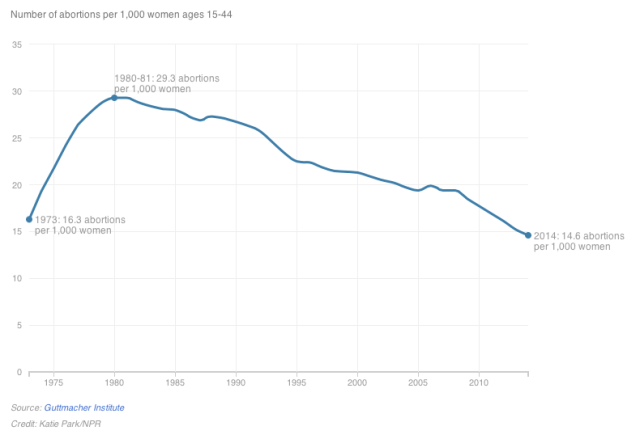
A recent study released by the Guttmacher Institute found that the U.S. abortion rate has fallen to its lowest rate since 1973.

The study claims that in 2014, the abortion rate is 14.6 abortions per ever 1K women of childbearing age (defined as ages 15-44). The rate peaked at 29.3 abortions per 1K women in 1980-1981. In 2013, the abortion rate “fell below 1M for the first time since the 1970s.”

Number of abortions per 1,000 women ages 15-44 (The Guttmacher Institute/NPR)

Number of abortions per 1,000 women ages 15-44 (The Guttmacher Institute/NPR)

The study also found that 12% of clinics had at least one patient who tried to self-induce her abortion. There was no correlation between the closing of abortion clinics and more restrictive abortion laws by state. In areas where more abortion clinics opened, there was not a higher abortion rate.

There appears to be a substitution effect at work, with other birth control methods taking the place of abortion. Most notable is that of the intrauterine device (IUD), which has gained in usage over the past several years.

But why 1973? 1973 was the seminal year where the U.S. Supreme Court handed down their decision on Roe v. Wade, which legalized abortion. It’s a good sign that women are using more birth control methods and not having to rely on abortion to get rid of unintended pregnancies.

Trump Bans Funding for International Organizations that “Promote” Abortion

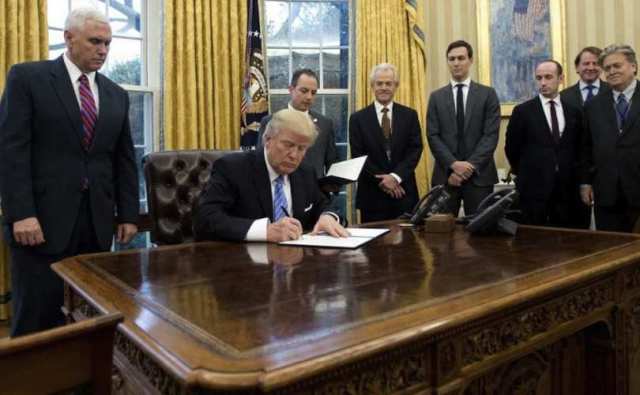
Trump signs international abortion ban (Lifesite)

Trump signs international abortion ban (Lifesite)

Well, that was quick.

On his third day in office, Trump showed his hand on female reproductive rights (not like we didnt already know…) He moved to block U.S. aid for organizations that “promote” abortion. In this case, “promoting” abortion means presenting it as a viable option and/or providing abortion counseling.

Similar rules have been in place since 1984, when President Ronald Reagan instituted the first rule known as the Mexico City policy. (The policy was named for the location in which Reagan announced it.) Depending on which party is in office, the bill has been repealed (by Bill Clinton and Barack Obama) and reinstated (by George H. W. Bush and George W. Bush).

Despite the fact that the policy has been around for over 30 years, it’s unclear whether it’s actually working:

Health experts say the policy has not led to a decline in abortions in the affected countries. Some research suggests that it has had the opposite effect: increasing abortion rates by forcing health clinics to close or to restrict contraceptive supplies because of lack of funding. Others say the restriction only heightens the risk of illegal and often unsafe abortions.

A study completed by the Stanford University School of Medicine in 2011 found that the Mexico City policy was “linked to increases in abortion rates in sub-Saharan African countries.” But the study also found that it was difficult to link a country’s abortion rates back to the policy.


Wonder Woman is No Longer a U.N. Ambassador

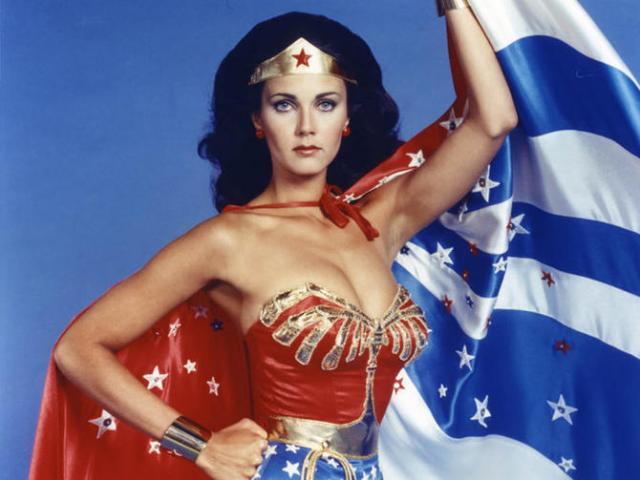
Lynda Carter as Wonder Woman (CNet2)

Lynda Carter as Wonder Woman (CNet2)


DC Comics superhero/feminist icon Wonder Woman has been ousted as the United Nations (U.N.)’s Honorary Ambassador for female empowerment. The character was officially unveiled as the ambassador on Oct. 21. The unveiling tied into the U.N.’s Sustainable Development Goal #5, which “seeks to achieve gender equality and empower all women and girls by 2030.’

Her last day as ambassador was Dec. 16. Girlfriend didn’t even have the job a whole two months.

The reason for the end of Wonder Woman’s ambassadorship is slightly unclear. Around 45K+ people showed their displeasure with the iconic character’s new role by singing a petition. But the U.N. claims they made the end date soon after the character’s debut in the role, and not as a result of the protests.


The Newest CoverGirl Wears a Hijab

CoverGirl Nura Afia (Today)

CoverGirl Nura Afia (Today)

CoverGirl is making strides in inclusivity in their marketing outreach this year. Earlier, the brand announced beauty blogger James Charles as its first male spokesmodel. Now, CoverGirl has tapped beauty vlogger Nura Afia. Afia wears a hijab as part of her Muslim faith.

The 24-year-old will be the first spokesmodel to wear a hijab. Afia will appear in a commercial, and will serve as an ambassador for the So Lashy! Blast Pro Mascara. She hopes that her wearing hijab will normalize Muslims for the rest of America.

Afia began posting makeup tutorials on YouTube in 2011. She now has 215K subscribers and 13M video views. But this isn’t Afia’s first major brand partnership: she’s previously partnered with Revlon.

Beauty that’s inclusive to Muslims is massive, and poised to grow even bigger. According to Ogilvy Noor, by way of The New York Times:

The Muslim personal cosmetics and care market is now worth more than $54 billion, a figure that is expected to reach $80 billion by 2020.

Wonder Woman Will Be the U.N.’s Honorary Ambassador for Female Empowerment

Lynda Carter as Wonder Woman (Vulture)

Lynda Carter as Wonder Woman (Vulture)

In addition to being the Amazonian Princess of Themyscira and civilian Diana Prince, Wonder Woman can add another title to her resume: United Nations’ Honorary Ambassador.

Wonder Woman’s promotion will kick off a campaign dedicated to women’s empowerment. This ties into the U.N.’s sustainable development goal 5, which promotes worldwide gender equality.

Though Wonder Woman will be used as a symbol of women’s empowerment throughout the world, it’s worth noting that most of the top U.N. jobs are held by men.

Wonder Woman will be formally announced as the honorary ambassador on October 21st, 75 years after her character first debuted. Actresses Lynda Carter, who’s played the character in the 1970s TV show, and Gal Gadot, who’ll depict the character in a big-budget DC Comics movie next year, are expected to attend the ceremony.

Trends: Emmys 2016 Diversity

Rami Malek, Emmys 2016 (Telegraph UK)

Rami Malek, Emmys 2016 (Telegraph UK)

The Emmy Awards aired this past Sunday night, honoring the best in TV. The twin themes  that popped out from the night were diversity and inclusion. And they played out in many ways.

Mr. Robot actor Rami Malek won Best Actor in a Drama Series, becoming the first Egyptian-American to do so. Malek also became the first non-white actor to win the award since 1998, when Andre Braugher won for Homicide: Life on the Street. On the actress side, Black-ish lead Tracee Ellis Ross was nominated for Best Actress in a Comedy Series. Though she didn’t win, Ellis was the first Black woman to be nominated for the award in 30 years; Phylicia Rashad was nominated in 1986 for The Cosby Show. Ellis was only the fifth Black woman ever to be nominated for Best Actress in a Comedy Series.

Inclusivity also prevailed behind the camera. Comedian Aziz Ansari and Alan Yang won Best Writing for a Comedy Series for Ansari’s Netflix series Master of None. (Ansari was also nominated for Best Actor in a Comedy Series.) Women directors were honored: Jill Soloway won Best Directing for a Comedy Series for Amazon’s Transparent, and Susanne Bier won Best Directing for a Limited Series, Movie or Dramatic Special for AMC’s The Night Manager.

Diverse narratives are gaining more traction. Transparent actor Jeffrey Tambor won Best Actor in a Comedy Series for the second consecutive year for his role as a transwoman.

It was good to see some progress made this year in terms of inclusion, but there’s still a long way to go.


Trends: Latex Dresses

Beyoncé, Met Ball 2016 (US Magazine)

Beyoncé, Met Ball 2016 (US Magazine)

The 2016 Met Ball (that is, the Metropolitan Museum of Art Costume Institute Benefit’s annual swanky party) took place this past Monday, and all eyes were on the stars to see who wore what. The theme “Manus x Machina: Fashion in an Age of Technology” ensured that attendees and fashion obsessives would see some futuristic outfits.

And what could be more futuristic than latex?

Beyoncé wore a light-pink long-sleeved beaded latex dress. Model Bella Hadid wore a tight black spaghetti-strap bustier and pencil skirt, designed by custom latex couturier Atsuko Kudo, to the after party.

The latex dress trend isn’t limited to real life. Taylor Swift wore a white two-piece latex outfit in her “Bad Blood” video, and the aforementioned Beyoncé has a bright red minidress as one of her current “Formation” tour costumes. Both of these were Kudo pieces.

But neither of the aforementioned ladies started this trend. That honor goes to Kim Kardashian back in 2014. She wore a peachy-pink Kudo creation (can you tell he’s got the custom latex market on lock?) to the Australian launch of her fragrance. Incidentally, her outfit was the identical forerunner of Hadid’s (though Kardashian has also worn the black version of the outfit).

Bella Hadid and Kim Kardashian (Wetpaint)

Bella Hadid and Kim Kardashian (Wetpaint)

Why is latex having a moment right now?

It’s possible that this is part of the long-range ripple effect from “Fifty Shades of Grey” that began ramping up last year. Everybody remembers (and was intrigued/titillated by) the playroom scenes, whether they read the book(s), saw the movie or both.

The book and movie’s success can be traced to many women’s hidden desires to be more sexually daring. However, in real life, some women may not feel comfortable completely putting themselves out there, sexually-speaking, in all their freak-flag glory. Donning a latex dress (or any fetishwear) can feel liberating, as if a woman is letting her “bad” side out to play. But it’s also safe in that the wearer can take it off at the end of the night (or session).

“Fashion Police” co-host Tim Gunn (also of “Project Runway” fame) hit the nail on the head when critiquing Beyoncé’s Met Gala look: “It has S&M written all over it.”

Well, yes. That’s sort of the point.


The HPV Vaccine Reduces the STD in Teen Girls by 64%

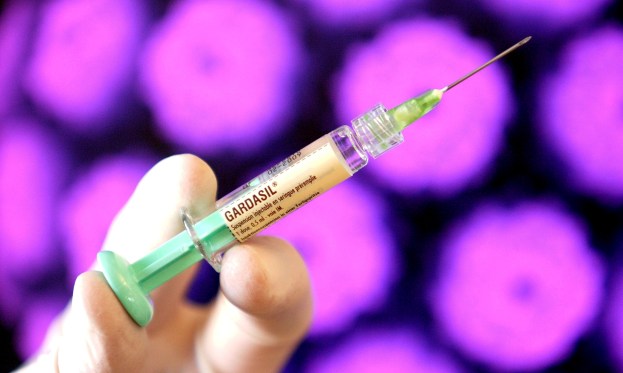
HPV vaccine (The Guardian UK)

HPV vaccine (The Guardian UK)

According to the Centers for Disease Control and Prevention (CDC), human papillomavirus (HPV) is the most common sexually transmitted infection (STI), and it’s estimated that most sexually active adults will get it at some point in their lives.

Fortunately, there’s a way to prevent the spread with the HPV vaccine. The vaccine has been around for ten years, so it’s a great time to amass some longitudinal data.

Just how effective is the HPV vaccine?

Earlier this year, “Pediatrics” released a study examining just that. Researchers looked at the HPV vaccine in teenage girls ages 14-19, and women ages 20-24. Effectiveness in the latter category resulted in a 34% decrease of the virus. That’s impressive, right? Effectiveness for teenage girls hovers around a 64% decrease. This thing is mad effective.

Obviously, the data shows that it’s best to get the HPV vaccine early in life. But unfortunately, the vaccine isn’t as widely known or used as it should be. Right now, only around 40% of teenage girls and 20% of teenage boys get the vaccine. (Yes, the vaccine is recommended for boys too.)

Getting the vaccine has ramifications beyond one’s teenage years: The virus can cause health issues such as genital warts and cancers affecting the genital areas. The HPV virus is particularly responsible for cervical cancer, which affects around 11K+ women a year.

Hopefully this data will persuade others to make getting the vaccine a top priority.