Trends: Companies Expanding Maternity/Paternity Leave Policies

Netflix 2014 logo (Under Consideration)

Netflix 2014 logo (Under Consideration)

A very positive trend has sprung up recently: Companies are their expanding parental leave policies. The main goal is to recruit more women with work-life balance policies, and to retain talent by allowing time off for family matters. Because trouble at home often means distracted employees and lower productivity. (I feel like that’s on a modern-day Mather Work Incentive poster somewhere.)

Big strides have been made this year: Consulting powerhouse Accenture bumped up its maternity leave policy to 16 weeks in March, which applies to both full-time and part-time employees. In April, Johnson & Johnson announced a new eight-week paid leave policy. In June, major bank Goldman Sachs began offering new fathers and “non-primary caregivers” four weeks of paid leave. (The company currently offers 16 weeks of paid maternity leave.) The U.S. Navy and Marines mandated an 18-week maternity leave policy, effective immediately, in July.

This trend has become especially prevalent in the tech industry, with a lot of changes occurring just this past month. In August, Microsoft recently announced a new parental leave policy, in which employees would get paid at 100% of their salary for 12 weeks. New mothers will have eight weeks of paid maternity leave, which, combined with disability leave, could entitle them to 20 weeks of paid leave.

Adobe’s policy also changed: Mothers will now receive 26 weeks of paid leave, up from the nine weeks off from the previous policy. It’ll be a combination of medical leave (10 weeks) and paternal leave (16 weeks).

Netflix announced they’re bumping up their maternity and paternity leave policies to an unlimited amount of time. New mothers and fathers are allowed to take as much time off as they like during a child’s first year, whether though birth or adoption. (Netflix isn’t a stranger to expanding time off: Employees already get unlimited vacation time.) But the policy isn’t all inclusive: It only applies toward salaried employees, so hourly workers aren’t able to take advantage of it.

It’ll be interesting to see if (when) other companies follow suit, and if paid parental leave will eventually be federally mandated. These are definitely steps in the right direction.




Ashley Madison Hackers Post the Site’s User Data

Ashley Madison homepage (Ashley Madison)

Ashley Madison homepage (Ashley Madison)

Happy Friday! Remember when cheating site Ashley Madison was hacked last month? And how the hackers threatened to release user data to the whole Internet?

Well, they’ve finally done it. The Impact Team, as the group of hackers is known, put the data online on the Dark Web, which can only be reached using specialized equipment. They dumped a jaw-dropping 9.7 GigaBytes (GBs) of data that went back to 2008.

(For context/scale, I have a 4 TeraByte (TB) external hard drive that I keep old school projects and work on. I’ve had that thing for over 6 years, and still haven’t filled it up. One TB is equal to .001 GBs. So you can imagine how voluminous this data breach truly is.)

There seems to be some disagreement over exactly how many users had data leaked. “CNN Money” claims 32M, while “Wired” and “Engadget” put the number closer to 37M.

As of July, Ashley Madison claimed to have 40M+ users.

Ashley Madison data dump (Gizmodo)

Ashley Madison data dump (Gizmodo)

Among the metrics leaked were users’  names, addresses and phone numbers. “Wired” looked into some initial data analysis:

A sampling of the data indicates that users likely provided random numbers and addresses, but files containing credit card transactions will yield real names and addresses, unless members of the site used anonymous pre-paid cards. One analysis of email addresses found in the data dump also shows that some 15,000 are .mil. or .gov addresses.

Passwords were broken by “hashing,” or breaking into the algorithm a site would use to protect passwords. The hackers used the “bcrypt” algorithm used in web development language PHP. This is usually a secure measure to protect passwords. But hey, at least Ashley Madison tried:

It’s notable, however, that the cheating site, in using the secure hashing algorithm, surpassed many other victims of breaches we’ve seen over the years who never bothered to encrypt customer passwords.

Have a great weekend, and go change your passwords!

FDA Approves “Female Viagra” Addyi

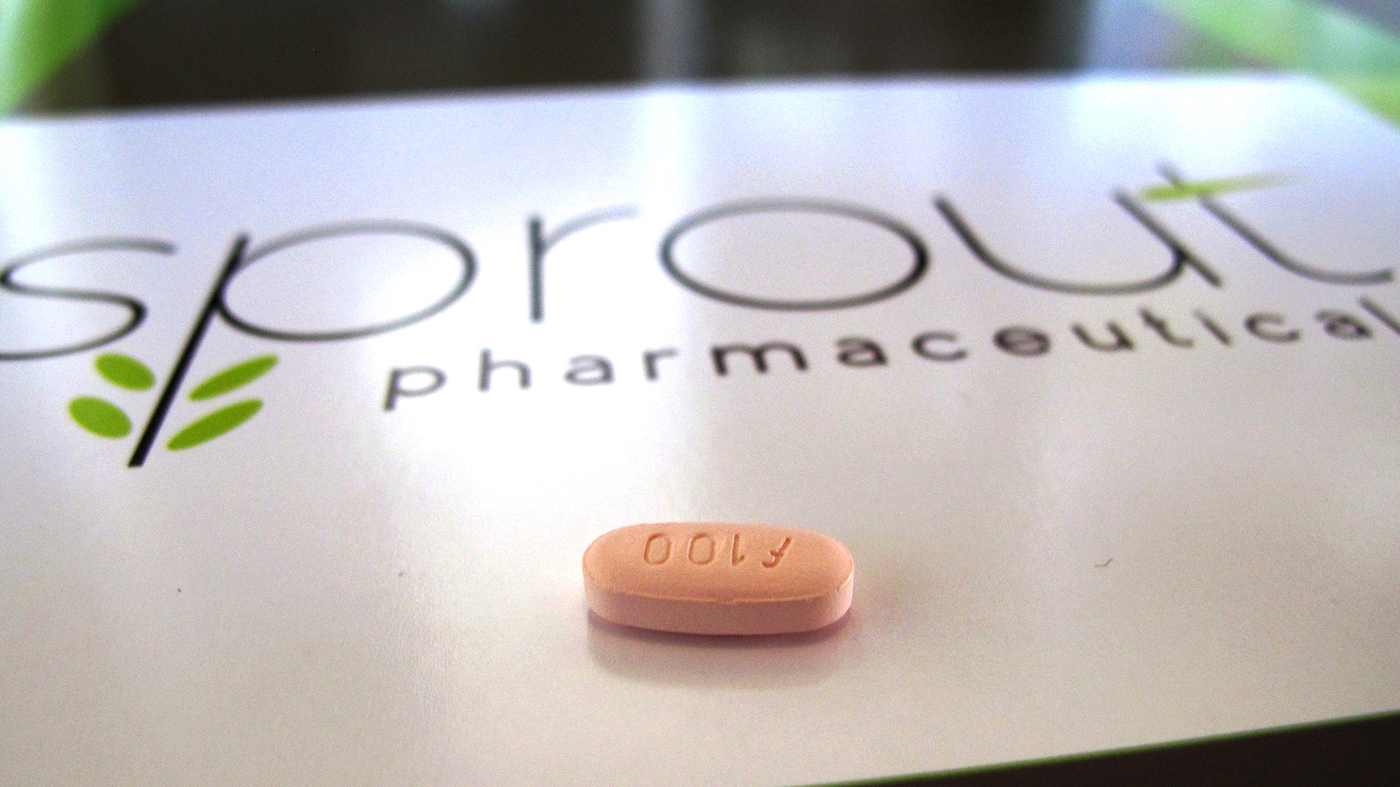
The experimental drug flibanserin, made by Sprout Pharmaceuticals, is at the center of a regulatory controversy.

The experimental drug flibanserin, made by Sprout Pharmaceuticals, is at the center of a regulatory controversy.

Yesterday, the Food and Drug Administration (FDA) approved Addyi (also known by its generic name Flibanserin) for public consumption. The drug, produced by Sprout Pharmaceuticals, is being touted as a “female Viagra,” a way to “even the score” sexually against men (who have many option to treat waning sexual desire). In some circles, it’s seen as a big breakthrough for women’s sexual health.

Interestingly, Addyi is the first drug to specifically treat waning sex drives for both men and women. (Viagra solved a purely medical/physical issue rather than a psychological one.) Addyi targets the central nervous system, putting it in line with an antidepressant.

Addyi purports to help women with hypoactive sexual disorder (i.e. lack of sexual desire.) But it works on a woman’s mind instead of her body. Rather than facilitating blood flow to the genital region, as Viagra does, the drug takes a two-pronged approach:

Flibanserin targets two neurotransmitters in the brain that can help inspire sexual desire. The first is dopamine, which helps control the brain’s reward and pleasure centers and could help drive up our interest in sex. The second is norepinephrine, which affects parts of the brain that control our attention and our response to things in our environment and could help direct our attention to a sexual partner.

The ultimate goal is that a woman’s level of desire would increase over time.

(Side note: Apparently, Viagra was marketed to women in 2004. The drug did increase blood flow to the women’s genitals, but didn’t affect their level of sexual desire.)

But the drug isn’t completely out of the woods yet: there are still some concerns regarding side effects. Doctors and pharmacists will need to undergo specific training of the drug before dispensing it, and will need to keep track of the women who take it. The biggest side effects include low blood pressure, sleepiness and “sudden fainting,” especially when taken with alcohol. (I have to say, I don’t really understand the point of making a drug to help with sex that can’t be paired with alcohol, but that’s just me.)

There’s also an argument that the drug “doesn’t work safely enough to justify its approval:” Women who took the drug during clinical trials reported a 37% increase in sexual desire, which averaged out to not even two more “satisfying sexual experiences” per month. The boost over the placebo group was even smaller.

It’s expected that Addyi will be covered under most health insurance plans, requiring a co-pay, and will inhabit a price range similar to that of Viagra. The drug should hit the market as soon as October (i.e. less than two months), with some outlets reporting an exact date of Oct. 17th.

I have to say, I’m really curious to see how this will do. I want to see how well it’ll perform (heh) sales-wise, and how many women report the side effects. But most of all, I want to see how this drug will influence the female-desire drugs that will surely come after it.

Jen Welter is the NFL’s First Female Coach

Jen Welter coaching the Arizona Cardinals (AZ Central)

Jen Welter coaching the Arizona Cardinals (AZ Central)

Late last month, the Arizona Cardinals announced a new hire to the their coaching staff, someone that brings plenty of experience. Jen Welter has coached linebackers and special teams for the Texas Revolution of the Indoor Football League. She brings 14 years of professional football experience during her time in the Women’s Football Alliance, and holds advanced degrees in psychology and sports psychology. She also won two gold medals playing for the United States on two separate occasions during the International Federation of American Football Women’s World Championship within this decade.

Welter will be the first woman to coach on a National Football League (NFL) team.

But she’s used to blazing trails: She was the first female coach for the Indoor Football League, another men’s professional sports league. Welter was hired to that position this past February.

As for her day-to-day work, CNN reports:

Welter will work with the Cardinals’ inside linebackers and will coach throughout training camp and the preseason as a training camp/preseason intern.

It’s fantastic that the NFL is continuing to break barriers: Earlier this year, the league hired Sarah Thomas, its first female official. The two actually met during a recent preseason game.

Planned Parenthood Hacks: By The Numbers

Planned Parenthood site outage (Planned Parenthood)

Planned Parenthood site outage (Planned Parenthood)

You may have heard that Planned Parenthood’s website got hacked earlier this week. But did you know it got hacked twice?

That’s right. It actually happened twice in one week. Planned Parenthood was first hacked this past Sunday night, and then again on Wednesday. The hacking on Sunday was performed by a group called 3301. The group hacked employees’ personal contact information and internal emails and files. According to 3301’s leader E, the breach was possible due to the organization’s “extremely outdated and broken” coding.

While previously unknown, this group holds some extreme anti-abortion views, and feels that what Planned Parenthood does is “a very ominous practice.” The hacking was prompted by some recent leaked videos showing Planned Parenthood officials “discussing the sale of aborted fetal tissue.”

3301 calls its members “social justice warriors.”

The hacking on Wednesday interfered with the organization’s usual flow of web traffic. It was a large “distributed denial-of-service” (DDoS), where users couldn’t access the site due to the server getting flooded with voluminous quantities of data.

(And for those who wish I’d write about something else this week: yes, I know I just covered another prominent website’s hacking, but I couldn’t let this one pass by unacknowledged.)

Here are the numbers behind the hacking:

1: day that Planned Parenthood took their own site offline

2: times the site has been hacked this week

2: Government agencies (Department of Justice and the FBI) investigating the data breaches

300: number of Planned Parenthood employees whose personal information has already been leaked

200K: number of people who visit Planned Parenthood’s site daily

2.7M: Number of people that Planned Parenthood helps in a given year

Kim Kardashian West’s Implanted Male Embryos: How Common Is It?

Kanye West and Kim Kardashian West (US Weekly)

Kanye West and Kim Kardashian West (US Weekly)

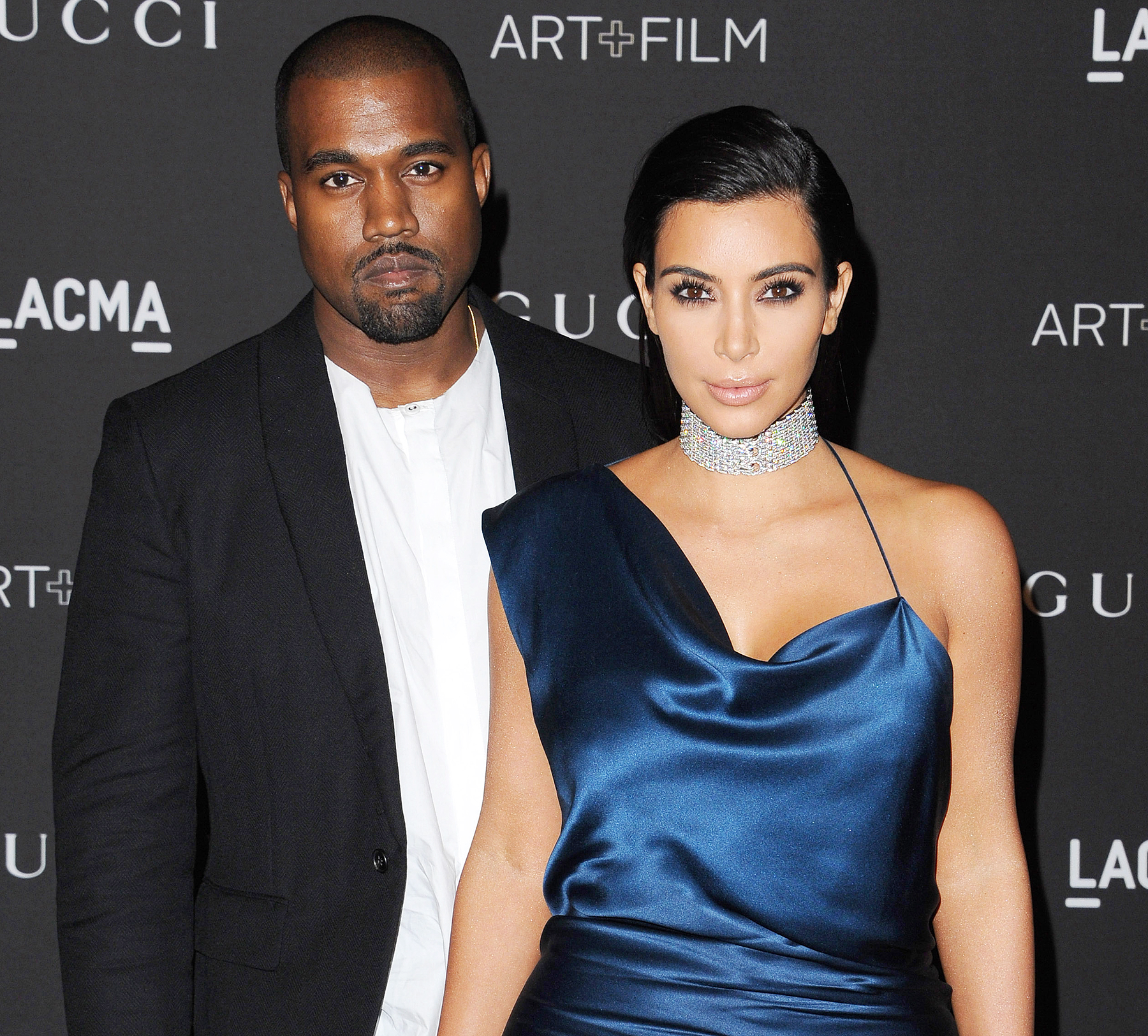
As the whole world knows by now, Kim Kardashian is pregnant with her second child, a boy, through in-vitro fertilization (IVF). Apparently, her husband Mr. Kim Kardashian (a.k.a. Kanye West) wanted a boy, or, as he calls it, “an heir.”

To achieve the desired result, Kardashian chose to only implant male embryos (and evidently, it worked). She most likely underwent preimplantation genetic diagnosis (PGD), a procedure which screens embryos for sex characteristics, looking for XX (a girl) or XY (a boy).

In 2012, it was estimated that PGD was used for 4K-6K procedures per year. In 2014, fertility treatment procedures, including but not limited to IVF, were estimated at around 165K+ per year. PGD is used with IVF, so PGD cases comprise between 2%-3% of total fertility treatments.

Interestingly, the U.S. is one of the only countries in the world within which PGD may used for “prenatal sex selection.” In many countries, its use is restricted to medical and chromosome-related issues.

Nobody can yet say if this will become a widespread practice. It does raise some questions about the ethics of calling the shots on choosing your child’s sex. But this isn’t a new concern: New York University’s Director of the Bioethics Program S. Matthew Liao wrote a paper on the subject in 2004 for the “Journal of Medical Ethics” while at Johns Hopkins University. About halfway through the paper, he acknowledges, “As far as I know, no one has tried to use genetic engineering for sex selection.” Things have certainly changed in 11 years. Welcome to your brave new world.

The Supreme Court Rules in Favor of Same-Sex Marriage

The White House (Mashable)

The White House (Mashable)

(Yes, I know this is old news by now, but I couldn’t start blogging again without acknowledging it. If only  could’ve seen into the future!)

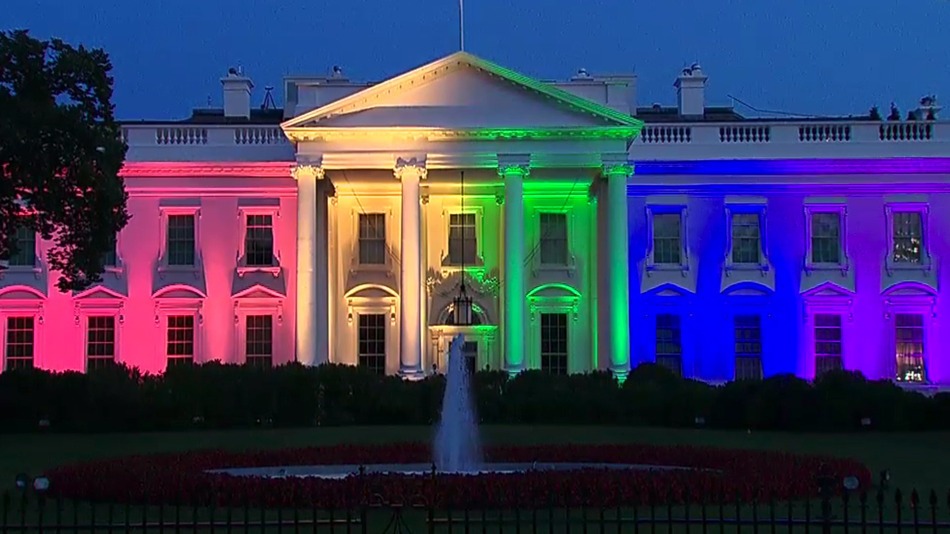
Friday, June 26th was a historic day that was a long time coming: The Supreme Court ruled to legalize same-sex marriages nationwide in a 5-4 decision. The decision overrules states that had previously decided not to allow same-sex marriage, and prompted many previously-against states to begin issuing marriage licenses and performing ceremonies.

Naturally, this is a wonderful decision, not just for the LGBT(QQIA+) community, but also for humanity as a whole. I think people have finally recognized that it’s time. And that it’s been time. Interestingly, there hasn’t been much resistance from state governments: Though Louisiana initially said it’d wait for federal intervention to comply, towns within the state eventually began offering marriage licenses.

As an ally, I’m glad I got to see the day, and hope this is the start of many beneficial changes.


Rachel Dolezal: How Many White People Have Passed As Black?

Rachel Dolezal (Young Cons)

Rachel Dolezal (Young Cons)

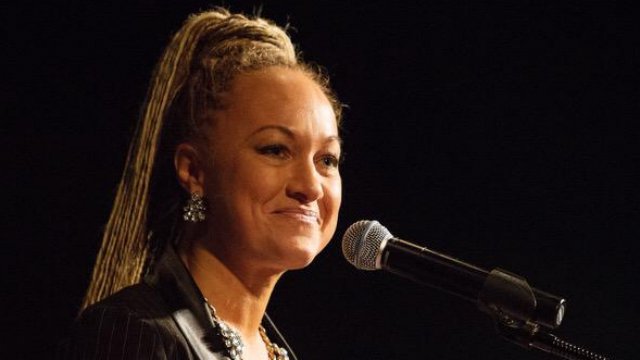
This is pretty insane: It came out last week that Rachel Dolezal, the president of the National Association for the Advancement of Colored People (NAACP) chapter in Spokane, Washington, isn’t black at all. Not one drop.

She’s actually white.

Her story came out after a reporter asked her point-blank if she was black. Dolezal dodged the question. Since then, other aspects of Dolezal’s life have come to light: attending Howard University, telling people her adopted black brother (who lived with her) was really her son, and teaching classes on African-American culture at Eastern Washington University. Dolezal also claimed to have received hate mail.

Dolezal began identifying as black in 2007, after years of identifying with the culture.

I wanted to see if there were any stats on white people passing as black in the larger culture. I don’t mean in terms of appropriating dress or mannerisms, but actually altering one’s physical appearance and living an elaborate lie.

And I couldn’t find anything. Shocker (but not really). This is such a strange situation that I’m not surprised there haven’t been enough subjects to be studied.

The only white person who’s done anything remotely similar was John Howard Griffin, author of “Black Like Me.” Griffin underwent physical changes, including darkening his skin under heat lamps, to pass for a black man and report on racial injustices in the South firsthand. But obviously, his motives were very different than Dolezal’s.

It’ll be interesting to see how Dolezal’s case plays out, and if she’ll drop her black identity now that she’s been exposed.

How Many Husbands Take Their Wives’ Last Names?

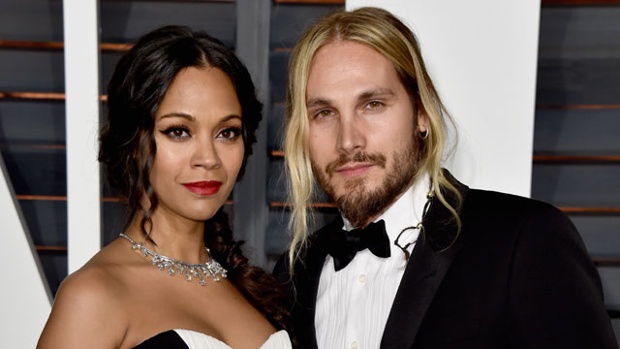
Zoe and Marco Saldana (KCCI)

Zoe and Marco Saldana (KCCI)

Happy Friday! Earlier this week, actress Zoe Saldana told “InStyle” that her husband Marco Perego wanted to take her last name, instead of having her take his. Saldana was initially hesitant:

I tried to talk him out of it. I told him, ‘If you use my name, you’re going to be emasculated by your community of artists, by your Latin community of men, by the world.’ But Marco looks up at me and says [in his Italian accent], ‘Ah, Zoe, I don’t give a sheet.’

Now, that’s a true man right there. Husbands taking their wife’s last name isn’t too common, at least anecdotally. But what about the data? Has it been tracked?

No, it hasn’t, at least not yet. I found several articles profiling couples who did it, but each article mentioned in some way that statistics weren’t tracked. Oh well. On the other hand, it’s a topic ripe for picking for a Ph.D. thesis. Any takers?

But Mr. Saldana (né Perego) made a huge impact. Meghan Blalock of “Who What Wear” puts his decision in context:

The storied history of women taking men’s last names in marriage is not just a trend or a matter of practicality—it’s a long-existing symptom of the patriarchal society in which we live, in which a marriage means that a woman is little more than a man’s property.

So his decision shows that he’s not just a traditionally masculine man, but that he has a sensitive side towards women and feminism, and isn’t afraid to show it. Pretty badass, right? Maybe we’ll see more men follow suit!

Thursday Trends: Whitewashing Asian Characters in Film

Emma Stone, 'Aloha' (Jezebel)

Emma Stone, ‘Aloha’ (Jezebel)

Let me be clear: this is not a good trend. At all. It should never have even started. And yet, here we are.

It’s still a problem.

Historically, Hollywood has always had a problem of “whitewashing,” i.e. casting white actors in roles specifically created for non-whites. The thinking is that whites are more “bankable,” but there aren’t many roles and opportunities for non-white actors as it is. So a white actor ends up taking a role from a non-white one, and many non-white people are deprived of seeing depictions of themselves on-screen.

This tends to happen a lot with Asian actors. Most recently, director Cameron Crowe came under fire for casting Emma Stone in his latest movie “Aloha.” Stone was cast as a character named Allison Ng, whose ancestry is one-quarter Chinese and one-quarter Hawaiian. (Having white and Asian or Pacific Islander ancestry is traditionally known as “hapa,” deriving from the Hawaiian Pidgin word for half. So Ng’s heritage would be termed “hapa” or “hapa haole,” to include the European ancestry.)

Look at the picture above and tell me with a straight face that Emma Stone resembles anyone remotely half-Asian.

Fortunately, Crowe caught some heat for this decision, and has publicly apologized for his choice. (But he covered his ass a little, saying that the character was meant to be frustrated that her features belied her mixed-race heritage.) But Crowe could’ve easily cast an Asian or mixed-race Asian for his film. He just chose not to.

This whitewashing of Asian characters tends to come up every few years. 2010’s “The Last Airbender” received a public outcry when it was revealed that the cast was mostly non-white actors, save for Dev Patel. (The debacle coined the term “race bending.”) This was odd considering that the TV series (on which the movie was based) was set in a world with obvious Asian elements, and it was animated using anime influence.

The 2008 movie “21” centered on the real-life story of the MIT Blackjack Team, a group of current and former students who beat the casinos at their own game by counting cards. Though many of the group were of Indian and Asian descent, the movie whitewashed the cast, using mostly Caucasian actors.

And then there are the times when white actors are actually put in yellowface. 2012’s “Cloud Atlas,” which had the ensemble actors playing various characters, actually had two examples of this, and took it past the point of no return: Jim Sturgess (who was also in “21”) and James D’Arcy both played Korean men at one point. Sturgess and D’Arcy are both white men, but they both spent extensive time in makeup to more realistically resemble Asian men.

This is far from a new problem. The 1956 film “Teahouse of the August Moon” featured legendary actor Marlon Brando as Japanese villager Sakini, donning full-on yellowface to physically embody the role. And everyone who’s seen 1961’s “Breakfast at Tiffany’s” remembers Mickey Rooney as Holly Golightly’s Japanese neighbor I.Y. Yunioshi, who, seen through modern eyes, was a jaw-droopingly offensive caricature. (“The New York Times” review of the film called Rooney “broadly exotic.”) Fortunately, the distance of time and perspective have allowed people to see that these portrayals were very offensive towards Asians, and it was wrong to a) write/portray the characters in such stereotypical ways, and b) cast actors not of the specific ethnicity to play these parts.

But maybe the message isn’t sinking in as much as it should be: Blonde, Caucasian actress Scarlett Johansson will star in DreamWorks’ adaptation of the anime title “Ghost in the Shell.”

Here’s the thing: There are so many asian and mixed-Asian actors out there. Kristin Kreuk, Chloe Bennet, Olivia Munn, John Cho, Steven Yeun, Daniel Henney, Harry Shum Jr., Sendhil Ramamurthy. And those are only the ones I didn’t need to Google off the top of my head. Point being, there’s massive opportunity here for diverse casting that reflects reality. So let’s get on it!