#ThrowbackThursday: Viola Davis Wins an Emmy, 2015

Viola Davis, Emmys 2015 (Betches)

Viola Davis, Emmys 2015 (Betches)

At the Emmys this past weekend, actress Viola Davis was nominated for Best Actress in a  Drama Series for her lead role in ABC’s “How to Get Away with Murder.” Though she didn’t win on Sunday night, she won the award in 2015, and made history in the process. Davis became the first Black woman to win the Best Actress award.

Crazy that seemingly simple milestones are still only now being surpassed.

Trends: Latina Actress Firsts


Melissa Villasenor (Remezcla)

Melissa Villasenor (Remezcla)

Earlier this week, new additions to the “Saturday Night Live” cast were announced for the upcoming season. Among the three new cast members is comedian Melissa Villasenor. Villasenor’s hiring is significant because she’ll be the first Latina cast-member since “SNL” debuted 41 years ago.

How in the hell did it take Forty. One. Years?!?!?!

Villasenor’s hiring is just the latest achievement for Latinas in the entertainment industry, and she’s not the first to bust down a barrier.

Mexican actress Dolores del Rio worked in Hollywood from the 1920s until the ’40s, and achieved cross-over success with American audiences. She was the first Mexican actress to do so, and she worked with Hollywood luminaries such as Fred Astaire. (Fun fact: In the 1933 film “Flying Down to Rio,” del Rio danced with Astaire in the same film where he first paired with Ginger Rogers.)

Actress Rita Moreno overachieved with the firsts. Not only did she win the Best Supporting Actress Oscar in 1961, but she won the same award at the Tonys in 1975. Moreno went on to be the second person ever to get the EGOT honor (that is, she won an Emmy, Grammy, Oscar and Tony).

Villasenor’s hiring opens the door for more diversity at “SNL,” but more Latina achievement in entertainment.


#ThrowbackThursday: Rita Moreno, 1961

Rita Moreno, 1961 (Pinterest)

Actress Rita Moreno poses with her Oscar after she was named best supporting actress at the Academy Awards in Los Angeles on April 9, 1962. She won for her roll in “West Side Story

In 1961, actress Rita Moreno won the Oscar for Best Supporting Actress for her portrayal of Anita in “West Side Story.” She was the first Latina actress to win that award.

Moreno didn’t stop there: In 1975, she won the Tony for Best Supporting Actress for “The Ritz.” And she was the first Latina actress to win that award as well.

Two years later, Moreno became the second person ever to achieve the EGOT: winning an Emmy, Grammy, Oscar and Tony. She’s continued working steadily and blazing trails today.

Idris Elba Makes History at the 2016 SAG Awards

Idris Elba at the 2016 SAG Awards (LA Times)

Idris Elba at the 2016 SAG Awards (LA Times)

The world’s hottest man (not editorializing, this is a fact and everyone agrees) made history Saturday night at the annual Screen Actors Guild (SAG) Awards.

Idris Elba (you know him as Stringer Bell from “The Wire”) not only became the first man to win two SAG awards in one night; he became the first African-American man to do so. Elba won for Best Male Actor in a Supporting Role in a Motion Picture for “Beasts of No Nation,” and for Best Male Actor in a Television Movie or Mini Series for “Luther.” This is especially impressive as it’s the first year he was nominated for a solo acting award. Go Idris!

But Elba’s wins made a splash for another, more sobering reason: He’s the only film winner that wasn’t nominated for an Oscar. His fellow winners (Leonardo DiCaprio for “The Revenant,” Brie Larson for “Room,” and Alicia Vikander for “The Danish Girl“) are all nominated. With the conversation around the Oscars’ diversity occurring for the second year in a row (#OscarsSoWhiteRedux), it’s worth noting for the future.

With Queen Latifah (“Bessie“), Uzo Aduba (“Orange is the New Black“), and Viola Davis (“How to Get Away with Murder“) also winning awards, Elba welcomed us all into the future with the following words:

“Ladies and gentleman, welcome to diverse TV.”

I, for one, cannot wait to see how things progress.

Elle’s Women in TV List Is Most Diverse Ever

Priyanka Chopra, %22Elle%22 (Tribune)

Priyanka Chopra, “Elle” (The Express Tribune)

Fashion magazine “Elle” doesn’t exactly have the best track record in terms of showcasing diverse women. Over the years, they’ve lightened Gabourey Sidibe’s skin, and photographed Mindy Kaling in close-up. (Incidentally, Kaling was photographed for a cover of the Women in TV list for 2014.) But it looks like they’re finally getting it: The magazine’s 2016 Women in TV list is its most diverse yet, and three of its five cover stars are women of color.

Taraji P. Henson (from FOX’s “Empire”), Viola Davis (ABC’s “How to Get Away With Murder”), and Priyanka Chopra (ABC’s “Quantico”) each received their own special cover. And none are in closeup or otherwise “hidden.”

This is heartening step forward for non-white women to see themselves represented and recognized in mainstream fashion magazines. I certainly hope it lasts and grows from here.

All of the Oscar Acting Nominees Are White. WTF?


Oscars 2016 Best Actress Nominees (Reuters)

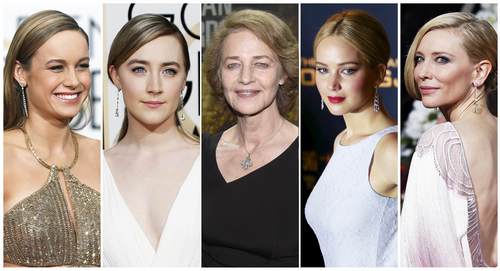
Oscars 2016 Best Actress nominees (Reuters)

Last week, the Oscar nominations were announced. Selected by the Academy of Motion Picture Arts and Sciences (AMPAS), the winners will be revealed Feb. 28. But this year continued a disturbing trend that began last year: Not one of the nominees in any of the acting categories (Best Actress, Best Actor, Best Supporting Actress, Best Supporting Actor) were people of color (POC).

I use the word “disturbing” as it seems the Academy is determined to ignore stories and narratives that don’t fit within their very narrow worldview. It’s becoming increasingly clear that non-white stories are not only valuable (as we knew already), but make bank, both in terms of box office and in social influence. (See this past year’s examples of TV smash “Empire,” and movies “Straight Outta Compton” and “Dope.”) The Academy needs to wake up and see that rewarding diverse stories can only help their bottom line.

In terms of the numbers, here are some of the most recent POC nominees (counted if they didn’t win) and winners:

Best Actress:

Winner: Halle Berry (“Monster’s Ball,” 2001)

Nominee: Quvenzhane Wallis (“Beasts of the Southern Wild,” 2012)

Best Actor:

Winner: Forest Whitaker (“The Last King of Scotland,” 2006)

Nominee: Chiwetel Ejiofor (“12 Years a Slave,” 2013)

Best Supporting Actress:

Winner: Lupita Nyong’o (“12 Years a Slave,” 2013)

Nominee: Taraji P. Henson (“The Curious Case of Benjamin Button,” 2008)

Best Supporting Actor:

Winner: Djimon Hounsou (“Blood Diamond,” 2006)

Nominee: Barkhad Abdi (“Captain Phillips,” 2013)


Female/POC Video of the Year Winners at the MTV VMAs: By The Numbers

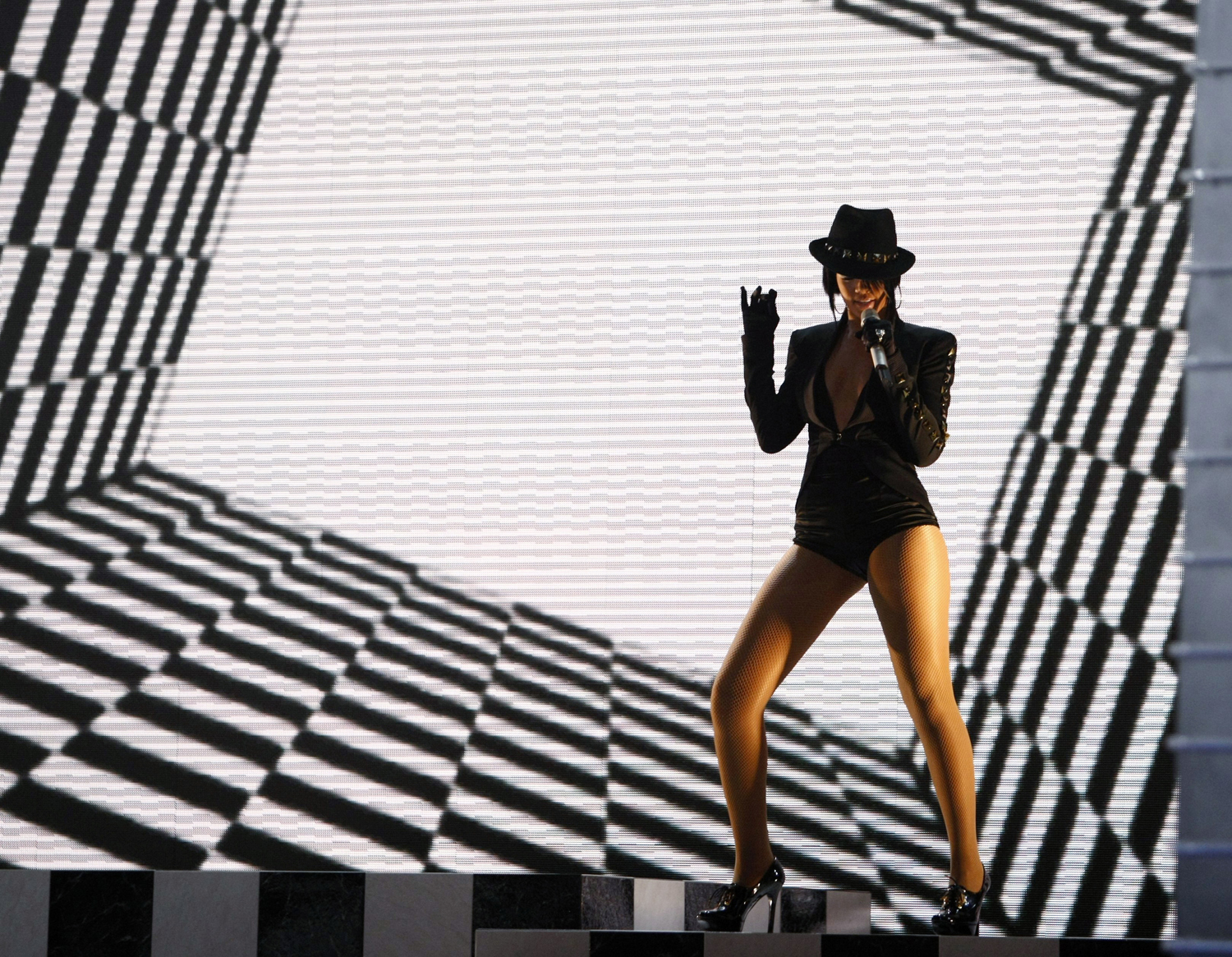
Singer Rihanna performs "Umbrella" at the 2007 MTV Video Music Awards in Las Vegas September 9, 2007. Rihanna won the award for Monster Single of the Year for the song. REUTERS/Mike Blake (UNITED STATES)

Singer Rihanna performs “Umbrella” at the 2007 MTV Video Music Awards in Las Vegas September 9, 2007. Rihanna won the award for Monster Single of the Year for the song. REUTERS/Mike Blake (UNITED STATES)

When the nominees for MTV’s Video Music Awards (VMAs) were announced earlier this summer, acclaimed rapper Nicki Minaj pointed out the glaring absence of women of color in the Video of the Year category. She had a point: The video for her song “Anaconda” broke VEVO viewing records, racking up 19.6M+ views in 24 hours, and propelled a huge cultural impact. (I know you know of at least one person who dressed in one of Nicki’s outfits for Halloween.) To have Minaj’s video snubbed ignores all of those not-insignificant achievements.

I had a sneaking suspicion that the numbers were pretty dismal, not just for women performers of color, but also for women performers in general. I wanted to see exactly how skewed the numbers were, so I looked up the data.

First, some context:

31: Years the Video of the Year Award has been presented (this year will be the 32nd)

69: Number of solo musicians who’ve been nominated

16: Number of solo musicians who’ve won

67: Number of groups who’ve been nominated (including feature artists, not counting 2015 nominees)

15: Number of groups who’ve won (including feature artists)


Let’s look at the stats of the women:

13: years where women solo artists or groups won

0: years after the award began that the first woman artist was nominated (Cyndi Lauper in 1984, nominated during the Award’s first year)

6: years after the Award began that the first woman artist won (Sinead O’Connor in 1990)

4: times Madonna has been nominated

1: time Madonna has won (1998)


And the stats of women of color:

9: years after the Award began that a female group of color was nominated (En Vogue in 1993)

11: years after the Award began that a female group of color won (TLC in 1995)

1: times a women of color group won (TLC in 1995)

  • If you counted the “Lady Marmalade” group who won in 2001, which had Lil’ Kim, Missy Elliott, and Mya, the number goes up to 2.

1: time Missy Elliott has been a double-nominee in the category (2001)

2: winners that have won twice (Missy Elliott in 2001 and 2003, Rihanna in 2007 and 2012)

1: time that Beyoncé has won (2009)

2: times that Beyoncé has been nominated, not counting her 2015 nomination (2007 and 2009)


You don’t have to be a math genius to see that Minaj was correct about the institutional bias in the music industry with regards to awards, and that this should not be tolerated.

This year’s VMAs will air on Sunday, Aug. 30th.

#ThrowbackThursday: TLC at the MTV VMAs, 1995

TLC at the 1995 MTV VMAs (NY Daily News)

TLC at the 1995 MTV VMAs (NY Daily News)

In 1995 (twenty years ago!), pop sensation TLC won the Video of the Year Award at the MTV Video Music Awards (VMAs). This was pretty special for a couple of reasons: Not only were T-Boz, Left Eye, and Chili the first all-women group to win the award, they were also the first women of color to do so.

They’re still the only all women-of-color group to win the coveted award. (The next closest group was the “Lady Marmalade” quintet from 2001, whose three out of five members were women of color.)

When the Video of the Year nominations came out earlier this year, star rapper Nicki Minaj rightly called out the nominations for their lack of diversity. (Beyoncé was the only woman of color nominated this year, up for her “7/11” video.) Let’s hope the music industry heeds her call, and ups the diversity quotient in the future. It’s absurd that it’s two decades from TLC’s historic win, and we still have to have this conversation.

American Ballet Theatre Promotes Filipina-American Stella Abrera to Principal Dancer

Stella Abrera (Ballet UK)

Stella Abrera (Ballet UK)

By now, I’m sure you’ve heard that New York City’s American Ballet Theatre (ABT) recently promoted dancer Misty Copeland to principal, making her the first Black principal in the company’s 75-year history. But that wasn’t the only important promotion that was made.

Stella Abrera became the first Filipina-American to ascend to the rank of principal. (Two promotions, two history-makers this round for the ABT, if you’re keeping track.) She was born in the Philippines and moved to the U.S. when she was four years old. Beginning in Pasadena, Abrera also studied ballet in San Diego and Sydney, Australia. She joined ABT in 1996, and became a soloist in 2001. Abrera’s various roles have included the titular role in “Cinderella,” Emilia in “Othello,” and Clara and The Snow Queen in different versions of “The Nutcracker.”

Ballet is an art form notorious for having little diversity. I hope Abrera’s promotion (and Copeland’s) opens the door for more non-white dancers.


Diversity Amongst Principal Dancers in Top Ballet Companies: By The Numbers

San Francisco Ballet's Yuan Yuan Tan and Davit Karapetyan in George Balanchine's 'Scotch Symphony,' 2012 (Odette's Ordeal)

San Francisco Ballet’s Yuan Yuan Tan and Davit Karapetyan in George Balanchine’s ‘Scotch Symphony,’ 2012 (Odette’s Ordeal)

It’s a well-known fact that classical ballet companies aren’t known for their diversity. With the news that American Ballet Theatre (ABT) dancer Misty Copeland has been promoted to principal, I was curious to see just how (non-) diverse the major ballet companies are.

First, I identified the top classical ballet companies in the U.S.: ABT, New York City Ballet (NYCB), San Francisco Ballet, Pacific Northwest Ballet, and Houston Ballet. (I didn’t look at Chicago’s Joffrey Ballet because the company doesn’t use traditional levels, as far as I could tell.)

Next, I looked at each company’s roster, looking for diversity. I decided to narrow my search to solely the principal dancers to save time. I then made a spreadsheet of my findings:

Principal Dancer Diversity at Top Ballet Companies Excel Spreadsheet

Principal Dancer Diversity at Top Ballet Companies Excel Spreadsheet

The first glaring thing is none of the companies have any Black principals at this time. (Copeland will change that when she begins her new position in August.) Every company listed has at least one principal of Asian descent, and San Francisco has two.

Here’s how the various companies break down.

American Ballet Theatre (ABT):

ABT has 15 principal dancers. Four Latino/Latina dancers make up 25%+ of the company’s diversity.

Houston Ballet:

Houston Ballet has the smallest group of principals with just eight dancers. The one Asian dancer and one Latina dancer combine to make up 25% of the diversity.

New York City Ballet (NYCB):

NYCB has the highest number of principal dancers at 24. Latino/Latina dancers comprise 12%+. Though not noted above, NYCB also features one dancer of South Asian descent.

Pacific Northwest Ballet:

This company has the worst diversity score. No Black or Latino/Latina dancers, and only one Asian dancer, in a group of 12 principals.

San Francisco Ballet:

With six dancers among 20 principals, San Francisco Ballet’s Latino/Latina contingent make up 30% of that company’s diversity, the largest of the studied cohort. Though not noted above, the company also features one dancer of South Asian descent.