(Reversible) Male Birth Control Could Be Available in 2018

Male birth control (The Chicago Tribune)

Male birth control (The Chicago Tribune)

Whoa! Scientists recently made a discovery that puts us nearer to a male birth control method. And said method might even be available by 2018!

Here are the deets: Scientists at the Parsemus Foundation have developed a “non-hormonal male contraceptive,” which they’re calling Vasalgel. It’s a gel which gets injected into a man’s testicles. Once inside, the gel forms a protective barrier that prevents sperm from leaving the vans deferens (located inside the testicles).

Vasalgel explainer graphic (Tech Times)

Vasalgel explainer graphic (Tech Times)

So far, the gel has only been through animal testing, specifically on rabbits. Of the 12 rabbits tested, 11 revealed no traces of sperm within their semen within 29 days of receiving the injection. (That twelfth rabbit’s semen cleared of sperm soon after.) The effect endured throughout the 12-month study.

Another important aspect: it’s reversible! Scientists were able to inject a second gel into seven of the rabbits, and their sperm “rapidly” returned.

What does this mean for human men? It looks so promising, right? Unfortunately, we’ll have to wait a couple of years. Scientists now need to conduct a human trial, which could happen later this year. Of course, the results will need to be duplicated to get the greenlight. But who knows? Hopefully men around the world will be able to get this procedure done at their doctor’s office within the next five years.

The Pentagon Will Pay to Freeze Troops’ Sperm and Eggs

Military troops (The Political Insider)

Military troops (The Political Insider)

Family-friendly policies have been proliferating workplace culture within the past year, and now there’s another company to add to that list: the Pentagon.

The Defense Department will a pilot program that allows troops to freeze sperm and eggs in an effort to retain service members. This policy is especially aimed at women: After 10 years of service (which would place a woman in her late 20s, assuming she enlisted when she was 18), women’s retention rate is 30% less than that of men’s. The cost is estimated to be around $150M for five years, or  $30M per year.

The move comes as the Defense Department noted changing policies that allowed for longer maternity leaves and “improved child care.” After creating a plan, the Defense Department will outline a plan, and will evaluate two years after implementation. The Defense Department is following in the footsteps of certain Silicon Valley companies such as Facebook, which recently began offering female employees the option of freezing their eggs.

So far, the Defense Department is the only government agency that will allow freezing sperm and eggs within their healthcare policy.

It’ll be interesting to see how the pilot program goes, and how it changes the quality of life for military members.

Are “3-Parent Babies” Ethical?

Human embryos (Bloomberg)

Human embryos (Bloomberg)

The genetic engineering future is here, and we’ve come to an important initial step: Is it ethical to create babies using DNA from three parents?

Scientists say “yes,” provided there are certain conditions. Said conditions were laid out in a report put out last week by the National Academies of Sciences, Engineering and Medicine:

Scientists would have to perform extensive preliminary research in the laboratory and with animals to try to make sure it is safe. And then researchers should initially try to make only male babies, because they would be incapable of passing their unusual amalgamation of DNA on to future generations.

The main goal of creating a “three-parent baby” would be to make a “genetically related child without risk of passing on a disease.” This would be done using mitochondrial replacement technique (MRT), which combines genetic material from two women and one man. Mitochondrial disorders are only passed down by women, so one women’s genetic material would substitute for the other one’s. (The defective material would be completely removed.)

Naturally, there are many implications (social, sexual, medical) for these experiments, and it’ll be interesting to see how things proceed. The UK introduced a bill on this same subject last year, and recently received approval to begin mitochondrial transplants.


Trends: Opening Up About Miscarriages

Mark Zuckerberg and Priscilla Chan, 2015 (Business Insider)

Mark Zuckerberg and Priscilla Chan Zuckerberg (Business Insider)

When Facebook founder Mark Zuckerberg announced that his wife was pregnant with their first child last summer, he made another important statement: that his wife Priscilla had endured three miscarriages over the course of three years.

It’s a huge thing to acknowledge, especially since it seems that any narrative other than an easy pregnancy is given short shift. I applaud Zuckerberg for speaking up about what he and his wife went through, and what many more people work through.

But he hasn’t been the only one. Lately, many celebrities/people with social influence have been speaking up about that painful time in their lives.

Actress Eva Amurri Martino experienced a miscarriage as well, and spoke about it publicly two weeks after Zuckererg’s announcement. Martino’s miscarriage occurred around nine weeks after conception. Earlier this year, actress Kimberly McCullough revealed that she’d suffered a miscarriage last year, losing her baby at 22 weeks.

Shining a light on something helps to normalize it, and hopefully these confessions will encourage others to open up about their personal experiences. We need to keep talking about miscarriages to destigmatize them.

#ThrowbackThursday: Mark Zuckerberg and Pregnant Priscilla Chan, 2015

Mark Zuckerberg and Priscilla Chan, 2015 (Business Insider)

Mark Zuckerberg and Priscilla Chan Zuckerberg (Business Insider)

On July 31, 2015, Facebook founder Mark Zuckerberg announced on (where else?) Facebook that he and his wife Priscilla were expecting a baby girl. He also revealed that the couple had weathered three miscarriages in the span of two years.

Zuckerberg rarely posts personal things on his own site, so this was a break from routine for him. The confession earned him praise.

The Zuckerbergs’ daughter Max was born on Dec. 1, 2015.

Zika Virus Linked to Birth Defects

Mosquito (NPR)

Mosquito (NPR)

Earlier this month, the Centers for Disease Prevention and Control (CDC) released a travel warning for pregnant women. They’ve issued the warning for 14 countries where the Zika virus has been confirmed to be transmitted.

Transmitted through bites of infected mosquitos, the Zika virus symptoms include fever, rashes and red eyes. It’s also been linked to birth defects.

Brazil was the first country to report birth defects linked to Zika. Specifically, the virus manifests as microcephaly, where newborns will have an unusually small head that leads to abnormal brain development. Over 2.4K cases of newborns affected by Zika were recorded in 2015, up from only 147 cases in 2014. This was a 1,532%+ year-over-year increase.

And the U.S. is no longer exempt from Zika’s reach: A baby with microcephaly was confirmed to have the virus. The baby was born in Hawaii last week.


Planned Parenthood Endorses Hillary Clinton

Hillary Clinton (The Washington Times)

Hillary Clinton (The Washington Times)

Planned Parenthood has endorsed a candidate for the primary election: Hillary Clinton, the only woman running for the Democratic nomination. This is the first time in Planned Parenthood’s 100-year history that the organization has endorsed a candidate.

For this who’ve been living under a rock, Planned Parenthood provides a number of serves for womens’ reproductive health, including birth control, Pap smears and abortions.

It’s becoming increasingly clear that women’s issues will take up a prominent share of issues discussed leading up to this year’s election. Last week, Republicans in the Senate voted to defund Planned Parenthood. Thankfully, they didn’t get very far, since President Obama vetoed it.

I hope this endorsement brings out women (and men!) to the polls who might not’ve voted otherwise come November.


Birth Control Is Now Available Over The Counter in Oregon

Birth control pills (Salon)

Birth control pills (Salon)

Good news for those who may not have insurance, or don’t want to visit the doctor: Birth control is (slowly) becoming available over-the-counter at your nearest pharmacy. That’s right, soon (depending on where you live) you won’t need a prescription.

Right now, the service is only available in Oregon, and it kicked into effect Jan. 1st of this year. Here’s how it works: A woman can walk into her local pharmacy, and fill out a questionnaire about her health. If all systems go, she can get birth control. If the pharmacist refuses to supply her on the grounds of religious reasons, the pharmacist is required to provide suggestions as to where the customer can find birth control.

This all applies if the woman is over 18 years old. If she’s under 18, she’ll still need a doctor’s prescription, though this standard will be relaxed at some point in the future.

It’s also pretty significant that a woman signed this into law: Oregon’s governor Kate Brown signed the bill into law last July.

But Oregon might not be the only state with this law in place for long: California is working out its own law, which is set to go into effect in March. And Colorado and Washington have introduced similar laws within their own respective states. Let’s hope the other 46 states soon see the light and follow suit.


China’s (Now Ended) One-Child Policy: By The Numbers

Chinese One-Child Policy poster (The Galloping Beaver)

Chinese One-Child Policy poster (The Galloping Beaver)

Most people have heard of China’s infamous one-child policy. it’s exactly what it sounds like: each married couple is only allowed to have one child.

Now the policy has ended. Actually, it ended on Jan. 1st, less than a week ago.

A lot of people don’t know the story behind the concept, and why it was initially implemented. Here are some numbers that made the one-child policy look like a sensible idea at the time:

China’s total population:

1960: 667.1M

1970: 818.3M

China’s population grew 151.2M in 10 years, or at the rate of 15.12M per year. The government was worried that the population would continue growing exponentially at the same rate, with the country eventually becoming unsustainable.

Fertility rate:

1960: 5.76 births/1 woman

1970: 5.47 births/1 woman

The fertility rate stayed stable (and strong) throughout the 1960s.

Crude birth rate:

1960: 20.9

1970: 33.4

This metric shows the “number of of live births occurring during the year, per 1,000 population estimated at midyear.” The number hit a high in 1963 with 43.4, no doubt sending the Chinese government into a full-fledged panic.

With the above stats as historical context, it’s a bit easier to see why the Chinese government implemented the One-Child Policy, and kept it for the 35 years they did.

FDA Approves “Female Viagra” Addyi

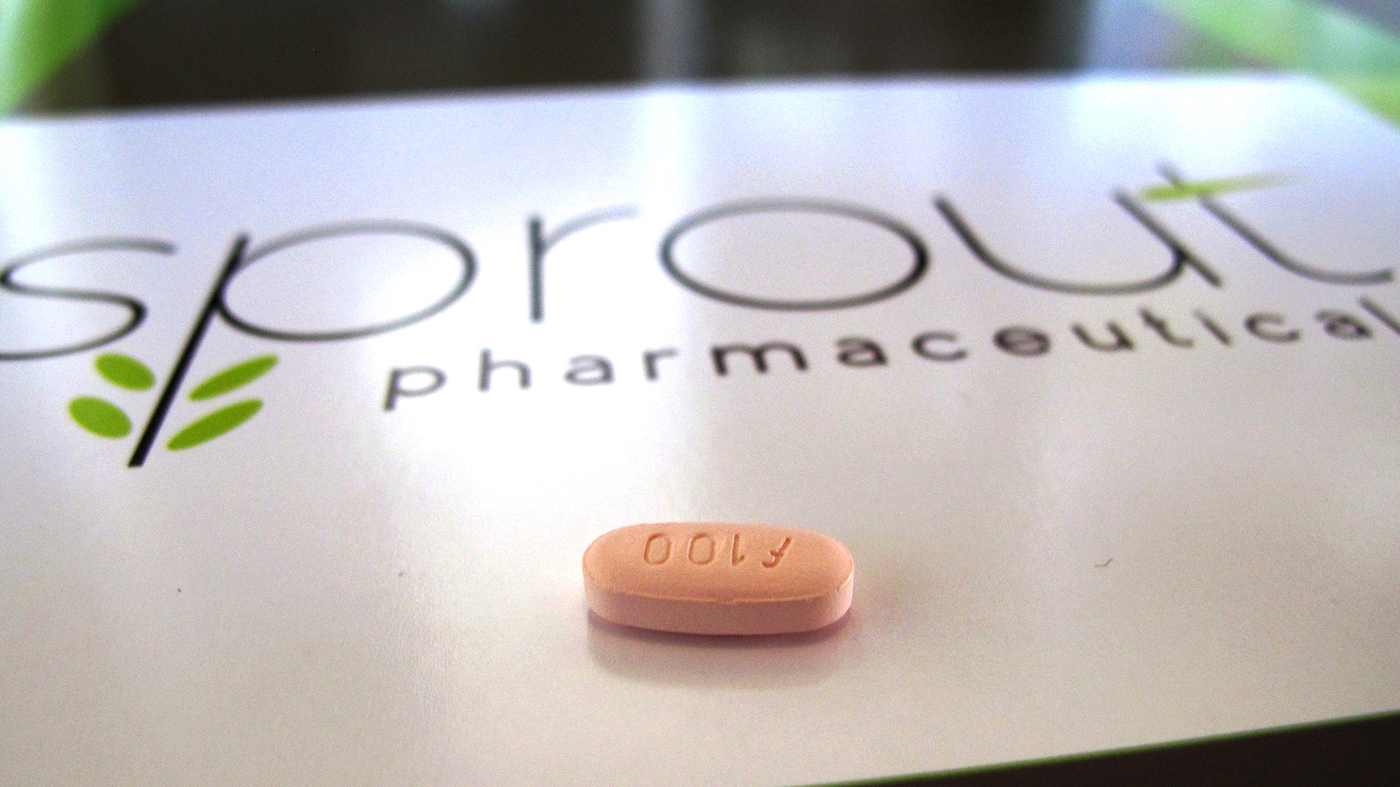
The experimental drug flibanserin, made by Sprout Pharmaceuticals, is at the center of a regulatory controversy.

The experimental drug flibanserin, made by Sprout Pharmaceuticals, is at the center of a regulatory controversy.

Yesterday, the Food and Drug Administration (FDA) approved Addyi (also known by its generic name Flibanserin) for public consumption. The drug, produced by Sprout Pharmaceuticals, is being touted as a “female Viagra,” a way to “even the score” sexually against men (who have many option to treat waning sexual desire). In some circles, it’s seen as a big breakthrough for women’s sexual health.

Interestingly, Addyi is the first drug to specifically treat waning sex drives for both men and women. (Viagra solved a purely medical/physical issue rather than a psychological one.) Addyi targets the central nervous system, putting it in line with an antidepressant.

Addyi purports to help women with hypoactive sexual disorder (i.e. lack of sexual desire.) But it works on a woman’s mind instead of her body. Rather than facilitating blood flow to the genital region, as Viagra does, the drug takes a two-pronged approach:

Flibanserin targets two neurotransmitters in the brain that can help inspire sexual desire. The first is dopamine, which helps control the brain’s reward and pleasure centers and could help drive up our interest in sex. The second is norepinephrine, which affects parts of the brain that control our attention and our response to things in our environment and could help direct our attention to a sexual partner.

The ultimate goal is that a woman’s level of desire would increase over time.

(Side note: Apparently, Viagra was marketed to women in 2004. The drug did increase blood flow to the women’s genitals, but didn’t affect their level of sexual desire.)

But the drug isn’t completely out of the woods yet: there are still some concerns regarding side effects. Doctors and pharmacists will need to undergo specific training of the drug before dispensing it, and will need to keep track of the women who take it. The biggest side effects include low blood pressure, sleepiness and “sudden fainting,” especially when taken with alcohol. (I have to say, I don’t really understand the point of making a drug to help with sex that can’t be paired with alcohol, but that’s just me.)

There’s also an argument that the drug “doesn’t work safely enough to justify its approval:” Women who took the drug during clinical trials reported a 37% increase in sexual desire, which averaged out to not even two more “satisfying sexual experiences” per month. The boost over the placebo group was even smaller.

It’s expected that Addyi will be covered under most health insurance plans, requiring a co-pay, and will inhabit a price range similar to that of Viagra. The drug should hit the market as soon as October (i.e. less than two months), with some outlets reporting an exact date of Oct. 17th.

I have to say, I’m really curious to see how this will do. I want to see how well it’ll perform (heh) sales-wise, and how many women report the side effects. But most of all, I want to see how this drug will influence the female-desire drugs that will surely come after it.