Female/POC Video of the Year Winners at the MTV VMAs: By The Numbers

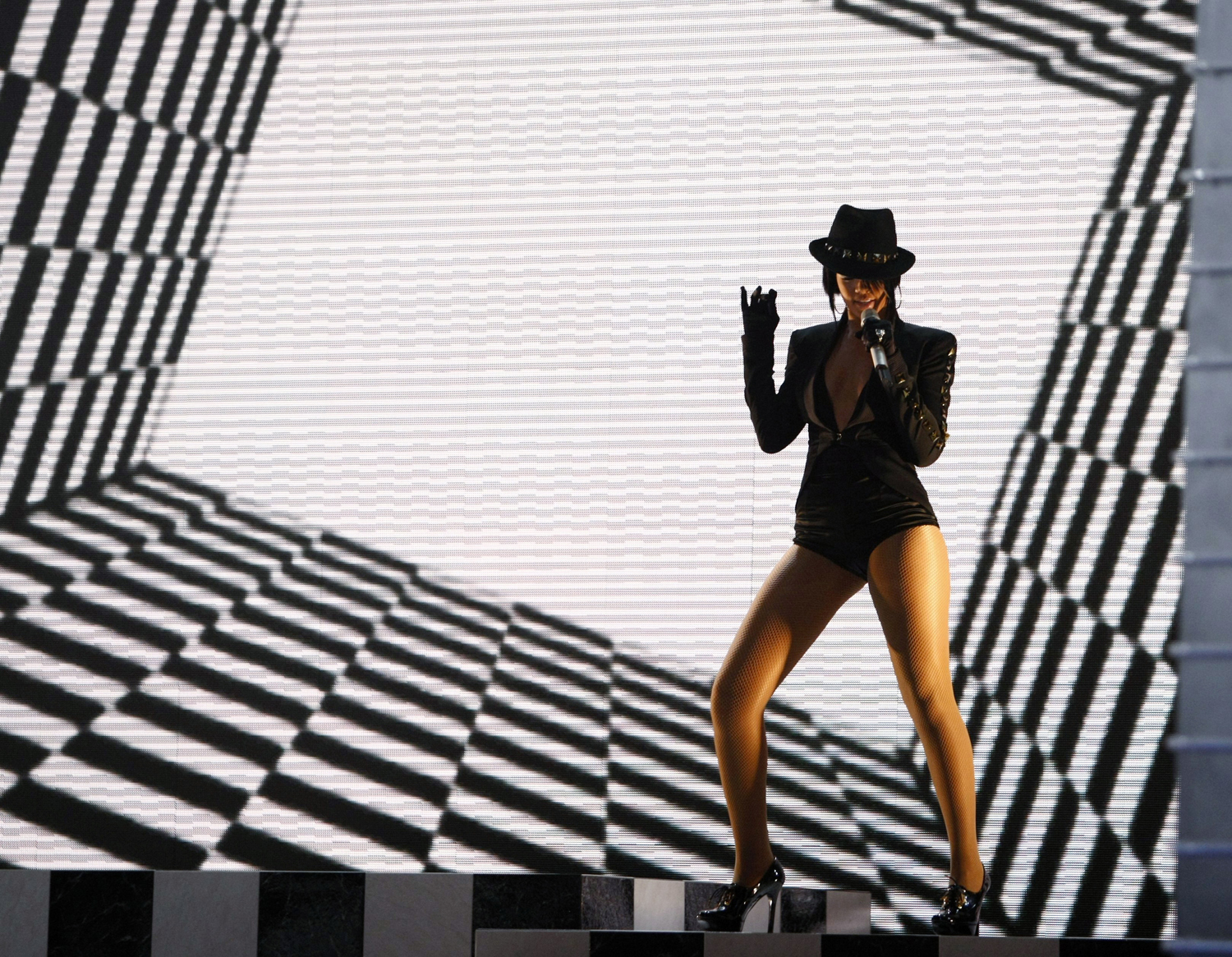
Singer Rihanna performs "Umbrella" at the 2007 MTV Video Music Awards in Las Vegas September 9, 2007. Rihanna won the award for Monster Single of the Year for the song. REUTERS/Mike Blake (UNITED STATES)

Singer Rihanna performs “Umbrella” at the 2007 MTV Video Music Awards in Las Vegas September 9, 2007. Rihanna won the award for Monster Single of the Year for the song. REUTERS/Mike Blake (UNITED STATES)

When the nominees for MTV’s Video Music Awards (VMAs) were announced earlier this summer, acclaimed rapper Nicki Minaj pointed out the glaring absence of women of color in the Video of the Year category. She had a point: The video for her song “Anaconda” broke VEVO viewing records, racking up 19.6M+ views in 24 hours, and propelled a huge cultural impact. (I know you know of at least one person who dressed in one of Nicki’s outfits for Halloween.) To have Minaj’s video snubbed ignores all of those not-insignificant achievements.

I had a sneaking suspicion that the numbers were pretty dismal, not just for women performers of color, but also for women performers in general. I wanted to see exactly how skewed the numbers were, so I looked up the data.

First, some context:

31: Years the Video of the Year Award has been presented (this year will be the 32nd)

69: Number of solo musicians who’ve been nominated

16: Number of solo musicians who’ve won

67: Number of groups who’ve been nominated (including feature artists, not counting 2015 nominees)

15: Number of groups who’ve won (including feature artists)


Let’s look at the stats of the women:

13: years where women solo artists or groups won

0: years after the award began that the first woman artist was nominated (Cyndi Lauper in 1984, nominated during the Award’s first year)

6: years after the Award began that the first woman artist won (Sinead O’Connor in 1990)

4: times Madonna has been nominated

1: time Madonna has won (1998)


And the stats of women of color:

9: years after the Award began that a female group of color was nominated (En Vogue in 1993)

11: years after the Award began that a female group of color won (TLC in 1995)

1: times a women of color group won (TLC in 1995)

  • If you counted the “Lady Marmalade” group who won in 2001, which had Lil’ Kim, Missy Elliott, and Mya, the number goes up to 2.

1: time Missy Elliott has been a double-nominee in the category (2001)

2: winners that have won twice (Missy Elliott in 2001 and 2003, Rihanna in 2007 and 2012)

1: time that Beyoncé has won (2009)

2: times that Beyoncé has been nominated, not counting her 2015 nomination (2007 and 2009)


You don’t have to be a math genius to see that Minaj was correct about the institutional bias in the music industry with regards to awards, and that this should not be tolerated.

This year’s VMAs will air on Sunday, Aug. 30th.

#ThrowbackThursday: TLC at the MTV VMAs, 1995

TLC at the 1995 MTV VMAs (NY Daily News)

TLC at the 1995 MTV VMAs (NY Daily News)

In 1995 (twenty years ago!), pop sensation TLC won the Video of the Year Award at the MTV Video Music Awards (VMAs). This was pretty special for a couple of reasons: Not only were T-Boz, Left Eye, and Chili the first all-women group to win the award, they were also the first women of color to do so.

They’re still the only all women-of-color group to win the coveted award. (The next closest group was the “Lady Marmalade” quintet from 2001, whose three out of five members were women of color.)

When the Video of the Year nominations came out earlier this year, star rapper Nicki Minaj rightly called out the nominations for their lack of diversity. (Beyoncé was the only woman of color nominated this year, up for her “7/11” video.) Let’s hope the music industry heeds her call, and ups the diversity quotient in the future. It’s absurd that it’s two decades from TLC’s historic win, and we still have to have this conversation.

The White House Hires Its First Transgender Staffer

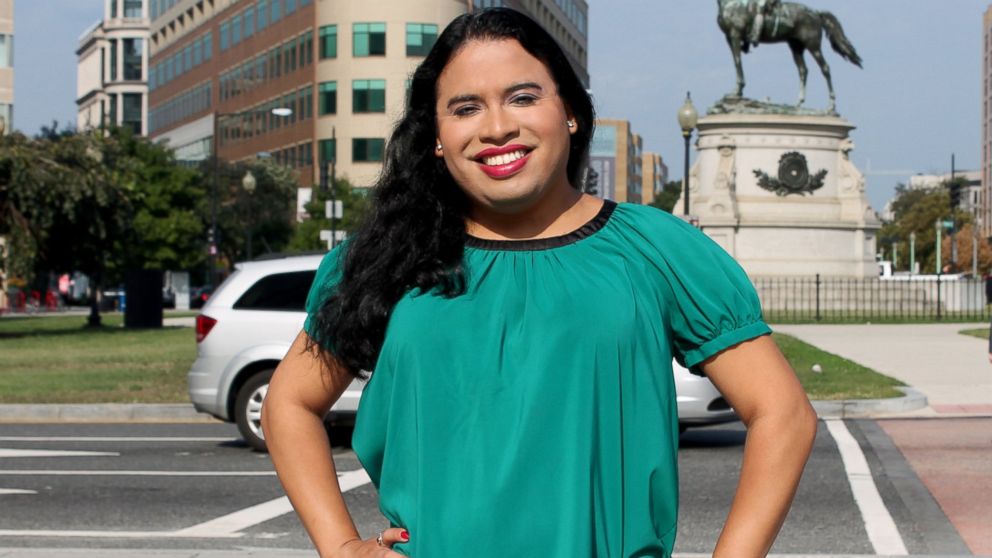
Raffi Freedman-Gurspan (ABC News)

Raffi Freedman-Gurspan (ABC News)

Last week, the Obama administration made a historic hiring: Raffi Freedman-Gurspan is the first transgender person hired to serve the White House. She’s not only the first transgender person, but also the first transwoman.

Freedman-Gurspan comes with a lot of experience to her new role: She had previously served as policy adviser at the National Center for Transgender Equality, and will be the recruitment and outreach director on Obama’s staff.

While the administration has hired other transgender people to other government agencies, this is the first time a transgender person will work directly with the White House.

The hiring indicates that President Obama is becoming more comfortable in openly supporting the LGBT community: Earlier this year, he spoke out about ending conversion therapy for LGBT youth.


Black Women Covering the September Issue for “Vogue:” By The Numbers

Beyonce's 'Vogue' Cover, September 2015 (PopSugar)

Beyonce’s ‘Vogue’ Cover, September 2015 (PopSugar)

Sadly, the number of Black women covering the famed September issue of “Vogue” is very short. It really needs to be longer (how the hell is it 2015, and we’re still talking about this?!), and I have no doubt that it will be. Someday. But not soon enough.

As everyone knows by now, the ***Flawless Beyoncé will be covering the fashion bible’s September issue, which comes out Aug. 25th. It’s her first time covering the issue, though it’ll be her third time around as a “Vogue” cover model.

3: The number of Black women covering the September issue solo

1989: Supermodel Naomi Campbell covers the September issue

2010: Academy Award-winning actress Halle Berry covers the September issue.

The fashion industry is notoriously slow to change its ways (look at how many Black women were on “Vogue” covers in 2014). I hope Queen B’s new issue means we’ll see more diverse cover models, and soon.

#ThrowbackThursday: Beyoncé’s “Vogue” Covers, 2009 and 2013

Beyoncé's 'Vogue' covers, April 2009 and March 2013 (Celebuzz)

Beyoncé’s ‘Vogue’ covers, April 2009 and March 2013 (Celebuzz)

Last week, fashion bible “Vogue” announced its cover star for the always-hotly-anticipated September issue: the one, the only Beyoncé Knowles-Carter. But you may know the acclaimed singer solely by her first name.

This will mark Beyoncé’s third turn as the magazine’s cover model: She had previously appeared on the April 2009 and March 2013 covers. But this time is significant: It’ll be the first time she’s covered the September issue. Beyoncé will be only the third Black woman to cover the biggest issue of the year solo. (Her predecessors are supermodel Naomi Campbell and Academy Award-winning actress Halle Berry.)

The issue will hit newsstands Aug. 25th.


American Ballet Theatre Promotes Filipina-American Stella Abrera to Principal Dancer

Stella Abrera (Ballet UK)

Stella Abrera (Ballet UK)

By now, I’m sure you’ve heard that New York City’s American Ballet Theatre (ABT) recently promoted dancer Misty Copeland to principal, making her the first Black principal in the company’s 75-year history. But that wasn’t the only important promotion that was made.

Stella Abrera became the first Filipina-American to ascend to the rank of principal. (Two promotions, two history-makers this round for the ABT, if you’re keeping track.) She was born in the Philippines and moved to the U.S. when she was four years old. Beginning in Pasadena, Abrera also studied ballet in San Diego and Sydney, Australia. She joined ABT in 1996, and became a soloist in 2001. Abrera’s various roles have included the titular role in “Cinderella,” Emilia in “Othello,” and Clara and The Snow Queen in different versions of “The Nutcracker.”

Ballet is an art form notorious for having little diversity. I hope Abrera’s promotion (and Copeland’s) opens the door for more non-white dancers.


Diversity Amongst Principal Dancers in Top Ballet Companies: By The Numbers

San Francisco Ballet's Yuan Yuan Tan and Davit Karapetyan in George Balanchine's 'Scotch Symphony,' 2012 (Odette's Ordeal)

San Francisco Ballet’s Yuan Yuan Tan and Davit Karapetyan in George Balanchine’s ‘Scotch Symphony,’ 2012 (Odette’s Ordeal)

It’s a well-known fact that classical ballet companies aren’t known for their diversity. With the news that American Ballet Theatre (ABT) dancer Misty Copeland has been promoted to principal, I was curious to see just how (non-) diverse the major ballet companies are.

First, I identified the top classical ballet companies in the U.S.: ABT, New York City Ballet (NYCB), San Francisco Ballet, Pacific Northwest Ballet, and Houston Ballet. (I didn’t look at Chicago’s Joffrey Ballet because the company doesn’t use traditional levels, as far as I could tell.)

Next, I looked at each company’s roster, looking for diversity. I decided to narrow my search to solely the principal dancers to save time. I then made a spreadsheet of my findings:

Principal Dancer Diversity at Top Ballet Companies Excel Spreadsheet

Principal Dancer Diversity at Top Ballet Companies Excel Spreadsheet

The first glaring thing is none of the companies have any Black principals at this time. (Copeland will change that when she begins her new position in August.) Every company listed has at least one principal of Asian descent, and San Francisco has two.

Here’s how the various companies break down.

American Ballet Theatre (ABT):

ABT has 15 principal dancers. Four Latino/Latina dancers make up 25%+ of the company’s diversity.

Houston Ballet:

Houston Ballet has the smallest group of principals with just eight dancers. The one Asian dancer and one Latina dancer combine to make up 25% of the diversity.

New York City Ballet (NYCB):

NYCB has the highest number of principal dancers at 24. Latino/Latina dancers comprise 12%+. Though not noted above, NYCB also features one dancer of South Asian descent.

Pacific Northwest Ballet:

This company has the worst diversity score. No Black or Latino/Latina dancers, and only one Asian dancer, in a group of 12 principals.

San Francisco Ballet:

With six dancers among 20 principals, San Francisco Ballet’s Latino/Latina contingent make up 30% of that company’s diversity, the largest of the studied cohort. Though not noted above, the company also features one dancer of South Asian descent.

#ThrowbackThursday: Lauren Anderson in the Houston Ballet’s “Don Quixote,” 2006

Lauren Anderson, with Carlos Acosta, in Houston Ballet's 'Don-Quixote' (DanseTrack)

Lauren Anderson, with Carlos Acosta, in Houston Ballet’s ‘Don-Quixote’ (DanseTrack)

Misty Copeland may be the most recognizable Black almost-principal ballet dancer right now. But she’s not the first.

Lauren Anderson danced with the Houston Ballet from 1983 until her retirement in 2006. Born and bred in Houston, she began training at the company’s Ben Stevenson Academy (named for the company’s artistic director, now emeritus) before joining the company itself.

In 1990, Anderson was named principal dancer. She was the Black woman to achieve the rank within the Houston Ballet, but also became one of the most visible Black classical ballet principal dancers within a major company.

The above photo shows Anderson dancing with Carlos Acosta in the Houston Ballet’s 2006 production of “Don Quixote.”

Misty Copeland is American Ballet Theatre’s First Black Principal Dancer

Misty Copeland in 'Swan Lake' (Vanity Fair)

Misty Copeland in ‘Swan Lake’ (Vanity Fair)

Last week, the American Ballet Theatre (ABT) in New York City promoted dancer Misty Copeland to principal. Copeland is the first Black woman to attain the level of principal (the highest level possible for a dancer) in ABT’s 75-year history. (ABT has previously had one Black man reach principal: Desmond Richardson, who achieved the level in 1997.) Since she’s considered a classical ballet dancer, this is all the more rare.

Copeland is considered to be a ballet prodigy since she began studying at age 13, and began dancing in pointe shoes a mere three months (!) later. She came to the larger public’s attention when she starred in the now-famous UnderArmour 2014 ad spot “I Will What I Want,” which featured her dancing. Since then, Copeland has written a biography and a children’s book, appeared on the cover of “Time” for their 2015 Top 100 list, and was the subject of a documentery, “A Ballerina’s Tale,” that premiered at the Tribeca 2015 Film Festival.

Copeland’s notable roles include the titular role in “The Firebird,” Swanhilda in “Coppélia,” and the dual roles of Odette/Odile in “Swan Lake.” The “Swan Lake” roles were significant for Copeland, and the rest of the ballet world:

It was a symbolically significant moment in American arts, in which a black woman danced the role of ballet’s famed white swan—and sold out all of her performances from the moment tickets went on sale months earlier.

Copeland became a member of ABT’s corps de ballet in 2001, and was promoted to soloist in 2007. She’ll start as principal dancer on August 1st.

Rachel Dolezal: How Many White People Have Passed As Black?

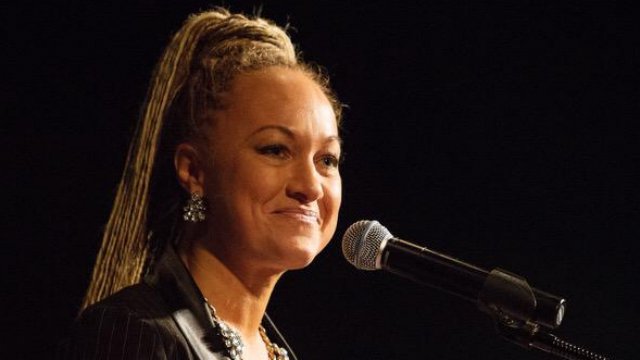
Rachel Dolezal (Young Cons)

Rachel Dolezal (Young Cons)

This is pretty insane: It came out last week that Rachel Dolezal, the president of the National Association for the Advancement of Colored People (NAACP) chapter in Spokane, Washington, isn’t black at all. Not one drop.

She’s actually white.

Her story came out after a reporter asked her point-blank if she was black. Dolezal dodged the question. Since then, other aspects of Dolezal’s life have come to light: attending Howard University, telling people her adopted black brother (who lived with her) was really her son, and teaching classes on African-American culture at Eastern Washington University. Dolezal also claimed to have received hate mail.

Dolezal began identifying as black in 2007, after years of identifying with the culture.

I wanted to see if there were any stats on white people passing as black in the larger culture. I don’t mean in terms of appropriating dress or mannerisms, but actually altering one’s physical appearance and living an elaborate lie.

And I couldn’t find anything. Shocker (but not really). This is such a strange situation that I’m not surprised there haven’t been enough subjects to be studied.

The only white person who’s done anything remotely similar was John Howard Griffin, author of “Black Like Me.” Griffin underwent physical changes, including darkening his skin under heat lamps, to pass for a black man and report on racial injustices in the South firsthand. But obviously, his motives were very different than Dolezal’s.

It’ll be interesting to see how Dolezal’s case plays out, and if she’ll drop her black identity now that she’s been exposed.