Obama Signs Bill That Requires Babies’ Changing Tables in Every Public Bathroom

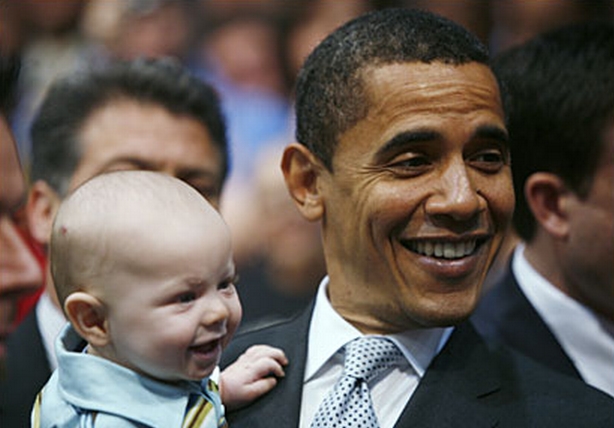
U.S. President Barack Obama and baby (Winwes)

U.S. President Barack Obama and baby (Winwes)

Earlier this month, President Obama signed a very important bill. The Bathrooms Accessible in Every Situation (BABIES) Act requires government and federally-run buildings to provide babies’ changing tables in every restroom on the the premises. That’s right, babies’ changing tables will now be in both women’s and men’s bathrooms.

Previously, there was no such act that mandated changing tables in public bathrooms. And it’s common knowledge that changing tables are a much more common sight in women’s bathrooms than in men’s.

The BABIES Act was proposed in April by Rhode Island Democratic Representative David Cicilline. The measure was co-sponsored by 26 fellow Democrats and one Republican.

It’s fitting that the act was introduced and passed now: The move comes as parental leave, gender equality and division of household labor (which includes childcare) have become top of mind to many people, and a hot topic during this election season.

The new changing tables must be added within the next two years.

Apple’s iOS 10 Emoji Will Bust Gender Stereotypes

iOS 10 Emoji (Australian Broadcasting Corporation)

iOS 10 Emoji (Australian Broadcasting Corporation)

Apple’s iOS update will also bring a slew of emoji changes to the Messages app. But these emoji will now be more diverse and gender-inclusive.

Women will now be represented with professions that had previously only be available for men, such as surfing, police officers and doctors. The reverse will hold true for the men, who will now have the option to use emoji depicting haircuts and massages.

There will also be new family emoji, showing single mothers and fathers with their children. A rainbow flag has also made it into the mix, signifying Apple’s support for marriage equality (insert hallelujah-hands emoji here).

This spring, Google first brought new emoji designs to the Unicode Consortium, the committee that oversees the selection, development and implementation of new emoji. Apple is also a member of the Consortium, and moved forward in developing its own emoji.

This isn’t the first time emoji have been updated for diversity. Last year’s release of iOS 9.1 included the debut of multiple skin tones. This upcoming batch of new inclusive emoji will have 100+ iterations, taking skin tone into account.

iOS 10 will debut later this fall.

Drinking (Moderately) Helps Mens’ Sexual Performance

Beer (Preuss Podcast)

Beer (Preuss Podcast)

To a certain extent, we’ve been conditioned by the media to think that having sex after drinking might not be the best thing for me (see: whiskey dick). And that’s true. But moderately imbibing might actually help a man’s sexual performance.

The Keogh Institute for Medical Research at the University of Western Australia in Nedlands surveyed 1.5K+-1.7K+ men (for some reason, I couldn’t find an exact number) about their sexual performance, specifically with respect to sexual dysfunction. The moderate drinkers reported 25%-30% fewer problems than men who didn’t drink at all. This percentage took into account age, smoking habits, and heart disease, all of which affect penile function.

But there is one issue with this study’s results: nobody asked the subjects’ partners if they were satisfied!


When Do Men Begin Masturbating?

Male masturbation (Lerablog)

Male masturbation (Lerablog)

Did you know that May is National Masturbation Month? Time to (officially) celebrate self-love (though I personally do every day)!

I’m always curious about the different stages of sexual initiation: first kiss, first intercourse, etc. Of course, one more milestone is the first time a person masturbates (and subsequently finds out that touching yourself feels amazing). Conventional wisdom has held that men begin masturbating in their early teens. But is this true?

Weirdly, I couldn’t find much official, hard (heh) data on this. Dr. Alfred Kinsey briefly touched on this topic (wow, I just can’t stop) and found that 92% of men reported that they had masturbated. (Interestingly, Kinsey took a deeper-dive into female masturbation. Pretty surprising for 1953!) But the stat I found didn’t delve into when the first age for masturbation for boys occurred.

I did find an informal poll on a Coachella-related message board. Here are the findings:

Masturbation poll (Coachella)

Masturbation poll (Coachella)

I have no idea how close to the sexual “norm” this is. This data is problematic for a couple of reasons: First, it’s self-reported, and the respondents could easily be lying about how old they were when they first touched themselves. Also, it’s self-selected, meaning that respondents decided of their own accord to answer the question. It’s improbable that the responses represent an even swath of people that would be comparable to that of a formal study.

Again, I’m really surprised that more research hasn’t been done on this topic. Kinsey Institute, get on this!


How Many Men Fake Orgasms?

Couple in bed (Nairobi Today)

Couple in bed (Nairobi Today)

That headline made you do a double-take, right? “But…but only women fake it…right?!” No, apparently it’s not just women. (I’ll let that sink in for a moment now that everything in your world has come crashing down.)

A study published last month in a volume of “Sexual and Relationship Therapy” examines whether faking it, and why, is correlated with sexual and relationship satisfaction. Researchers looked at a sample size of 230 men ages 18-29 years old. Men reported faking it on average about 25% of sexual encounters within their current relationship, and mostly within penetrative (a.k.a. vaginal) sex. (Granted, this is self-reported data, so it’s highly possible some men are lying about their frequency of this act.) It’s unclear as to the sexual orientations of the subjects.

Faking orgasms were found to be related to relationship and sexual satisfaction, but could vary with motivation. Men with lower levels of attraction to their partners indicated that they faked it more frequently. But men who were happy with their partners also faked it “to support a partner’s emotional well-being.” Also, men who faked it when they were drunk correlated to higher levels of sexual satisfaction.

These results parallel a 2010 study published in the “Journal of Sex Research” that also examined rates of faking orgasm (though this one looked at faking for both men and women). And the numbers were near-identical: 25% of men reported faking orgasm, with 28% of men reporting that it occurred during penetrative/vaginal sex.

(Side note: each of these studies referred to faking orgasm as “pretend/pretending orgasm.” I tried to use that phrase in this post, but every time I typed it, I started giggling. Because I’m 12 years old.)

These are interesting stats, and definitely not something I knew before. But does this mean we’ll now have a cultural conversation regarding the faking-orgasm gap?


(Reversible) Male Birth Control Could Be Available in 2018

Male birth control (The Chicago Tribune)

Male birth control (The Chicago Tribune)

Whoa! Scientists recently made a discovery that puts us nearer to a male birth control method. And said method might even be available by 2018!

Here are the deets: Scientists at the Parsemus Foundation have developed a “non-hormonal male contraceptive,” which they’re calling Vasalgel. It’s a gel which gets injected into a man’s testicles. Once inside, the gel forms a protective barrier that prevents sperm from leaving the vans deferens (located inside the testicles).

Vasalgel explainer graphic (Tech Times)

Vasalgel explainer graphic (Tech Times)

So far, the gel has only been through animal testing, specifically on rabbits. Of the 12 rabbits tested, 11 revealed no traces of sperm within their semen within 29 days of receiving the injection. (That twelfth rabbit’s semen cleared of sperm soon after.) The effect endured throughout the 12-month study.

Another important aspect: it’s reversible! Scientists were able to inject a second gel into seven of the rabbits, and their sperm “rapidly” returned.

What does this mean for human men? It looks so promising, right? Unfortunately, we’ll have to wait a couple of years. Scientists now need to conduct a human trial, which could happen later this year. Of course, the results will need to be duplicated to get the greenlight. But who knows? Hopefully men around the world will be able to get this procedure done at their doctor’s office within the next five years.

How Many Couples Wait Until Marriage to Have Sex?

Russell Wilson and Ciara (Wenner Media)

Russell Wilson and Ciara (Wenner Media)

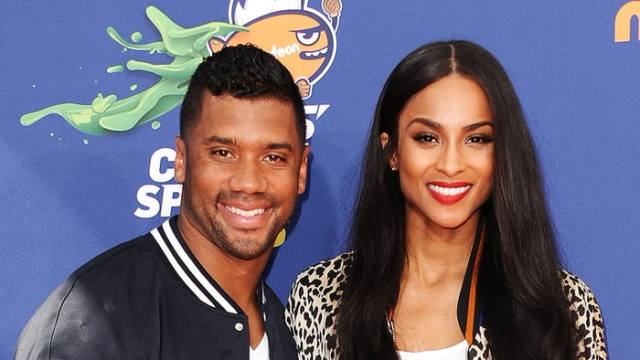
Last month, Seattle Seahawks quarterback Russell Wilson proposed to singer Ciara. While this narrative isn’t uncommon (professional athlete gets with professional singer), one thing about their courtship has stuck out: Wilson and Ciara (I’d use her last name here if she used it herself) abstained from sex during their courtship. And they were loud and clear about it.

You may think this example is an outlier. So how many couples wait until marriage to have sex?

A 2006 study by the Guttmacher Institute took data from the National Survey of Family Growth from 1982, 1988, 1995 and 2002. Around 40K+ subjects ages 15-44 were asked about their sex lives. In 2002, around 95% reported having premarital sex (shocker <– sarcasm right here.) So that’d be around 5% who reported staying virgins til marriage. But this is all self-reported data, so I can’t tell if answers were blinded or not. (Respondents might lie if their answers aren’t blinded.)

This is a upswing from back in the day, but not a total shock. Dr. Alfred Kinsey tackled this same question in his seminal works, 1948’s “Sexual Behavior in the Human Male” and 1953’s “Sexual Behavior in the Human Female.” He found that 67-98% of men had had premarital sex, “depending on socioeconomic level” (I would love to know what that means!), with 68% losing it before turning 18. Women fell into a 50-50 split of whether they’d had premarital sex or not. (This kind of turns the prudish ’50s narrative on its ass, doesn’t it?)

Even thought we have some data, it’s difficult to predict the numbers of virgins-til-marriage completely accurately if the numbers are all self-reported. Some might not self-report accurately due to shame or any number of factors. That being said, nothing wrong with their decision to wait.


Alejandro Gonzalez Inarritu is the First Mexican to Win the Best Director Oscar Two Consecutive Years

Alejandro Gonzalez Inarritu, Oscars 2015 (Latin Trends)

Alejandro Gonzalez Inarritu, Oscars 2015 (Latin Trends)

Alejandro Gonzalez Inarritu has a new record under his belt: He’s the first Mexican to win the Oscar for Best Director two consecutive years in a row. He won this year for “The Revenant,” and won for “Birdman.”

Inarritu joins two other directors in this distinction: John Ford (1940 and 1941) and Joseph L. Mankiewicz (1949 and 1950).

Congrats to Inarritu, and I can’t wait to see what else he does.

How Many Asian Actors Have Been Nominated for Oscars?

Yul Brynner in 'The King and I,' 1956 (Gold Derby)

Yul Brynner in ‘The King and I,’ 1956 (Gold Derby)

The Oscars are this weekend (Sunday, Feb. 28th), and the big controversy this year has centered around the lack of non-white acting nominees (and continues last year’s #OscarsSoWhite hashtag). But when talked about in detail, the conversation has seemed to focus more on including Black nominees and narratives. And that’s great! But there are a wealth of other races and ethnicities that need to be included in the conversation and given a place at the table.

This led me to wonder: how many Asian acting nominees and winners have there been in the history of the Academy Awards? Spoiler alert: not all that many, sadly.

The Best Actor category has seen the most Asian men win the award: Yul Brynner in 1956, and Ben Kingsley in 1982. These two men comprise two-thirds of the category’s Asian nominees.

Actress Merle Oberon was the first Asian nominated for any Oscar, and the first nominated for Best Actress. (The category was called “Best Lead Actress” when she was nominated in 1935.) She remains the sole Asian woman nominee of the category.

Of the seven Asian men who received Best Supporting Actor nominations spanning 1957 to 2003, only one has won: Haing S. Ngor in 1984. Six Asian women have received Best Supporting Actress nominations, but only one has won: Miyoshi Umeki in 1957.

Considering that these categories have five nominees each, and the Academy Awards have been occurring since 1930, this nominations/wins-to-visibility ratio is…fucking pathetic.

I really hope this year teaches the Academy a lesson, and we’ll begin to see more diverse characters and stories not just on screen, but materially validated by the old guard as well.


Match.com Singles in America Data 2016: By The Numbers

Screen Shot 2016-02-10 at 8.57.39 PM

Singles in America study header (Match.com)

Man, I love delving into user data from websites (though I’m sure you’ve figured that out by now). Match.com recently released the results of their sixth annual “Singles In America” survey. You can find all their findings on their microsite. Let’s take a look at what insights came to light:

Number of singles surveyed: 5.5K+

Percentage that sushi increases your odds of getting a second date: 170% (!!)

Screen Shot 2016-02-10 at 8.50.11 PM

First-date length correlation with second-date chances diagram (Match.com)

Number of men who expect sex on the first date: 6%

Percentage of Millennials likely to have filmed sex: 165% (!)

Screen Shot 2016-02-10 at 8.53.29 PM

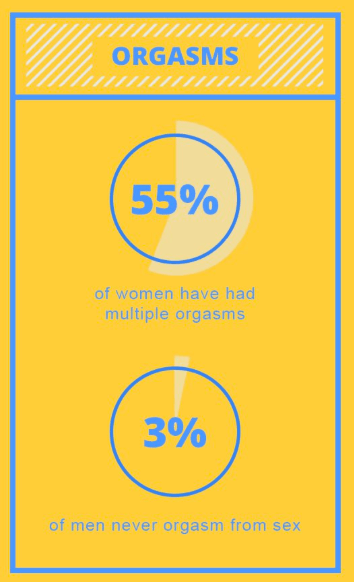
Orgasms data visualization (Match.com)

Percentage that using the phrase “Netflix and chill” gets you a second date: 99%

Percentage that using the phrase “on fleek” gets you a second date: -26%