Women Who’ve Headlined Coachella: By The Numbers

Bjork Headlining Coachella, 2002 (Snakkle)

Bjork Headlining Coachella, 2002 (Snakkle)

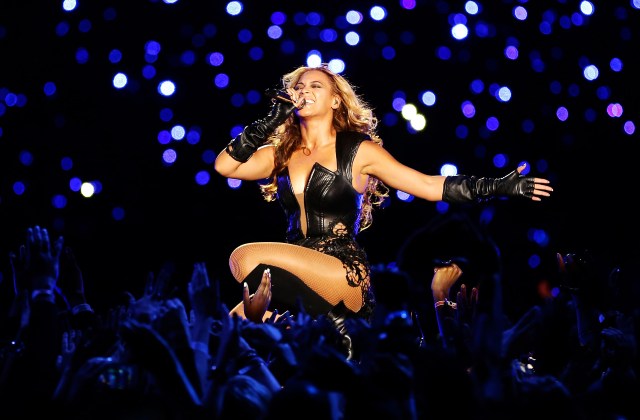
The Coachella Valley Music and Arts Festival (also known as…Coachella) runs over two weekends in April. Headliners were announced earlier this month, and music superstar/feminist/legend for our times Beyonce will headline each Saturday’s performance at the main Coachella stage.

Why is this significant?

Coachella festivals (#): 18

  • Founded in 1999

Total female headliners (#): 3

Bjork headlined in 2002 and 2007.

Unique female headliners (#): 2

  • Bjork and soon-to-be Beyonce

Female headliners (%): 16.67%

Main stage acts (approximate #): 135

*Source: Coachella Festival line-ups page on Wikipedia


#ThrowbackThursday: Beyonce and Solange at Coachella, 2014

Beyonce and Solange at Coachella, 2014 (Global Music Tribune)

Beyonce and Solange at Coachella, 2014 (Global Music Tribune)

Solange performed a set at Coachella in 2014. While singing “Losing You,” off her EP “True,” Beyonce joined her little sister onstage to dance to the song.

Beyonce will be headlining Coachella on Saturday, Apr. 15th and 22nd.

Beyonce and Solange’s #1 Albums: By The Numbers

Beyonce and Solange Knowles (ET Online)

Beyonce and Solange Knowles (ET Online)

Musicians/performers/all-around FLAWLESS women Beyonce and her sister Solange each have achieved something many artists dream of: cracking the Billboard 200 chart. And now each have achieved the distinction of having an album reach #1.

But they also sit in a rarefied strata: Beyonce and Solange are only the third pair of siblings to make the Billboard 200 chart. They’re also the only sisters to achieve this feat.

Since this is such an impressive distinction for the Knowles sisters, here are some numbers that put their joint accomplishment in perspective:

Number of Siblings Who’ve Also Scored #1 Albums: 2

  • Michael and Janet Jackson
  • Master P and Silkk the Shocker

Number of Siblings Who’ve Also Hit #1 in a Calendar Year: 1

  • Michael and Janet Jackson, 2001

Number of Times the Knowles Sisters’ Albums Have Hit #1: 

  • Beyonce: 6
  • Solange: 1

Number of Times Beyonce Hit #1 With Destiny’s Child Albums: 2

Number of Solo Albums Each Knowles Sister Has Released:

  • Beyonce: 6
  • Solange: 3

2016 Album that Hit #1 for Each Knowles Sister:

  • Beyonce: Lemonade
  • Solange: A Seat at the Table

Number of Units Consumed Within First Week of 2016’s Album Release (includes full albums, streaming- and track-equivalents):

Number of Sales Within First Week of 2016’s Album Release:

Best-Selling Album for Each Knowles Sister:

#ThrowbackThursday: Solange, ‘True,’ 2012

Solange, 'True' (The Jewel Wicker Show)

Solange, ‘True’ (The Jewel Wicker Show)

It’s no secret I’m a fan of Beyonce. I’ve seen her three times in concert (The Mrs. Carter Tour 2013, On the Run 2014, and Formation 2016) because I think she’s one of the performers we’ll tell our grandkids about.

I also really like Solange, Beyonce’s sister. And the release of her new album “A Seat at the Table has led me to revisit “True,” her 2012 EP. The above still is from her song of the same name, which Solange filmed in Cape Town, South Africa with members of Les Sape Society. The entire video is beautiful, so definitely watch it if you haven’t yet. The EP’s excellent, too.

#ThrowbackThursday: Beyoncé’s Super Bowl Performance, 2013

Beyonce's Super Bowl performance, 2013 (Wired)

Beyonce’s Super Bowl performance, 2013 (Wired)

We all saw Beyoncé’s amazing performance at the Super Bowl halftime show last weekend. And heard her new song. (And have put it on repeat this week.)

I feel like Beyoncé’s Super Bowl performance from 2013 really kicked off her current stratospheric level. And 10 months later, she released her self-titled visual album, and we all know how that went.

Barbie Gets Three New Body Types

New Barbies (CNBC)

New Barbies (CNBC)

For decades, Barbies have been a constant presence in many girls’ toy boxes. Her body barely changed for over 50 years: tall, thin, big boobs, small waist (for that coveted 7:10 waist-to-hip ratio) and balancing on her tiptoes.

For many years, her physical assets have been a point of contention for feminists and activists for positive body image and acceptance. (I can confirm: I’ve been told my grandmother wouldn’t let my mom play with Barbies when she was growing up on the grounds that the doll was too “buxom.” I mean, she wasn’t exactly wrong.) It seems that their concerns have finally been acknowledged.

Barbie will be sold in three different body types: petite, curvy, and tall. Mattel, the company that’s made the doll since its inception in 1959, is also expanding the line in terms of ethnicity and race options:

Barbie dolls will come in seven skin tones, 22 eye colors, 24 hairstyles, and even a flat foot.

This move comes as consumers seek dolls that resemble themselves, or the little girls in their lives. For many women, Barbie is the first doll they could envision as themselves, and dreaming big. and it’s even better that now more dolls will resemble the consumer base’s diversity. Mattel has already begun diversifying their Barbies: the company broadened the range of “skin tones, eye colors and hair styles” available.

The new Barbies will debut this spring in stages. It’ll be interesting to see how the new dolls impact Mattel’s bottom line: Worldwide sales fell 4% in Q4 2015, and the company’s stock price has dropped 43% since a high in 2013.

Female/POC Video of the Year Winners at the MTV VMAs: By The Numbers

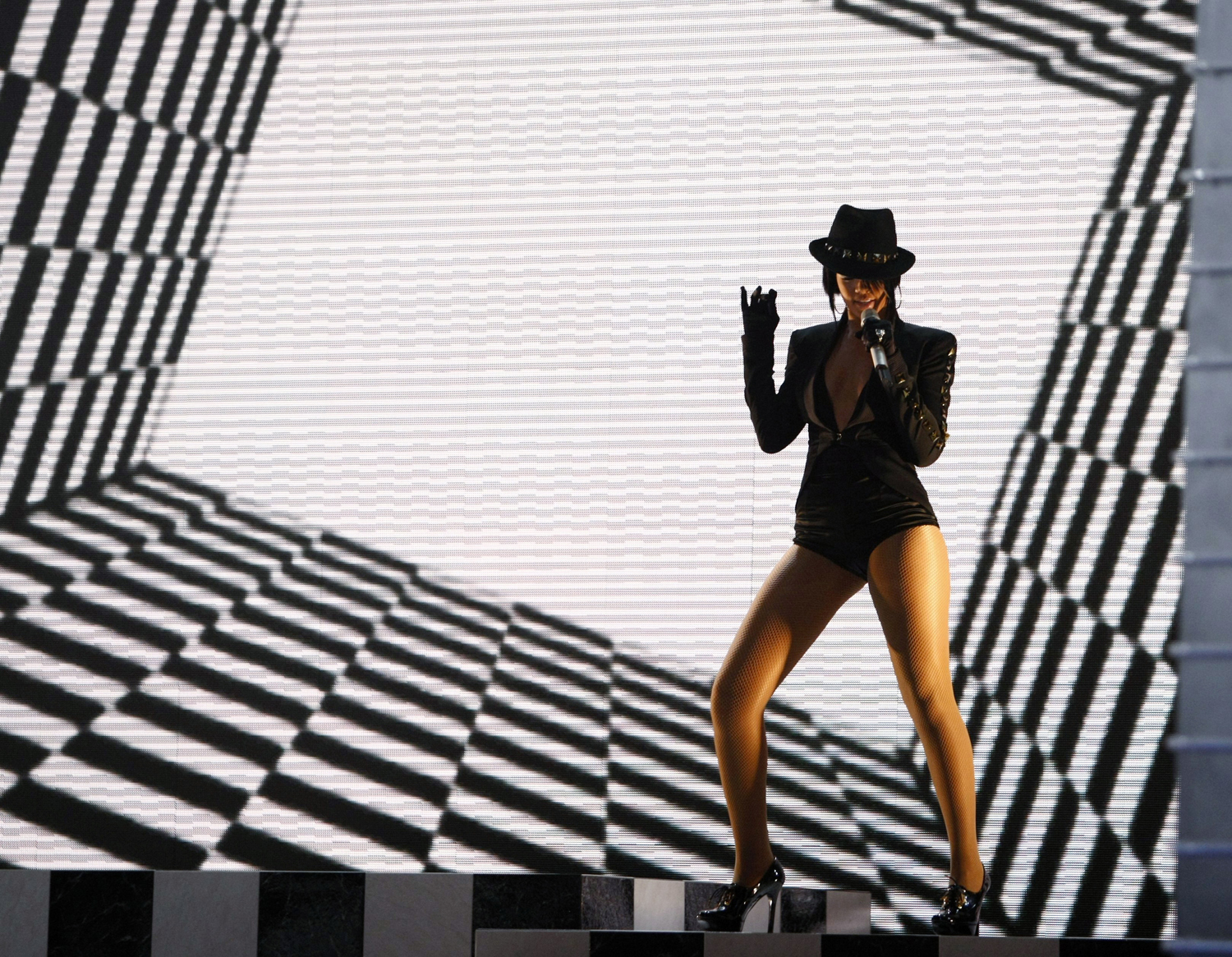
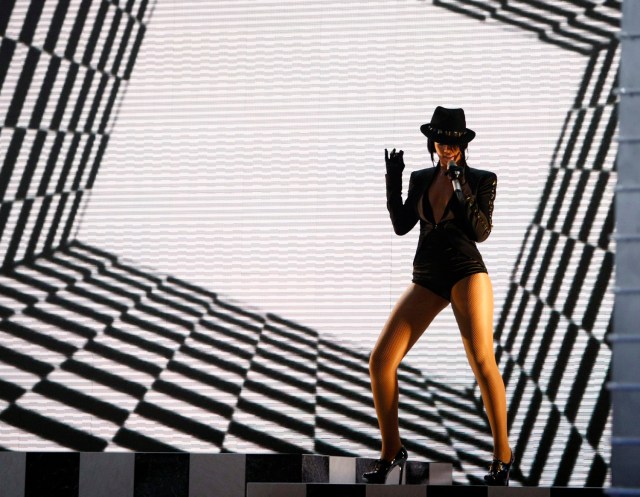
Singer Rihanna performs "Umbrella" at the 2007 MTV Video Music Awards in Las Vegas September 9, 2007. Rihanna won the award for Monster Single of the Year for the song. REUTERS/Mike Blake (UNITED STATES)

Singer Rihanna performs “Umbrella” at the 2007 MTV Video Music Awards in Las Vegas September 9, 2007. Rihanna won the award for Monster Single of the Year for the song. REUTERS/Mike Blake (UNITED STATES)

When the nominees for MTV’s Video Music Awards (VMAs) were announced earlier this summer, acclaimed rapper Nicki Minaj pointed out the glaring absence of women of color in the Video of the Year category. She had a point: The video for her song “Anaconda” broke VEVO viewing records, racking up 19.6M+ views in 24 hours, and propelled a huge cultural impact. (I know you know of at least one person who dressed in one of Nicki’s outfits for Halloween.) To have Minaj’s video snubbed ignores all of those not-insignificant achievements.

I had a sneaking suspicion that the numbers were pretty dismal, not just for women performers of color, but also for women performers in general. I wanted to see exactly how skewed the numbers were, so I looked up the data.

First, some context:

31: Years the Video of the Year Award has been presented (this year will be the 32nd)

69: Number of solo musicians who’ve been nominated

16: Number of solo musicians who’ve won

67: Number of groups who’ve been nominated (including feature artists, not counting 2015 nominees)

15: Number of groups who’ve won (including feature artists)


Let’s look at the stats of the women:

13: years where women solo artists or groups won

0: years after the award began that the first woman artist was nominated (Cyndi Lauper in 1984, nominated during the Award’s first year)

6: years after the Award began that the first woman artist won (Sinead O’Connor in 1990)

4: times Madonna has been nominated

1: time Madonna has won (1998)


And the stats of women of color:

9: years after the Award began that a female group of color was nominated (En Vogue in 1993)

11: years after the Award began that a female group of color won (TLC in 1995)

1: times a women of color group won (TLC in 1995)

  • If you counted the “Lady Marmalade” group who won in 2001, which had Lil’ Kim, Missy Elliott, and Mya, the number goes up to 2.

1: time Missy Elliott has been a double-nominee in the category (2001)

2: winners that have won twice (Missy Elliott in 2001 and 2003, Rihanna in 2007 and 2012)

1: time that Beyoncé has won (2009)

2: times that Beyoncé has been nominated, not counting her 2015 nomination (2007 and 2009)


You don’t have to be a math genius to see that Minaj was correct about the institutional bias in the music industry with regards to awards, and that this should not be tolerated.

This year’s VMAs will air on Sunday, Aug. 30th.

Black Women Covering the September Issue for “Vogue:” By The Numbers

Beyonce's 'Vogue' Cover, September 2015 (PopSugar)

Beyonce’s ‘Vogue’ Cover, September 2015 (PopSugar)

Sadly, the number of Black women covering the famed September issue of “Vogue” is very short. It really needs to be longer (how the hell is it 2015, and we’re still talking about this?!), and I have no doubt that it will be. Someday. But not soon enough.

As everyone knows by now, the ***Flawless Beyoncé will be covering the fashion bible’s September issue, which comes out Aug. 25th. It’s her first time covering the issue, though it’ll be her third time around as a “Vogue” cover model.

3: The number of Black women covering the September issue solo

1989: Supermodel Naomi Campbell covers the September issue

2010: Academy Award-winning actress Halle Berry covers the September issue.

The fashion industry is notoriously slow to change its ways (look at how many Black women were on “Vogue” covers in 2014). I hope Queen B’s new issue means we’ll see more diverse cover models, and soon.

#ThrowbackThursday: Beyoncé’s “Vogue” Covers, 2009 and 2013

Beyoncé's 'Vogue' covers, April 2009 and March 2013 (Celebuzz)

Beyoncé’s ‘Vogue’ covers, April 2009 and March 2013 (Celebuzz)

Last week, fashion bible “Vogue” announced its cover star for the always-hotly-anticipated September issue: the one, the only Beyoncé Knowles-Carter. But you may know the acclaimed singer solely by her first name.

This will mark Beyoncé’s third turn as the magazine’s cover model: She had previously appeared on the April 2009 and March 2013 covers. But this time is significant: It’ll be the first time she’s covered the September issue. Beyoncé will be only the third Black woman to cover the biggest issue of the year solo. (Her predecessors are supermodel Naomi Campbell and Academy Award-winning actress Halle Berry.)

The issue will hit newsstands Aug. 25th.


Sex & Stats’ 2014 Year in Review

Beyonce's 'Flawless' performance at the 2014 MTV Video Music Award

Beyoncé’s ‘Flawless’ performance at the 2014 MTV Video Music Awards

We’re almost done with 2014, so let’s take a look back at some important movements in the world of sexuality.

Trans Issues:

After a long time, the trans community has come into the spotlight.

It started back in early March, when Jared Leto took home the Best Supporting Actor Oscar for playing trans woman Rayon in “Dallas Buyers Club.” This was the first time an actor won an Oscar for a trans role, and the second time an actor playing a trans character had been nominated for an Academy Award. (The first time was when Felicity Huffman played a trans woman in 2005’s “Transamerica,” and garnered a Best Actress nomination.) The film also sparked a dialogue about cisgendered actors playing trans roles.

The community has been making strides on a local level as well. This fall, a Texas high school elected its first trans homecoming king.


Anal Play:

“We’ve been experimenting with the butt,” a good friend of mine said recently. Though she was referring to what she and her partner were getting up to, this statement also applies to our culture’s newfound fascination with anal play.

Ever since a stripper alleged that Drake enjoyed having his salad tossed, it seems like anal play and rappers  are having a major intersectionality moment. Nicki Minaj has proven this most frequently with her singles “Anaconda” and “Only,” positing herself in the power position of receiving, and greatly enjoying, having her asshole eaten out.

Anal sex also appeared on our broadcast TV screens in mainstream American homes this fall. The “How To Get Away With Murder” pilot and an episode of “The Mindy Project” both featured the formerly taboo act (the former more explicitly than the latter). Bonus points for both featuring interracial couples as well.


Feminism:

This is technically a holdover from 2013, but feminism continued to stake its claim in culture this year.

“Harry Potter” actress Emma Watson gave an inspiring speech to the United Nations launching the HeForShe campaign, mobilizing men to do their part for feminism. Chanel designer Karl Lagerfeld ended his spring 2015 runway show with models holding up signs painted with feminist slogans. Singer John Legend declared that society would be better if all men were be feminists.

Of course, Beyoncé also had a hand in this. (No surprise there, as her 2013 self-titled album sampled Chiamanda Ngozi Adichie’s now-famous TED talk on feminism.) She started it off strong in January authoring an essay on workplace inequality for “The Shriver Report: A Woman’s Nation Pushes Back From the Brink.”

But that was small compared to what was to come: During the 2014 MTV Video Music Awards, Beyoncé performed “***Flawless” in front of a giant lit marquee, branding herself as a FEMINIST. IN ALL CAPS. It certainly raised consciousness for many people, because Google searches for “feminist” and “beyonce feminist” majorly spiked that week.


2014 has been very eventful, and let’s hope society keeps making sex-positive strides forward in 2015. See you next year!