Kim Kardashian Magazine Nudity: By The Numbers

Kim Kardashian, 'Paper' Magazine 2014

Kim Kardashian, ‘Paper’ Magazine 2014

“Break the Internet,” indeed. Kim Kardashian’s “Paper” magazine cover shoot debuted yesterday, and it’s already the talk of the town (and inter webs) due to her various nude shots.

In photos taken by Jean-Paul Goude, Kardashian poses mooning the camera (as the image above teases), and then goes balls (or boobs) to the wall and poses full frontal holding up her dress around her knees. This is the first time Kardashian has shown so much in a more artsy magazine.

Let’s take a look at how Kardashian’s nude magazine appearances in 2014 compare to the “W” magazine ones in 2010. (In terms of nude posing in magazines, we’re not counting “Playboy” because that would skew the sample.)

“W” Magazine, 2010:

Number of Cover Shots: 2

Number of Total Shots: 10

Number of Shots Sans Clothes: 10

Bare Butt: 2* (*one more prominent)

Bare Boobs: 2* (*shots where nipple is visible)

Full Frontal: 1* (*everything bare from the navel up)

(Technically, both cover shots are full-frontal, but text bars obscure the good stuff.)


“Paper” Magazine, 2014:

Number of Cover Shots: 1

Number of Total Shots: 4

Number of Shots Sans Clothes: 3

Bare Butt: 2

Bare Boobs: 2

Full Frontal: 1


#ThrowbackThursday: Kim Kardashian Nude in “W” Magazine, 2010 (NSFW)

Kim Kardashian, 'W' Magazine 2010

Kim Kardashian, ‘W’ Magazine 2010

Kim Kardashian’s “Paper” magazine photo shoot wasn’t the first time she’s stripped down for a magazine. That would be back in 2010 for “W” magazine and its accompanying article, “Kim Kardashian: Queen of Reality TV.”

In this shoot, her body was covered in silver paint (as above). She was reportedly upset with the result, telling her sisters Kourtney and Khloe, “I’ve definitely learned my lesson. I’m never taking my clothes off again, even if it’s for ‘Vogue.’” But later it’s reported she changed her mind and was proud of her photos.

Apparently, that only lasted a few years.


Brown University Date Rape Drug GHB: How Common Is It?

Brown University's Robinson Hall, 2009

Brown University’s Robinson Hall, 2009

A female student at a Brown University fraternity party held on Oct. 17 has tested positive for a date-rape drug.

The student drank an alcoholic punch which contained GHB (gamma hydroxybutrate), which was found during a later test. One other student drank the punch, and those results are still pending.

The Australian Drug Foundation notes that symptoms such as drowsiness, lowered inhibitions and memory lapses become present 15-20 minutes after taking the drug, and can continue for 3-4 hours. It’s also easy to overdose since there aren’t much difference in dosage between an overdose and a safe amount.

This continues a story in which the aforementioned female student reported that she was sexually assaulted at the Phi Kappa Psi party.

How common is GHB’s use as a date-rape drug?

Unfortunately, I couldn’t find any hard numbers solely on GHB for colleges. A 2009 Monitoring the Future study found that .7% of eighth-graders and 1.1% of 12th-graders reported using the drug in the past year. GHB use peaked in 2000 when 1.2% of eighth-graders in 2000 and 2% of 12th-graders in 2004 reporting using it within the past year.

Drug abuse treatment website Serenity Lane reports that since there have been 15K+ overdoses and 72 deaths related to GHB. But this doesn’t tell us the age-spread, so it’s impossible to tell which, if any, age group this affected most.

Every resource I looked at listed GHB as a date-rape drug alongside rohypnol and ketamine. In fact, Brown’s own Health Services website devotes a page to GHB. It’s clear that its use is still a large issue.


Will In Vitro Fertilization (IVF) Replace Sex?

Couple in bed

Couple in bed

Dr. Carl Djerassi recently predicted that sex would become purely recreational by 2050 since so many women are having children via in vitro fertilization (IVF). But do the numbers bear this out?

Earlier this year, the Society for Assisted Reproductive Technology released a report examining success rates from many IVF clinics. The report revealed that in 2012, IVF clinics performed 165K+ procedures, out of which 61K+ babies were born. Therefore the year had a 37%+ success rate. Two thousand more babies were born in 2012 than in the previous year, and 2012 also had the highest percentage of babies born through IVF thus far.

Dr. Djerassi also remarked that advances in IVF technology will allow parents without fertility problems to consider the procedure. This would, in turn, free up the potential parents (and everyone else) for consequence-free sex.

And Dr. Djerassi would know about recreational sex: In 1951, he helped invent The Pill.

How Common are Sexual Reassignment Surgeries (SRS)?

Lili Elbe, 1926

Lili Elbe, 1926

Last week, it was announced that English actor Eddie Redmayne will play Lili Elbe in an upcoming film. Elbe, a Dutch painter, was one of the first recipients of sexual reassignment surgery (SRS). Elbe was born Elnar Mogens Wegener in 1882 and started the surgery in 1930 in Germany. SRS was very experimental at the time, and she went through a series of five operations that spanned over two years.

Naturally, this made me wonder how common SRS surgeries (both male-to-female and female-to-male) are in the U.S.

In 2008, Dr. Mary Ann Horton published a paper on just that, where she examined all SRS surgeries performed within calendar year 2001.

She found that 1.1K+ overall SRS surgeries were performed, 740 being MTF and 430 being FTM.

The incidence of SRS followed an overall ratio to 1:240K. This broke down to 1:190 for MTF and 1:330 for FTM.

Unfortunately, it’s not clear how we can project these numbers to grow and/or change moving forward.


In any case, the development with Redmayne’s casting is significant is that cis-woman Nicole Kidman was initially cast in the role five years ago. Cis-man Redmayne’s casting might signal a shift in how Hollywood perceives depictions of tradespeople.


How Thick is the Average Condom?

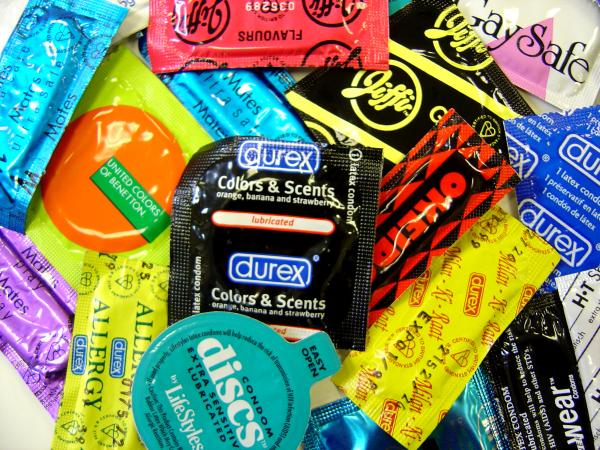
Condoms

Condoms

Happy Friday! Just in time for the weekend, I’m wondering about how thick condoms are.

The Brunswick Centre, a charity that provides sexual health services based in the UK, sheds some light on this: Condoms are measured in microns. One micron is .01 mm (one/one-hundreth of a millimeter).

Their FAQ sheet on condoms breaks it down:

“An extra thin condom is around 4 microns thick, an average condom is around 7 microns thick and an extra thick condom is around 9 microns thick.”

Knowledge is power. Go forth and use it.

Sodomy Laws in the US: By The Numbers

US Sodomy Laws by Year of Repeal/Struck Down

US Sodomy Laws by Year of Repeal/Struck Down

While many states are passing laws allowing gay marriage, some areas regarding sexuality are still in the Dark Ages: Fourteen states still have laws on the books banning sodomy. And these laws aren’t just for the LGBT crowd; they’re for everyone, regardless of orientation.

Contrary to popular belief equating sodomy with only anal sex, these laws can also cover oral sex, and certain sexual acts between homosexual couples, unmarried heterosexual couples and even married couples.

Though these “crimes against nature” laws were invalidated in 2003 with the Lawrence v. Texas Supreme Court case, some remain, and are still enforced, in certain states.

How common are these laws? Let’s take a look:

Number of states with active sodomy laws: 14

Number of states outlawing anal sex: 27

Number of states outlawing oral sex: 24

Number of states outlawing both anal and oral sex: 24

Number of states with laws including certain acts between homosexual couples: 27

Number of states with laws including certain acts between unmarried heterosexual couples: 20

US Sodomy Laws by Year of Repeal/Struck Down

US Sodomy Laws by Year of Repeal/Struck Down

Number of states with laws including certain acts between married couples: 16


If you’d like more information, Wikipedia has a very helpful matrix.

#ThrowbackThursday: German “Aquaglide” Ad

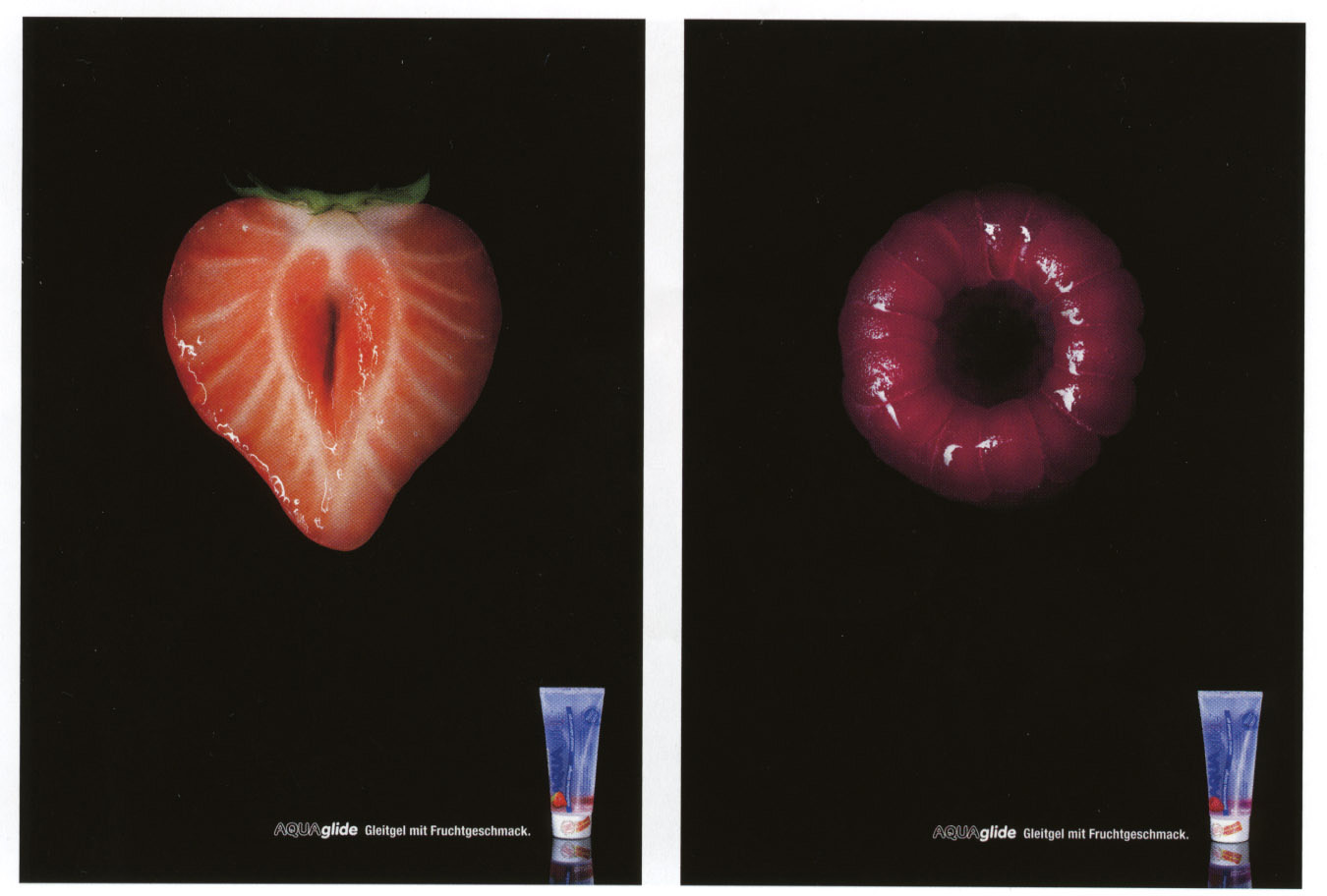
Aquaglide ads

Aquaglide ads

I found this pair of ads for “Aquaglide,” and realized, on further inspection, that they were in German. I already prefer these ads to most ads I see in the US.

Turns out it’s a line from German sex company Joy Division, which features a line of flavored lubes (which the ad references).

Makes me want to check out a new product, don’t you think?


Prostate Health Boosted by Having Lots of Sex

Prostate screening patient

Prostate screening patient

You’re not being a man-whore, you’re protecting your health: A new study out of the University of Montreal says that having intercourse with 20 or more women helps men’s risk in developing prostate cancer decrease by 28%.

However, this effect only holds true for straight men: Men who had sex with 20 or more men were twice as likely to get the disease.

The study had 3K+ men answer an questionnaire about their sex lives. In the course of the study running Sept. 2005-Aug. 2009, 1.5K+ men were diagnosed with prostate cancer.

The article doesn’t mention how exactly 20 was determined to be the break-even point. It also begs the question as to what other numbers of partners do for preventing the cancer (for example, how does having 17 partners help, or hurt?).

I’d love to know more about this. Wouldn’t you?

Lena Dunham Allegations: How Common is Sibling Sexual Abuse?

Lena Dunham

Lena Dunham

In the past few days, the Internet has exploded in calling “Girls” creator and actress Lena Dunham a sexual abuser. In her memoir “Not That Kind of Girl,” Dunham details pulling apart the lips of her baby sister’s vagina, among other instances.

Whether or not Dunham deserves the abuser label remains to be seen (we haven’t heard anything direct from her sister yet), but it does bring up the question of how common sexual abuse at the hands of siblings is.

Pandora’s Project, a sexual abuse survivors’ resource site, makes the main point that child sexual abuse is, at its core, an imbalance of power between siblings. It notes that around 15% of people report “some sort of sexual activity with a sibling in childhood.” (However, this doesn’t distinguish between healthy curiosity and abuse.) Studies have also shown that between 2% and 4% of people “have been sexually victimized by a sibling as the sexual contact involved some degree of forced or coercive activity.”

Pandora’s Project also defines the age range at which curiosity becomes abuse as “a significant difference in developmental age,” determined as more than three years. In her essay, Dunham was seven years old, and her sister was a one year-old.

Maybe this revelation will start a new conversation on sibling sexual abuse. It’ll be interesting to see if Dunham receives any further backlash from this: She’s already canceled two upcoming European appearances.