
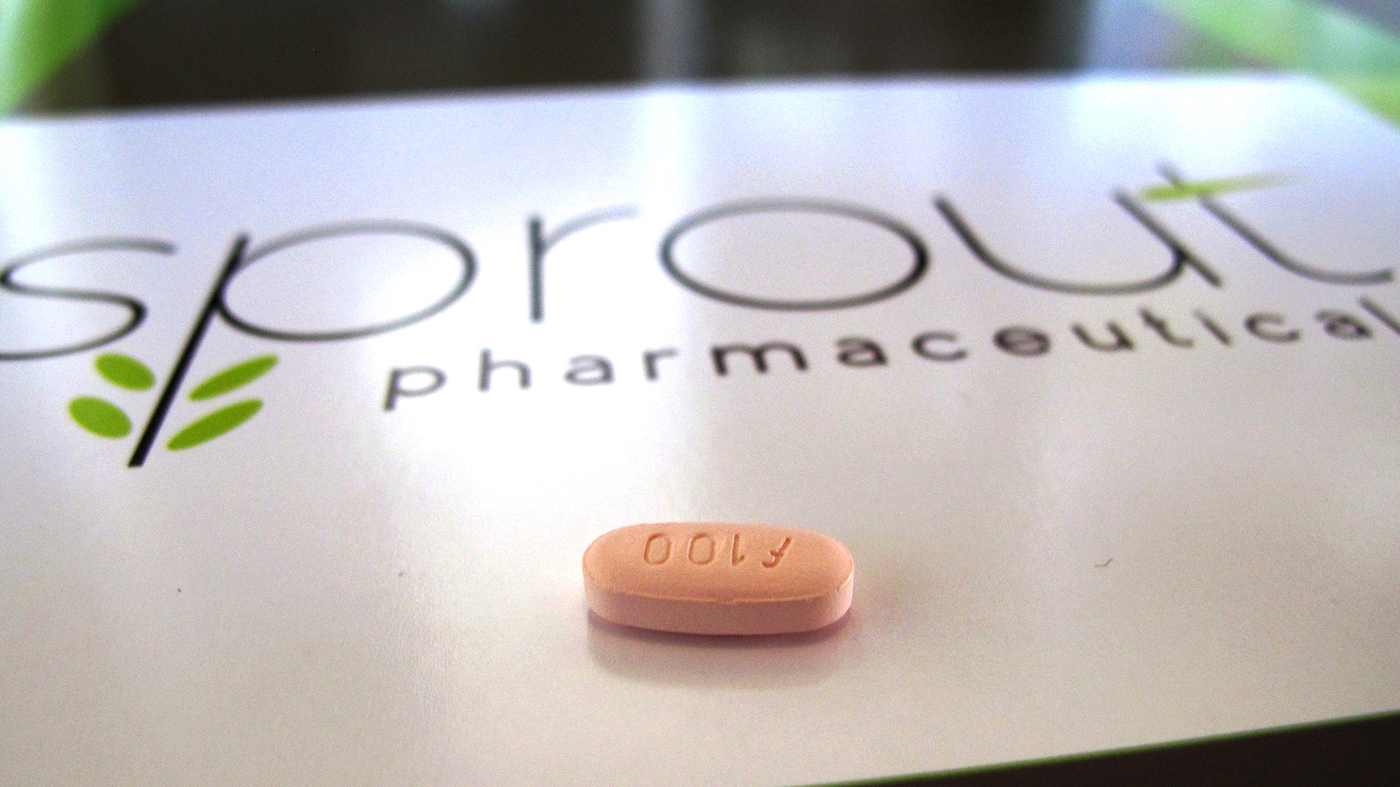
Little pink pill (Stuff NZ)
Hot on the heels of the news that a female Viagra is edging closer to public consumption, I wanted to see how often U.S. Internet users (which would be basically everyone) were searching for information related to female Viagra. I used “2004-present” as my timeframe.
First, here’s how often “female viagra” (red line) against “viagra” (blue line):

Google Trends: ‘Female Viagra’ vs. ‘Viagra,’ U.S. 2004-Present
As you can see, there’s a lot less searching for the former term versus the latter.
Now, let’s look at “female Viagra” on its own:

Google Trends: ‘Female Viagra,’ U.S. 2004-Present
It’s hard to ignore that huge spike at the end of the timeframe. That occurred this month. It’s no coincidence: Sprout Pharmaceuticals announced that their female desire pill Flibanserin/ADDYI was recommended for Food & Drug Administration (FDA) approval on Jun. 5th.
Flibanserin/ADDYI will treat women with low libidos, known medically as hypoactive sexual desire disorder (HSDD). I wanted to see how common Google searches for low sex drives appeared.
First, I searched “low sex drive in women,” which was the first specific option Google autofilled for me:

Google Trends: ‘Low Sex Drive in Women,’ U.S. 2004-Present
Interesting. It appears that the term hit its peak (ha) around a spike in 2011, and then crested in 2013. It’s dipped since then, but is starting to come back up. (Also, I’d love to know what happened in 2007.)
But let’s put this in context. Here’s “low sex drive in women” (blue line) versus “low sex drive” (red line):

Google Trends: ‘Low Sex Drive in Women’ vs. ‘Low Sex Drive,’ U.S. 2004-Present
It’s interesting that the female-specific searches don’t make up that much of the overall searches.
Now let’s find out how many men are searching for information on low desire. Here’s “low sex drive in women” (blue line) versus “low sex drive in men” (red line):
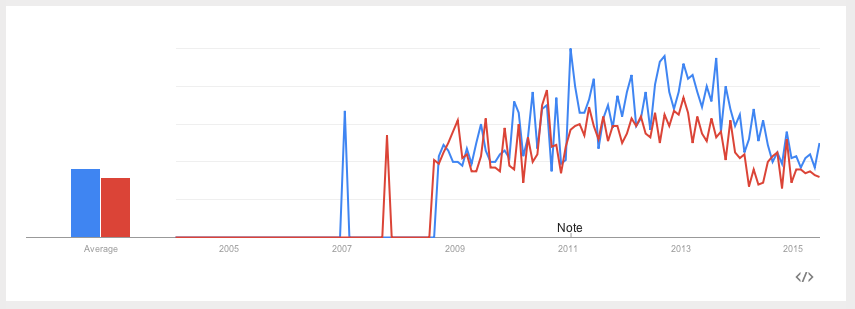
Google Trends: ‘Low Sex Drive in Women’ vs. ‘Low Sex Drive in Men,’ U.S. 2004-Present
OK, now we can see that low libidos in women are an issue, insofar as they’re being Googled.
So a lot of people (we could probably reasonably assume women) are searching for information on low sex drives in women. But how many are searching for a solution? Maybe a cure, call it “female viagra” (red line)?

Google Trends: ‘Low Sex Drive in Women’ vs. ‘Female Viagra,’ U.S. 2004-Present
Holy shit, this is amazing. Sure, users are searching for (presumably) information on women having low sex drives, but they’re searching a lot more for a solution. At no point in this graph are there more searches for “low sex drive in women” than there are for “female viagra.” Also, note how the “female viagra” searches spike at the end, halfway through 2015. As noted above, that’s when Sprout announced their “little pink pill.”
Conclusion:
The evidence here points to the fact that people are actively searching for solutions to cure women’s low sex drives. This certainly warrants a female Viagra pill to be brought to market, but why the hell wasn’t this developed sooner?!
 Sex & Stats: Where Numbers Come to Bang