Apple’s iOS 10 Emoji Will Bust Gender Stereotypes

iOS 10 Emoji (Australian Broadcasting Corporation)

iOS 10 Emoji (Australian Broadcasting Corporation)

Apple’s iOS update will also bring a slew of emoji changes to the Messages app. But these emoji will now be more diverse and gender-inclusive.

Women will now be represented with professions that had previously only be available for men, such as surfing, police officers and doctors. The reverse will hold true for the men, who will now have the option to use emoji depicting haircuts and massages.

There will also be new family emoji, showing single mothers and fathers with their children. A rainbow flag has also made it into the mix, signifying Apple’s support for marriage equality (insert hallelujah-hands emoji here).

This spring, Google first brought new emoji designs to the Unicode Consortium, the committee that oversees the selection, development and implementation of new emoji. Apple is also a member of the Consortium, and moved forward in developing its own emoji.

This isn’t the first time emoji have been updated for diversity. Last year’s release of iOS 9.1 included the debut of multiple skin tones. This upcoming batch of new inclusive emoji will have 100+ iterations, taking skin tone into account.

iOS 10 will debut later this fall.

Beth Comstock is GE’s First Female Vice Chair

GE Vice Chair Beth Comstock (Fast Company)

GE Vice Chair Beth Comstock (Fast Company)

Big news from a major corporation: Conglomerate General Electric named Beth Comstock a new Vice Chair. She oversees marketing for the company, becoming chief marketing officer in 2003. Oh yeah, she’s the first woman to hold the executive position (no big!). She joins three other men as her fellow vice chairs.

Comstock’s official title is Vice Chair of Business Innovations (pretty cool, huh?). Per “Fast Company,” here’s what the Business Innovations unit actually is and does:

[It] accelerates new business and helps established commercial ventures transition into GE’s technology universe. The Business Innovations arm houses GE Lighting, GE Ventures & Licensing, software commercialization and corporate marketing, sales, and communications.

Comstock is credited with helping GE focus on the future, in terms of the “industrial internet.” The concept marries data analysis with GE’s traditional, industrial products. CEO Jeff Immelt has called her “a catalyst for digital innovation and growth.”

I can’t wait to see how she’ll evolve GE into the future.

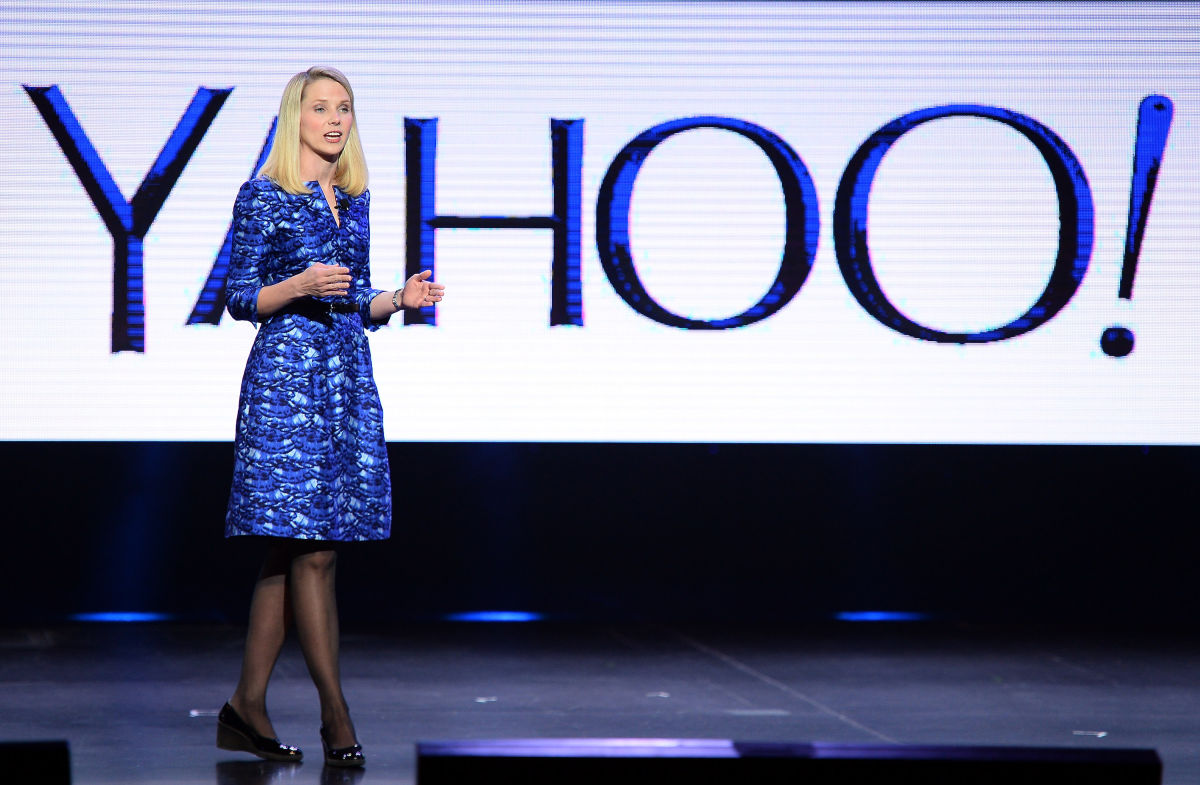
Yahoo CEO Marissa Mayer is Pregnant with Twin Girls

Yahoo CEO Marissa Mayer (The New Yorker)

Yahoo CEO Marissa Mayer (The New Yorker)

Last week, Marissa Mayer, best-known as Yahoo’s CEO (one of the most-well known female CEOs in tech, if not the world), announced that she’s pregnant with twin girls. She made the announcement in a way befitting her industry: on Yahoo’s Tumblr.

The twins will be the second and third children for Mayer and her husband, Zachary Bogue. Mayer gave birth to her first child, her son Macallister, in September 2012. (That year was a momentous one for her: She became CEO of Yahoo earlier in July.) Mayer announced her pregnancy the same day that Yahoo announced her as their new CEO.

Mayer has said she’ll work through her pregnancy before her due date in December. She also worked through most of her first pregnancy.

After her son’s birth, Mayer famously didn’t take a break for maternity leave, returning to work only two week after giving birth. She also installed a nursery right next door to her office.

It’ll be interesting to see if having to care for two babies at once slows her down at all, and if she changes her views on feminism and working from home.


Trends: Companies Expanding Maternity/Paternity Leave Policies

Netflix 2014 logo (Under Consideration)

Netflix 2014 logo (Under Consideration)

A very positive trend has sprung up recently: Companies are their expanding parental leave policies. The main goal is to recruit more women with work-life balance policies, and to retain talent by allowing time off for family matters. Because trouble at home often means distracted employees and lower productivity. (I feel like that’s on a modern-day Mather Work Incentive poster somewhere.)

Big strides have been made this year: Consulting powerhouse Accenture bumped up its maternity leave policy to 16 weeks in March, which applies to both full-time and part-time employees. In April, Johnson & Johnson announced a new eight-week paid leave policy. In June, major bank Goldman Sachs began offering new fathers and “non-primary caregivers” four weeks of paid leave. (The company currently offers 16 weeks of paid maternity leave.) The U.S. Navy and Marines mandated an 18-week maternity leave policy, effective immediately, in July.

This trend has become especially prevalent in the tech industry, with a lot of changes occurring just this past month. In August, Microsoft recently announced a new parental leave policy, in which employees would get paid at 100% of their salary for 12 weeks. New mothers will have eight weeks of paid maternity leave, which, combined with disability leave, could entitle them to 20 weeks of paid leave.

Adobe’s policy also changed: Mothers will now receive 26 weeks of paid leave, up from the nine weeks off from the previous policy. It’ll be a combination of medical leave (10 weeks) and paternal leave (16 weeks).

Netflix announced they’re bumping up their maternity and paternity leave policies to an unlimited amount of time. New mothers and fathers are allowed to take as much time off as they like during a child’s first year, whether though birth or adoption. (Netflix isn’t a stranger to expanding time off: Employees already get unlimited vacation time.) But the policy isn’t all inclusive: It only applies toward salaried employees, so hourly workers aren’t able to take advantage of it.

It’ll be interesting to see if (when) other companies follow suit, and if paid parental leave will eventually be federally mandated. These are definitely steps in the right direction.


How Many Active Female Users did Ashley Madison Have?

Ashley Madison homepage (Ashley Madison)

Ashley Madison homepage (Ashley Madison)

I’m loving this Ashley Madison hack for the sheer volume of data it’s bringing to light! It makes a numbers nerd like me very happy.

This may not come as a shock (well, hopefully it doesn’t), but Ashley Madison didn’t have a whole lot of active female users. The site claimed to have around 31M+ male users and 5M+ female users. So already, the women on the site are outnumbered by the men at a 6:1 ratio. This wouldn’t be a promising sign for any man who was a registered user. (Side note: Do you think any of the men knew to what degree they were competing with the other men? I’m really curious about this.)

But wait, there’s more: Annalee Newitz at “Gizmodo” crunched some numbers on on-site interaction between members (and made some fun bar graphs), and the results trumpeted the sex ratios loud and clear. Some examples: For every woman that checked her messages, 20 men did. For every two women that used the online chat system, 11 men did.

With those numbers in mind, how many of these men interacted with a bot? My guess is quite a few.