Nikki Haley is the First Woman and Minority Named to the Trump Administration

South Carolina Governor Nikki Haley (Politico)

South Carolina Governor Nikki Haley (Politico)

President-elect Donald Trump (I threw up a little just now writing that) has named his pick for U.S. ambassador to the United Nations. He’s selected Republican Governor of South Carolina Nikki Haley. Haley is the first woman Trump has selected for his administration.

Haley’s also the first minority Trump has selected: She’s of Indian descent, and her parents are Sikh.

Haley has served two terms as governor of South Carolina, and is known for advocating removing the Confederate flag from South Carolina’s State Capitol grounds.

She is the first woman governor of South Carolina, as well as the first minority governor of the state.

According to CNN, “Haley will keep serving as governor until the Senate confirms her nomination.”

The Teen Birth Rate Is Declining

Teenage girls with pregnancy test (Young Adults)

Teenage girls with pregnancy test (Young Adults)

When I was growing up in the ’90s, teenage pregnancy was just a fact. It was depicted in movies and on TV, and you probably knew at least one girl in your school who got pregnant.

But teenage pregnancy now seems so…dated. Times have changed. Having kids young and outside of wedlock isn’t a big deal anymore. And I feel like I’m not seeing teen pregnancies focused on so much anymore (granted, that might be because I’m no longer a teen myself).

There’s a good reason for this: the teen birth rate is decreasing.

According to the U.S Department of Health & Human Services’ Office of Adolescent Health, the teenage birth rate in the U.S. has actually been decreasing for over 20 years. In 1991, there were 61.8 babies born for every 1k teenage girls. In 2014, there were 24.2 babies born for every 1K teenage girls. Quite a drop.

Even the year-over-year drops can be steep. The 2014 number is a 9% drop from 2013, where 26.5 babies were born to every 1K teenage girls. And the 2015 number of 22 babies per every 1K teenage girls is a 8% decrease from 2014.

For a longer-term view of how the teen birth rate has declined from the previous decade, CNN has the scoop:

Since 2007, the year-to-year decline in teen birth rates has been between 7% and 9%…The number of teens becoming moms has dropped by a total of 54% from 2007 to 2015.

That’s huge! We’ll see how small the number of teenage pregnancies eventually gets.


Link Between Tonsils and Appendix and Fertility Discovered

Tonsils (Daily Mail UK)

Today in “Things You (Probably) Wouldn’t Guess:” Scientists have discovered that the presence of tonsils or an appendix affects fertility.

A study conducted by University of Dundee and University College London found that if woman had either organ removed, they were more likely to both to become pregnant, but also to get pregnant earlier in life. (If you remember from middle school math class, this is what’s called an inverse relationship.) The study followed 530K+ women in the UK over a 15-year period. Over 54K women had their appendix removed, 112K+ women had their tonsils removed, and 10K+ women had both appendices and tonsils removed.

Women who’d had their appendix removed got pregnant at a 34% higher rate than women who still had their appendix. Women who’d had their tonsils removed got pregnant at a 49% (!) higher rate than women who still had their tonsils. And women who’d had both procedures got pregnant at a 43% higher rate than women who had not undergone both procedures.

It’s not clear yet why these things are linked together. But it flies in the face of long-time conventional medical wisdom, which had previously declared that removing a woman’s appendix affected her future fertility due to scarring around her fallopian tubes (a crucial passage for her eggs).


Geraldine Roman is the Philippines’ First Transgender Congresswoman

Filipina Congresswoman Geraldine Roman (CNN)

Filipina Congresswoman Geraldine Roman (CNN)

The Philippines made history earlier this month when the country’s congress elected its first transgender member.

Geraldine Roman won her seat with 62% of the vote, judging by reporting from 99% of districts, and she’ll represent the northern Bataan province’s first district.

Roman’s platform included banning any anti-LGBT discrimination and making gender changes legal.

This is a giant progressive step for a country in which divorce, abortion, and same-sex marriage are illegal. It’s also illegal for a transperson to change their name and sex. There have also not been any gay or lesbian politicians serving at the national level.

How Many People Support North Carolina’s HB2 Law?

North Carolina Governor Pat McCrory (Instinct Magazine)

North Carolina Gov. Pat McCrory speaks during a news conference, Monday, Jan. 7, 2013, in Raleigh, N.C. In one of his first acts as governor, McCrory issued an executive order to repeal the nonpartisan judicial nominating commission established by former Gov. Bev Perdue. (AP Photo/The News & Observer, Takaaki Iwabu)

The outcry against North Carolina’s HB2 law, also known as the famously-derided “bathroom bill,” has been swift and fierce. But can we measure the reaction? And is it representative of the whole?

Fortunately, a recent poll provides some insight. CNN and ORC International polled 1K+ adults via phone (both landlines and cells), and asked those surveyed about North Carolina’s new law. Respondents also could self-identify as Democrat, Republican, or Independent. As the study notes, the sample was weighted to resemble the country as a whole.

When asked about equal protections for transpeople, 75% of respondents “favor law guaranteeing equal protection.” For equal protections for gays and lesbians, that number rose slightly to 80%.

Now, one might be tempted to correlate the former stat with the rise of transgender visibility in mainstream society. But that’s not the case. Respondents were also asked if they had a close family member or friend who’s transgender, and 80% did not. That’s huge! Things really are changing.

Barbie Gets Three New Body Types

New Barbies (CNBC)

New Barbies (CNBC)

For decades, Barbies have been a constant presence in many girls’ toy boxes. Her body barely changed for over 50 years: tall, thin, big boobs, small waist (for that coveted 7:10 waist-to-hip ratio) and balancing on her tiptoes.

For many years, her physical assets have been a point of contention for feminists and activists for positive body image and acceptance. (I can confirm: I’ve been told my grandmother wouldn’t let my mom play with Barbies when she was growing up on the grounds that the doll was too “buxom.” I mean, she wasn’t exactly wrong.) It seems that their concerns have finally been acknowledged.

Barbie will be sold in three different body types: petite, curvy, and tall. Mattel, the company that’s made the doll since its inception in 1959, is also expanding the line in terms of ethnicity and race options:

Barbie dolls will come in seven skin tones, 22 eye colors, 24 hairstyles, and even a flat foot.

This move comes as consumers seek dolls that resemble themselves, or the little girls in their lives. For many women, Barbie is the first doll they could envision as themselves, and dreaming big. and it’s even better that now more dolls will resemble the consumer base’s diversity. Mattel has already begun diversifying their Barbies: the company broadened the range of “skin tones, eye colors and hair styles” available.

The new Barbies will debut this spring in stages. It’ll be interesting to see how the new dolls impact Mattel’s bottom line: Worldwide sales fell 4% in Q4 2015, and the company’s stock price has dropped 43% since a high in 2013.

Zika Virus Linked to Birth Defects

Mosquito (NPR)

Mosquito (NPR)

Earlier this month, the Centers for Disease Prevention and Control (CDC) released a travel warning for pregnant women. They’ve issued the warning for 14 countries where the Zika virus has been confirmed to be transmitted.

Transmitted through bites of infected mosquitos, the Zika virus symptoms include fever, rashes and red eyes. It’s also been linked to birth defects.

Brazil was the first country to report birth defects linked to Zika. Specifically, the virus manifests as microcephaly, where newborns will have an unusually small head that leads to abnormal brain development. Over 2.4K cases of newborns affected by Zika were recorded in 2015, up from only 147 cases in 2014. This was a 1,532%+ year-over-year increase.

And the U.S. is no longer exempt from Zika’s reach: A baby with microcephaly was confirmed to have the virus. The baby was born in Hawaii last week.


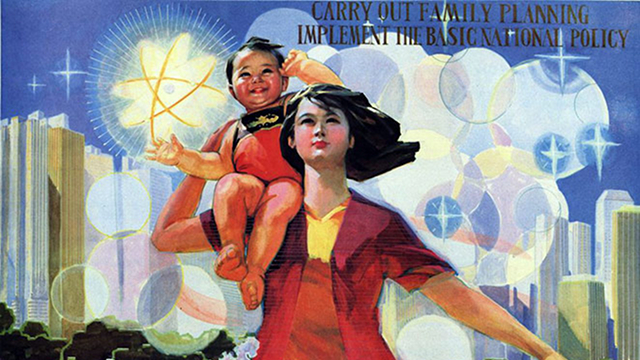
#ThrowbackThursday: Chinese One-Child Policy Propaganda Poster, 1986

Chinese One-Child Policy poster (The Galloping Beaver)

Chinese One-Child Policy poster (The Galloping Beaver)

As of Jan. 1, China’s one-child policy is officially history. Married couples are now allowed to have up to two children for the first time since 1979.

I’ve always thought propaganda posters were interesting, and here’s a great one for the one-child policy. It’s from 1986, and titled, “Carry out family planning, implement the basic national policy.” The image carries that can-do attitude made popular by Rosie the Riveter, and it’s easy to get swept up in the sentiment. Not to mention, the overall poster design’s pretty great too.


Saudi Women Win 20 Seats in Elections

Saudi Woman voting (Haaretz)

Saudi woman voting (Haaretz)

In Saudi Arabia, women have now gained a step towards equality: holding office.

In the recent elections held on Dec. 12 of last year, 20 women were elected to municipal seats. They comprise almost 10% of the 2.1K seats available. These seats were the only ones Saudi citizens vote for.

This was the first time women were allowed to vote in municipal elections. The most recent elections were held in 2005 and 2011.

Women were allowed to campaign for seats, albeit in a limited manner. They were not allowed to give out material that showed their faces (though this applied to both men and women), and could not speak to male audiences directly. (A candidate would have to speak from behind a partition or enlist a male relative to speak for her.) Women comprised 979 out of 7K candidates, or nearly 14%.

Around 130K+ women registered to vote, with the voting age being 21. There are 12.2M+ total women, and election officials estimated around 5M women would be eligible to vote. The country’s total population is around 30M.

This speaks to some good progress being made, and I hope there’s more on the horizon. This could happen: Before King Abdullah died, he decreed in 2013 that the Consultive Council, an appointed body that advises the king, be made up of 20% women.

China Ends Its Famous One-Child Policy

Chinese One-Child Policy poster (The Galloping Beaver)

Chinese One-Child Policy poster (The Galloping Beaver)

Whoa. Here’s something I didn’t expect to happen within my lifetime: Last week, China officially ended its one-child-per-family policy. Now, married couples are allowed to have up to two children. Crazy! (Though I kind of doubt that many couples will get crazy, and have more than two.)

The one-child policy was informally adopted (i.e. “strongly encouraged”) in 1975, made into law by the country’s Communist Party four years later. The law followed China’s population exceeding 800M+ people in 1970, with leaders realizing that the then-current growth rate was unsustainable.

However, the law has been relaxed for exceptions. In 1984, parents were allowed to have two children if one parent was an only. In 2013, this became alright if only one parent was an only child.

It’s estimated that the policy has prevented 400M+ births.

But why was the policy abolished, and why now? There are a few reasons. One is that the male-to-female sex ratio is becoming unbearably skewed, which tends to happen when preference for one sex greatly outweighs the other. (In this case, the Chinese preferred boys to girls, even going so far as to commit infanticide if a child was born a girl.) The birth rate is also declining, and the mortality rate is on track to outpace it. Per “The New York Times:”

China’s working-age population, those 15 to 64, grew by at least 100 million people from 1990 until a couple of years ago. But that expansion is petering out, and more people are living longer, leaving a greater burden on a shrinking work force. Now, about 10 percent of the population is 65 or older, and according to earlier estimates, that proportion is likely to reach 15 percent by 2027 and 20 percent by 2035.

China’s population is now 1.3B+, with 30% being over 50. It’s estimated that the decision will affect 100M+ couples.