Woman-Friendly Sex Shops: By The Numbers

Babeland, New York's Lower East Side location (Yelp)

Babeland, New York’s Lower East Side location (Yelp)

Dell Williams, who died last week at age 92, is credited with founding the first woman-friendly sex shop in the nation. Her store Eve’s Garden, founded in 1974, was born out of a need for a safe space for women to embrace and grow their sexuality and respective needs and desires (as well as selling high-end toys and products).

Williams was very much ahead of her time in that respect. Over forty years later, we now have many woman-friendly sex stores. They tend to be founded in same spirit of celebration and discovery of sexuality that Eve’s Garden was. Education and empowerment go hand-in-hand.

Here’s a timeline of how woman-friendly sex shops have evolved:

1970s: After gaining popularity in the gay community, The Pleasure Chest becomes more couple- (and woman-) friendly.

1974: Dell Williams opened Eve’s Garden, the nation’s first woman-friendly sex shop.

1977: Joani Blank opened the first Good Vibrations store in San Francisco.

1993: Noticing a niche needing to be filled, Claire Cavanah and Rachel Venning founded Toys in Babeland in Seattle.

1998: Toys in Babeland opened a store in New York.

2003: The Smitten Kitten opened in Minneapolis, Minnesota.

2005: Toys in Babeland changes its name to simply Babeland, to better reflect a sexually satisfying lifestyle.

2006: Good Vibrations opened a store in Brookline, Massachusetts. It was the fourth store total, and the first to open outside of California.

2009: Evy Cowan and Jeneen Doumitt opened She Bop in Portland, Oregon.


This is just a handful of woman-friendly sex shops.

It’s interesting to note that not only are these stores woman-friendly, but they were also founded by women. Clearly, it takes one to know one, in the case of knowing what women want in their sex toy shopping experience. There also appears to be a link between owning your sexuality and entrepreneurship. Very interesting!
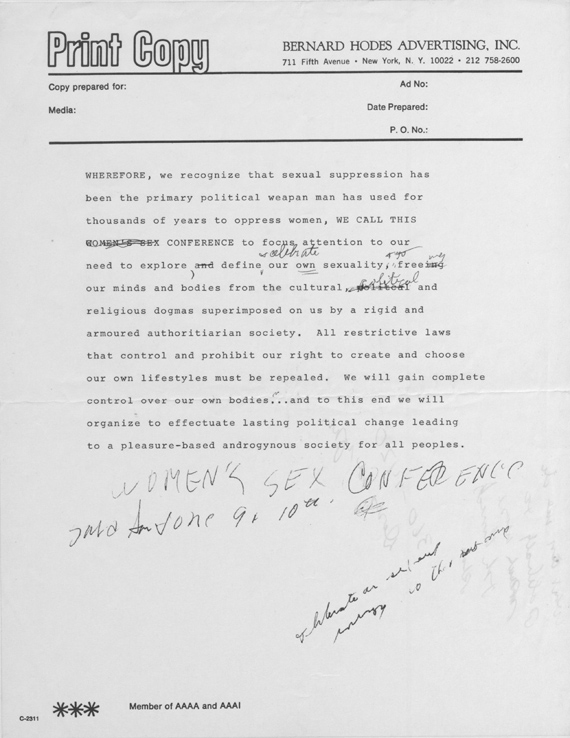
 

#ThrowbackThursday: Dell William’s Statement of Purpose for NOW’s Women’s Sexuality Conference, 1973

Dell Williams' draft statement of purpose for the NOW Women's Sexuality Conference, 1973 (Cornell Library)

Dell Williams’ draft statement of purpose for the NOW Women’s Sexuality Conference, 1973 (Cornell Library)

In honor of the late Dell Williams, I found this gem: In 1973, Williams organized a sexuality conference in New York that gained a lot of attention. It was put on by the National Organization for Women (NOW), and featured “workshops on thirty five sex-related subjects.” Thousands of women attended.

Above is a draft of Williams’ statement of purpose for the conference, housed in Cornell’s Human Sexuality Collection. As you can see, it naturally focuses on women reclaiming their sexuality and breaking free from restrictions of choice.

Williams would go on to found Eve’s Garden, the nation’s first woman-friendly sex shop, in 1974.

What are Common Personality Traits of Women Who’ve Read the “Fifty Shades of Grey” Trilogy?

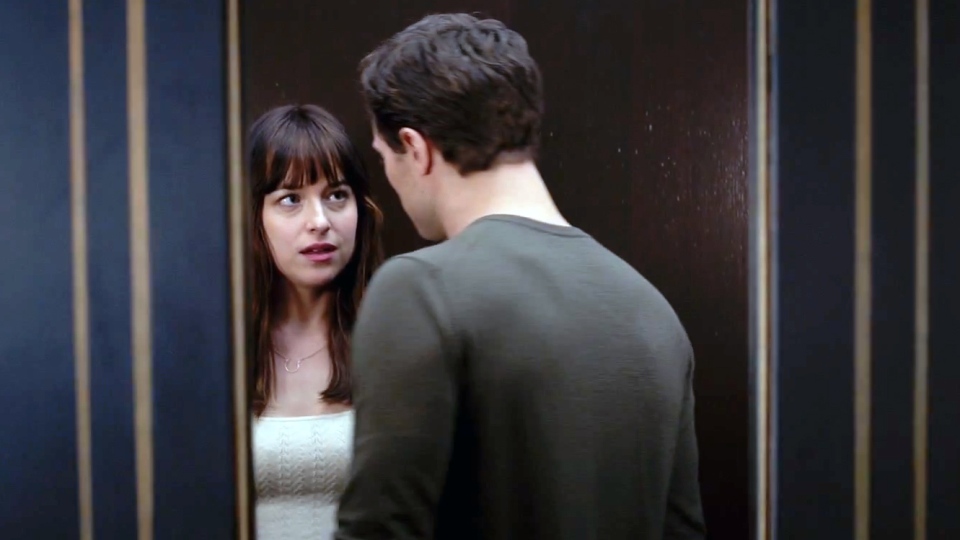
'Fifty Shades of Grey' still (The Tipsy Verse)

‘Fifty Shades of Grey’ still (The Tipsy Verse)

Now that we’ve all seen “Fifty Shades of Grey” (or are waiting for Netflix/Redbox/not-so-legal means), we can all relax until the franchise’s next installment comes out.

Until then, you have time to catch up on the rest of the trilogy. But that might say certain things about your personality.

Last year, Michigan State University researchers found that women who had read the erotic trilogy were “more likely to have a verbally abusive partner with stalker traits and eating disorders than non-readers.” The study polled 655 women ages 18-24, and was published in the “Journal of Women’s Health.” The subjects were divided into thirds of non-readers (those who hadn’t read any of the books), one-book readers (those who’d only read the first book) and three-book readers (those who’d read the entire trilogy).

Compared to women who hadn’t read the books, women who had read them reported more abusive behavior in relationships: They were 25% more likely to have been yelled at by a partner, and 34% more likely to have had a potential stalker.

But it’s unclear whether the subjects engaged in this behavior before reading the books, so we can’t say definitively that the books influenced them.

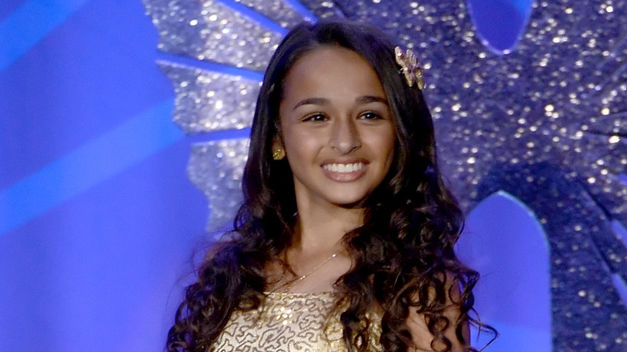
Trans Teen Jazz Jennings is the New Face of Clean & Clear

Trans teen activist Jazz Jennings (The Mary Sue)

Trans teen activist Jazz Jennings (The Mary Sue)

2015 continues to be a big year for the trans community as they make strides towards heightened visibility. Now, the community can add one more mainstream accomplishment: teen models.

Fourteen-year-old Jazz Jennings was named the new face of skincare line Clear & Clear last week. She’ll be fronting their “See the Real Me” promotional campaign, and tells her personal story in a video in an effort to encourage others to share their stories via social media.

Assigned male at birth, Jennings is the first trans model to represent the brand.

Jennings had already made a splash 10 years ago, when she became the youngest-known person diagnosed with gender dysmorphia. As she’s grown up, she’s been very active in advocating for LGBT rights, specifically for teens. Jennings has also written a book “I Am Jazz” detailing her story, and she was named to “Time”‘s Most Influential Teens List in 2014.

I’m sure we’ll be hearing a lot more from Jennings as she grows up and continues to accomplish great things. And we won’t have to wait long: Cable channel TLC will air a docuseries on her titled “All That Jazz.”


Dell Williams, Influential Sex Shop Entrepreneur, Has Died

Sex shop founder/entrepreneur Dell Williams (Refinery29)

Sex shop founder/entrepreneur Dell Williams (Refinery29)

Sad news from last week: Dell Williams, founder of the first woman-friendly sex shop Eve’s Garden, died at the age of 92.

Her origin story begins in the early ’70s, when she decided to purchase a Hitachi Magic Wand, “the Rolls-Royce of vibrators” after attending famed sex educator Betty Dodson’s “Body/Sex Workshop.” (Dodson was a huge proponent of the Magic Wand.) When Williams attempted to buy the device at a New York City Macy’s, she was shamed by a younger male sales associate.

She reported her lightbulb moment as follows:

Someone really ought to open up a store where a woman can buy one of these things without some kid asking her what she’s going to do with it.

This experience led Williams to build Eve’s Garden from her kitchen table, pursuing it as a side-hustle while working a 9-to-5 as an advertising executive. She was working on this at an interesting time: Discussions about female sexuality were beginning to bubble up, contrasting with the point that sex shops were run by, and catered pretty exclusively to men.

She showed an aptitude for entrepreneurship, as the thriving mail-order business (founded in 1974) grew into a storefront, and later went online. The site sells condoms, sex toys, and books, including Williams’ biography “Revolution in the Garden.”

Williams quickly became one of the go-to women to comment on sexuality changes amidst the larger society. In 1973, she organized a conference on women’s sexuality that received a lot of attention, and was consulted on sexual matters ranging from how to up the passion during Valentine’s Day to Britney Spears’ own ode to female masturbation “Touch of My Hand.”

But perhaps Williams was destined to go into the sex industry: Legend has it she was named for journalist Floyd Dell, who was an ardent supporter for Margaret Sanger’s work.

Williams started something that (thankfully) continues to thrive to this day: the woman-friendly sex shop, where women can go in and explore without fear of being shamed or side-eyed.

Above all, she knew the power of a sexually healthy and knowledgable woman (and how scared the rest of the world is of her). For her dedication in her biography, she wrote:

It has long been my unassailable belief that orgasmic women can change the world.  By this I mean that a woman who is unfettered sexually is unfettered politically, socially, economically and she is unstoppable.


How Big is The Average Penis?

Sewing tape measure (Gika Rector)

Sewing tape measure (Gika Rector)

Happy Friday! Men, I’m sure you’ve all worried about your size at some point, right? (No royal we here, since I’m not a man and therefore have never had this particular worry.) Depending on your mood today, you may or may not want to read on.

Scientists have (once again) figured out the average penis size. But this time, they’ve really got it down. (Some might say to a science.)

British researchers looked at a pretty comprehensive sample size of 15K+ men from the U.S., Asia, Europe and Africa. The men ranged in age from 17 to 91 years old, and most of them were from either Europe or the Middle East.

The results, published in the “British Journal of Urology” and fittingly titled “Am I Normal?,” found the following:

The mean length of a flaccid penis is 3.6 inches, and the mean length of an erection is 5.16 inches. An average guy’s erect circumference is 4.5 inches.

(How many dudes are frantically measuring right now?)

Here’s more reassurance, per The U.K.’s “The Guardian:”

In reality, only 2.28% of the male population have an abnormally small penis, said the study – and the same percentage an unusually large one.

Over 97% of men have an average-sized penis. This also means that we can assume a normal distribution (or bell curve) in terms of distribution.

Breathing easier now?

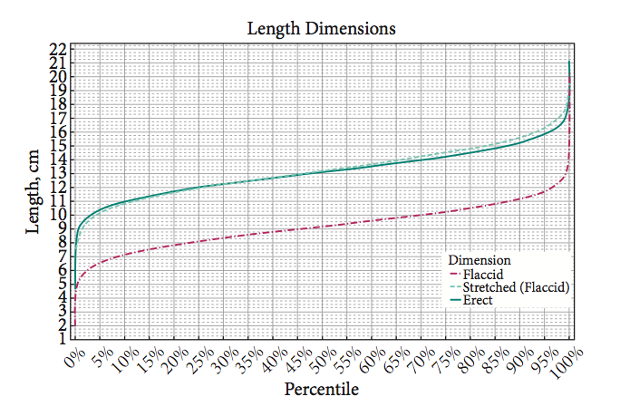
To find these numbers, the researchers examined variables from 20 previous studies on penises (culled down from 96 original studies) to construct a “nomogram,” a graphical representation that’s supposed to include all ages and races of men’s genitalia.

The study is the first of its kind to “combine all existing data on penis length and girth into a definitive graph.” It’ll be used by doctors to reassure men from size anxieties.

Here’s one of the graphs related to penile length:

Penile length graph (The Guardian)

Penile length graph (The Guardian)

However, the researchers have admitted there are some flaws to this study. One is that size differences between the races can’t be compared equally, because the sample sizes of each race were not equal themselves.

And then there’s this flaw:

They acknowledged their results may have been somewhat skewed by the possibility that men who volunteer to be examined may be more confident in their penis size than the general population.

But I’m sure that’s just part and parcel of the entire package (sorry, couldn’t resist). Either way, 97%+ of men can now rest easy.


Colleges and Universities with Graduate-Level Sexuality Programs: By The Numbers

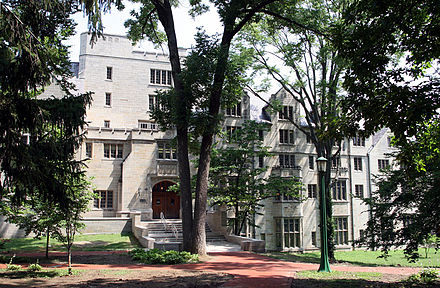
The Kinsey Institute (Wikipedia)

The Kinsey Institute (Wikipedia)

For those who are thinking (or planning on) making a career in the study of sexuality and would like to go the academic route, there are some schools which offer programs geared towards the subject. Several schools have undergrad courses and certifications, but there are also some graduate programs in which one can get a master’s or a Ph.D. degree.

This is by no means a comprehensive list, but a general smattering of the options out there.

Number in California: 2

San Francisco State University:

Program: Sexuality Studies

California Institute of Integral Studies (CIIS):

Program: Human Sexuality

– Concentrations: Clinical Psychology or Sexual Policy Leadership


Number in Indiana: 1

Indiana University Bloomington:

ProgramThe Kinsey Institute for Research in Sex, Gender, and Reproduction


Number in Hawaii: 1

University of Hawaii at Manoa

Program: Pacific Center for Sex and Society


As I mentioned, there are several programs out there, but these should be enough to pique your interest!

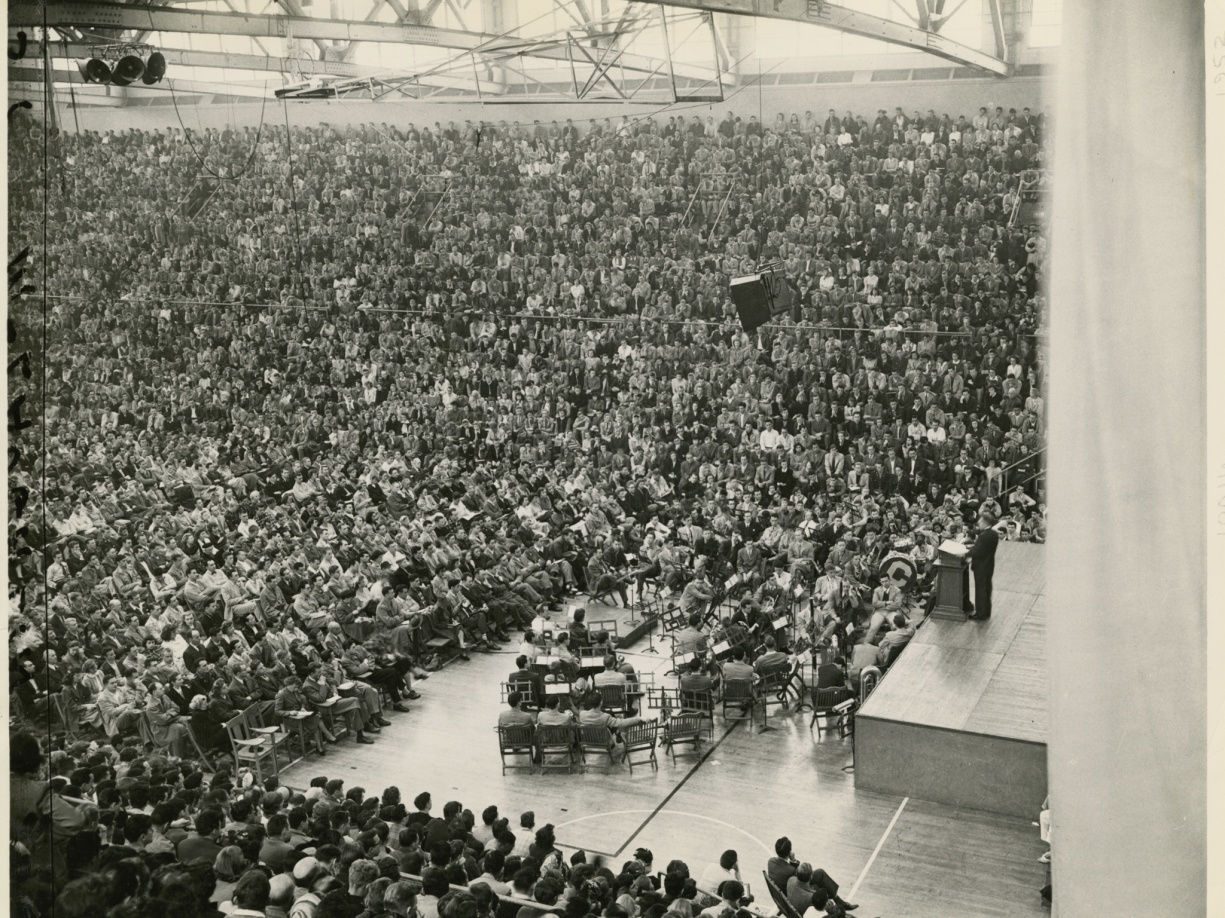
#ThrowbackThursday: Dr. Alfred Kinsey Lecturing at UC Berkeley, 1949

Dr. Alfred Kinsey lecturing at UC Berkeley, 1949 (The Guardian)

Dr. Alfred Kinsey lecturing at UC Berkeley, 1949 (The Guardian)

Dr. Alfred Kinsey, known to be one of the (if not the) father of modern sexology, lectured to a packed house at the University of California, Berkeley in 1949. This lecture capped off a big decade for him: He began by teaching a class on marriage (attended mostly by women) in which he espoused his beliefs on sexual frankness and equality for both genders. In 1947, he founded the Institute for Sex Research (now called The Kinsey Institute) at Indiana University. The following year, he wrote the breakthrough work “Sexual Behavior in the Human Male.”

I couldn’t find any further information on this image. But look how many people are there to hear him speak! I’m sure it helped that his book had sold 200K+ within the first two months of its release. He was truly a rockstar, and I wonder what it would’ve been like to hear him speak.

How Many Wives Cheat?

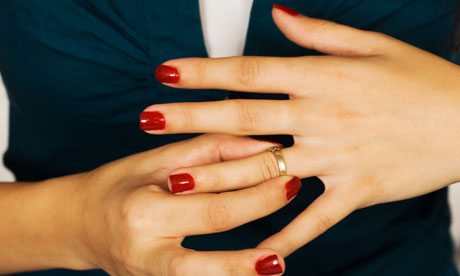
Woman removing wedding ring (Mockridge Investigations)

Woman removing wedding ring (Mockridge Investigations)

I ran across an interesting article on “The Huffington Post” on cheating wives, and wanted to see what other numbers I could find on the topic.

The 2013 HuffPo piece cites a “Bloomberg Business” article (the link to which is now defunct) that supposedly goes into further detail about it. The findings were apparently taken from the National Opinion Research Center’s General Social Survey, and found that women “had more affairs in the past two decades then in previous years.” The article doesn’t clarify how long the “previous years” timespan is.

But the study apparently found that “the percentage of wives having affairs rose almost 40 percent … to 14.7 percent in 2010.” This seems a little suspect, especially since we can’t see the original source. We’re dealing with self-reporting, so there’s bound to be some wonky numbers. And I don’t understand this “rising 40% to 14.7%” business. I feel like something got lost there, because there’s sort of no way that can be true.

HuffPo’s article mentions that for women, greater economic freedom makes it easier to cheat, since a financially independent woman isn’t trapped by her husband making all the household income.

Another study excerpted from the book “The Normal Bar” puts the number of cheating women at 19%, but this might also included unmarried women. A feature from “Fox News Magazine” claims the number of cheating wives hovers around 50-60%.

But which of these is correct?

It’s pretty impossible to tell. But it’s probable that the actual numbers might be higher.

There are so many varying statistics on this due to self-reporting issues that we’ll probably never get a concrete number of wives who admit to cheating on their husbands.


How Has “Fifty Shades of Grey” Impacted the Sex Toy Industry?

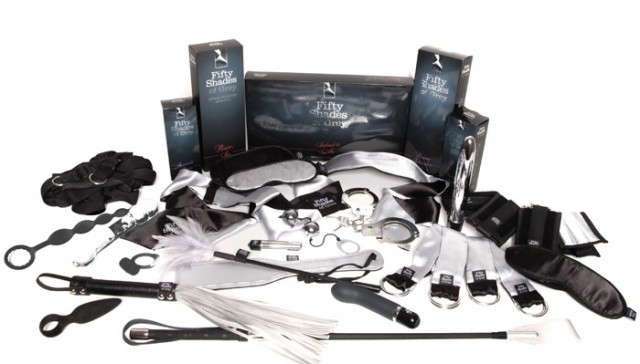
'Fifty Shades of Grey'-themed sex toys (Crushable)

‘Fifty Shades of Grey’-themed sex toys (Crushable)

With the recent “Fifty Shades of Grey” movie coming out last month (along with the requisite storm of thinkpieces), the sex toy industry is seeing an impact on the bottom line.

Different sex toy retailers are feeling an impact. “Variety” reports that Manhattan-based The Pleasure Chest was offering “Fifty Shades”-themed classes every night leading up to the movie’s premiere (though it doesn’t say for many weeks this went on).

Online retailer Adam & Eve, which holds the largest market share at 4%, has also gained a boost in sales. They’re also selling their own toy line “Scarlet Couture” pegged to the movie, in addition to the official “Fifty Shades”-inspired line.

“The Hollywood Reporter” has a piece which came out before the movie opened giving us some hard numbers. The U.K. sex toy brand Lovehoney made the line of “Fifty Shades”-inspired toys, which includes blindfolds, riding crops and feather ticklers. Demand for the “Inner Goddess” Ben Wa balls (or vaginal balls) sold out Europe in pre-orders. (Full disclosure: I was actually given a box of these when I attended a sexual health conference in January.)

THR reports that Lovehoney’s profits “tripled from $1.1 million the year before to $3.39 million by January 2014.” The “Fifty Shades” line has already sold 1.2M units worldwide, and is estimated to boost sales by 40% once the movie debuts.

If you’re looking for lingerie, Bluebella has you covered. The lingerie line has three “Fifty Shades”-inspired collections, and they anticipate a spike in sales not only from the movie, but also from Valentine’s Day.

“Inc.” also had a comprehensive article on this cultural phenomenon, and puts it in the larger context of a sea change. Market research firm IBISWorld found the following:

Between 2008 and 2013, sex toy sales in the U.S. increased by approximately 12.5 percent annually, raking in $610 million in 2013 overall.

The article notes that it’s more the smaller companies seeing a boon to their bottom line. But there’s also been a shift in who the sex toy industry’s customers are:

In 2013, women made up approximately 67 percent of U.S. industry patronage, which was a 12 percent increase from 2008.

It’ll be interesting to see if this is just a one-time sales spike, specifically in BDSM gear, or if this trend will continue, eventually making the practice almost, dare I say, vanilla.