Nonbinary Teen Barred from Opening Bank Account

Kaelin Farnish and their father, Keith (BuzzFeed)

Kaelin Farnish and their father, Keith (BuzzFeed)

Here’s your daily dose of LGBT+ discrimination: A Scottish Borders teen has been denied the right to open a bank account on the grounds that they do not identify with a sole gender.

Seventeen-year-old Kaelin Farnish tried to open online accounts at several banks, but kept getting stopped by the gender question. Farnish identifies as non-binary (i.e. defines as neither male nor female), and uses the pronouns “they” and “them.” Farnish was told at many of the banks that they would have to go to the bank in person to make the change.

As gender non-conforming individuals become more commonplace and visible, I hope that institutions begin making changes to policies such as this one.


When Do Men Begin Masturbating?

Male masturbation (Lerablog)

Male masturbation (Lerablog)

Did you know that May is National Masturbation Month? Time to (officially) celebrate self-love (though I personally do every day)!

I’m always curious about the different stages of sexual initiation: first kiss, first intercourse, etc. Of course, one more milestone is the first time a person masturbates (and subsequently finds out that touching yourself feels amazing). Conventional wisdom has held that men begin masturbating in their early teens. But is this true?

Weirdly, I couldn’t find much official, hard (heh) data on this. Dr. Alfred Kinsey briefly touched on this topic (wow, I just can’t stop) and found that 92% of men reported that they had masturbated. (Interestingly, Kinsey took a deeper-dive into female masturbation. Pretty surprising for 1953!) But the stat I found didn’t delve into when the first age for masturbation for boys occurred.

I did find an informal poll on a Coachella-related message board. Here are the findings:

Masturbation poll (Coachella)

Masturbation poll (Coachella)

I have no idea how close to the sexual “norm” this is. This data is problematic for a couple of reasons: First, it’s self-reported, and the respondents could easily be lying about how old they were when they first touched themselves. Also, it’s self-selected, meaning that respondents decided of their own accord to answer the question. It’s improbable that the responses represent an even swath of people that would be comparable to that of a formal study.

Again, I’m really surprised that more research hasn’t been done on this topic. Kinsey Institute, get on this!


How Many Men Fake Orgasms?

Couple in bed (Nairobi Today)

Couple in bed (Nairobi Today)

That headline made you do a double-take, right? “But…but only women fake it…right?!” No, apparently it’s not just women. (I’ll let that sink in for a moment now that everything in your world has come crashing down.)

A study published last month in a volume of “Sexual and Relationship Therapy” examines whether faking it, and why, is correlated with sexual and relationship satisfaction. Researchers looked at a sample size of 230 men ages 18-29 years old. Men reported faking it on average about 25% of sexual encounters within their current relationship, and mostly within penetrative (a.k.a. vaginal) sex. (Granted, this is self-reported data, so it’s highly possible some men are lying about their frequency of this act.) It’s unclear as to the sexual orientations of the subjects.

Faking orgasms were found to be related to relationship and sexual satisfaction, but could vary with motivation. Men with lower levels of attraction to their partners indicated that they faked it more frequently. But men who were happy with their partners also faked it “to support a partner’s emotional well-being.” Also, men who faked it when they were drunk correlated to higher levels of sexual satisfaction.

These results parallel a 2010 study published in the “Journal of Sex Research” that also examined rates of faking orgasm (though this one looked at faking for both men and women). And the numbers were near-identical: 25% of men reported faking orgasm, with 28% of men reporting that it occurred during penetrative/vaginal sex.

(Side note: each of these studies referred to faking orgasm as “pretend/pretending orgasm.” I tried to use that phrase in this post, but every time I typed it, I started giggling. Because I’m 12 years old.)

These are interesting stats, and definitely not something I knew before. But does this mean we’ll now have a cultural conversation regarding the faking-orgasm gap?


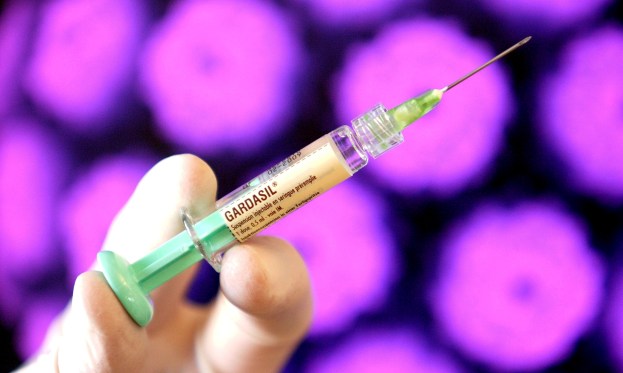
The HPV Vaccine Reduces the STD in Teen Girls by 64%

HPV vaccine (The Guardian UK)

HPV vaccine (The Guardian UK)

According to the Centers for Disease Control and Prevention (CDC), human papillomavirus (HPV) is the most common sexually transmitted infection (STI), and it’s estimated that most sexually active adults will get it at some point in their lives.

Fortunately, there’s a way to prevent the spread with the HPV vaccine. The vaccine has been around for ten years, so it’s a great time to amass some longitudinal data.

Just how effective is the HPV vaccine?

Earlier this year, “Pediatrics” released a study examining just that. Researchers looked at the HPV vaccine in teenage girls ages 14-19, and women ages 20-24. Effectiveness in the latter category resulted in a 34% decrease of the virus. That’s impressive, right? Effectiveness for teenage girls hovers around a 64% decrease. This thing is mad effective.

Obviously, the data shows that it’s best to get the HPV vaccine early in life. But unfortunately, the vaccine isn’t as widely known or used as it should be. Right now, only around 40% of teenage girls and 20% of teenage boys get the vaccine. (Yes, the vaccine is recommended for boys too.)

Getting the vaccine has ramifications beyond one’s teenage years: The virus can cause health issues such as genital warts and cancers affecting the genital areas. The HPV virus is particularly responsible for cervical cancer, which affects around 11K+ women a year.

Hopefully this data will persuade others to make getting the vaccine a top priority.

Porn Site Blocks North Carolina IP Addresses

Typing on a laptop keyboard (Free Stock Photos)

Typing on a laptop keyboard (Free Stock Photos)

By now, we’ve all heard about what’s going on in North Carolina with the House Bill 2 (HB2), which has abolished statewide anti-discrimination legislation against the LGBT community. Many companies are unhappy about it, and have either threatened to, or already have, pulled their business from the state.

One company is doing something a little different. Porn site xHamster has begun blocking any inbound users from any North Carolina (NC) IP addresses. At first, users with these addresses saw only a black screen. Later, NC users were asked if they supported HB2. If they answered affirmatively, they see numbers relating to NC users who search for “gay” and “she male” as keywords for their porn consumption. (Spoiler alert: the numbers for those are not insignificant.)

xHamster.com homepage for NC IP addresses (@xhamstercom)

xHamster.com homepage for NC IP addresses (@xhamstercom)

It is unclear how many IP addresses are registered in NC, and how many visitors xHamster.com receives in a given month.


(Reversible) Male Birth Control Could Be Available in 2018

Male birth control (The Chicago Tribune)

Male birth control (The Chicago Tribune)

Whoa! Scientists recently made a discovery that puts us nearer to a male birth control method. And said method might even be available by 2018!

Here are the deets: Scientists at the Parsemus Foundation have developed a “non-hormonal male contraceptive,” which they’re calling Vasalgel. It’s a gel which gets injected into a man’s testicles. Once inside, the gel forms a protective barrier that prevents sperm from leaving the vans deferens (located inside the testicles).

Vasalgel explainer graphic (Tech Times)

Vasalgel explainer graphic (Tech Times)

So far, the gel has only been through animal testing, specifically on rabbits. Of the 12 rabbits tested, 11 revealed no traces of sperm within their semen within 29 days of receiving the injection. (That twelfth rabbit’s semen cleared of sperm soon after.) The effect endured throughout the 12-month study.

Another important aspect: it’s reversible! Scientists were able to inject a second gel into seven of the rabbits, and their sperm “rapidly” returned.

What does this mean for human men? It looks so promising, right? Unfortunately, we’ll have to wait a couple of years. Scientists now need to conduct a human trial, which could happen later this year. Of course, the results will need to be duplicated to get the greenlight. But who knows? Hopefully men around the world will be able to get this procedure done at their doctor’s office within the next five years.

France Outlaws Paying for Sex

French prostitutes (The Independent UK)

French prostitutes (The Independent UK)

Earlier this month, France made a major move: The country has now made paying for sex illegal.

If someone is caught paying for sex, they’ll be fined up to $1.7K for a first offense, and up to $4.2K+ for a second time. The offender may also be required to attend classes on sex workers’ conditions.

France isn’t the only country to pass a measure of this kind, or even the first: The country follows in the footsteps of the U.K., Sweden, Iceland, and Norway.

Advocates of the new ban claim that this will help sex workers get out of the trade. But sex workers are opposing this new measure, reasoning that it will expose them to more violence.

It’s estimated that France has between 20K to 40K sex workers. (Naturally, it’s difficult to get an accurate count.)

North Carolina Passes LGBT Discrimination Law

North Carolina Governor Pat McCrory (Instinct Magazine)

North Carolina Gov. Pat McCrory speaks during a news conference, Monday, Jan. 7, 2013, in Raleigh, N.C. In one of his first acts as governor, McCrory issued an executive order to repeal the nonpartisan judicial nominating commission established by former Gov. Bev Perdue. (AP Photo/The News & Observer, Takaaki Iwabu)

North Carolina Mayor Pat McCrory has now ensured that his state has made the news recently for all the wrong reasons: On Mar. 24th, he signed House Bill 2 into law, which overrides any local government’s anti-discrimination bills that benefitted the LGBT community. (The bill was introduced by the North Carolina State Legislature, which I’ve now refer to as the NCSL.) And not only did McCrory sign this into law, he did it in just one day.

Why is this a huge deal? For one, the NCSL has now blocked a measure that the city of Charlotte (the state’s largest city and the South’s banking hub) recently brought forth which banned discrimination against the LGBT community. Where others would see progress, the NCSL saw…inappropriate public restroom use?

“The Atlantic” breaks down what exactly this new law (ick!) entails:

It also prevents any local governments from passing their own non-discrimination ordinances, mandates that students in the state’s schools use bathrooms corresponding to the gender on their birth certificate, and prevents cities from enacting minimum wages higher than the state’s.

Seriously, this new law is all kinds of trouble. But what really gets me is the notion of forcing transgender students to use the restrooms of the gender for which they were assigned at birth. The NCSL is perpetuating the myth that transpeople are pedophiles, and will follow children into public restrooms to ensure vulnerability. I don’t have to tell you how insane that is, do I?

McCrory’s also sending a statement that the capricious whims of the state government will rule any actions local governments make to better their own communities.

This measure will go into effect on Apr. 1st.

Real talk here: I’m from North Carolina. I haven’t lived there in years, but my parents and much of my extended family still resides there. I love going back to visit, but wouldn’t want to live back there again for various reasons. And this new law has given me yet another reason not to go back.

If North Carolina really wants to show that the state, and its residents, are progressive and accepting of all, the NCSL and Pat McCrory really need to turn this ship around, and fast. (I mean, damn, Charlotte’s newspaper “The Charlotte Observer” just published an op-ed putting McCrory in the ranks of other Southern governors that proved to be on the wrong side of history.)

I’m aware of how Southerners are portrayed and thought of outside the bounds of the South (and have even been the victim of these stereotypes sometimes), and right now, North Carolina is looking like a right bumpkin. And not a cute one. Instead of the little cousin who’s endearingly behind the times due to her own innocent ignorance, the Old North State has progressed (ha!) to being the willfully racist hick uncle everyone just grits their teeth and bears at the best of times.

I used to be proud of where I’m from. But this latest idiocy is making it real hard to be.

How Many Couples Wait Until Marriage to Have Sex?

Russell Wilson and Ciara (Wenner Media)

Russell Wilson and Ciara (Wenner Media)

Last month, Seattle Seahawks quarterback Russell Wilson proposed to singer Ciara. While this narrative isn’t uncommon (professional athlete gets with professional singer), one thing about their courtship has stuck out: Wilson and Ciara (I’d use her last name here if she used it herself) abstained from sex during their courtship. And they were loud and clear about it.

You may think this example is an outlier. So how many couples wait until marriage to have sex?

A 2006 study by the Guttmacher Institute took data from the National Survey of Family Growth from 1982, 1988, 1995 and 2002. Around 40K+ subjects ages 15-44 were asked about their sex lives. In 2002, around 95% reported having premarital sex (shocker <– sarcasm right here.) So that’d be around 5% who reported staying virgins til marriage. But this is all self-reported data, so I can’t tell if answers were blinded or not. (Respondents might lie if their answers aren’t blinded.)

This is a upswing from back in the day, but not a total shock. Dr. Alfred Kinsey tackled this same question in his seminal works, 1948’s “Sexual Behavior in the Human Male” and 1953’s “Sexual Behavior in the Human Female.” He found that 67-98% of men had had premarital sex, “depending on socioeconomic level” (I would love to know what that means!), with 68% losing it before turning 18. Women fell into a 50-50 split of whether they’d had premarital sex or not. (This kind of turns the prudish ’50s narrative on its ass, doesn’t it?)

Even thought we have some data, it’s difficult to predict the numbers of virgins-til-marriage completely accurately if the numbers are all self-reported. Some might not self-report accurately due to shame or any number of factors. That being said, nothing wrong with their decision to wait.


Five Women File Class Action Suit to Lift New York’s Tampon Tax

Tampon (Salon)

Tampon (Salon)

Did you know that a tampon tax exists? No? A lot of people don’t. Thankfully, that’s about to change.

The “tampon tax” is a sales tax applied to feminine hygiene needs (tampons and pads). Many states have one in place, and it’s been proven to really add up over time (especially since the average women menstruates for around 37 years).

Right now, women aren’t going to take it any more. Five women in New York have filed a class-action lawsuit against commissioner Jerry Boone and the New York State Department of Taxation and Finance. Their stance is that feminine hygiene products aren’t classified as medical use, and so are relegated to the 4% sales tax.

The lawsuit also models the amount of money women are spending through this tax:

According to the lawsuit, women spend on average more than $70 a year on tampons and pads, and women who menstruate constitute more than one-quarter of New York state’s 20 million population. The plaintiffs estimate that the state collects around $14 million in taxes by imposing a four percent sales tax on tampons and pads, less than one-hundredth of one percent of the state’s annual budget of $142 billion.

And the five women bringing the lawsuit aren’t the only ones who think the tax should be outlawed:

New York Governor Andrew Cuomo said on Thursday that the tax should be repealed. Earlier this year, Manhattan Assemblywoman Linda Rosenthal introduced a bill seeking to end the state’s taxation on tampons and pads.

It’ll be interesting to see how long it takes to affect change in this area.