Women Who’ve Headlined Coachella: By The Numbers

Bjork Headlining Coachella, 2002 (Snakkle)

Bjork Headlining Coachella, 2002 (Snakkle)

The Coachella Valley Music and Arts Festival (also known as…Coachella) runs over two weekends in April. Headliners were announced earlier this month, and music superstar/feminist/legend for our times Beyonce will headline each Saturday’s performance at the main Coachella stage.

Why is this significant?

Coachella festivals (#): 18

  • Founded in 1999

Total female headliners (#): 3

Bjork headlined in 2002 and 2007.

Unique female headliners (#): 2

  • Bjork and soon-to-be Beyonce

Female headliners (%): 16.67%

Main stage acts (approximate #): 135

*Source: Coachella Festival line-ups page on Wikipedia


#ThrowbackThursday: Beyonce and Solange at Coachella, 2014

Beyonce and Solange at Coachella, 2014 (Global Music Tribune)

Beyonce and Solange at Coachella, 2014 (Global Music Tribune)

Solange performed a set at Coachella in 2014. While singing “Losing You,” off her EP “True,” Beyonce joined her little sister onstage to dance to the song.

Beyonce will be headlining Coachella on Saturday, Apr. 15th and 22nd.

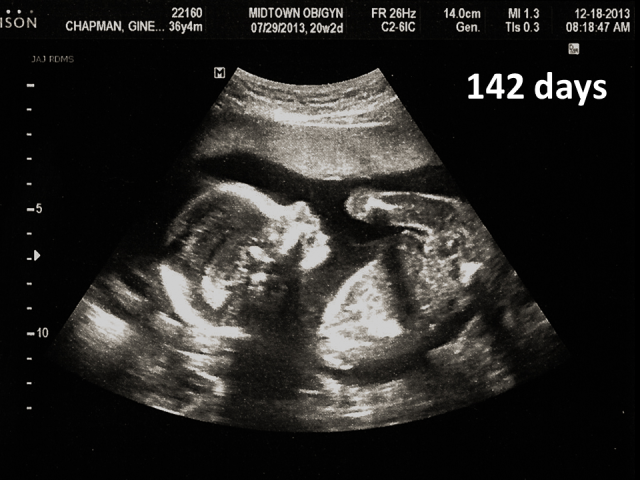
Ohio Bans Abortions After 20 Weeks

Ultrasound of fetus at 20 weeks (The Times in Plain English)

Ultrasound of fetus at 20 weeks (The Times in Plain English)

Another blow for women’s health: Ohio Governor John Kasich (yes, the former Republican presidential hopeful) signed a bill to approve banning abortions after the 20th week of pregnancy. (To put this in context, most pregnancies are around 40 weeks long.)

The Senate Bill 127, signed December 2016, does not allow for exceptions in rape and incest cases. Supporters of the bill claim that the fetus can feel pain at 20 weeks. (I’m curious how they know this; did they ask the fetus through the ultrasound?) The only exception will be for women whose pregnancy puts their health at risk.

Providers caught performing abortions after 20 weeks will charged with a “fourth-degree felony.”

Earlier that month, Kasich tried to sign a “heartbeat” bill, which would ban abortion after six weeks. A heartbeat pulse can generally be found around that time, though women may not know they’re pregnant. He eventually vetoed it due to overwhelming public pressure.

Around 1% of abortions occur after 20 weeks. The new law takes effect Mar. 14, 2017.

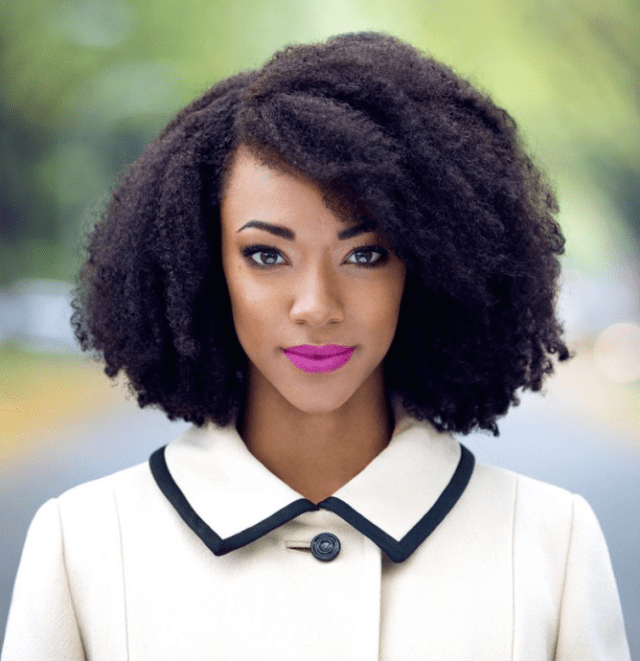
Sonequa Martin-Green Will be the First Black Woman to Star on a “Star Trek” TV Series

Sonequa Martin-Green (Audrey Can)

Sonequa Martin-Green (Audrey Can)

Once again, science fiction imagines a more inclusive world for all of us. This time, “Star Trek” is adding on to its storied universe, and creating its first new franchise in a decade. Sonequa Martin-Green, actress on “The Walking Dead,” will lead the cast as a lieutenant commander in “Star Trek: Discovery.”

Martin-Green’s lead character Rainsford is a first for the series: She’s the first Black woman to star in a “Star Trek” series. In-universe, the lieutenant commander is also a first. Previous to the new series, all the lead characters had been captains. Executive Producer Bryan Fuller has spoken on the need for context and a new perspective, as well as his desire to have a Black woman lead the series.

Martin-Green will lead an inclusive cast, which includes Asian actress Michelle Yeoh playing another starship’s captain and Anthony Rapp as the series’ first gay character on TV.

Bus Permits for the Women’s March Outnumber Bus Permits for the Inauguration by a 1:6 Ratio

Women's Strike For Peace And Equality March, 1970 (Time)

Women’s Strike for Peace-And Equality, Women’s Strike for Equality, Fifth Avenue, New York, New York, August 26, 1970. (Photo by Eugene Gordon/The New York Historical Society/Getty Images)Women’s Strike For Peace And Equality March, 1970 (Time)

Friday, January 20th is Inauguration Day for the president-elect. The Women’s March takes place the next day. (Who’s going? I am!) D.C. can already tell the event is sure to be huge, judging by the number of bus permits secured. And the March might overshadow the previous day’s activities.

According to D.C. Council member Charles Allen, 1,200 buses have secured parking permits for the day of the March in RFK Stadium. (RFK Stadium has a capacity of 1,300 buses.) By contrast, just 200 buses have registered for parking permits for Inauguration Day. For every bus that has registered for the inauguration, six buses have registered for the March.

For President Barack Obama’s second inauguration in 2009, 3K buses registered for permits. Bus registrations for the current president-elect comprised 6.67% of that total.

Attendees for the March are expected to number as many as 200K.

Hopefully, this detail begins getting the message to the president-elect loud and clear that we will not be ignored.


Black Women Nominees for the Best Actress in a Television Series — Comedy or Musical Golden Globe: By The Numbers

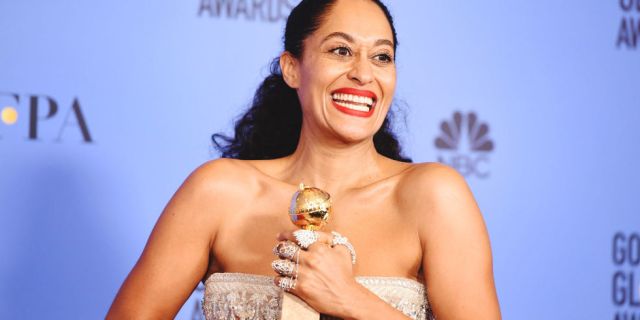
Tracee Ellis Ross with her Golden Globe award, 2017 (Wbli)

Tracee Ellis Ross with her Golden Globe award, 2017 (Wbli)

At the 2017 Golden Globe Awards, actress Tracee Ellis Ross won the Best Actress Television Series Musical or Comedy (BATSMC) for her role of Bow Johnson on the ABC comedy “Blackish.” Ross is only the second Black woman to win in this particular category.

If that doesn’t impress you enough, here are some numbers that put Ross’s win in the larger context (with Best Actress Television Series Musical or Comedy noted as BATSMC):

Number of total Black nominees for BATSMC: 14

Number of unique* Black nominees for BATSMC: 7

*I’m defining unique as actresses who’ve been nominated at least once.

Total nominees for BATSMC, 1963-2017: 54

Percentage of total Black nominees to total overall nominees, 1963-2017: 25.96%

Percentage of total Black winners to total overall winners, 1963-2017: 3.70%

Number of Black actresses who’ve won BTMSC: 2

  • Debbie Allen for “Fame,” 1983
  • Tracee Ellis Ross for “Blackish,” 2017

Number of Years between the first Black winner and second Black winner: 34

Year of the first Black nominee: 1970

  • Diahann Carroll for “Julia”

Number of TV Shows with more than one Black actress nominations:

  • “The Jeffersons:” 5 nominations – 1977, 1978, 1983, 1984, 1985
  • “Fame:” 3 nominations – 1983, 1984, 1985
  • “Gimme a Break!:” 2 nominations – 1983, 1985

Highest number of Black nominees in a single year: 3

  • 1983: Isabel Sanford, “The Jeffersons;” Nell Carter, “Gimme a Break!;” Debbie Allen, “Fame”
  • 1985: Isabel Sanford, “The Jeffersons;” Nell Carter, “Gimme a Break!;” Debbie Allen, “Fame” (No, this isn’t a typo; the exact same three actresses were all nominated again two years later.)

 Number of Black nominees, 2017: 2

  • Tracee Ellis Ross, “Blackish”
  • Issa Rae, “Insecure”

*Sources: Wikipedia’s list of black Golden Globe Award winners and nominees and Golden Globe Award for Best Actress page.

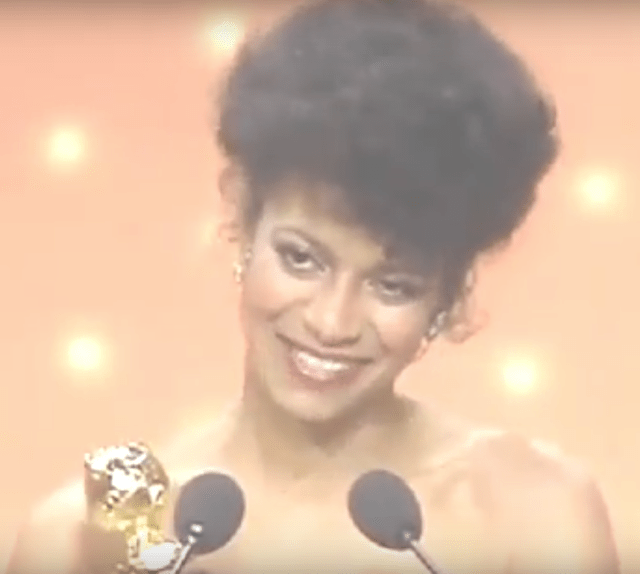
#ThrowbackThursday: Debbie Allen at the Golden Globes, 1983

Debbie Allen at the Golden Globes, 1983 (YouTube)

Debbie Allen at the Golden Globes, 1983 (YouTube)

Way back in 1983 (34 years ago!), actress-choreographer Debbie Allen won the Golden Globe Award for Best Musical or Comedy Actress. Allen starred in “Fame,” the TV series based off the 1980 movie.

She was the only Black woman to win this award until “Blackish” actress Tracee Ellis Ross (yes, Diana Ross’s daughter) won earlier this week during the

New York City Issues the First U.S. Intersex Birth Certificate

Sara Kelly Keenan (LGBTQ Nation)

Sara Kelly Keenan (LGBTQ Nation)

In December 2016, New York City’s Department of Health and Mental Hygiene re-issued a birth certificate to Sara Kelly Keenan. The action made history: Keenan’s corrected birth certificate denoted her intersex identity. (Keenan uses female pronouns.) The new birth certificate is the first one ever in the U.S. to note the gender identity.

The term “intersex” refers to a physical condition where one’s anatomy does not fully line up as either male or female. Keenan is “genetically male with female genitalia and mixed internal reproductive anatomy.” When Keenan was born, her birth certificate originally read “male,” but was changed to “female” three weeks later.

This change has been a long time coming, seeing as Keenan is 55 years old. She’s seen a lot of changes, especially within the fields of reproductive health and anatomy: When Keenan was born, “hermaphrodite” was the commonly accepted term for her condition.

Previous to the birth certificate change, Keenan had self-identified as non-binary (that is, neither male nor female).

“Glamour” Publishes All-Women, No-Photoshop Issue

'Glamour 'magazine, February 2017 (Refinery29)

‘Glamour ‘magazine, February 2017 (Refinery29)

Fashion magazines are becoming woke as never before: “Glamour” magazine’s February 2017 will be feature no Photoshopping within its pages. If you’ve every picked up a women’s fashion magazine in the history of ever, you know this is no small feat.

Another thing: the issue will feature all women. Editor-in-Chief Cindi Leive breaks down what exactly this means:

We’ve decided to support women in the most meaningful way we can: by hiring them.From first page to our last every photo we commissioned for the February issue was created by women: photographers, stylists, hair, makeup, everything.

Clearly, “Glamour” puts its money where its mouth is. In her letter for readers, Leive declares that this issue’s changes were born of changing the norm. Even for a women’s magazine, women contributors were few and far between. For last fall’s content, Leive notes that only 37% of the print photographers who were used were women, and only 32% of the hairstylists were women.

Tracee Ellis Ross Becomes the First Black Woman to Win a Golden Globe for Best Actress in a TV Comedy Since 1983

Tracee Ellis Ross, Golden Globes 2017 (Elle)

Tracee Ellis Ross, Golden Globes 2017 (Elle)

Last night at the Golden Globe Awards, the always amazeballs Tracee Ellis Ross won the award for Best Actress — Television Series Musical or Comedy. Ross plays Bow Johnson, badass doctor and matriarch of the Johnson family in the ABC comedy “Blackish.”

Ross is also the first Black woman to win that category in 34 years. The last Black woman to win in that category was Debbie Allen for “Fame.”

In her historic moment, Ross’s acceptance speech celebrated inclusion, especially for women of color:

This is for all the women, women of color, and colorful people whose stories, ideas, thoughts are not always considered worthy and valid and important. But I want you to know that I see you. We see you.

Congratulations, Tracee, and keep being you!