13K Women Interested in Running for Public Office

Women's March (Social Work Blog)

Women take part in a protest against Republican presidential candidate Donald Trump outside the Trump International Hotel and Tower in Chicago, Illinois, U.S. October 18, 2016. REUTERS/Joshua Lott – RTX2PDGE

Ever since Donald Trump became the president-elect in November, women have felt compelled to act out. The Women’s Marches that took place all over the world on January 21 were a great example. Now, some women are interested in taking their civic duty further by running for office.

NY Mag‘s “The Cut” estimates there are 13K women interested in running for public office. They arrived at this number by looking to different organizations that help women run for public office: VoteRunLead has 3.5K women interested, EMILY’s List has 4K+, and She Should Run has 8K+ interested women.

As the article points out, it’s unlikely that all of these women will run. It’s also probable that other women will join these organizations later. It remains to be seen how (or even if) this will impact the 2018 midterm elections, but it certainly looks like #thefutureisfemale.
Male Contraceptive Gel 100% Effective in Primate Trials

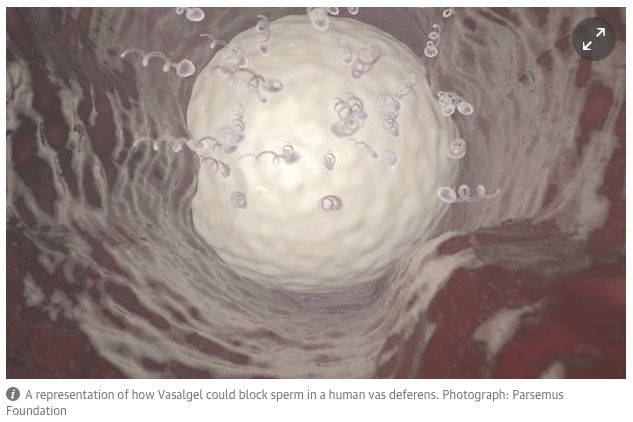
Vasalgel rendering (The Guardian)

Vasalgel rendering (The Guardian)

If you’re yearning for male birth control that isn’t a condom, you’re in luck! Scientists have been making progress on Vasalgel, a male contraceptive gel. A recent trial of the product on primates found the gel to be 100% effective at preventing pregnancy.

It’s pretty simple how Vasalgel works: the gel prevents sperm from exiting the penis. If a man decides he’d like to stop using the gel, the effects can be eradicated by using ultrasound waves to dissolve the gel. Vasalgel doesn’t affect “sperm levels or hormone production.”

Here’s how the study, conducted by scientists at the California National Primate Research, was set up:

For the study, 16 rhesus monkeys were selected to undergo the procedure before being placed back into groups with fertile females during mating season. After being monitored for six months, the researchers found that no pregnancies had occurred—the typical pregnancy rate in such unaffected conditions is usually around 80 percent.

The Parsemus Foundation funded the research for the study. Results were published in Basic and Clinical Andrology journal.

Vasalgel isn’t the only contraceptive gel being tested right now. In India, reversible inhibition of sperm under guidance (RISUG) is being tested on men. This gel works differently in that it seeks to injure swimming sperm. RISUG has shown to be effective for up to 10 years within the 200 men on whom the product was tested.

Trends: #NoPhotoshop

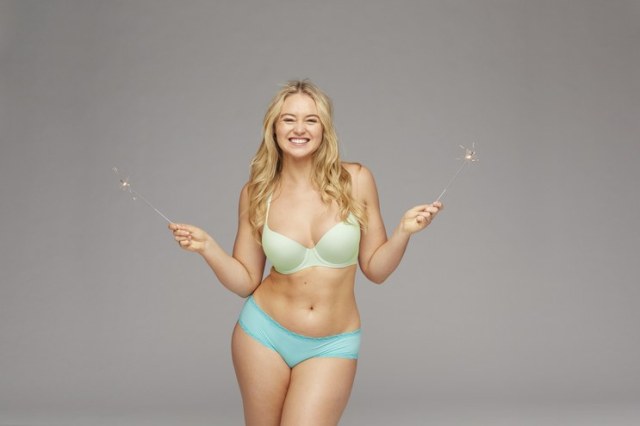
Iskra-Lawrence 'Share Your Spark' AerieReal campaign (Glamour)

Iskra-Lawrence ‘Share Your Spark’ AerieReal campaign (Glamour)

It used to be that brands only used tall, skinny, (mostly) blonde girl in their advertising. This was thought to be aspirational: You wanted to be the girl in the photo, and how best to be that? Buy their clothes (or perfume, or lingerie, or whatever the brand was selling). But the pursuit of one aspirational body type led those who didn’t possess said body type (either by genetic luck-of-the-draw or by carefully-chosen enhancements) to believe themselves unworthy and maybe inferior.

Thankfully, that trend is on its way out. The current thing (which, I hope, stays) is all about positivity and accepting yourself as you are, because you are enough. For women’s brands, this has translated to, among other things, banning Photoshop.

This month, Glamour released its all-women, no Photoshop issue. The magazine’s staff has gone all-in on banning photo retouching: A quick glance at the “Girls” cast on the cover, and you can see that the cellulite on Lena Dunham’s thigh hasn’t been wiped out. And why should it? It’s just a natural part of life.

In January 2014, American Eagle’s underwear brand Aerie launched its #AerieReal campaign, featuring models of all shapes and sizes and no Photoshopping. The intimates brand is aimed at girls ages 15-22, and the campaign has been used to promote body acceptance, positivity and confidence.

Aerie’s gamble has paid off exponentially: Q2 2014 sales were up 9% from the previous quarter, and continued to grow for the rest of the year. In 2015, sales were up by 20%, with Q4 2015 seeing a 26% increase year-over-year. And sales in Q1 2016 were up 32%.

Body acceptance and positivity has also bled into regular women’s lives, and features prominently on social media. Searching #nophotoshop on Instagram brings up 460K+ posts.It’s clear that this trend isn’t going away anytime soon.


#ThrowbackThursday: #AerieReal, 2014

#AerieReal campaign, 2014 (The Huffington Post)

#AerieReal campaign, 2014 (The Huffington Post)

American Eagle’s underwear brand Aerie launched its Aerie Real campaign in January 2014. The campaign, photographed by John Urbano and targeted to teens and women and in their 20s, did away with traditional models (read: skinny, unblemished) and began using “real” women, unretouched in all their glory.


The Philippines Might Get Access to Free Birth Control

Birth control pills (Salon)

Birth control pills (Salon)

Women in the Philippines might soon get access to free birth control.

The Philippine President Rodrigo Duterte signed an executive order for women of the country to receive free birth control, as well as access to further reproductive health services.

The order implements the Responsible Parenthood and Reproductive Health (RPRH) Act of 2012, which promotes family planning with the support of the state. It was signed into law that year. The order took 13 years to be signed into law (so it was introduced in 1999…yikes).

It’s estimated that there are currently 6M women without birth control within the country, with 2M women classified as poor. There are 24 live births per every 1K people, giving the country the 66th highest birth rate in the world. Considering that abortion is illegal, the need for some form of birth control is high:

More than half of all pregnancies in the Philippines are unintended, according to the Guttmacher Institute, and more than 90 percent of unintended pregnancies occurred in the absence of modern contraceptive methods.

Duterte’s goal is to completely eradicate any “unmet family planning needs” by 2018.

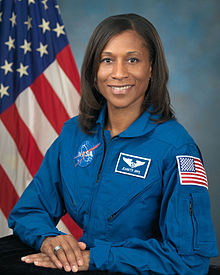
Jeanette Epps Will Be the First Black Astronaut to Board the International Space Station

Jeanette Epps (Wikipedia)

Jeanette Epps (Wikipedia)

Earlier this month, the National Aeronautics and Space Administration (NASA) announced that Astronaut Jeanette Epps will join the International Space Station (ISS) in May 2018. History was made with this announcement: Epps will be the first Black woman to join the ISS.

Epps will be NASA’s 15th Black astronaut, the fifth Black female astronaut. She’ll be part of Expedition 56 and all of Expedition 57.

This will be Epps’ first flight into space, and I’m sure she’ll kill it.


The U.S. Abortion Rate is at its Lowest Numbers Since 1973

Abortion protestors (FIUsm)

WASHINGTON – JANUARY 22: Pro-choice advocates participate in protest in front of the U.S. Supreme Court building January 22, 2010 in Washington, DC. Activists from across the nation gathered to commemorate the 37th anniversary of the Roe v. Wade Supreme Court decision, which decriminalized abortion in all fifty states. (Photo by Mark Wilson/Getty Images)Abortion protestors (FIUsm)

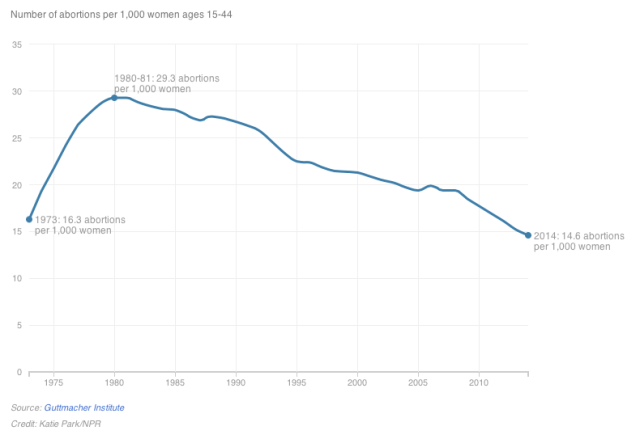
A recent study released by the Guttmacher Institute found that the U.S. abortion rate has fallen to its lowest rate since 1973.

The study claims that in 2014, the abortion rate is 14.6 abortions per ever 1K women of childbearing age (defined as ages 15-44). The rate peaked at 29.3 abortions per 1K women in 1980-1981. In 2013, the abortion rate “fell below 1M for the first time since the 1970s.”

Number of abortions per 1,000 women ages 15-44 (The Guttmacher Institute/NPR)

Number of abortions per 1,000 women ages 15-44 (The Guttmacher Institute/NPR)

The study also found that 12% of clinics had at least one patient who tried to self-induce her abortion. There was no correlation between the closing of abortion clinics and more restrictive abortion laws by state. In areas where more abortion clinics opened, there was not a higher abortion rate.

There appears to be a substitution effect at work, with other birth control methods taking the place of abortion. Most notable is that of the intrauterine device (IUD), which has gained in usage over the past several years.

But why 1973? 1973 was the seminal year where the U.S. Supreme Court handed down their decision on Roe v. Wade, which legalized abortion. It’s a good sign that women are using more birth control methods and not having to rely on abortion to get rid of unintended pregnancies.

Black Actor Oscar Nominations: By The Numbers

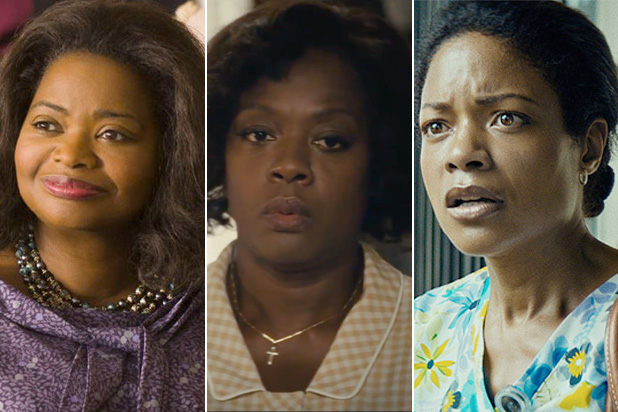
7 Best Supporting Actress Nominees Octavia Spencer, Viola Davis and Naomie Harris (The Wrap)

7 Best Supporting Actress Nominees Octavia Spencer, Viola Davis and Naomie Harris (The Wrap)

Remember how the last couple of Oscar ceremonies were plagued by a lack of diverse nominees, especially in the major categories? The Academy has appeared to learn from that. The change has become especially clear in the acting categories. This year, each acting category has at least one Black nominee.

Here are the stats:

Best Actor: Denzel Washington (“Fences”)

  • Washington is now the most nominated Black actor in Oscar history. He’s had six previous nominations, two for Best Supporting Actor and four for Best Actor. He won Best Supporting Actor in “Glory” in Best Actor for “Training Day” in 2001.

Best Actress: Ruth Negga (“Loving”)

Best Supporting Actor: Mahershala Ali (“Moonlight”)

Best Supporting Actress: Viola Davis (“Fences”), Naomie Harris (“Moonlight”), Octavia Spender (“Hidden Figures”)

  • This year is the first time an acting category has had three Black nominees. The last time an acting category had two Black nominees was in 1985, when Margaret Avery and Oprah Winfrey were both nominated for “The Color Purple.”
  • This is the second time the Best Supporting Actress category has had three non-white nominees. The first time was in 2007, with Jennifer Hudson for “Dreamgirls,” and Adriana Barraza and Rinko Kikuchi for “Babel” nominated.
  • Davis made history this year by becoming the first Black actress to score three Oscar nominations. Previously, Whoopi Goldberg was the only Black actress to have two Oscar nominations. She won the Oscar for her second nomination for her performance in “Ghost” in 1991.

#ThrowbackThursday: Whoopi Goldberg Wins the Best Supporting Actress Oscar for “Ghost,” 1990

Whoopi Goldberg at the Oscars, 1991 (Leosigh)

Whoopi Goldberg at the Oscars, 1991 (Leosigh)

Actress/comedian Whoopi Goldberg won an Oscar for “Ghost,” the seminal Patrick Swayze movie where his character dies and comes back as, you guessed it, a ghost. (Shocker, right?) Goldberg played Oda Mae Brown, a psychic who helps Swayze’s character.

Goldberg won the Best Supporting Actress Oscar for the movie a the 63rd Annual Academy Awards in 1991. This was her second Oscar nomination: Goldberg had previously been nominated for Best Actress in 1986’s “The Color Purple.”

Until the 2017 Oscar nominations were announced, Goldberg was the only Black actress to be nominated for an Oscar twice. Now there’s a new record: Powerhouse actress Viola Davis received a nomination for her work in “Fences,” and she is now the only Black actress to be nominated three times for an Oscar.  Davis had previously been nominated in 2009 for “Doubt” and in 2012 for “The Help.”

Trump Bans Funding for International Organizations that “Promote” Abortion

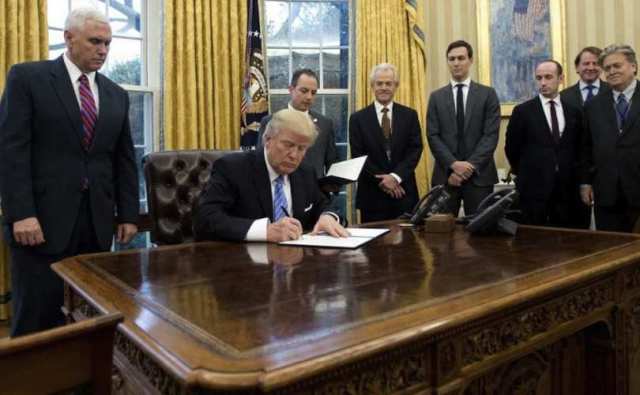
Trump signs international abortion ban (Lifesite)

Trump signs international abortion ban (Lifesite)

Well, that was quick.

On his third day in office, Trump showed his hand on female reproductive rights (not like we didnt already know…) He moved to block U.S. aid for organizations that “promote” abortion. In this case, “promoting” abortion means presenting it as a viable option and/or providing abortion counseling.

Similar rules have been in place since 1984, when President Ronald Reagan instituted the first rule known as the Mexico City policy. (The policy was named for the location in which Reagan announced it.) Depending on which party is in office, the bill has been repealed (by Bill Clinton and Barack Obama) and reinstated (by George H. W. Bush and George W. Bush).

Despite the fact that the policy has been around for over 30 years, it’s unclear whether it’s actually working:

Health experts say the policy has not led to a decline in abortions in the affected countries. Some research suggests that it has had the opposite effect: increasing abortion rates by forcing health clinics to close or to restrict contraceptive supplies because of lack of funding. Others say the restriction only heightens the risk of illegal and often unsafe abortions.

A study completed by the Stanford University School of Medicine in 2011 found that the Mexico City policy was “linked to increases in abortion rates in sub-Saharan African countries.” But the study also found that it was difficult to link a country’s abortion rates back to the policy.