How Common is Gestational Surrogacy?

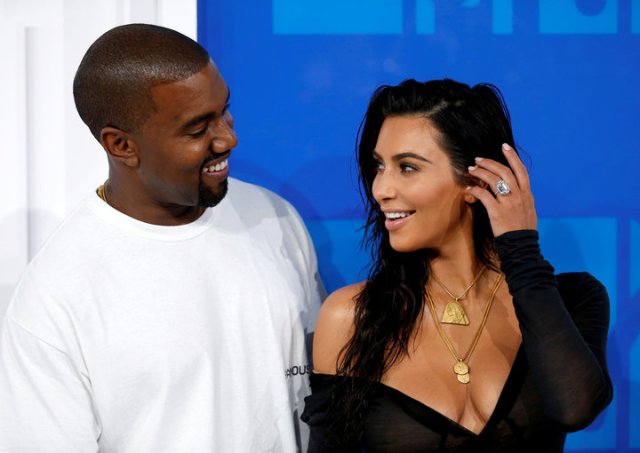
Kim Kardashian and Kanye West arrive at the 2016 MTV Video Music Awards in New York (The Huffington Post)

FILE PHOTO – Kim Kardashian and Kanye West arrive at the 2016 MTV Video Music Awards in New York, U.S., August 28, 2016. REUTERS/Eduardo Munoz/File Photo

Last month, reality TV personality Kim Kardashian West and her husband Kanye West announced the birth of their third child. The couple’s daughter Chicago was carried via a gestational surrogate. She was created from a fertilized egg taken from Kardashian West, and had no genetic tie to the surrogate.

How common is gestational surrogacy?

It’s not that common, but it’s difficult to nail down exact numbers. The Society for Assisted Reproductive Technology (SART) reported 1.5K+ babies born from gestational surrogates in 2011, up from 1.3K+ babies born via the method in 2009. Another source reports 1.4K+ babies born via gestational surrogacy.

It’s difficult to pin down an actual number, because some cases of gestational surrogacy may not reported. It’s also difficult to tell when the sample size is so small.

As the procedure becomes more widely available, we’ll be able to see how common gestational surrogacy really is.

GLAAD Reports 11% Increase in LGBTQ Discrimination in 2017

Rainbow Flag (Sauk Valley)

Rainbow Flag (Sauk Valley)

It’s no secret that the LGBTQ community has faced discrimination throughout history. And it looked like that things were getting better (to rip from Dan Savage). But the data tells a different story.

LGBT organization GLAAD recently released the results from its Accelerating Acceptance study at the World Economic Forum. GLAAD has put out this study every year since 2014 to measure attitudes towards people who identify as LGBTQ. This year’s study polled 2.1K+ people, and found that, we’re not making progress as one might reasonably expect. We’re actually backsliding.

The study found that non-LGBTQ people have become more uncomfortable in everyday situations where they might interact with members of the LGBTQ community. Situations included “having LGBT members at my place of worship” and “seeing a same-sex couple holding hands.” The percentage of respondents reporting discomfort ticked upwards at least two percentage points year-over-year (2016 vs. 2017) in each category.

Non-LGBT people are also shying away from calling themselves allies: The term dropped 2% in preference year-over-year. “Detached supporters” (defined as non-LGBT people whose comfort level depended on the situation) gained 4% in popularity.

LGBT people also reported more discrimination in 2017, leading to an 11% increase in reported harassment from 2016. It doesn’t take a genius to draw parallels between this stat and the kind of person who currently occupies the Oval Office.

Here’s where it gets interesting: Despite the decreases in the numbers of non-LGBT people reporting being comfortable around the LGBT community, the reported support for equal rights for LGBT people held steady year-over-year at 79%.

One thing that’s unclear is the methodology used: Are these results self-reported, or were respondents selected by another method? And did people lie about supporting equal rights, but tell the truth everywhere else? I’d love to know this.

This study is very disheartening. We still have a long way to go until it truly gets better.


Only 17% of Startups Had a Female Founder in 2017

Whitney Wolfe, Founder of Bumble (Travel + Leisure)

Whitney Wolfe, Founder of Bumble (Travel + Leisure)

Quick, how many female founders of startups can you name (without Googling)? Let’s see, there’s Sophia Amoruso of NastyGal (RIP!), Whitney Wolfe of Bumble, Jenn Hyman of Rent the Runway, and…who else?

Contrast that with how many male startup founders you could name (Bill Gates, Steve Jobs, Mark Zuckerberg, Elon Musk, etc.) and you could go on for days. And that’s without Googling. And without naming their respective companies (Microsoft, Apple, Facebook, and Tesla, in case you’e wondering.)

Why can’t we name more female founders? Do they exist?

Well, yes and no. Crunchbase, a platform that crunches (heh) data for many companies around the world, has been running a study on female founders of start-ups since 2015. And what they found will SHOCK you.

Actually, no it won’t. Only 17% of startups had a female founder as of Q1 2017 (the last recorded study). 17 PERCENT. THIS IS NOT PARITY.

What makes this number worse is that this percentage has persisted since 2012. So women have only have the best seats at the table less than 1/5th of the time for 5 years.

Ladies, let’s start some companies!! Who’s with me?!

By The Numbers: Female Best Director Oscar Nominees

Greta Gerwig at the 2018 Golden Globe Awards (Elk Grove Tribune)

Greta Gerwig at the 2018 Golden Globe Awards (Elk Grove Tribune)

Oscar nominations dropped earlier this week, and actress/director Greta Gerwig received a nomination for Best Director for her feature “Lady Bird.”

Gerwig is only the fifth woman to be nominated for Best Director! Isn’t that insane?! Especially since the Oscars have been occurring since 1927…

Here are some stats on female nominees for the Best Director Oscar:

Estimated Number of Best Director Oscar Nominees, 1927-2017: 451

  • This number covers 90 years of the Academy Awards, with an average of 5 directors nominated per year.

Number of female Best Director nominees: 5

  • Lina Wertmuller for “Seven Beauties” (1976)
  • Jane Campion for “The Piano” (1993)
  • Sofia Coppola for “Lost in Translation” (2003)
  • Kathryn Bigelow for “The Hurt Locker” (2009)
  • Greta Gerwig for “Lady Bird” (2017)

Percentage of female Best Director nominees to total Best Director nominees: 1.11%

Number of American female Best Director nominees: 3

  • Sofia Coppola for “Lost in Translation” (2003)
  • Kathryn Bigelow for “The Hurt Locker” (2009)
  • Greta Gerwig for “Lady Bird” (2017)

Female Best Director winners: 1

  • Kathryn Bigelow for “The Hurt Locker” (2009)

Percentage of Female Best Director Winners to Total Best Director Winners: 1.11%

Number of American female Best Director winners: 1

  • Kathryn Bigelow for “The Hurt Locker” (2009)

Obviously, these numbers need to change. More women need to be recognized and rewarded for their achievements!

#ThrowbackThursday: Kathryn Bigelow Wins Best Director for “The Hurt Locker,” 2010

Kathryn Bigelow at the 2010 Oscars (Zimbio)

Kathryn Bigelow at the 2010 Oscars (Zimbio)

Prior to directing the 2009 film “The Hurt Locker,” Kathryn Bigelow was known for science fiction “Strange Days” and action film “Point Break.” “The Hurt Locker” raised her profile, and pushed her into the spotlight when she won the Best Director Oscar for the film.

Bigelow is the only woman to win the Best Director Oscar. She was the fourth woman to be nominated for the award.

By The Numbers: Women’s March 2018

Women's March 2018 (Yahoo)

Women’s March 2018 (Yahoo)

Did you go to a Women’s March this past weekend? I went to the one in LA, and had a great time! It was wonderful being surrounded by so many positive people interested in change.

I was curious to see if there were any numbers on how many people marched this year. It does make sense that turnout would be lower this year than last year, which saw around 3M people around the country. It has been noted that year-over-year attendance in major cities decreased, while those in surrounding areas actually increased due to protestors opting to attend marches closer to home.

While it was difficult to estimate because some cities had marches spread out over the weekend and some cities didn’t have estimates, other cities still reported numbers:

  • Los Angeles: 500K
  • New York City: 200K+
  • San Diego: 37K
  • Washington, DC: 10K
  • Raleigh, NC: 1K+
  • Casper, Wyoming: 350

Hit the links to read more about the numbers. Can’t wait to march next year!

By The Numbers: Women Making Bank

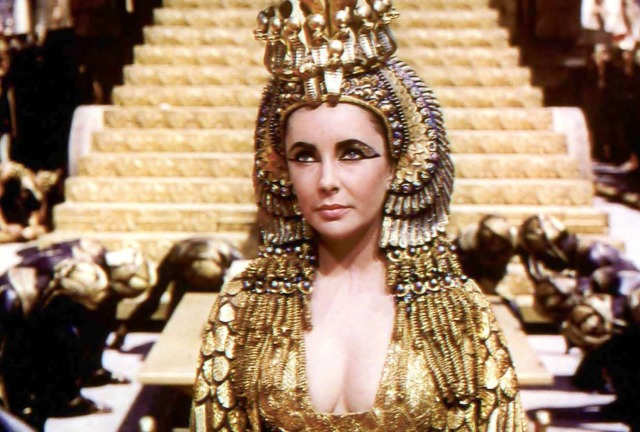
Elizabeth Taylor in 'Cleopatra,' 1963 (Eclipse Magazine)

Elizabeth Taylor in ‘Cleopatra,’ 1963 (Eclipse Magazine)

Earlier this week, Ellen Pompeo became the highest-paid TV actress currently on TV, making $20M a year. How’d she do it? She asked for it. Also, she knew her worth.

Who else has made bank while breaking the glass ceiling? Let’s take a look!

First Female Millionaire:

Madam C.J. Walker built a beauty empire and had a net worth of $600K at the time of her death. Adjusted for inflation, that’s that’s $8,757,479.29 in November 2017 money.

First Female Billionaire:

Lifestyle entrepreneur Martha Stewart became a billionaire in 2000, the year after her company Martha Stewart Living Omnimedia went public.

First Black Female Billionaire:

Be honest: you thought this would be Oprah, didn’t you? So did I…until I actually googled it. No, this honor goes to Sheila Johnson. Johnson co-founded BET with her ex-husband Bob Johnson and went on to work in hospitality and real estate, and own minority stakes in three sports teams. Johnson first made the “Forbes” Billionaire List in 2000.

First Film Actress to be Paid $1M for a Role:

This would be the incomparable Elizabeth Taylor, who played the titular role in “Cleopatra” in 1963.

Highest-Paid Actress of 2017:

Emma Stone made the “Forbes” 2017 list of highest paid actors and actresses at $26M. However, she’s the highest-ranking actress at #15.


#ThrowbackThursday: Eartha Kitt as Catwoman in “Batman,” 1967

Eartha Kitt as Catwoman (Pinterest)

Eartha Kitt as Catwoman (Pinterest)

Many people know Julie Newmar as Catwoman in the 1960s TV series “Batman,” but there was a second Catwoman as well! Actress and singer Eartha Kitt took over the role in 1967. Kitt was already famous by this time, having danced with the Katherine Dunham Company, recorded several songs and had been acting for many years.

Kitt played Catwoman from 1967 to 1968. Not bad for a woman Orson Welles called “the most exciting woman on Earth.”

Ellen Pompeo is the Highest-Paid TV Actress at $20M a Year

Ellen Pompeo in 'Grey's Anatomy' (Today)

Ellen Pompeo in ‘Grey’s Anatomy’ (Today)

Actress Ellen Pompeo has played the titular role in “Grey’s Anatomy” since 2004. And she’s finally making bank for it.

Pompeo is earning $575K per episode (!!), to the tune of $20M per year (!!!). She could also bring in another $6-7M with backend deals. Pompeo is now the highest-paid actress on TV.

Congrats to Ellen! May we all have the courage to go after what we’re worth!

Trends: Calling Out Pay Disparity

Savannah Guthrie and Hoda Kotb of 'Today' (ET Online)

Savannah Guthrie and Hoda Kotb of ‘Today’ (ET Online)

Earlier this week, word got out that Michelle Williams got paid a per diem for quickly reshooting scenes for “All the Money in the World” ahead of its release. That per diem amounted to $80 per diem, totaling less than $1,000. Her costar Mark Wahlberg, on the other hand, was paid a whopping $1.5M for the reshoots.

As USA Today notes, “that works out to Williams being paid less than one-tenth of 1% of her male co-star.” Isn’t that crazy?! In light of this revelation, the Screen Actors Guild (SAG) is investigating the matter to see if any rules were violated during the making of the film.

This isn’t the first time men and women have faced a pay disparity. Far from it. But now, calling out pay disparity has become a public way to shame companies for making their employees feel undervalued.

This has been happening several times in news. After “Today” host Matt Lauer was fired, it was reported that Hoda Kotb and Savannah Guthrie would take over as co-hosts. Kotb and Guthrie would each be paid $7M, with their combined salaries making $14M. Later was making $25M, making the difference between his salary and those of his two co-hosts $11M.

Last month, E! Entertainment host Catt Sadler left her job of 12 years, because she was paid half as much as her male co-host Jason Kennedy. Her departure did not go unnoticed: Actresses Debra Messing, Laura Dern, and Eva Longoria confronted this year’s Golden Globes red carpet pre-show hosts Guiliana Rancic and Ryan Seacrest over the issue.

Awareness of pay disparity has also spread around the world. Former BBC News editor Carrie Gracie quit her position earlier this month once she learned that she had been severely underpaid throughout her career.

The pay disparity problem has also crossed racial lines. “Hawaii Five-O” stars Daniel Dae Kim and Grace Park each left the series last year due to pay disparity between themselves and their white costars. Though the two had been with the show since 2010, their respective raises were still 10-15% lower than those of their white costars.

It’s excellent that pay disparities are finally coming to light! Let’s hope they spur some lasting changes toward equality.