Sales of High Heels Dropped 17% in 2017

Christian Louboutin shoes (Knowledge @ Wharton High School)

Christian Louboutin shoes (Knowledge @ Wharton High School)

Analysts have been sounding the alarm bell about the death of retail for a few years now. A few categories are also shifting. Among them are various trends in womenswear. Right now, one major category is getting shaken up: women’s shoes.

Market research firm NPD Group found that sales of high heels dropped 17% in 2017. The women’s footwear category then saw a substitute effect: Sales of women’s sneakers jumped 37% within the same time period.

There are a few reasons at play here: One is that the office is getting more casual, and it’s more acceptable for women to wear flats to work. Another is that sneakers are also having a moment in casual wear. An overarching reason is that women are claiming what they want to wear, and not bending to society’s expectations.

We can’t yet say if this will be a trend for retailers, or the beginning of a larger shift. It may be time to find out how men respond to flats and sneakers in terms of attraction.


International Women’s Day 2018: By The Numbers

International Women's Day 2018 (Code Pink)

International Women’s Day 2018 (Code Pink)

Today is International Women’s Day! Here are some fun facts appropriate for the day (and for the purposes of this blog) to dazzle your friends, with sources hyperlinked:

  • “Women love sex just as much as men. In a recent survey, three quarters of the females polled said they wanted to romp at least three times a week.”
  • Women now make up over half of college graduates at 58%. And it’s had an effect: “This increased percentage of educated women has been directly tied to economic growth worldwide — and faster economic growth at that.”
  • Curious about how the wage gap‘s looking? “In 2016, women working full time in the United States typically were paid just 80 percent of what men were paid.”
  • 80% of women directors made only 1 film between 2007 to 2016.
  • Only 17% of start-ups had a female founder in 2017.
  • This year’s theme is “#pressforprogress — a push for gender parity nationwide.”

And these are just the tip of the iceberg. There are lots more interesting facts out there. Now go out and spread the word that change needs to happen!!

#ThrowbackThursday: International Women’s Day Poster from Macedonia (Date Unknown)

Macedonian International Women's Day Poster (Flamingo Group)

Macedonian International Women’s Day Poster (Flamingo Group)

Happy International Women’s Day! The poster above is from Macedonia, and I couldn’t find out the original date behind it. The text on the poster reads (italics from the source):

8 March is not the day of the fairer sex, 8 March is the international reminder of the struggle for economic, political and societal equality of women. The fight against contemporary patriarchy is not over: the World Economic Forum predicts that the gender gap will not close until 2133!

The history behind International Women’s Day is fascinating! The history of the day stems from Socialist roots: The first observance was in New York in 1909, and was put on by the Socialist Party of America. Russia officially began marking the day in 1917, and became a non-working day in 1965. The United Nations adopted the day in 1975.

Even if you’re not wearing red or purple today, be sure to take a moment and reflect on the women in your life and the world over.

Women in Entertainment: Lina Wertmuller Directing “Seven Beauties,” 1975 #ThrowbackThursday

Lina Wertmuller directing 'Seven Beauties' (Pinimg)

Lina Wertmuller directing ‘Seven Beauties’ (Pinimg)

The first woman nominated for the Best Director Oscar was Lina Wertmuller in 1975 for her film “Seven Beauties.” The film follows an Italian man throughout his life, and the title comes from his seven sisters. “Seven Beauties” was her tenth film.

The next woman nominated for the Best Director Oscar was Jane Campion for her 1993 film “The Piano.”

Women in Entertainment: 80% of Women Directors Made Only 1 Movie Within 10 Years

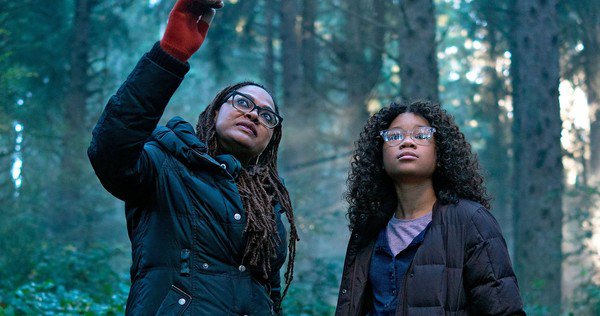
Ava DuVernay directing 'A Wrinkle in Time' (Movieweb)

Ava DuVernay directing ‘A Wrinkle in Time’ (Movieweb)

The entertainment industry has made it clear that it’s a man’s world. And now we have data to back it up.

The Annenberg School for Communication and Journalism at University of Southern California (USC) put out a study last year through their Media, Diversity & Social Change initiative. The study, titled “Inclusion in the Director’s Chair?,” examined the gender, race and age of directors for the top-grossing 1,000 movies from 2007 to 2016.

Among the interesting findings was the revelation that 80% of women directors made just one film within the 10-year timeframe. This counted them as “one and done.” By contrast, only 54%+ men directed only one film during the same length of time.

The study also called out gender ratios: Across the 1,000 films examined, there were 1,114 directors. (The study did not define if this number was for unique – i.e. only occurring once in the list – directors or not.) The male-to-female director ratio was 24:1.

Across the 1,114 total directors, there were only 35 (!) unique female directors across the stated timeframe. (Ava DuVernay, pictured above, was one of those 35.) That’s 3% of all the directors surveyed. That’s pretty bad!!

Clearly, we have a long way to go before we achieve parity behind the camera.


Women in Entertainment: Women Hire Women (No Shit)

'Pitch Perfect 3,' 2018 (Indiewire)

‘Pitch Perfect 3,’ 2018 (Indiewire)

Does it surprise anyone that women are more likely to hire women than men are likely to hire women? No? Great, than this next piece of information will totally make sense: The Center for the Study of Women in Television and Film put out a recent study that examined women’s employment in the entertainment industry in certain high-level behind-the-scenes capacities (director, writer, composer, etc.) for the top 250 films of 2017 and the top 100 and top 500 films of 2015.

What this study, aptly titled “The Celluloid Ceiling,” found was that on films with more than one female director, more women were hired for other top roles. The study looked at the incidence of women being hired as writers, editors, cinematographers and composers, and that incidence went up dramatically (ha) when women were also directors, or at least one director.

How dramatically? Women directors employed women writers at a 60% increase than male directors, and employed women composers at a 10% increase than male directors.

For those who require their data in visual form, here’s a graph of said increases:

Graph examining incidence of women hired for top-level behind-the-scenes work with at least one female director vs. exclusively male directors ('The Celluloid Ceiling' Report 2018)

Graph examining incidence of women hired for top-level behind-the-scenes work with at least one female director vs. exclusively male directors (‘The Celluloid Ceiling’ Report 2018)

I have to level with everyone here: I definitely assumed I’d see a sizable uptick in women being hired if there was already a women in the top spot (i.e. director). But I had no idea it’s be this large of a difference.

This also begs the question: Which movies are more likely to have women as directors? Though the “The Celluloid Ceiling” report doesn’t answer that directly, it does shed some light on certain genres which may favor women directors a bit more:

By genre, the largest percentage of women, relative to men, worked in documentaries (30%), followed by comedies (23%), dramas (22%), sci-fi features (20%), animated features (19%), horror features (18%), and action features (13%).

Personally, I’d like to see more women in dramas, sci-fi, and horror, but any gain works! Now let’s make more of them!!

Women in Entertainment: Some Basic Stats

Sofia Coppola (Junkee)

Sofia Coppola (Junkee)

Let’s kick off some basic stats about women in entertainment, shall we? Because knowledge is power, and let’s change this shit! I pulled these from a variety of sources; all figures are from 2017 unless otherwise noted.

Film:

(All figures for the top 100 domestic highest-grossing films of 2017)

  • Women comprised 10% of directors, 8% of writers, and 2% of cinematographers.
  • Women comprised 37% of major characters, and comprised 34% of all speaking characters.
  • In terms of female characters’ race and ethnicity, 68% of female characters were white, 16% were Black, 7% were Latina, 7% were Asian, and 2% were defined as “other” (no delineation given).
  • Women comprised 5% of total leaders depicted, compared to 8% for men.


TV:

(All data pulled from the 2016-2017 television season)

  • Women comprised “42% of major characters on broadcast network, cable, and streaming programs.”
  • For womens’ speaking roles with respect to race and ethnicity, Black women spoke in 19% of all roles, Asian women spoke in 6% of all roles, and Latina women spoke in 5% of all roles. Each group showed gains year-over-year.
  • Women comprised 28% of creators, directors and writers and other above-the line functions as defined by the survey.
  • Four women or fewer were employed in certain behind the scenes roles at 50% of programs.

And finally, this gem:

Hollywood’s top paid union executive—a man—earned 60 percent more than the highest-paid female union executive.

Makes you want to burn it all down, doesn’t it? And there are many more of these depressing and disappointing statistics out there.

Hopefully with all the awareness and dialogue surrounding gender disparity in the field right now, we’re on track to make some BIG changes.

Welcome to Women in Entertainment Week!

Directors Patty Jenkins, Sofia Coppola, Dee Rees, and Greta Gerwig (Vulture)

Directors Patty Jenkins, Sofia Coppola, Dee Rees, and Greta Gerwig (Vulture)

Welcome to Women in Entertainment Week here on Sex & Stats! This week, we’ll be devoting content to the various statistics surrounding women who work in the entertainment field. When you’re watching the Oscars on Sunday, you’ll know your stats! Enjoy!

By The Numbers: NPR Releases 2017 Staff Diversity Data

National Public Radio (NPR) Logo (NPR)

National Public Radio (NPR) Logo (NPR)

National Public Radio (NPR) has committed to inclusive hiring practices by releasing its newsroom diversity data each year. Last month, the diversity data for 2017 was released for 377 employees. All data was self-reported. I also compared these numbers to NPR’s 2016 diversity data.

Here’s the race/ethnicity breakdown:

White: 75.1%

  • Change Year-Over-Year – White: -.3%

Latino: 6.1%

  • Change Year-Over-Year – Latino: .7%

Black: 8.8%

  • Change Year-Over-Year – Black: .8%

Asian: 7.7%

  • Change Year-Over-Year – Asian: -6.%

Two or More Reported: 2.1%

  • Change Year-Over-Year – Two or More Reported: -.5%

American Indian: .3%

  • Change Year-Over-Year – American Indian: 0%

Here’s the gender split:

Male: 43.8%

  • Change Year-Over-Year – Male (%): -1.1%

Female: 56.2%

Change Year-Over-Year – Female (%): +1.1%

Obviously, there are some problems here. The first problem is that the data is self-reported, so we can assume that respondents self-selected to participate. The second problem is that there is not nearly enough diversity on staff. The third problem is that progress towards more diversity is proceeding too slowly. More progress needs to be made!

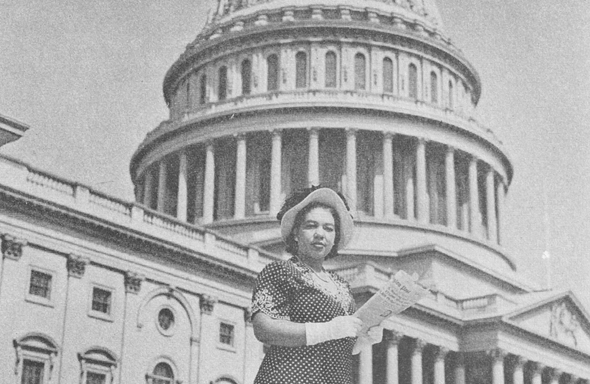
#ThrowbackThursday: Alice Dunnigan, Date Unknown

Alice Dunnigan (Columbia Journalism Review Archive)

Alice Dunnigan (Columbia Journalism Review Archive)

Alice Dunnigan should be more well-known. This is not editorializing, this is just a fact. As a journalist WOC, Dunnigan pioneered many firsts. She was the first African-American woman to have press access to the White House, first African-American female member of the Senate and House of Representatives press galleries. Dunnigan was also the first African-American woman to travel with a presidential candidate, when she traveled with Harry S. Truman during the 1948 presidential campaign.

Dunnigan paved the way for other African-American female journalists, among them Gwen Ifill, Nikole Hannah-Jones, and Oprah Winfrey.