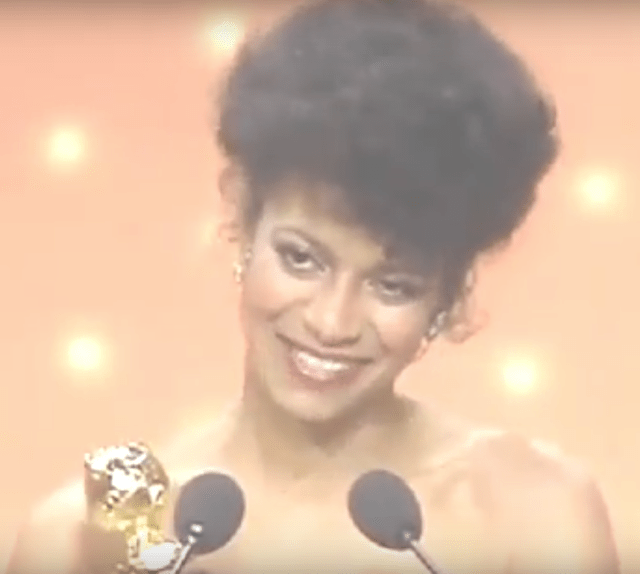
#ThrowbackThursday: Debbie Allen at the Golden Globes, 1983

Debbie Allen at the Golden Globes, 1983 (YouTube)

Debbie Allen at the Golden Globes, 1983 (YouTube)

Way back in 1983 (34 years ago!), actress-choreographer Debbie Allen won the Golden Globe Award for Best Musical or Comedy Actress. Allen starred in “Fame,” the TV series based off the 1980 movie.

She was the only Black woman to win this award until “Blackish” actress Tracee Ellis Ross (yes, Diana Ross’s daughter) won earlier this week during the

Tracee Ellis Ross Becomes the First Black Woman to Win a Golden Globe for Best Actress in a TV Comedy Since 1983

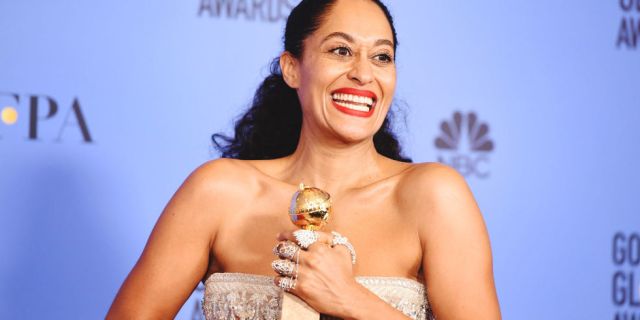
Tracee Ellis Ross, Golden Globes 2017 (Elle)

Tracee Ellis Ross, Golden Globes 2017 (Elle)

Last night at the Golden Globe Awards, the always amazeballs Tracee Ellis Ross won the award for Best Actress — Television Series Musical or Comedy. Ross plays Bow Johnson, badass doctor and matriarch of the Johnson family in the ABC comedy “Blackish.”

Ross is also the first Black woman to win that category in 34 years. The last Black woman to win in that category was Debbie Allen for “Fame.”

In her historic moment, Ross’s acceptance speech celebrated inclusion, especially for women of color:

This is for all the women, women of color, and colorful people whose stories, ideas, thoughts are not always considered worthy and valid and important. But I want you to know that I see you. We see you.

Congratulations, Tracee, and keep being you!


Wonder Woman is No Longer a U.N. Ambassador

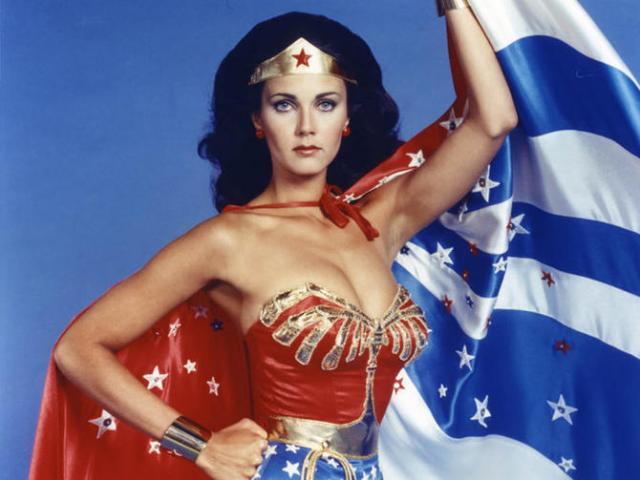
Lynda Carter as Wonder Woman (CNet2)

Lynda Carter as Wonder Woman (CNet2)


DC Comics superhero/feminist icon Wonder Woman has been ousted as the United Nations (U.N.)’s Honorary Ambassador for female empowerment. The character was officially unveiled as the ambassador on Oct. 21. The unveiling tied into the U.N.’s Sustainable Development Goal #5, which “seeks to achieve gender equality and empower all women and girls by 2030.’

Her last day as ambassador was Dec. 16. Girlfriend didn’t even have the job a whole two months.

The reason for the end of Wonder Woman’s ambassadorship is slightly unclear. Around 45K+ people showed their displeasure with the iconic character’s new role by singing a petition. But the U.N. claims they made the end date soon after the character’s debut in the role, and not as a result of the protests.


Trends: Actresses Demanding Equal Pay

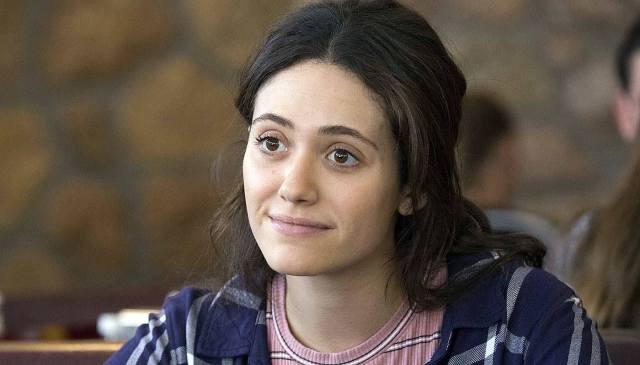
Emmy Rossum in 'Shameless' (TV By The Numbers)

Emmy Rossum in ‘Shameless’ (TV By The Numbers)

“Shameless” actress Emmy Rossum must’ve heard of Levo League’s negotiating slogan #Ask4More, which encourages women to ask for raises and/or equal pay. Earlier this week, Rossum was negotiating to earn equal pay, if not more, than William H. Macy, her co-star on the Showtime series. (And Macy was all for that.) Her reasoning is that her character features significantly in every episode.

Yesterday, Rossum decided to settle her negotiation with a new contract. Though there’s no word on the terms of her new contract, The Hollywood Reporter mentions the following:

Sources say Rossum had an offer of equal pay on the table. It’s unclear if she received more than Macy.

(I, for one, hope she achieved equal or greater pay.)

Actresses speaking up about, and publicly negotiating for, payment parity on par with their male co-stars has become a trend as of late. Robin Wright, the lead actress in Netflix’s “House of Cards,” threatened to take her fight for fair pay public when she realized she was getting paid less than the series’  lead actor Kevin Spacey:

“I was looking at the statistics and Claire Underwood’s character was more popular than [Frank’s] for a period of time. So I capitalized on it. I was like, ‘You better pay me or I’m going to go public.’ And they did.”

Oscar-winning actress Jennifer Lawrence most notably spoke out on the issue of pay parity  in 2015 when she penned an essay for Lenny. Lawrence acknowledged that she and fellow co-star Amy Adams got shortchanged with their pay for “American Hustle:” The two women each got 7% of the overall profits, which the leading men received 9% each. This information became public knowledge during the Sony Pictures Entertainment server hack in late 2014.

Let’s hope that more and more women start speaking up and asking demanding for equal pay. As Lawrence recalls, she “failed as a negotiator because [she] gave up too early.” Don’t give up!!

#ThrowbackThursday: Elizabeth Taylor in “Cleopatra,” 1963

Elizabeth Taylor as 'Cleopatra,' 1963 (First To Know)

Elizabeth Taylor as ‘Cleopatra,’ 1963 (First To Know)

In her heyday, Elizabeth Taylor was a lot of things: raven-haired beauty, husband-stealing vixen, condemned by the Vatican. Oh yeah, she was also an actress. A very good one.

It’s well known that Taylor played the title role in 1963’s “Cleopatra.” But one important aspect of the production is less well-known than it should be: Taylor earned $1M for her role. She was the first actress to be paid that amount for her work.

Due to production delays, that $1M would eventually become $7M. In 2015 currency, that’s $54.2M.

Beyonce and Solange’s #1 Albums: By The Numbers

Beyonce and Solange Knowles (ET Online)

Beyonce and Solange Knowles (ET Online)

Musicians/performers/all-around FLAWLESS women Beyonce and her sister Solange each have achieved something many artists dream of: cracking the Billboard 200 chart. And now each have achieved the distinction of having an album reach #1.

But they also sit in a rarefied strata: Beyonce and Solange are only the third pair of siblings to make the Billboard 200 chart. They’re also the only sisters to achieve this feat.

Since this is such an impressive distinction for the Knowles sisters, here are some numbers that put their joint accomplishment in perspective:

Number of Siblings Who’ve Also Scored #1 Albums: 2

  • Michael and Janet Jackson
  • Master P and Silkk the Shocker

Number of Siblings Who’ve Also Hit #1 in a Calendar Year: 1

  • Michael and Janet Jackson, 2001

Number of Times the Knowles Sisters’ Albums Have Hit #1: 

  • Beyonce: 6
  • Solange: 1

Number of Times Beyonce Hit #1 With Destiny’s Child Albums: 2

Number of Solo Albums Each Knowles Sister Has Released:

  • Beyonce: 6
  • Solange: 3

2016 Album that Hit #1 for Each Knowles Sister:

  • Beyonce: Lemonade
  • Solange: A Seat at the Table

Number of Units Consumed Within First Week of 2016’s Album Release (includes full albums, streaming- and track-equivalents):

Number of Sales Within First Week of 2016’s Album Release:

Best-Selling Album for Each Knowles Sister:

#ThrowbackThursday: Solange, ‘True,’ 2012

Solange, 'True' (The Jewel Wicker Show)

Solange, ‘True’ (The Jewel Wicker Show)

It’s no secret I’m a fan of Beyonce. I’ve seen her three times in concert (The Mrs. Carter Tour 2013, On the Run 2014, and Formation 2016) because I think she’s one of the performers we’ll tell our grandkids about.

I also really like Solange, Beyonce’s sister. And the release of her new album “A Seat at the Table has led me to revisit “True,” her 2012 EP. The above still is from her song of the same name, which Solange filmed in Cape Town, South Africa with members of Les Sape Society. The entire video is beautiful, so definitely watch it if you haven’t yet. The EP’s excellent, too.

Wonder Woman Will Be the U.N.’s Honorary Ambassador for Female Empowerment

Lynda Carter as Wonder Woman (Vulture)

Lynda Carter as Wonder Woman (Vulture)

In addition to being the Amazonian Princess of Themyscira and civilian Diana Prince, Wonder Woman can add another title to her resume: United Nations’ Honorary Ambassador.

Wonder Woman’s promotion will kick off a campaign dedicated to women’s empowerment. This ties into the U.N.’s sustainable development goal 5, which promotes worldwide gender equality.

Though Wonder Woman will be used as a symbol of women’s empowerment throughout the world, it’s worth noting that most of the top U.N. jobs are held by men.

Wonder Woman will be formally announced as the honorary ambassador on October 21st, 75 years after her character first debuted. Actresses Lynda Carter, who’s played the character in the 1970s TV show, and Gal Gadot, who’ll depict the character in a big-budget DC Comics movie next year, are expected to attend the ceremony.

Trends: Female Superheroes’ LGBT Sexuality

Wonder Woman in 'Justice League' (Pink News UK)

Wonder Woman in ‘Justice League’ (Pink News UK)

Last week, DC comics writer Greg Rucka gave voice to what a lot of people suspected for many years: Wonder Woman is queer.

Shocking. (That was sarcastic.)

So far, Rucka is the only person affiliated with DC to speak definitively on Wonder Woman’s sexuality. But he said it’s canon, so…it’s canon. Take it as gospel.

Previous to this “revelation” (if you can call it that), Wonder Woman’s sexuality had been on the table virtually since she debuted in 1941. Think about it: she lived on an island populated solely by women. Audiences can read between the lines.

Wonder Woman isn’t the only strong female protagonist in comics confirmed to be queer. In 2006, Batwoman’s alter ego Kate (also known as Kathy) Kane came out as a lesbian. Batwoman debuted in 1956. (Does this mean it took Kate/Batwoman 50 years to figure out her sexuality?) In 2007, it was announced that Batwoman would be part of DC’s graphic novel series 52, which aimed to depict modern times (relationships included) more accurately.

Batwoman received her own love story with detective Renee Montoya in 2016’s animated movie Batman: Bad Blood. As you might assume, Batwoman is most closely associated with Batman. (Fun fact: Batwoman was originally created to counteract public perception that Batman might be gay.) But thus far, Batwoman (with or without her sexuality) has not been featured in a big-budget live-action movie.

Though she isn’t part of DC or its main rival Marvel Comics, Xena from the TV series Xena: Warrior Princess counts as a superhero in my book. New Zealand actress Lucy Lawless starred as the titular character, a reformed warrior who travels the world doing good deeds for various civilizations. Her friend Gabrielle (Renee O’Connor) usually traveled with her. The two (and the show) quickly developed a cult following, especially amongst lesbians. Xena and Gabrielle were depicted as having a close (emotionally and physically) and mutually supportive relationship that many assumed was more than platonic. (There’s even a Tumblr devoted to this.)

In 2003, Lawless talked to Lesbian News (actually the name of a real publication) about Xena and Gabrielle’s relationship. She felt that Xena was “definitely gay,” and that the character and Gabrielle were married. Lawless gave this interview two years after the show ended. In 2015, it was announced that Javier Grillo-Marxuach, executive producer behind the CW’s The 100, would reboot Xena and explore her sexuality in greater depth than the original show. So that basically confirms the yes, the character, and Gabrielle by extension, is indeed gay.

It’s exciting that we’re seeing more and more superheroes depicted as LGBT+, and that their sexuality isn’t the main aspect of their personality. But I wonder which character will be next: Ms. Marvel? Black Canary? Black Widow?
It’s Canon: Wonder Woman Is Queer

Wonder Woman (The Mary Sue)

Wonder Woman (The Mary Sue)

Last week, the bisexual community gained heightened mainstream visibility through a Golden Age of Comics-era character: Wonder Woman.

DC comics writer Greg Rucka said that it’s “logical” that Wonder Woman is queer, given that she comes from an island inhabited solely by women warrior princesses. Wonder Woman’s homeland of Themyscira is supposed to be paradise, where inhabitants can have fulfilling relationships. But Rucka points out that despite the only options for romantic/sexual/emotional relationships, the concept of queerness doesn’t exist.

How would Rucka know this? He writes DC’s Wonder Woman: Year One series. So this revelation is obviously canon. But Rucka says that this revelation will continue to be subtle, and doesn’t feel the need to scream it at readers or make that Wonder Woman’s defining characteristic. (Real talk: I am such a fan of this line of reasoning.)

So far, Rucka is the only DC writer to speak definitively on Wonder Woman’s sexuality. As for whether the character has had same-sex relationships:

As [artist Nicola Scott] and I approach it, the answer is obviously yes. And it needs to be yes for a number of reasons.

Though this is big news, it’s not so shocking: Wonder Woman officiated a same-sex wedding in a story released last year.

The character, who’s also known as Diana Prince in her civilian life and Princess Diana of Themyscira in her homeland, debuted in Dec. 1941. The big-screen movie adaptation starring Gal Gadot will arrive in theaters on Jun. 2, 2017. It will be the first movie centered on a female superhero for the DC universe.

At this time, it’s unclear whether the upcoming movie will include this aspect of Wonder Woman.